| Journal of Clinical Question. 2026; 3(4): e368 https://doi.org/10.69854/jcq.2026.0023 Advance access publication date 13 August 2026 |
 |
Meta-Analysis
Thrombopoietin Receptor Agonists for Chemotherapy-Induced Thrombocytopenia: A Systematic Review and Network Meta-Analysis
Yong-Mei Guo1, Yan Zhao2, Toshiyoshi Maeda2, Nouhaila Ezzaoui3,  Chinwebudu M. Melford4,*
1Department of Hematology, Shin Matsudo Central General Hospital, Chiba, Japan.
2Liver Center, Saga University Faculty of Medicine, Saga, Japan.
3Faculty of Medicine and Pharmacy of Casablanca, Hassan II University, Casablanca, Morocco.
4Department of Medical Technology, Cebu Doctors’ University, Mandaue City, Philippines.
*Corresponding Author: e-mail: melfordcmiller@gmail.com
Submitted: June 15, 2026 Accepted: August 12, 2026
Clinical Question Box
In adults with solid tumors and chemotherapy-induced thrombocytopenia, should thrombopoietin receptor agonists be used to reduce chemotherapy disruption and platelet transfusion requirements?
In adults with solid tumors and chemotherapy-induced thrombocytopenia, thrombopoietin receptor agonists may reduce chemotherapy delays or dose reductions, with moderate-certainty evidence for romiplostim and eltrombopag compared with placebo. Evidence for hetrombopag, avatrombopag, platelet transfusion outcomes, and safety remains less certain because of the limited number of trials and their clinical heterogeneity. Thrombopoietin receptor agonists should be considered for selected patients whose thrombocytopenia disrupts planned treatment, rather than being used routinely.
Abstract
Background: Chemotherapy-induced thrombocytopenia (CIT) can lead to chemotherapy delays, dose reductions, and the need for platelet transfusions. However, comparative evidence for thrombopoietin receptor agonists (TPO-RAs) is limited. Methods: This study comprised a systematic review and a frequentist random-effects network meta-analysis of randomized trials evaluating avatrombopag, eltrombopag, hetrombopag, or romiplostim in adults with solid tumors who had or were at risk of CIT. Searches were conducted in PubMed, Embase, the Cochrane Library, Web of Science, and conference proceedings from inception to May 25, 2026. The primary outcome was chemotherapy delay or dose reduction; secondary outcomes included platelet transfusion, overall and serious adverse events, and thrombocytopenia. Risk ratios (RRs) with 95% confidence intervals (CIs) were estimated. Results: Six trials involving 534 participants were included. Compared with placebo, the risk of chemotherapy delay or dose reduction was significantly lower with romiplostim (RR, 0.26; 95% CI, 0.13–0.51), eltrombopag (RR, 0.57; 95% CI, 0.39–0.82), and hetrombopag (RR, 0.53; 95% CI, 0.32–0.88), but not with avatrombopag (RR, 0.92; 95% CI, 0.46–1.84). The risk of platelet transfusion was also significantly lower with romiplostim (RR, 0.12; 95% CI, 0.04–0.40) and hetrombopag (RR, 0.29; 95% CI, 0.13–0.68). No statistically significant between-agent differences were observed in the risk of overall adverse events. However, romiplostim was associated with an increased risk of serious adverse events compared with placebo (RR, 3.94; 95% CI, 1.25–12.55). Conclusions: Selected TPO-RAs may reduce CIT-related chemotherapy modifications and platelet transfusion requirements. Romiplostim showed the most consistently favorable efficacy estimates but was associated with an increased risk of serious adverse events. However, the small and heterogeneous network and the absence of closed loops preclude firm conclusions regarding comparative efficacy and safety. Larger head-to-head trials are needed.
Keywords: Chemotherapy-induced thrombocytopenia, thrombopoietin receptor agonist, romiplostim, eltrombopag, avatrombopag, network meta-analysis
Introduction
Chemotherapy-induced thrombocytopenia (CIT), commonly defined as a platelet count <100 × 109/L, is a frequent complication of myelosuppressive anticancer therapy and represents a substantial burden in routine oncology practice.1 CIT risk varies according to tumor type, chemotherapy regimen and intensity, baseline platelet count, bone marrow reserve, prior cytotoxic exposure, and concomitant myelosuppressive therapies.2 In a US-based Flatiron Health real-world cohort of 15,521 adults with solid tumors, the 3-month incidence of thrombocytopenia, as defined by the National Cancer Institute Common Terminology Criteria for Adverse Events, was 13%, including grade 3 and grade 4 events in 4% and 2% of patients, respectively.3,4 In a corresponding cohort of patients with hematologic malignancies, the 3-month incidence of thrombocytopenia was 28%, with grade 3 and grade 4 events occurring in 16% and 12% of patients, respectively.4
CIT may manifest as a transient nadir, typically occurring approximately 10–14 days after chemotherapy administration, or as persistent thrombocytopenia from which patients do not recover sufficiently before the next scheduled cycle.5 Persistent platelet counts below approximately 70 × 109/L may preclude the timely administration of subsequent chemotherapy and are particularly relevant to treatment delivery.6 Recurrent or persistent CIT may therefore compromise planned anticancer therapy through treatment delays, dose reductions, or regimen modifications, potentially reducing relative dose intensity. Although the effect of preserving dose intensity on cancer outcomes in this setting remains incompletely established, avoiding unnecessary disruption of effective systemic therapy is a clinically important objective.7
The effects of CIT extend beyond chemotherapy modification. In a Danish cohort, thrombocytopenia was associated with increased bleeding-related hospitalization and an almost seven-fold higher rate of transfusion among patients with solid tumors.8 Platelet transfusion provides short-term hemostatic support for severe thrombocytopenia, active bleeding, or selected prophylactic indications; however, it does not restore endogenous platelet production and is not generally used solely to maintain platelet counts for uninterrupted full-dose chemotherapy.9 Accordingly, current management remains largely supportive, often requiring chemotherapy interruption, delay, or dose reduction when platelet recovery is inadequate before a planned treatment cycle.10
Thrombopoietin receptor agonists (TPO-RAs) represent a pharmacologic approach to stimulate platelet production and potentially facilitate the continuation of systemic anticancer therapy.11 Their role may be particularly relevant for secondary prophylaxis among patients with prior CIT or persistent thrombocytopenia after chemotherapy, whereas evidence supporting routine primary prophylaxis remains less consistent.12 Romiplostim is a subcutaneously administered peptide TPO-RA, whereas avatrombopag, eltrombopag, and hetrombopag are orally administered small-molecule agonists.13 Despite sharing the same therapeutic target, these agents differ in their routes of administration, pharmacokinetic properties, dosing strategies, and potential interactions with concomitant therapies, which may be clinically relevant during cyclic chemotherapy.
Experience with TPO-RAs has also accumulated in hematologic malignancies, particularly for persistent thrombocytopenia after hematopoietic stem cell transplantation. Eltrombopag and other TPO-RAs have shown platelet responses in clinical studies, although evidence remains limited and is largely based on small or non-randomized cohorts.14,15 Because posttransplant thrombocytopenia has mechanisms distinct from chemotherapy-induced thrombocytopenia, these findings cannot be directly extrapolated to patients with solid tumors, in whom comparative randomized evidence remains scarce.
Randomized evidence on TPO-RAs for CIT remains limited and heterogeneous, with substantial variation in patient populations, chemotherapy regimens, platelet thresholds, treatment settings, and outcome definitions. In the absence of direct head-to-head randomized comparisons, this network meta-analysis aimed to compare the relative efficacy and safety of TPO-RAs in adults with CIT or at risk of developing it. Relative treatment rankings were also estimated while accounting for uncertainty arising from the limited number of trials and the sparse evidence network.
Methods
Reporting and Registration
This systematic review and network meta-analysis were conducted in accordance with the PRISMA extension statement for network meta-analyses.16 The protocol was prospectively registered in the Open Science Framework (DOI: 10.17605/OSF.IO/EWRCB).17 Ethics approval and informed consent were not required because the review used published aggregate data and did not involve identifiable individual participant data.
Eligibility Criteria
Studies were eligible for the review and network meta-analysis if they (1) were randomized controlled trials enrolling adults with solid tumors or hematologic malignancies who had or were at risk of CIT; (2) evaluated any TPO-RA, administered alone or alongside standard supportive care, and compared it with placebo, standard care, observation, or another TPO-RA; and (3) reported at least one prespecified efficacy or safety outcome.
Studies were excluded if thrombocytopenia was primarily attributable to causes other than chemotherapy, including immune thrombocytopenia, aplastic anemia, or post-hematopoietic stem cell transplantation thrombocytopenia. Non-randomized studies, including single-arm observational studies, as well as preclinical studies, reviews, editorials, and case reports, were also excluded, as were studies without extractable data for prespecified outcomes.
Information Sources and Study Selection
The PubMed, Embase, Cochrane Library, and Web of Science databases and major hematology and oncology conference proceedings were searched for relevant reports from inception to May 25, 2026. The search strategy combined terms related to CIT, thrombocytopenia, romiplostim, eltrombopag, avatrombopag, hetrombopag, and randomized controlled trials. Database-specific search strategies and the numbers of records retrieved are provided in Table S1. Two reviewers (Y.Z. and T.M.) independently screened titles and abstracts, assessed full-text articles for eligibility, and resolved disagreements through discussion or consultation with a third reviewer (Y.G.). Reference lists of the included studies and relevant reviews were also screened to identify additional eligible reports.
Data Extraction and Outcomes
Two reviewers independently extracted data on study design, country or region, cancer type, chemotherapy regimen, intervention and comparator characteristics, follow-up duration, participant characteristics, and outcome measures. Any discrepancies were resolved through discussion. For multi-arm trials, shared comparator groups were handled appropriately to avoid double-counting.
The primary outcome was chemotherapy delay or dose reduction attributable to CIT, according to each trial’s definition. Secondary outcomes included platelet transfusion, any adverse event, serious adverse event, and thrombocytopenia. When outcome definitions differed across studies, the original trial-level definitions were retained, and potential clinical heterogeneity was considered when interpreting pooled estimates.
Risk of Bias and Certainty of Evidence
Two reviewers independently assessed risk of bias using the revised Cochrane Risk of Bias 2 tool for randomized trials across the domains of bias arising from the randomization process, deviations from intended interventions, missing outcome data, measurement of outcomes, and selection of the reported result.18 Disagreements were resolved through discussion or consultation with a third reviewer. The certainty of evidence for the network estimates was assessed using the CINeMA framework across six domains: within-study bias, reporting bias, indirectness, imprecision, heterogeneity, and incoherence.19
Statistical Analysis
A frequentist random-effects network meta-analysis of binary outcomes was performed in R version 4.6.0 (R Foundation for Statistical Computing, Vienna, Austria) using the meta and netmeta packages, with results expressed as risk ratios (RRs) and 95% confidence intervals (CIs).20 Placebo and observation were retained as separate network nodes because they represented distinct management strategies and trial contexts. For all undesirable outcomes—including chemotherapy delay or dose reduction, platelet transfusion, adverse events, serious adverse events, and thrombocytopenia—an RR below 1.0 indicated a lower risk for the treatment listed in the corresponding row. Heterogeneity was assessed using the estimated between-study variance () and the I2 statistic. These measures were interpreted in conjunction with the magnitude and direction of effects, the precision of estimates, and clinical and methodological diversity.21 Global and local inconsistency were assessed using design-by-treatment interaction and node-splitting approaches, respectively, when estimable. Ranking probabilities and P-scores were calculated as descriptive measures of the relative treatment hierarchy and were not interpreted as definitive evidence of treatment superiority.22 Small-study effects were explored using comparison-adjusted funnel plots and Egger-type tests when at least 10 studies were available, recognizing that these assessments are unreliable in sparse networks.23
Results
Study Characteristics and Network Structure
A total of 1,571 records were identified through the PubMed (n = 709), Embase (n = 605), Cochrane CENTRAL (n = 144), and Web of Science (n = 113) databases. After removal of 79 duplicate records, 1,492 records underwent title and abstract screening. After screening, 119 full-text reports were assessed for eligibility. Of these, 113 were excluded because they were review articles (n = 34) or evaluated herbal interventions (n = 27), granulocyte colony-stimulating factor interventions (n = 17), interleukin-3 interventions (n = 15), interleukin-6 interventions (n = 13), or other ineligible interventions (n = 7) (Fig. S1). Finally, six reports representing six randomized controlled trials and involving 534 participants were included in the systematic review and network meta-analysis (Table 1).24–29
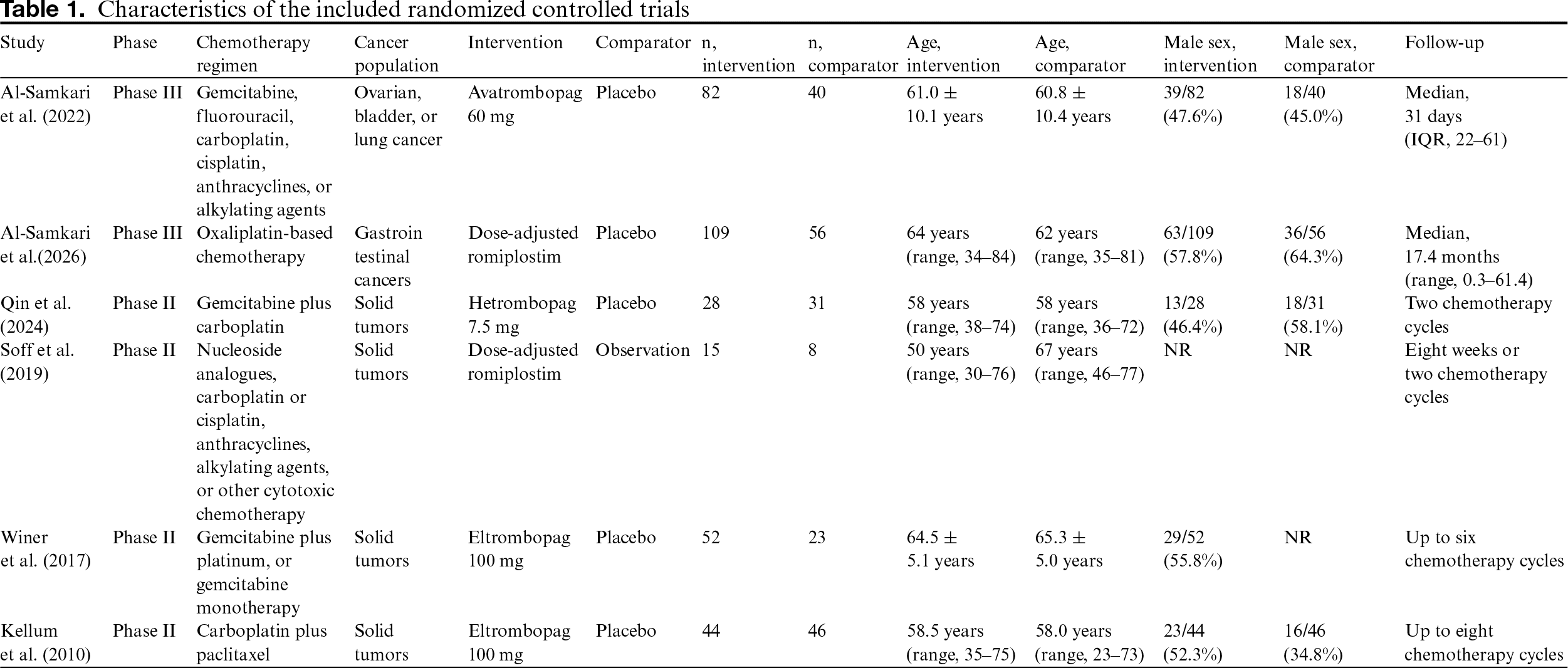
The six phase II–III trials evaluated avatrombopag, dose-adjusted romiplostim, hetrombopag, and eltrombopag in patients with diverse solid tumors receiving heterogeneous myelosuppressive chemotherapy regimens. Five trials used placebo as the comparator, while one phase II romiplostim trial used observation as the comparator. Participant ages ranged from 50 to 67 years, and the proportion of male participants ranged from 34.8% to 64.3% among the studies reporting this variable. Follow-up ranged from two chemotherapy cycles (8 weeks) to a median of 17.4 months. The networks were primarily connected through placebo, with observation providing an additional comparator for romiplostim. Study populations, chemotherapy regimens, and the timing of TPO-RA administration varied across trials.
Chemotherapy Delay or Dose Reduction
The chemotherapy-delay or dose-reduction network is shown in Fig. 1A. In direct comparisons, romiplostim was associated with a lower risk of chemotherapy delay or dose reduction compared with placebo (RR, 0.26; 95% CI, 0.13–0.51) (Fig. 2A). Eltrombopag (RR, 0.57; 95% CI, 0.39–0.82) and hetrombopag (RR, 0.53; 95% CI, 0.32–0.88) also favored active treatment, whereas avatrombopag showed no clear difference from placebo (RR, 0.92; 95% CI, 0.46–1.84). In the network meta-analysis, romiplostim was favored over eltrombopag (RR, 0.45; 95% CI, 0.21–0.99) and avatrombopag (RR, 0.24; 95% CI, 0.09–0.63), while the comparison with hetrombopag was imprecise (RR, 0.49; 95% CI, 0.21–1.14) (Table 2). Ranking analyses placed romiplostim among the most favorable treatments for this outcome (Fig. 3A).
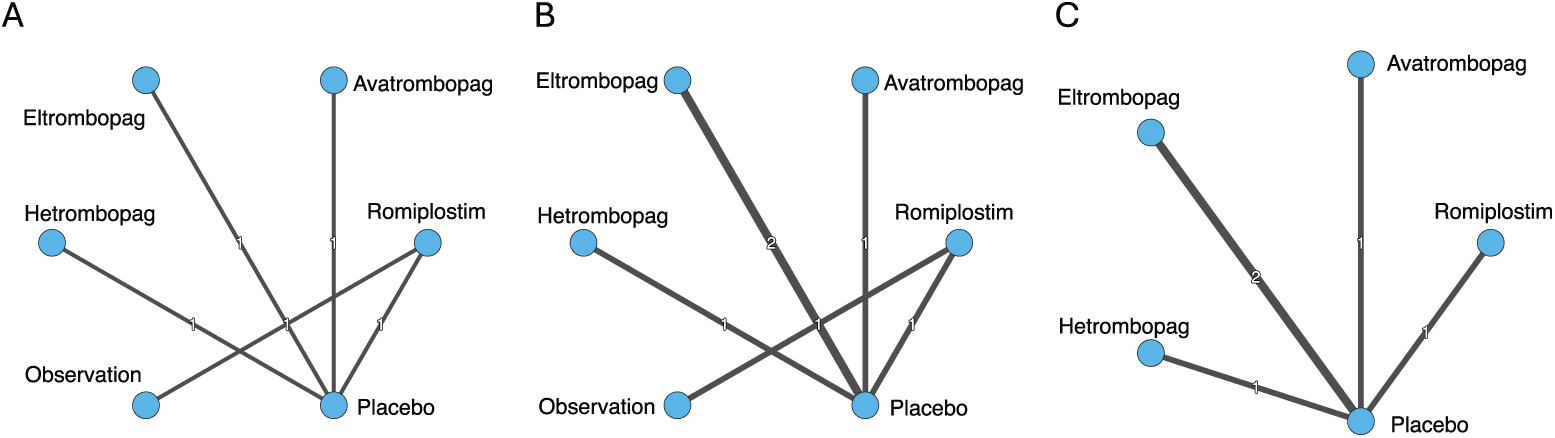
Figure 1. Network plots of treatment comparisons for each outcome. (A) Chemotherapy delay or dose reduction network; (B) platelet transfusion network; and (C) overall adverse-event network.
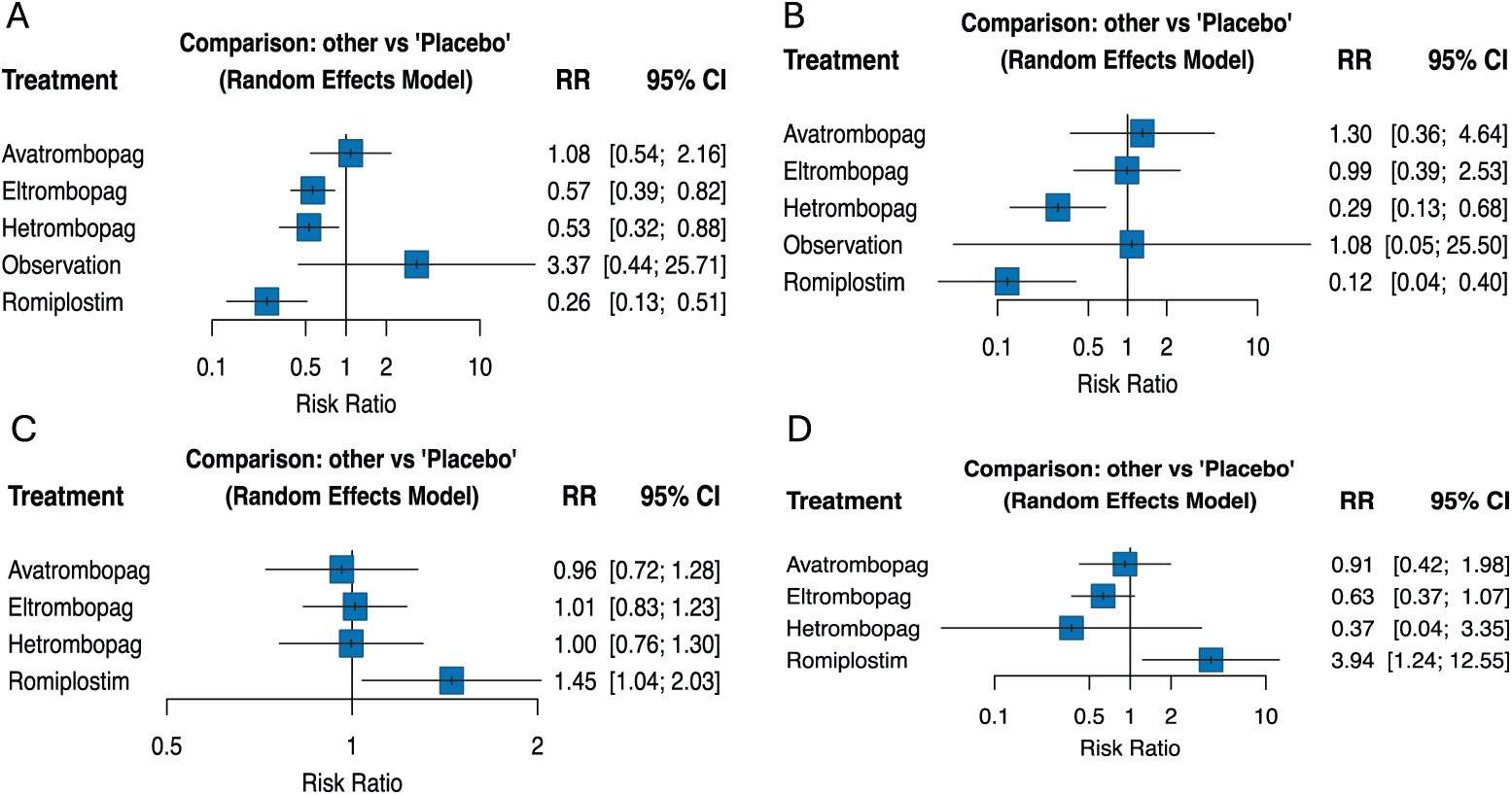
Figure 2. Direct-comparison estimates for each thrombopoietin receptor agonist versus placebo. (A) Chemotherapy delay or dose reduction; (B) platelet transfusion; (C) overall adverse events; and (D) serious adverse events.
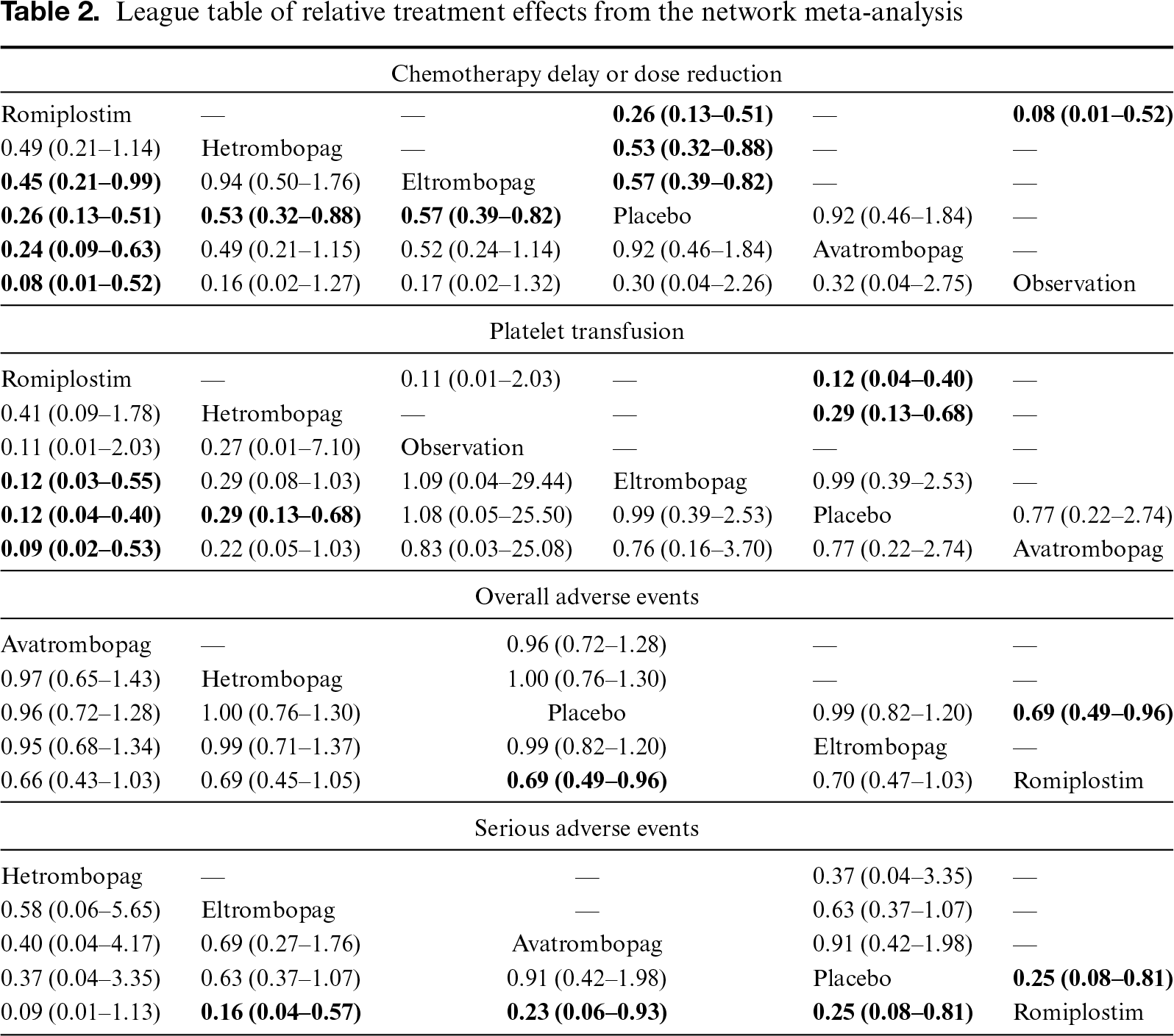
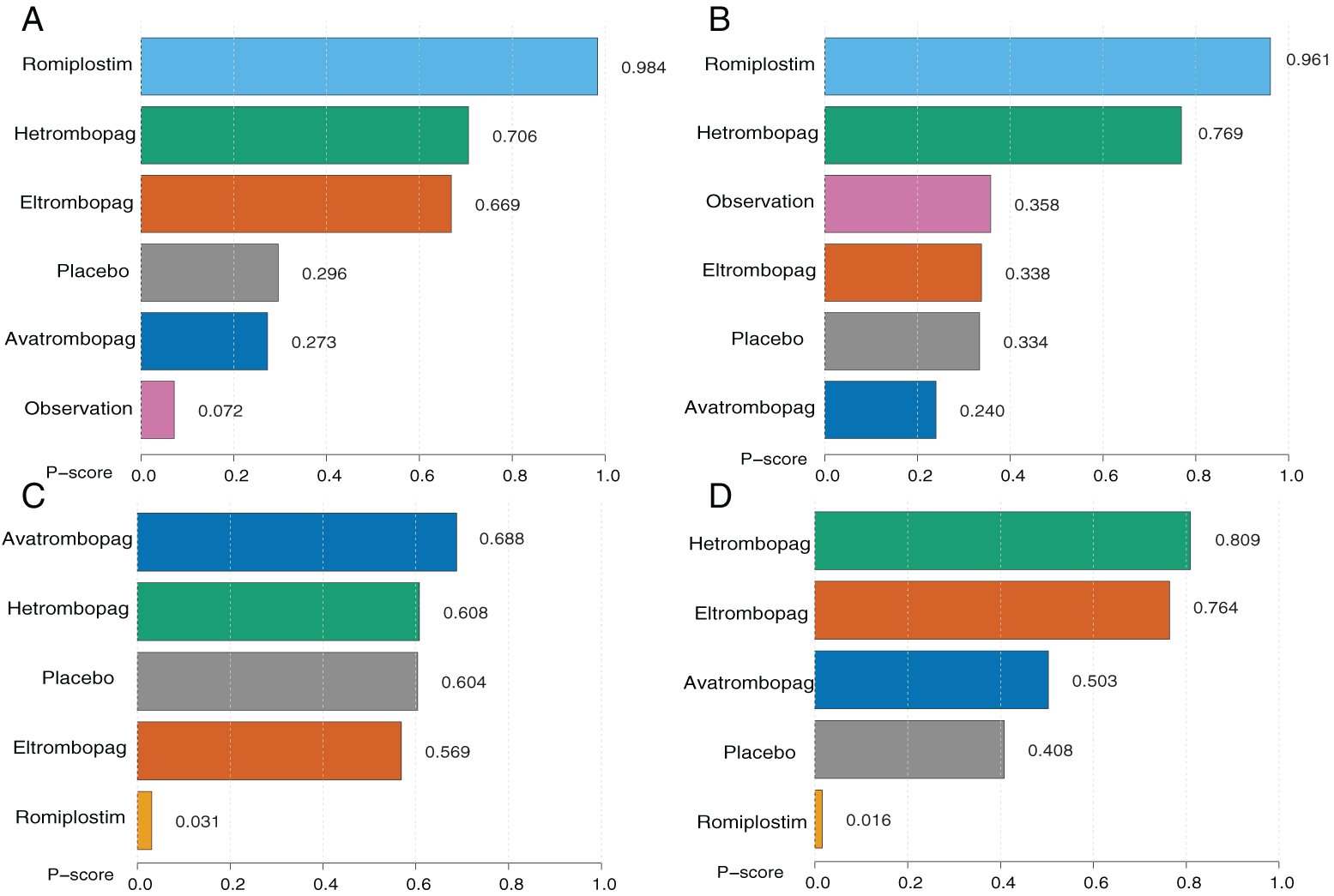
Figure 3. Treatment rankings based on P-scores for each outcome. (A) Chemotherapy delay or dose reduction; (B) platelet transfusion; (C) overall adverse events; and (D) serious adverse events.
Platelet Transfusion
The platelet transfusion network is shown in Fig. 1B. In direct comparisons, romiplostim (RR, 0.12; 95% CI, 0.04–0.40) and hetrombopag (RR, 0.29; 95% CI, 0.13–0.68) were associated with lower platelet transfusion requirements compared with placebo (Fig. 2B). Although the effect estimate for avatrombopag was below the null, the CI was wide (RR, 0.77; 95% CI, 0.22–2.74), and eltrombopag showed no clear difference from placebo (RR, 0.99; 95% CI, 0.39–2.53). In the network meta-analysis, romiplostim was favored over eltrombopag (RR, 0.12; 95% CI, 0.03–0.55) and avatrombopag (RR, 0.09; 95% CI, 0.02–0.53), while the comparison with hetrombopag was imprecise (RR, 0.41; 95% CI, 0.09–1.78) (Table 2). Ranking analyses placed romiplostim among the most favorable treatments for this outcome (Fig. 3B).
Overall Adverse Events
The overall adverse-event network is shown in Fig. 1C. With the exception of romiplostim, no active treatment was associated with a clear increase in the incidence of overall adverse events compared with placebo. Estimates were close to the null for avatrombopag (RR, 0.96; 95% CI, 0.72–1.28), hetrombopag (RR, 1.00; 95% CI, 0.76–1.30), and eltrombopag (RR, 1.01; 95% CI, 0.83–1.23), while romiplostim was associated with a higher risk of overall adverse events (RR, 1.45; 95% CI, 1.04–2.03) (Fig. 2C). The RRs for avatrombopag, hetrombopag, and eltrombopag versus romiplostim were 0.66 (95% CI, 0.43–1.03), 0.69 (95% CI, 0.45–1.05), and 0.70 (95% CI, 0.47–1.03), respectively, with no statistically significant differences between treatments (Table 2). Ranking analyses placed avatrombopag among the most favorable treatments for this outcome (Fig. 3C).
Serious Adverse Events
The serious adverse-event network was identical to the overall adverse-event network (Fig. 1C). In direct comparisons, romiplostim was associated with a significantly higher risk of serious adverse events than with placebo (RR, 3.94; 95% CI, 1.24–12.55) (Fig. 2D). Estimates for avatrombopag (RR, 0.91; 95% CI, 0.42–1.98), eltrombopag (RR, 0.63; 95% CI, 0.37–1.07), and hetrombopag (RR, 0.37; 95% CI, 0.04–3.35) were imprecise and showed no clear differences from placebo. In the network meta-analysis, compared with romiplostim, eltrombopag (RR, 6.25; 95% CI, 1.75–25.00) and avatrombopag (RR, 4.35; 95% CI, 1.08–16.67) were associated with significantly better outcomes, whereas the estimate for hetrombopag was imprecise (RR, 11.11; 95% CI, 0.88–100.00) (Table 2). Ranking analyses placed hetrombopag among the most favorable treatments for this outcome (Fig. 3D).
Thrombocytopenia
The thrombocytopenia network is shown in Fig. 1B. In direct comparisons, neither avatrombopag (RR, 0.56; 95% CI, 0.30–1.07) nor romiplostim (RR, 1.03; 95% CI, 0.54–1.96) showed a clear difference from placebo (Fig. S2). In the network meta-analysis, the estimated RRs for avatrombopag, romiplostim, and eltrombopag versus hetrombopag were 0.17 (95% CI, 0.01–4.27), 0.30 (95% CI, 0.01–7.80), and 0.48 (95% CI, 0.02–13.00), respectively. However, all estimates were highly imprecise, and none of the between-treatment differences reached statistical significance. Ranking analyses placed avatrombopag among the most favorable treatments for this outcome (Fig. S3).
Certainty of Evidence
Across outcomes, the networks were sparse, contained no closed loops, and included only one study for each direct comparison. Consequently, heterogeneity statistics ( and I2) and local or global inconsistency could not be assessed. Small-study effects and publication bias were not formally assessed because fewer than 10 studies were available. Risk of bias was assessed using the RoB 2 tool (Fig. S3). One trial was judged to be at low overall risk of bias, whereas the remaining five trials raised some concerns, most commonly in the domains of outcome measurement, the randomization process, and selection of the reported result.
For direct comparisons of TPO-RAs versus placebo, the certainty of evidence ranged from moderate to very low. Moderate-certainty evidence supported reduced chemotherapy delay or dose reduction with romiplostim and eltrombopag, while certainty for other outcomes was lower because of within-study bias, imprecision, and sparse event data (Table S3). Certainty for indirect comparisons among active agents was generally very low because of indirectness and substantial imprecision in sparse placebo- or observation-based networks (Table S4).
Discussion
This frequentist network meta-analysis synthesized randomized trials and compared TPO-RAs across key outcomes in the absence of direct head-to-head evidence. Romiplostim yielded the most consistently favorable point estimates for reducing chemotherapy delays or dose reductions and platelet transfusion requirements, but may be associated with an increased risk of serious adverse events. Eltrombopag and hetrombopag were also associated with lower risks of chemotherapy delay or dose reduction than placebo. With the exception of romiplostim, no active treatment showed a clear increase in the incidence of overall adverse events, although safety estimates were imprecise. By jointly evaluating chemotherapy modification, platelet transfusion, and safety outcomes, this analysis extends the evidence from individual placebo-controlled trials. Selected TPO-RAs may reduce disruption of anticancer treatment and platelet transfusion requirements in patients with CIT. However, the limited size and connectivity of the network, together with variation in trial populations and intervention strategies, preclude a definitive ranking of individual agents.
Maintaining planned chemotherapy intensity is important because CIT may necessitate treatment delays, dose reductions, or regimen modifications even without clinically apparent bleeding.30 In this network, romiplostim demonstrated the most consistent association with fewer chemotherapy modifications, including favorable indirect estimates versus eltrombopag and avatrombopag. Romiplostim and hetrombopag were also associated with fewer platelet transfusions. These effects may help preserve chemotherapy delivery and reduce reliance on platelet transfusions, which provide only temporary hematological support and may be associated with increased healthcare use, alloimmunization, and platelet refractoriness.31 However, these findings should be interpreted cautiously because decisions regarding chemotherapy modification and platelet transfusion are influenced not only by platelet count but also by the chemotherapy regimen, tumor status, non-hematological toxicity, bleeding risk, clinician judgment, and local practice.32 Follow-up duration, cumulative chemotherapy exposure, treatment discontinuation, and adverse-event ascertainment also differed across trials. Additionally, the available studies were insufficiently powered to exclude uncommon but clinically important harms, particularly thromboembolic events.
Potential drug–drug interactions should be considered when TPO-RAs are combined with anticancer therapy. Avatrombopag is metabolized by CYP2C9 and CYP3A, whereas eltrombopag inhibits OATP1B1 and BCRP; consequently, concomitant medications affecting these pathways may alter drug exposure.33,34 In patients receiving tyrosine kinase inhibitors (TKI)-containing regimens, careful medication review and monitoring are warranted, although direct evidence regarding TPO-RA/TKI combinations remains limited. Common adverse effects include headache, fatigue, nausea, diarrhea, hepatic enzyme elevations, thrombocytosis, and thromboembolic events.35,36 However, no chemotherapy-specific strategy of empirical TPO-RA dose reduction has been established, and dose modification should be individualized according to concomitant medications, platelet response, hepatic function and treatment-related toxicity. Cost and accessibility are additional considerations. TPO-RAs may impose a substantial financial burden and may be unavailable or inadequately reimbursed in resource-limited settings.37 Although these agents may reduce platelet transfusions and chemotherapy disruption, evidence regarding the cost-effectiveness of thrombopoietic agents specifically for CIT remains limited.38 Treatment decisions should therefore consider the anticipated clinical benefit, treatment duration, local availability, and reimbursement.
Beyond these differences in follow-up and safety assessment, heterogeneity in treatment intent, baseline CIT status, eligibility criteria, and outcome definitions further limited the comparability of the included trials. The romiplostim and hetrombopag studies enrolled patients with persistent or treatment-delaying CIT at randomization. The avatrombopag trial required qualifying severe CIT during the preceding chemotherapy cycle, defined as two platelet counts below 50 × 109/L measured at least 24 hours apart.24 The eltrombopag studies included both treatment-oriented and preventive populations, while the Kellum study evaluated an early preventive strategy among patients without established CIT at baseline. The correction of persistent CIT and the prevention of recurrent thrombocytopenia address distinct clinical objectives and may yield different apparent treatment effects. Consequently, pooled estimates, particularly those for trial-defined thrombocytopenia, should be interpreted as reflecting related but nonidentical clinical constructs rather than a uniform measure of CIT severity. This variation is also relevant to the transitivity assumption underlying indirect comparisons in the network. Accordingly, potential violations of the transitivity assumption cannot be excluded, and indirect comparisons among active agents should be interpreted with substantial caution.
The applicability of these findings to contemporary systemic therapy also warrants consideration. Most included trials enrolled patients receiving conventional cytotoxic chemotherapy, whereas current clinical practice increasingly incorporates TKIs, immune checkpoint inhibitors (ICIs), and combination regimens.39 Thrombocytopenia during TKI therapy may arise from agent-specific marrow suppression, platelet effects, concomitant cytotoxic therapy, bone marrow involvement, or cancer-related factors.40 In contrast, ICI-associated thrombocytopenia may be immune-mediated and may require diagnostic assessment and treatment strategies distinct from those used for conventional CIT.41 Therefore, the current findings should not be extrapolated directly to thrombocytopenia during TKI or ICI monotherapy. In patients receiving chemotherapy combined with ICIs or targeted therapies, TPO-RAs may remain relevant when thrombocytopenia is predominantly caused by chemotherapy. Future trials evaluating chemoimmunotherapy and targeted therapy-containing regimens must report the presumed mechanism of thrombocytopenia, concomitant treatment exposure, and thromboembolic outcomes in a standardized manner.
Several limitations of the current review should be acknowledged. First, the evidence base was small with most direct comparisons informed by a single trial and with no closed loops, precluding formal assessment of heterogeneity and inconsistency. Second, clinical heterogeneity across cancer populations, chemotherapy regimens, follow-up periods, and TPO-RA strategies may have limited cross-trial comparability. Third, the absence of standardized CIT definitions, including inconsistent platelet thresholds and outcome definitions, may have caused outcome misclassification and reduced comparability. Fourth, five of the six trials raised some concerns regarding risk of bias, and publication bias could not be reliably assessed. Larger head-to-head trials using standardized CIT criteria, clinically relevant chemotherapy-delivery endpoints, and systematic monitoring of thromboembolic events are needed.
Conclusion
In this network meta-analysis, selected TPO-RAs were associated with fewer chemotherapy modifications and, for some agents, lower platelet transfusion requirements in patients with CIT. Romiplostim showed the most consistently favorable efficacy estimates. However, comparisons with other active agents were based on indirect evidence of very low certainty, and between-agent differences in overall adverse-event risk were not statistically significant. Larger head-to-head randomized trials are needed to define the optimal role of TPO-RAs in contemporary cancer care.
Acknowledgment
None.
Ethics Declarations
Not applicable, as this study was based exclusively on published aggregate data.
Availability of Data and Materials
Raw data are available upon reasonable request and after consultation with the corresponding author.
Funding
None.
Competing Interests
The authors declare that they have no competing interests.
Authors’ Contributions
Yong-Mei Guo: Conceptualization, methodology, investigation, data curation, formal analysis, data interpretation, and writing—original draft. Yan Zhao: Methodology, data curation, formal analysis, and investigation. Toshiyoshi Maeda: Methodology and data curation. Nouhaila Ezzaoui: Writing—review and editing. Chinwebudu M. Melford: Supervision and writing—review and editing.
Generative AI Declaration
During the preparation of this manuscript, the authors used ChatGPT for proofreading assistance. All content was subsequently reviewed and edited by the authors, who assume full responsibility for the accuracy and integrity of the published work.
Supplemental Information
Supplemental information for this article can be found online at https://sup.jclinque.com/api/articles/368/download-suppl.
References
[1] Al-Samkari H. Optimal management of chemotherapy-induced thrombocytopenia with thrombopoietin receptor agonists. Blood Rev. January 01, 2024;63:101139. doi:10.1016/j.blre.2023.101139.
[2] Peshin S, Dharia A, Takrori E, Kaur J, Thanikachalam K, Iyer R. Understanding chemotherapy-induced thrombocytopenia: implications for gastrointestinal cancer treatment. Current Oncol. 2025;32(8):455. doi:10.3390/curroncol32080455.
[3] Freites-Martinez A, Santana N, Arias-Santiago S, Viera A. Using the common terminology criteria for adverse events (CTCAE-Version 5.0) to evaluate the severity of adverse events of anticancer therapies. Actas Dermosifiliogr (Engl Ed). January 2021;112(1):90–92. CTCAE versión 5.0. Evaluación de la gravedad de los eventos adversos dermatológicos de las terapias antineoplásicas. doi:10.1016/j.ad.2019.05.009.
[4] Shaw JL, Nielson CM, Park JK, Marongiu A, Soff GA. The incidence of thrombocytopenia in adult patients receiving chemotherapy for solid tumors or hematologic malignancies. Eur J Haematol. May 2021;106(5):662–672. doi:10.1111/ejh.13595.
[5] Song AB, Al-Samkari H. Emerging data on thrombopoietin receptor agonists for management of chemotherapy-induced thrombocytopenia. Expert Rev Hematol. May 2023;16(5):365–375. doi:10.1080/17474086.2023.2201428.
[6] Kuter DJ. Treatment of chemotherapy-induced thrombocytopenia in patients with non-hematologic malignancies. Haematologica. June 1, 2022;107(6):1243–1263. doi:10.3324/haematol.2021.279512.
[7] Soff GA, Al-Samkari H, Leader A, Eisen M, Saad H. Romiplostim in chemotherapy-induced thrombocytopenia: a review of the literature. Cancer Med. August 2024;13(15):e7429. doi:10.1002/cam4.7429.
[8] Adelborg K, Veres K, Horváth-Puhó E, Clouser M, Saad H, Sørensen HT. Risk and adverse clinical outcomes of thrombocytopenia among patients with solid tumors—a Danish population-based cohort study. British J Cancer. May 01, 2024;130(9):1485–1492. doi:10.1038/s41416-024-02630-w.
[9] Wang Y, Zhang L, Ma N, Wang Y. Platelet transfusion for patients with cancer: an update. Transfus Med Hemother. December 2025;52(6):379–389. doi:10.1159/000546566.
[10] Galamaga R, Johnston S, Acosta C. Avatrombopag for the treatment of patients with chemotherapy-induced thrombocytopenia: a case series. Br J Haematol. January 2025;206(1):272–278. doi:10.1111/bjh.19797.
[11] Lai Y, Pan Q, Wang S, et al. The efficacy and safety of thrombopoietin receptor agonists in solid tumors with chemotherapy-induced thrombocytopenia: a systematic review and network meta-analysis of randomized controlled trials. Front Pharmacol. 2025;16:1683857. doi:10.3389/fphar.2025.1683857.
[12] Joffe E, Epstein-Peterson Z, Falchi L, et al. Romiplostim for prevention of severe chemotherapy-induced thrombocytopenia in lymphoma patients—phase I study. Cancers. 2026;18(2):188. doi:10.3390/cancers18020188.
[13] Gilreath J, Lo M, Bubalo J. Thrombopoietin receptor agonists (TPO-RAs): drug class considerations for pharmacists. Drugs. July 2021;81(11):1285–1305. doi:10.1007/s40265-021-01553-7.
[14] Ahmed S, Bashir Q, Bassett R, et al. Eltrombopag for post-transplantation thrombocytopenia: results of phase II randomized, double-blind, placebo-controlled trial. Transplant Cell Ther. May 2021;27(5):430.e1–430.e7. doi:10.1016/j.jtct.2021.02.004.
[15] Kilic Gunes E, Yigit Kaya S, Yaman F, et al. Eltrombopag treatment in thrombocytopenia following hematopoietic stem cell transplantation: a multicenter real-world experience. Leuk Res. May 2024;140:107484. doi:10.1016/j.leukres.2024.107484.
[16] Hutton B, Salanti G, Caldwell DM, et al. The PRISMA extension statement for reporting of systematic reviews incorporating network meta-analyses of health care interventions: checklist and explanations. Ann Intern Med. June 2, 2015;162(11):777–784. doi:10.7326/m14-2385.
[17] Open Science Framework. Thrombopoietin receptor agonists for chemotherapy-induced thrombocytopenia: a systematic review and network meta-analysis. (Published 2026, Accessed June 2 2026). https://osf.io/ewrcb/overview.
[18] Sterne JAC, Savović J, Page MJ, et al. RoB 2: a revised tool for assessing risk of bias in randomised trials. BMJ. August 28, 2019;366:l4898. doi:10.1136/bmj.l4898.
[19] Nikolakopoulou A, Higgins JPT, Papakonstantinou T, et al. CINeMA: an approach for assessing confidence in the results of a network meta-analysis. PLoS Med. April 2020;17(4):e1003082. doi:10.1371/journal.pmed.1003082.
[20] Balduzzi S, Rücker G, Schwarzer G. How to perform a meta-analysis with R: a practical tutorial. Evid Based Ment Health. November 2019;22(4):153–160. doi:10.1136/ebmental-2019-300117.
[21] Choi GJ, Kang H. Heterogeneity in meta-analyses: an unavoidable challenge worth exploring. Korean J Anesthesiol. August 2025;78(4):301–314. doi:10.4097/kja.25001.
[22] Salanti G, Nikolakopoulou A, Efthimiou O, Mavridis D, Egger M, White IR. Introducing the treatment hierarchy question in network meta-analysis. Am J Epidemiol. March 24, 2022;191(5):930–938. doi:10.1093/aje/kwab278.
[23] Chaimani A, Higgins JP, Mavridis D, Spyridonos P, Salanti G. Graphical tools for network meta-analysis in STATA. PLoS One. 2013;8(10):e76654. doi:10.1371/journal.pone.0076654.
[24] Al-Samkari H, Kolb-Sielecki J, Safina SZ, Xue X, Jamieson BD. Avatrombopag for chemotherapy-induced thrombocytopenia in patients with non-haematological malignancies: an international, randomised, double-blind, placebo-controlled, phase 3 trial. Lancet Haematol. March 2022;9(3):e179–e189. doi:10.1016/s2352-3026(22)00001-1.
[25] Al-Samkari H, Muñoz C, Geredeli Ç., et al. Romiplostim versus Placebo for chemotherapy-induced Thrombocytopenia. N Engl J Med. March 12, 2026;394(11):1061–1073. doi:10.1056/NEJMoa2511882.
[26] Qin S, Wang Y, Yao J, et al. Hetrombopag for the management of chemotherapy-induced thrombocytopenia in patients with advanced solid tumors: a multicenter, randomized, double-blind, placebo-controlled, phase II study. Ther Adv Med Oncol. 2024;16:17588359241260985. doi:10.1177/17588359241260985.
[27] Soff GA, Miao Y, Bendheim G, et al. Romiplostim treatment of chemotherapy-induced thrombocytopenia. J Clin Oncol. November 1, 2019;37(31):2892–2898. doi:10.1200/jco.18.01931.
[28] Winer ES, Safran H, Karaszewska B, et al. Eltrombopag for thrombocytopenia in patients with advanced solid tumors receiving gemcitabine-based chemotherapy: a randomized, placebo-controlled phase 2 study. Int J Hematol. December 2017;106(6):765–776. doi:10.1007/s12185-017-2319-9.
[29] Kellum A, Jagiello-Gruszfeld A, Bondarenko IN, Patwardhan R, Messam C, Mostafa Kamel Y. A randomized, double-blind, placebo-controlled, dose ranging study to assess the efficacy and safety of eltrombopag in patients receiving carboplatin/paclitaxel for advanced solid tumors. Curr Med Res Opin. October 2010;26(10):2339–2346. doi:10.1185/03007995.2010.510051.
[30] Nielson CM, Bylsma LC, Fryzek JP, Saad HA, Crawford J. Relative dose intensity of chemotherapy and survival in patients with advanced stage solid tumor cancer: a systematic review and meta-analysis. Oncologist. September 2021;26(9):e1609–e1618. doi:10.1002/onco.13822.
[31] Cohn CS. Platelet transfusion refractoriness: how do I diagnose and manage? Hematol Am Soc Hematol Educ Program. December 4, 2020;2020(1):527–532. doi:10.1182/hematology.2020000137.
[32] Gao A, Zhang L, Zhong D. Chemotherapy-induced thrombocytopenia: literature review. Discov Oncol. January 25, 2023;14(1):10. doi:10.1007/s12672-023-00616-3.
[33] Nomoto M, Zamora CA, Schuck E, et al. Pharmacokinetic/pharmacodynamic drug-drug interactions of avatrombopag when coadministered with dual or selective CYP2C9 and CYP3A interacting drugs. Br J Clin Pharmacol. May 2018;84(5):952–960. doi:10.1111/bcp.13517.
[34] Allred AJ, Bowen CJ, Park JW, et al. Eltrombopag increases plasma rosuvastatin exposure in healthy volunteers. Br J Clin Pharmacol. August 2011;72(2):321–329. doi:10.1111/j.1365-2125.2011.03972.x.
[35] Labanca C, Vigna E, Martino EA, et al. Avatrombopag for the treatment of immune Thrombocytopenia. Eur J Haematol. May 2025;114(5):733–746. doi:10.1111/ejh.14395.
[36] Liu Y, Zhang N, Jiang T, Li Y, Xiong Y, Liu Y. Efficacy and safety and analysis of thrombopoietin receptor agonists for the treatment of immune thrombocytopenia in adults: analysis of a systematic review and network meta-analysis of randomized controlled trials and results of real-world safety data. Front Med (Lausanne). 2025;12:1531824. doi:10.3389/fmed.2025.1531824.
[37] Cooper N, Guterres S, Pochopień M, et al. The cost-effectiveness of avatrombopag versus eltrombopag and romiplostim in the treatment of patients with immune thrombocytopenia in the UK. J Mark Access Health Policy. June 2025;13(2):11. doi:10.3390/jmahp13020011.
[38] Soff GA, Ray-Coquard I, Rivera LJM, et al. Systematic literature review and meta-analysis on use of Thrombopoietic agents for chemotherapy-induced thrombocytopenia. PLoS One. 2022;17(6):e0257673. doi:10.1371/journal.pone.0257673.
[39] Starzer AM, Wolff L, Popov P, Kiesewetter B, Preusser M, Berghoff AS. The more the merrier? Evidence and efficacy of immune checkpoint- and tyrosine kinase inhibitor combinations in advanced solid cancers. Cancer Treat Rev. April 01, 2024;125:102718. doi:10.1016/j.ctrv.2024.102718.
[40] Zheng TJ, Parra-Izquierdo I, Reitsma SE, et al. Platelets and tyrosine kinase inhibitors: clinical features, mechanisms of action, and effects on physiology. Am J Physiol Cell Physiol. October 1, 2022;323(4):C1231–C1250. doi:10.1152/ajpcell.00040.2022.
[41] Kroll MH, Rojas-Hernandez C, Yee C. Hematologic complications of immune checkpoint inhibitors. Blood. June 23, 2022;139(25):3594–3604. doi:10.1182/blood.2020009016.
 |
Copyright: © 2026 Guo et al. This work is licensed under a Creative Commons Attribution 4.0 International License, which permits unrestricted use, distribution, and reproduction in any medium, provided the original work is properly cited. |