| Journal of Clinical Question. 2025; 2(3): e73 https://doi.org/10.69854/jcq.2025.0014 Advance access publication date 17 June 2025 |
 |
Meta-Analysis
The Effectiveness of Cryotherapy or Compression Therapy in Preventing Chemotherapy-Induced Peripheral Neuropathy: A Systematic Review and Network Meta-Analysis
Hao Chen 1,*, Koji Hashiguchi1, Muhammad Habibullah Khan2, Bhaumik Shah3
1Department of Chemotherapy, Yokohama Minami Kyousai Hospital, Yokohama, Japan.
2Department of Oncology, University of Saskatchewan, Saskatoon, Canada.
3St Vincent’s Hospital Melbourne, Fitzroy, Australia.
*Corresponding Author: e-mail: chinsmd@gmail.com
Submitted: April 04, 2025 Accepted: June 16, 2025
Clinical Question Box
Is Cryotherapy or Compression Therapy Recommended for Preventing Chemotherapy-Induced Peripheral Neuropathy (CIPN) in Patients Undergoing Cytotoxic Regimens?
Various cryotherapy and compression therapy interventions have been evaluated for the prevention of CIPN. Although the certainty of the evidence remains low, cryotherapy—particularly continuous cooling and the use of frozen gloves—is strongly suggested for CIPN prevention due to its demonstrated efficacy. For patients who cannot tolerate cryotherapy, the use of surgical gloves may be considered, although this recommendation is supported by limited evidence.
Abstract
Introduction: Chemotherapy-induced peripheral neuropathy (CIPN) is a common, dose-limiting adverse effect of neurotoxic chemotherapy agents. Despite its prevalence and clinical significance, effective preventive strategies are limited. Cryotherapy and compression therapy have emerged as promising non-pharmacological interventions. Methods: A comprehensive literature search was performed across PubMed, Embase, the Cochrane Library, and Web of Science up to March 31, 2025. Eligible studies included randomized controlled trials and self-controlled trials assessing the preventive efficacy of cryotherapy-related interventions in adult cancer patients undergoing neurotoxic chemotherapy. The primary outcome was the incidence of CIPN. A frequentist random-effects network meta-analysis was conducted to estimate odds ratios (ORs). Results: A total of 13 studies involving 865 patients were included in the analysis. Cryotherapy was found to be associated with a significant reduction in CIPN incidence compared to usual care (OR: 0.32, 95% confidence interval [CI]: 0.17–0.60), followed by compression therapy (OR: 0.44, 95% CI: 0.21–0.94). Among the specific modalities evaluated, continuous cooling (OR: 0.25, 95% CI: 0.07–0.93) and frozen gloves (OR: 0.28, 95% CI: 0.12–0.68) showed the highest preventive efficacy. The surface under the cumulative ranking curve (SUCRA) values supported these findings, with cryotherapy ranked as the most effective intervention overall (SUCRA = 0.873), particularly continuous cooling (0.734) and frozen gloves (0.714). Conclusion: Cryotherapy, especially continuous cooling and frozen gloves, emerged as the most effective non-pharmacological intervention for preventing CIPN. Compression therapy also showed potential as an alternative, though the certainty of evidence remains low.
Keywords: Chemotherapy-induced peripheral neuropathy, CIPN, cryotherapy, compression therapy, cryocompression, meta-analysis.
Introduction
Chemotherapy-induced peripheral neuropathy (CIPN) is a prevalent and often dose-limiting side effect associated with various chemotherapeutic agents, particularly taxanes, platinum-based compounds, vinca alkaloids, and proteasome inhibitors.1 An estimated 41.2% of chemotherapy patients develop symptoms that may persist over time.2 The incidence rates vary depending on the specific agent, cumulative dose, patient age, comorbidities, and the presence of preexisting neuropathy.3 In some studies, the prevalence of CIPN has been reported to range from 19% to over 85% within the first month following chemotherapy completion.4,5 The clinical manifestations of CIPN are diverse and typically include numbness, tingling, burning sensations, and pain, predominantly in the hands and feet.6 These sensory disturbances can persist for months or even years, substantially impairing patients’ quality of life, physical functioning, and emotional well-being.7 Beyond personal discomfort, the burden of CIPN extends to healthcare systems and society at large. The symptoms often lead to treatment delays, dose reductions, or even discontinuation of chemotherapy, potentially compromising oncologic outcomes.8 Moreover, chronic CIPN contributes to long-term disability and increased medical costs due to the need for supportive care, rehabilitation, and pharmacological interventions. Despite its high prevalence and significant impact, there is a lack of effective, evidence-based strategies for the prevention of CIPN, highlighting a critical unmet need in oncology supportive care.9
Various pharmacological and non-pharmacological interventions have been proposed for preventing or mitigating CIPN.10 Pharmacological treatments, including duloxetine, gabapentin, and antioxidants, have shown limited and inconsistent effectiveness in clinical trials.11 Furthermore, the potential for adverse effects associated with these agents has curtailed their widespread adoption for CIPN prevention.12 As a result, non-pharmacological strategies have gained attention due to their favorable safety profiles and feasibility in clinical practice. Among the non-pharmacological modalities, physical therapy, acupuncture, limb hypothermia, and compression interventions are promising candidates.13 Cryotherapy, which involves the application of cold (via frozen gloves, socks, or gel packs) to peripheral extremities during chemotherapy infusion, aims to reduce local blood flow and thereby limit the exposure of peripheral nerves to neurotoxic agents.14 Similarly, compression therapy involves using garments or surgical gloves one size smaller than the limb to apply pressure, potentially inducing transient vasoconstriction and achieving a comparable pharmacokinetic effect.15 These interventions are relatively simple, low-cost, and well-tolerated by most patients, making them attractive options for routine clinical use.
Recent randomized controlled trials and observational studies have explored the effectiveness of cryotherapy and compression therapy in preventing CIPN, particularly among patients receiving taxane- or platinum-based chemotherapy.16,17 While many studies have reported significant alleviation of symptoms, others have revealed inconclusive or negative findings due to variations in study design, treatment protocols, and outcome measures.18,19 Previous meta-analyses have often examined these interventions separately, lacking integrated comparisons.14,15 To bridge this gap, we conducted a systematic review and network meta-analysis (NMA) to evaluate the comparative efficacy of cryotherapy and compression therapy. By leveraging direct and indirect evidence, our NMA offers a comprehensive assessment to support clinical decision-making and guide future research in supportive oncology care.
Methods
Protocol and Registration
This systematic review and network meta-analysis (NMA) was conducted according to the PRISMA-NMA guidelines.20,21 The protocol was prospectively registered in the University Medical Information Network (UMIN000057786).22
Eligibility Criteria
The inclusion criteria comprised RCTs that met the following conditions: (1) evaluated the preventive effects of cryotherapy, compression therapy, or cryocompression therapy on CIPN; (2) enrolled adult patients (aged ≥18 years) receiving neurotoxic chemotherapy; (3) assessed CIPN occurrence as an outcome of the intervention; and (4) included self-controlled designs, which were considered acceptable. Studies were excluded if they met any of the following criteria: (1) the intervention was not intended for prevention; (2) the study was not a randomized controlled trial; or (3) the data were not comparable.
Information Sources and Search Strategy
A comprehensive literature search of the PubMed, Embase, Cochrane Library, and Web of Science databases was conducted, with the final search updated on March 31, 2025. The search strategy utilized a combination of keywords related to “chemotherapy-induced peripheral neuropathy” and “CIPN” to identify the target patient population; terms such as “cryotherapy,” “cold,” “compression,” “cryocompression,” “hypothermal,” and “surgical gloves” to capture relevant interventions; and the keyword “randomized” to identify randomized controlled trials (Table S1). No language restrictions were applied during the search.
Study Selection
Data were extracted by H.C. and K.H. using a standardized form and cross-checked for consistency, with any discrepancies resolved by consensus. Collected information included study characteristics (author, year, country, design, and sample size), patient characteristics (cancer type, age, chemotherapy regimen), intervention details (type of cryotherapy or compression, temperature, duration, and timing), and outcomes such as the incidence of CIPN. Titles and abstracts were independently screened for eligibility. Full texts of potentially relevant articles were assessed for inclusion. Discrepancies were resolved through discussion or consultation with a third reviewer (M.H.K.).
Outcome
Due to variations in scoring scales across different CIPN assessment tools, the outcome of CIPN was primarily defined as a Common Terminology Criteria for Adverse Events (CTCAE) grade greater than 1 to allow inclusion of a broader range of studies. For continuous outcome measures such as the Functional Assessment of Cancer Therapy-Neurotoxicity, CIPN was defined as a ≥10% increase or an absolute increase of ≥6 points. Cryotherapy interventions included continuous cooling (hilotherapy), ice bags, or frozen gloves. CIPN incidence was regarded as the primary outcome.
Summary Measures
The incidence of CIPN was estimated using odds ratios (ORs) with 95% confidence intervals (CIs). A frequentist random-effects NMA was conducted to account for between-study heterogeneity, and consistency was assessed using node-splitting and global inconsistency tests. Surface under the cumulative ranking (SUCRA) probabilities were calculated to rank the relative efficacy of each intervention. Analyses were performed using the meta and netmeta packages in R (version 4.4), where meta facilitated pairwise meta-analysis and netmeta supported the NMA, including random-effects models and the calculation of SUCRA values.
Assessment of Inconsistency
Inconsistency in the network was assessed using both local (node-splitting) and global (design-by-treatment interaction) methods. Inconsistency was considered significant if the p-value was <0.05. The risk of bias was independently assessed by two reviewers using the Cochrane Risk of Bias 2.0 tool, with each domain rated as low risk, some concerns, or high risk. The results were summarized in a risk-of-bias table. Publication bias and small-study effects were evaluated using comparison-adjusted funnel plots and Egger’s test. The certainty of evidence across the network was assessed using the Grading of Recommendations Assessment, Development, and Evaluation (GRADE) approach for NMA.
Results
Study Selection and Characteristics
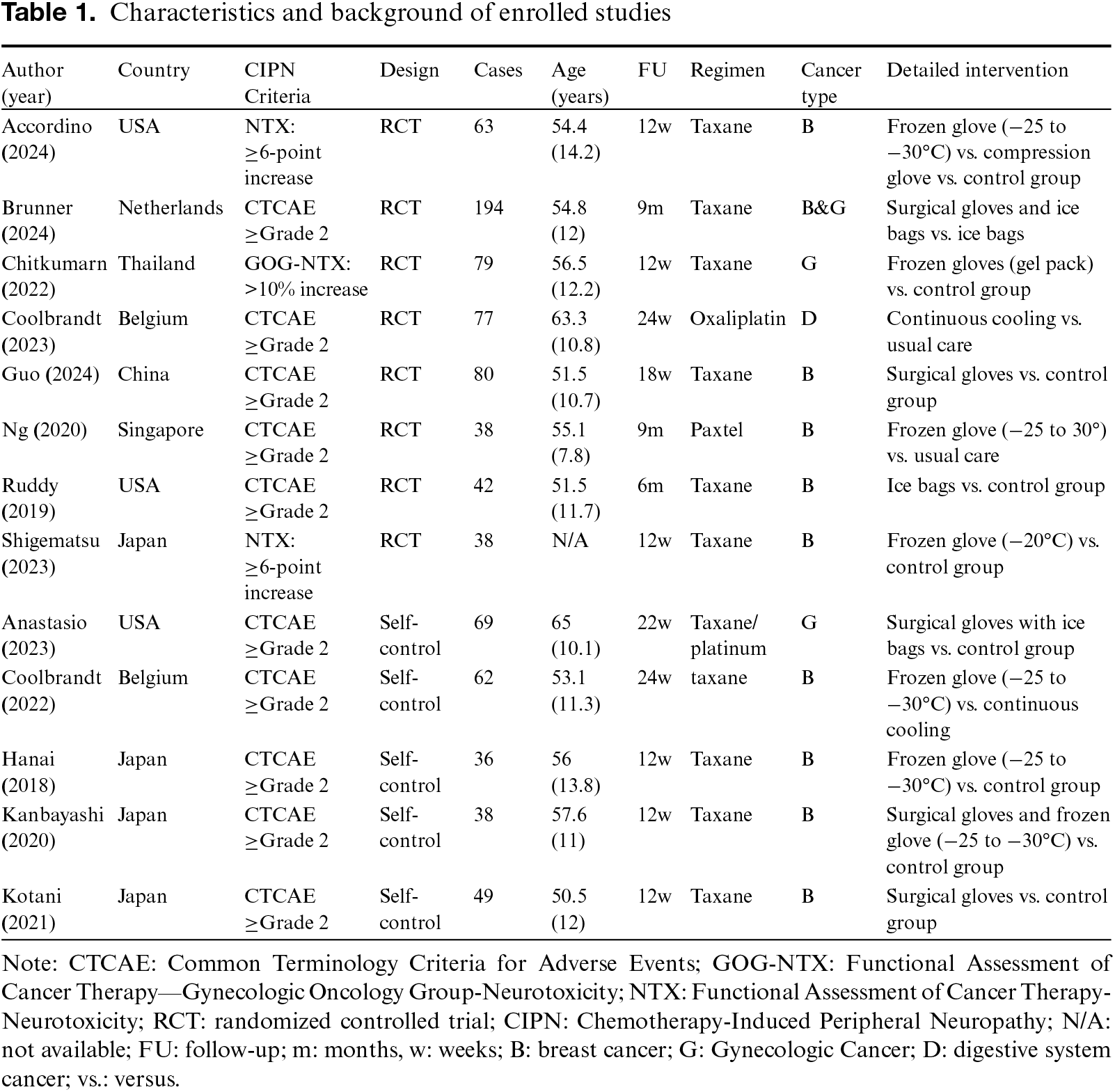
After searching the databases, 815 studies were identified. Subsequently, 95 duplicate records were removed, followed by the exclusion of 604 and 44 articles during the first and second screenings, respectively (Figure S1). Finally, 13 studies comprising 865 patients were included in the NMA to evaluate the efficacy of various interventions in preventing CIPN (Table 1).23-35 These studies were conducted between 2018 and 2024, comprising eight RCTs and five self-controlled trials from multiple countries, including the USA, Japan, Belgium, the Netherlands, China, Thailand, and Singapore. Sample sizes ranged from 36 to 194 participants, with mean ages between 50.5 and 65 years. Most studies focused on taxane-based chemotherapy, while a few involved platinum or oxaliplatin regimens. Cancer types primarily included breast, gynecologic, and digestive cancers. CIPN was assessed using various criteria, including CTCAE ≥Grade 2, NTX ≥6-point increase, and GOG-NTX >10% increase. Follow-up durations ranged from 12 weeks to 9 months. Interventions mainly involved physical cooling methods such as frozen gloves, compression garments, surgical gloves, ice bags, or continuous cooling, with most studies comparing these strategies to usual care as control groups.
Summarized Efficiency in CIPN Prevention
The network graph illustrating studies involving compression, cryotherapy, and cryocompression is presented in Fig. 1A. Seven studies compared cryotherapy with usual care. The direct comparisons are shown in Fig. 2A. Among all interventions, cryotherapy demonstrated the greatest efficacy, with an OR of 0.32 (95% CI: 0.17–0.60), followed by compression therapy with an OR of 0.44 (95% CI: 0.21–0.94), and cryocompression with an OR of 0.53 (95% CI: 0.20–1.43).
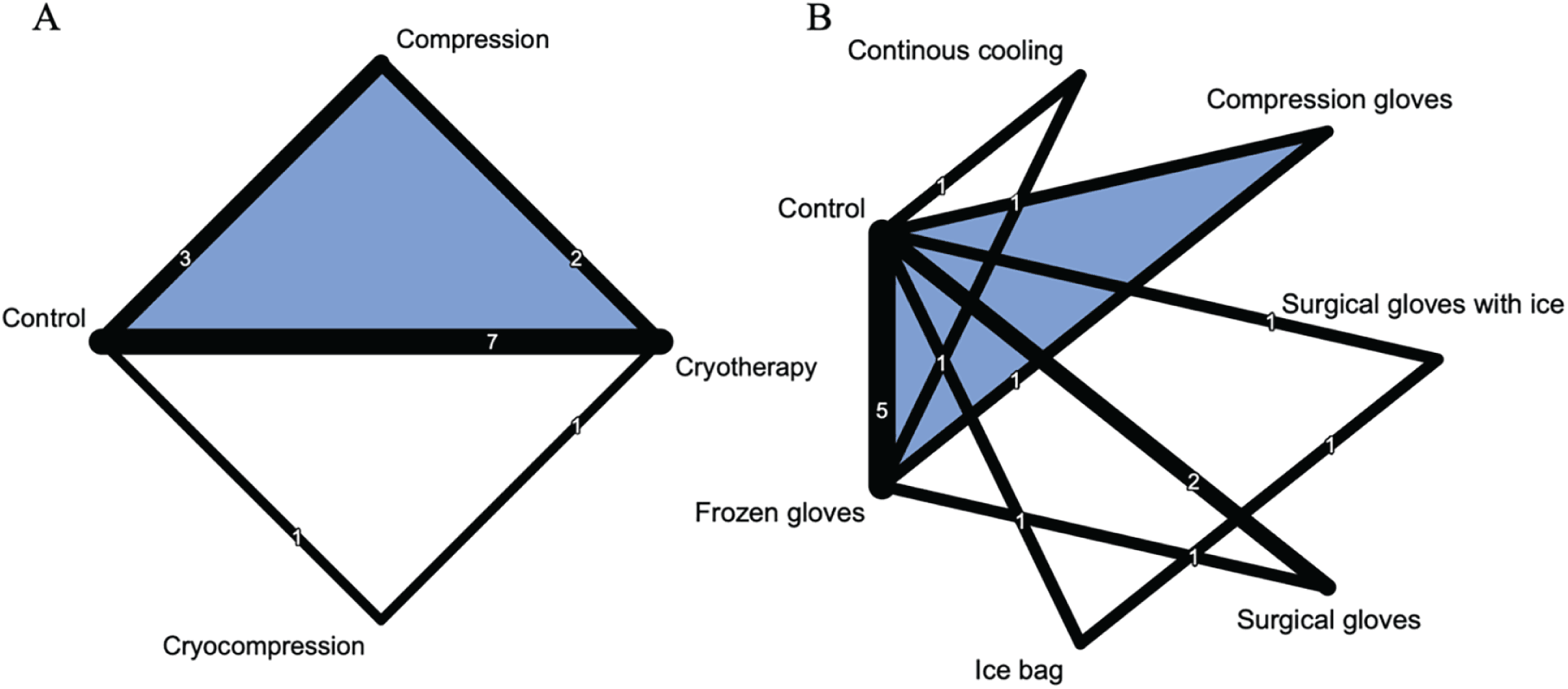
Figure 1. Network graph of enrolled studies. (A) Summary of therapies; (B) detailed description of each therapy.
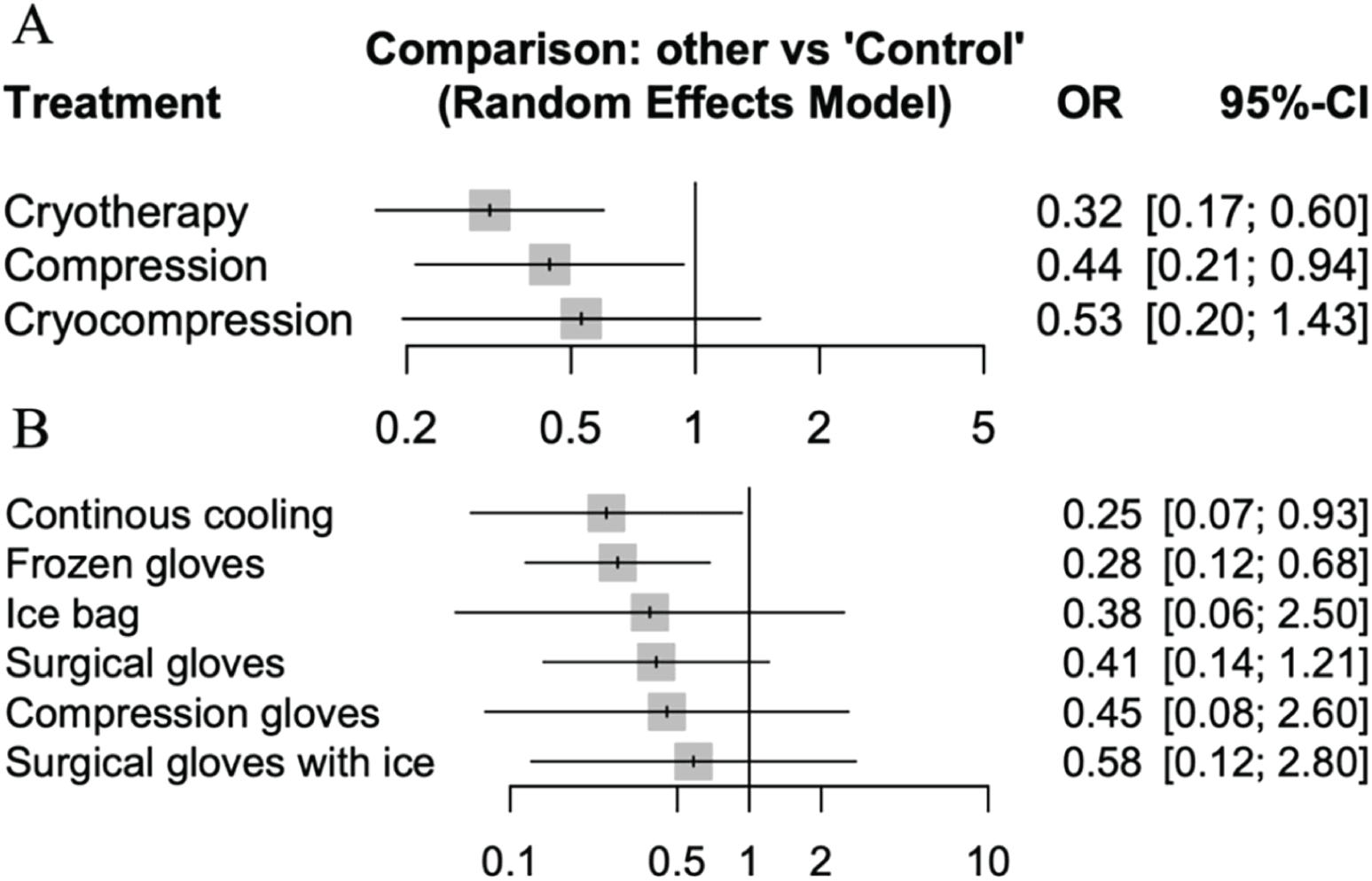
Figure 2. Direct comparisons of interventions vs. control. (A) Summary of therapies; (B) detailed description of each therapy.
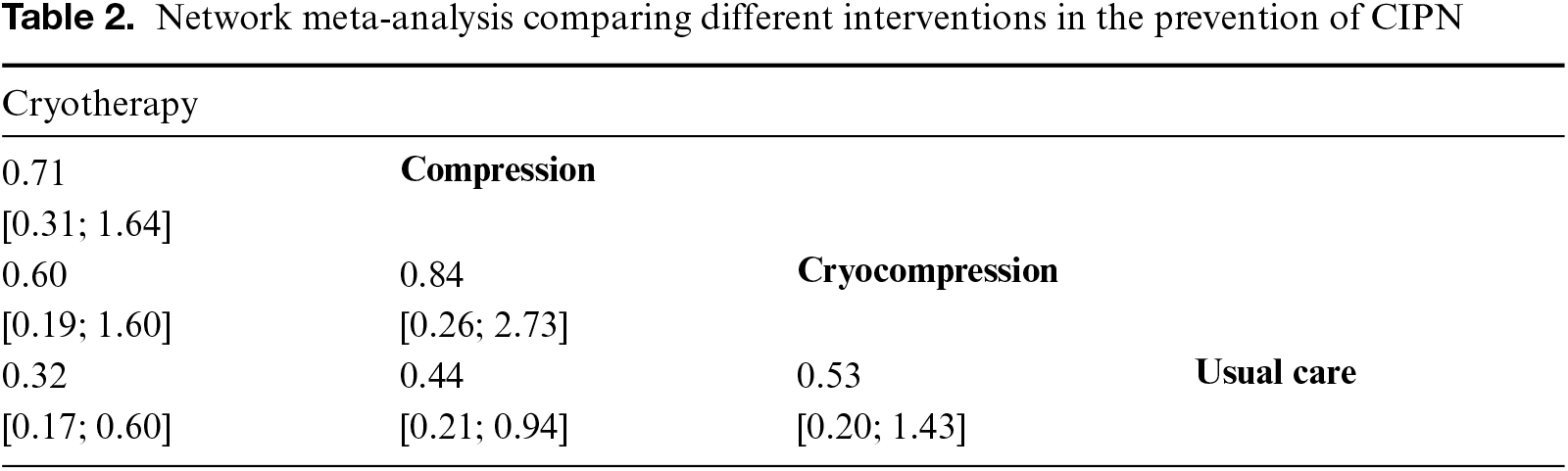
The results of the NMA are summarized in Table 2. Although cryotherapy was not significantly more effective than compression or cryocompression, it was confirmed to be significantly more effective than the placebo. The ranking of treatment efficacy is illustrated in Figure S2. Cryotherapy had the highest probability of being the most effective treatment (SUCRA = 0.873), followed by compression (0.589) and cryocompression (0.498). The control group ranked the lowest (0.039).
Detailed Efficiency in CIPN Prevention
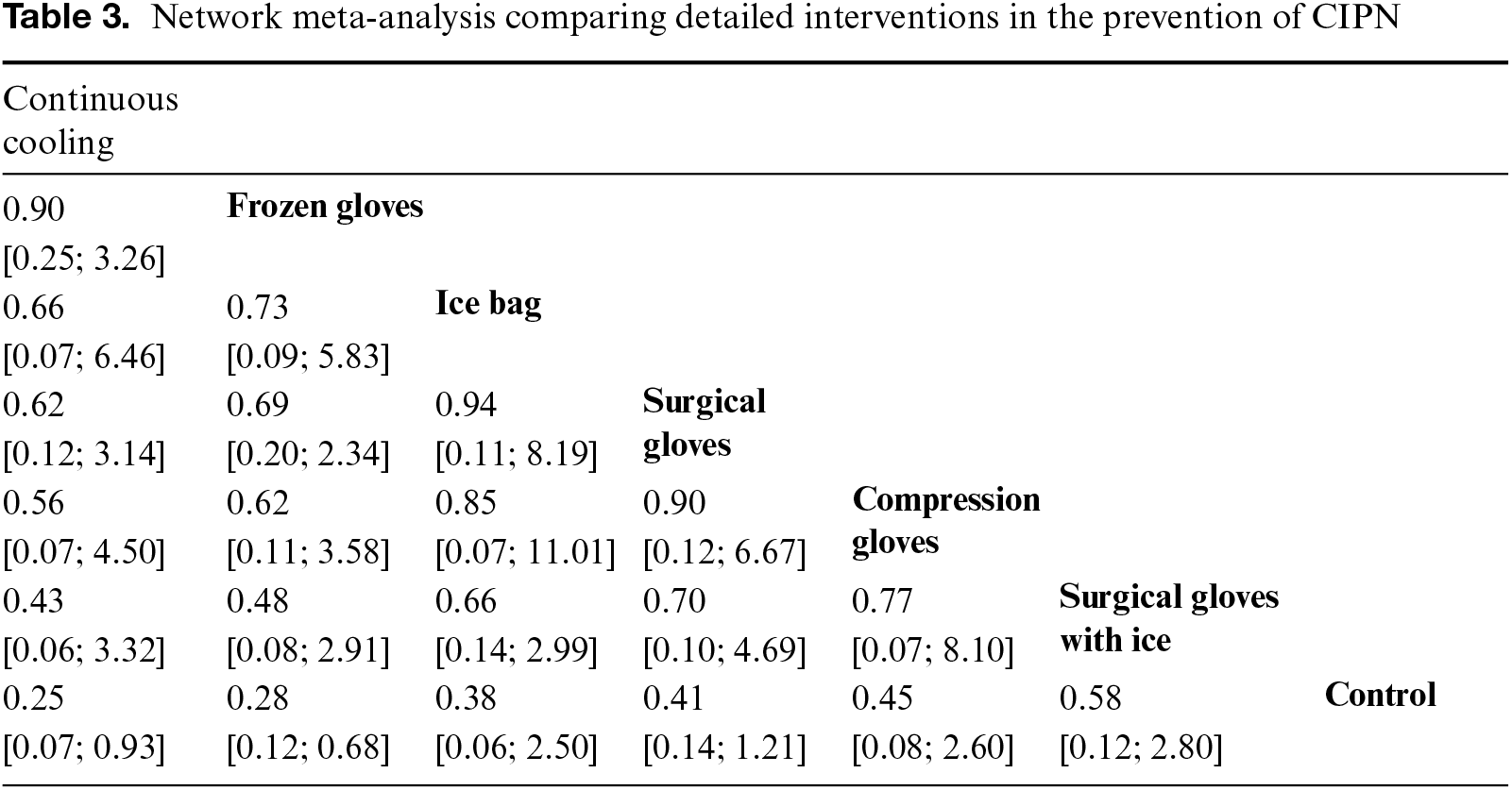
The network graph illustrating studies involving compression, cryotherapy, and cryocompression is presented in Fig. 1B. Five studies compared frozen gloves with usual care, and two studies compared surgical gloves. The direct comparisons are shown in Fig. 2B. Among all interventions, continuous cooling demonstrated the greatest efficacy, with an OR of 0.25 (95% CI: 0.07–0.93), followed by frozen gloves with an OR of 0.28 (95% CI: 0.12–0.68), ice bags with an OR of 0.38 (95% CI: 0.06–2.50), surgical gloves with an OR of 0.41 (95% CI: 0.14–1.21), compression gloves with an OR of 0.45 (95% CI: 0.08–2.60), and surgical gloves with ice bags with an OR of 0.58 (95% CI: 0.12–2.80).
The results of the NMA are summarized in Table 3. Although continuous cooling and frozen gloves did not show statistically significant superiority over other therapies, they were confirmed to be significantly more effective than placebo, as indicated by the previously presented ORs. Treatment efficacy ranking is illustrated in Figure S3. Among the interventions assessed, continuous cooling had the highest SUCRA value (0.734), followed closely by frozen gloves (0.714), suggesting superior efficacy in preventing CIPN. Ice bags (0.554), surgical gloves (0.522), and compression gloves (0.493) showed moderate rankings. Surgical gloves with ice (0.369) were less effective, and the control group had the lowest SUCRA value (0.115).
Sensitivity Analysis of CIPN Prevention
A sensitivity analysis including all RCTs was conducted, with the network graph presented in Figure S4. Four studies compared frozen gloves with usual care. Among all interventions, frozen gloves demonstrated the greatest efficacy, with an OR of 0.22 (95% CI: 0.05–1.06), followed by surgical gloves (OR: 0.29; 95% CI: 0.02–4.42), compression gloves (OR: 0.40; 95% CI: 0.03–5.23), ice bag (OR: 0.48; 95% CI: 0.01–16.47), continuous cooling (OR: 0.50; 95% CI: 0.03–7.40), and surgical gloves with ice bags (OR: 0.78; 95% CI: 0.01–64.72). The results of the NMA are summarized in Table S2. No treatment demonstrated clearly superior efficacy over the others. The ranking of interventions is illustrated in Figure S6. Among the assessed treatments, frozen gloves had the highest SUCRA value (0.705), followed by surgical gloves (0.594), compression gloves (0.543), continuous cooling (0.496), ice bag (0.495), surgical gloves with ice (0.392), and control (0.275).
Bias and Certainty of evidence
The risk of bias is presented in Figure S4. Three studies were assessed as having a low risk of bias, while the remaining five were judged to have some concerns or a high risk of bias. For summarized therapy, no significant inconsistency was found (p = 0.08), and Egger’s test also indicated no bias (p = 0.12). For detailed treatment, significant inconsistency was observed overall (p = 0.01), mainly due to between-design heterogeneity (p = 0.02), while within-design heterogeneity was not significant (p = 0.12). Egger’s test showed no publication bias (p = 0.23). The certainty of evidence assessed by GRADE was low for the suggestion that continuous cooling or frozen gloves are effective, primarily due to the risk of bias and imprecision.
Discussion
This NMA synthesized evidence from 13 studies to compare the effectiveness of cryotherapy, compression therapy, and cryocompression in preventing CIPN. Our findings indicated that cryotherapy, particularly continuous cooling and frozen gloves, demonstrated the highest efficacy in reducing the incidence of CIPN, followed by compression therapy. These findings are consistent with previous meta-analyses that evaluated cryotherapy and compression therapy separately, but our integrated network analysis provides a more comprehensive comparison of various physical interventions.36,37 Notably, the SUCRA values ranked continuous cooling and frozen gloves highest, highlighting their potential as first-line non-pharmacological interventions. A recently published article also confirms this finding.38 This study builds upon earlier research by directly and indirectly comparing and evaluating newer modalities such as cryocompression.
These findings have significant clinical implications, particularly considering the limited effectiveness and adverse effects of pharmacological agents used to prevent CIPN.39 Cryotherapy and compression therapy are simple, cost-effective methods that are generally well tolerated. Although there were concerns about cold sensitivity, especially with oxaliplatin, most patients managed the side effect well, and some even reported a reduction in throat discomfort.40 Hilotherapy, which uses milder cooling around 10°C, is usually better tolerated than traditional cryotherapy, which involves using frozen gloves or ice packs that reach temperatures below −20°C.26 However, practical issues exist, such as limited mobility, difficulty with intravenous insertion due to cold-induced vessel constriction, and the need for multiple glove changes, freezers, and additional nursing support. Patients with Raynaud’s or peripheral vascular disease may not be eligible.41 These logistical demands can affect chemotherapy workflows, as seen with scalp cooling. Although there is a theoretical concern that cooling could create areas for cancer to spread, current evidence does not show higher relapse rates. Given the impact of chemotherapy-induced nerve damage, integrating these nondrug approaches may improve outcomes. Further studies are needed to confirm long-term safety and effectiveness and to standardize treatment protocols.
Although cryocompression combines the effects of both cryotherapy and compression, current evidence does not consistently demonstrate its greater efficacy over either modality used independently. One possible reason is that the simultaneous application of cold and compression may not result in additive benefits; instead, it may alter the physiological response in ways that do not significantly enhance efficacy.42 The small sample size may be another reason cryocompression’s efficacy in preventing CIPN has not been clearly identified. A recent study revealed the potential of cryocompression.43 Variability in protocols across studies, including differences in pressure levels, temperature settings, and application duration, also complicates direct comparisons and may contribute to the absence of clear benefits. Therefore, while cryocompression appears promising in theory, further well-controlled trials are needed to clarify its comparative advantages.
Several limitations should be acknowledged. First, the included studies displayed substantial variation in assessment methods, intervention protocols, dropout rates, and follow-up durations, which may affect the applicability of our findings. Second, definitions of “usual care” differed across studies and were often inadequately described, complicating comparisons between interventions and control groups. Third, some studies exhibited a risk of bias, and the overall certainty of evidence, as evaluated using GRADE, was low, which limits the confidence in our conclusions. Fourth, while we incorporated both randomized controlled trials and self-controlled studies to include as much relevant data as possible, this variation in study design may have introduced inconsistency. Lastly, adverse events and dropout rates were inconsistently reported, precluding a comprehensive summary of safety and treatment adherence.
Conclusion
This NMA suggests that cryotherapy, particularly continuous cooling and frozen gloves, may be among the most effective non-pharmacological options for preventing CIPN; however, the certainty of evidence is low. Compression therapy also showed potential benefit and might be considered when cryotherapy is not feasible. Given the limitations in the current evidence base, these findings should be interpreted with caution. Further high-quality, adequately powered trials are needed to confirm these results and guide clinical implementation.
Acknowledgment
None.
Funding Source
This study was funded by Rosai Aid Research Funds (2024-0012).
Author Contributions
H.C., K.H., and M.K. contributed to the study design, search, quality check, data extraction, and analysis. B.S. worked on data interpretation and revision. All authors have read the manuscript and agree with its content and data.
Data Availability
The datasets are available from the corresponding author upon reasonable request.
Ethical Statement
Institutional Review Board approval was waived due to the nature of the meta-analysis.
Conflict of Interest
The authors report no conflicts of interest in this work.
Supplemental Information
Supplemental information for this article can be found online at https://sup.jclinque.com/api/articles/73/download-suppl.
References
[1] Burgess J, Ferdousi M, Gosal D. Chemotherapy-induced peripheral neuropathy: epidemiology, pathomechanisms and treatment. Oncol Ther. December 2021;9(2):385–450. doi:10.1007/s40487-021-00168-y.
[2] D'Souza RS, Saini C, Hussain N, Javed S, Prokop L, Her YF. Global estimates of prevalence of chronic painful neuropathy among patients with chemotherapy-induced peripheral neuropathy: systematic review and meta-analysis of data from 28 countries, 2000-24. Reg Anesth Pain Med. February 4, 2025;6:rapm-2024-106229. doi:10.1136/rapm-2024-106229.
[3] Lee KT, Bulls HW, Hoogland AI, James BW, Colon-Echevarria CB, Jim HSL. Chemotherapy-induced peripheral neuropathy (CIPN): a narrative review and proposed theoretical model. Cancers (Basel). July 18, 2024;16(14):2571. doi:10.3390/cancers16142571.
[4] Maihöfner C, Diel I, Tesch H, Quandel T, Baron R. Chemotherapy-induced peripheral neuropathy (CIPN): current therapies and topical treatment option with high-concentration capsaicin. Support Care Cancer. August 2021;29(8):4223–4238. doi:10.1007/s00520-021-06042-x.
[5] Bandla A, Sundar R, Liao LD, et al. Hypothermia for preventing chemotherapy-induced neuropathy-a pilot study on safety and tolerability in healthy controls. Acta Oncol. 2016;55(4):430–436. doi:10.3109/0284186x.2015.1075664.
[6] Wang M, Cheng HL, Lopez V, Sundar R, Yorke J, Molassiotis A. Redefining chemotherapy-induced peripheral neuropathy through symptom cluster analysis and patient-reported outcome data over time. BMC Cancer. November 27, 2019;19(1):1151. doi:10.1186/s12885-019-6352-3.
[7] Costa-López B, Ruiz-Robledillo N, Moreno O, et al. Sensory processing sensitivity as a predictor of health-related quality of life outcomes via stress and sleep quality. Sci Rep. September 30, 2024;14(1):22707. doi:10.1038/s41598-024-72657-9.
[8] Mattar M, Umutoni F, Hassan MA, et al. Chemotherapy-induced peripheral neuropathy: a recent update on pathophysiology and treatment. Life. 2024;14(8):991. doi:10.3390/life14080991.
[9] D'Souza RS, Saini C, Hussain N, Javed S, Prokop L, Her YF. Global estimates of prevalence of chronic painful neuropathy among patients with chemotherapy-induced peripheral neuropathy: systematic review and meta-analysis of data from 28 countries, 2000-24. Reg Anes Pain Med. 2025;6:rapm-2024-106229. doi:10.1136/rapm-2024-106229.
[10] Li Y, Lustberg MB, Hu S. Emerging pharmacological and non-pharmacological therapeutics for prevention and treatment of chemotherapy-induced peripheral neuropathy. Cancers (Basel). February 12, 2021;13(4):766. doi:10.3390/cancers13040766.
[11] Colvin LA. Chemotherapy-induced peripheral neuropathy: where are we now? Pain. May 2019;160(Suppl 1):S1–s10. doi:10.1097/j.pain.0000000000001540.
[12] Ibrahim EY, Ehrlich BE. Prevention of chemotherapy-induced peripheral neuropathy: a review of recent findings. Crit Rev Oncol Hematol. January 2020;145(8):102831. doi:10.1016/j.critrevonc.2019.102831.
[13] Zhang X, Wang A, Wang M, Li G, Wei Q. Non-pharmacological therapy for chemotherapy-induced peripheral neurotoxicity: a network meta-analysis of randomized controlled trials. BMC Neurol. December 11, 2023;23(1):433. doi:10.1186/s12883-023-03485-z.
[14] Jia J, Guo Y, Sundar R, Bandla A, Hao Z. Cryotherapy for prevention of taxane-induced peripheral neuropathy: a meta-analysis. Front Oncol. 2021;11:781812. doi:10.3389/fonc.2021.781812.
[15] Wan Z, Huang J, Wang X, Li P. Compression therapy for prevention of chemotherapy-induced peripheral neuropathy: a systematic review and meta-analysis of randomized controlled trials. J Pain Res. 2024;17:4509–4519. doi:10.2147/jpr.S488470.
[16] Elshinnawy AM, Eraky ZS, Abdelaziz SS, Abd-Elrahman NAF. Effect of cold application versus transcutaneous nerve stimulation on chemotherapy induced diabetic peripheral neuropathy post mastectomy. Physiother Res Int. January 2024;29(1):e2051. doi:10.1002/pri.2051.
[17] Xiaoqian Y, Jiwei H, Lizhi Z, et al. A randomized controlled trial: effects of compression therapy combined with exercise on chemotherapy-induced peripheral neuropathy in patients with breast cancer. Cancer Treat Res Commun. 2024;42(1):100871. doi:10.1016/j.ctarc.2025.100871.
[18] Loprinzi CL, Lacchetti C, Bleeker J, et al. Prevention and management of chemotherapy-induced peripheral neuropathy in survivors of adult cancers: ASCO guideline update. J Clin Oncol. October 1, 2020;38(28):3325–3348. doi:10.1200/jco.20.01399.
[19] Wang C, Chen S, Jiang W. Treatment for chemotherapy-induced peripheral neuropathy: a systematic review of randomized control trials. Front Pharmacol. 2022;13:1080888. doi:10.3389/fphar.2022.1080888.
[20] Page MJ, McKenzie JE, Bossuyt PM, et al. The PRISMA, 2020 statement: an updated guideline for reporting systematic reviews. BMJ. March 29, 2021;372:n71. doi:10.1136/bmj.n71.
[21] Hutton B, Salanti G, Caldwell DM, et al. The PRISMA extension statement for reporting of systematic reviews incorporating network meta-analyses of health care interventions: checklist and explanations. Ann Intern Med. June 2, 2015;2(11):777–784. doi:10.7326/m14-2385.
[22] University Medical Information Network. The efficiency of cryo or compression therapy in the prevention of chemotherapy-induced peripheral neuropathy: a systematic review and network meta-analysis. Published May 2025, Accessed May 7 2025. https://center6.umin.ac.jp/cgi-open-bin/ctr_e/ctr_view.cgi?recptno=R000066043.
[23] Accordino MK, Lee S, Leu CS, et al. Randomized adaptive selection trial of cryotherapy, compression therapy, and placebo to prevent taxane-induced peripheral neuropathy in patients with breast cancer. Breast Cancer Res Treat. February 2024;204(1):49–59. doi:10.1007/s10549-023-07172-y.
[24] Brunner C, Emmelheinz M, Egle D, et al. Cropsi study: efficacy and safety of cryotherapy and cryocompression in the prevention of chemotherapy-induced peripheral neuropathy in patients with breast and gynecological cancer-A prospective, randomized trial. Breast. August 2024;76(3):103763. doi:10.1016/j.breast.2024.103763.
[25] Chitkumarn P, Rahong T, Achariyapota V. Efficacy of Siriraj, in-house-developed, frozen gloves for cold therapy reduction of chemotherapy-induced peripheral neuropathy in gynecological cancer patients: randomized controlled trial. Support Care Cancer. June 2022;30(6):4835–4843. doi:10.1007/s00520-022-06890-1.
[26] Coolbrandt A, Tobback H, Govaerts R, et al. A randomized controlled trial of hand/foot-cooling by hilotherapy to prevent oxaliplatin-related peripheral neuropathy in patients with malignancies of the digestive system. ESMO Open. April 2023;8(2):101205. doi:10.1016/j.esmoop.2023.101205.
[27] Dongxue G, Ran L, Fangfei Z, Zirui Z, Lizhi Z. Therapeutic effects of compression therapy on taxane-induced peripheral neuropathy incidence, negative emotions, and sleep disorders in patients with breast cancer. Support Care Cancer. April 2, 2024;32(4):260. doi:10.1007/s00520-024-08461-y.
[28] Ng DQ, Tan CJ, Soh BC, et al. Impact of cryotherapy on sensory, motor, and autonomic neuropathy in breast cancer patients receiving paclitaxel: a randomized, controlled trial. Front Neurol. 2020;11:604688. doi:10.3389/fneur.2020.604688.
[29] Ruddy KJ, Le-Rademacher J, Lacouture ME, et al. Randomized controlled trial of cryotherapy to prevent paclitaxel-induced peripheral neuropathy (RU221511I); an ACCRU trial. Breast. December 2019;48(18):89–97. doi:10.1016/j.breast.2019.09.011.
[30] Shigematsu H, Hirata T, Nishina M, Yasui D, Ozaki S. Cryotherapy for the prevention of weekly paclitaxel-induced peripheral adverse events in breast cancer patients. Support Care Cancer. October 2020;28(10):5005–5011. doi:10.1007/s00520-020-05345-9.
[31] Anastasio MK, Unnithan S, Scott A, et al. Cryocompression to reduce peripheral neuropathy in gynecologic cancer: a randomized controlled trial. Obstet Gynecol. December 1, 2023;142(6):1459–1467. doi:10.1097/aog.0000000000005419.
[32] Coolbrandt A, Vancoille K, Dejaeger E, et al. Preventing taxane-related peripheral neuropathy, pain and nail toxicity: a prospective self-controlled trial comparing hilotherapy with frozen gloves in early breast cancer. Breast Cancer Res Treat. April 2022;192(2):293–301. doi:10.1007/s10549-021-06477-0.
[33] Hanai A, Ishiguro H, Sozu T, et al. Effects of cryotherapy on objective and subjective symptoms of paclitaxel-induced neuropathy: prospective self-controlled trial. J Natl Cancer Inst. February 1, 2018;110(2):141–148. doi:10.1093/jnci/djx178.
[34] Kanbayashi Y, Sakaguchi K, Ishikawa T, et al. Comparison of the efficacy of cryotherapy and compression therapy for preventing nanoparticle albumin-bound paclitaxel-induced peripheral neuropathy: a prospective self-controlled trial. Breast. February 2020;49(5):219–224. doi:10.1016/j.breast.2019.12.011.
[35] Kotani H, Terada M, Mori M, et al. Compression therapy using surgical gloves does not prevent paclitaxel-induced peripheral neuropathy: results from a double-blind phase 2 trial. BMC Cancer. May 13, 2021;21(1):548. doi:10.1186/s12885-021-08240-6.
[36] Wu H, Jin Y, Song J, Gao X. Effect of frozen gloves on chemotherapy-induced neurotoxicity in breast cancer patients: a systematic review and meta-analysis. Front Oncol. 2024;14:1366782. doi:10.3389/fonc.2024.1366782.
[37] Crichton M, Yates PM, Agbejule OA, Spooner A, Chan RJ, Hart NH. Non-Pharmacological self-management strategies for chemotherapy-induced peripheral neuropathy in people with advanced cancer: a systematic review and meta-analysis. Nutrients. June 9, 2022;14(12):2403. doi:10.3390/nu14122403.
[38] Michel LL, Schwarz D, Romar P, et al. Efficacy of hand cooling and compression in preventing taxane-induced neuropathy: the POLAR randomized clinical trial. JAMA Oncol. April 1, 2025;11(4):408–415. doi:10.1001/jamaoncol.2025.0001.
[39] Mezzanotte JN, Grimm M, Shinde NV, et al. Updates in the treatment of chemotherapy-induced peripheral neuropathy. Curr Treat Options Oncol. January 2022;23(1):29–42. doi:10.1007/s11864-021-00926-0.
[40] Hsu HT, Wu LM, Lin PC, et al. Emotional distress and quality of life during folinic acid, fluorouracil, and oxaliplatin in colorectal cancer patients with and without chemotherapy-induced peripheral neuropathy: a cross-sectional study. Medicine (Baltimore). February 2020;99(6):e19029. doi:10.1097/md.0000000000019029.
[41] Yanes D, Sawaya J, Wanner M, Avram M. Predicting negative outcomes of cryolipolysis in patients with and without raynaud disease. Dermatol Surg. May 1, 2021;47(5):675–677. doi:10.1097/dss.0000000000002925.
[42] Tveita T, Sieck GC. Physiological impact of hypothermia: the good, the bad, and the ugly. Physiology (Bethesda). March 1, 2022;37(2):69–87. doi:10.1152/physiol.00025.2021.
[43] Bandla A, Wong R, Santhanakrishnan P, et al. Safety and feasibility of concomitant scalp cooling and limb cryocompression to prevent paclitaxel-induced alopecia and neuropathy. Support Care Cancer. February 12, 2025;33(3):180. doi:10.1007/s00520-024-08982-6.
 |
Copyright: © 2025 Chen et al. This work is licensed under a Creative Commons Attribution 4.0 International License, which permits unrestricted use, distribution, and reproduction in any medium, provided the original work is properly cited. |