| Journal of Clinical Question. 2026; 3(3): e117 https://doi.org/10.69854/jcq.2026.0018 Advance access publication date 04 June 2026 |
 |
Case Report
Survival Following a Fentanyl-Related Mass Casualty Event: A Case Report
Katelynne Au, Reggie Fan , Alyssa Leo, Gary Chu*
California Northstate University College of Medicine, Elk Grove, CA, USA.
*Corresponding Author: e-mail: Gary.Chu@cnsu.edu
Submitted: March 30, 2026 Accepted: June 03, 2026
Clinical Question Box
What should clinicians recognize when a patient presents after suspected cocaine use with altered mental status or prolonged unconsciousness?
Clinicians should consider polysubstance toxicity rather than attributing the presentation solely to cocaine. Mixed stimulant-opioid exposure may produce overlapping or conflicting toxidromes combining opioid-related central nervous system depression and immobilization with stimulant-associated hypertension, vasospasm, and stroke risk. Patients should be promptly evaluated for multisystem complications, including rhabdomyolysis, acute kidney injury, compartment syndrome, aspiration, and cerebrovascular injury.
Abstract
Opioid contamination of recreational substances has become a significant contributor to overdose-related morbidity and mortality in the United States. The co-use of opioids and stimulants produces a mixed toxidrome combining opioid-induced central nervous system depression and immobilization with stimulant-associated vasospastic and prothrombotic effects. We report a survivor of an overdose event in which multiple individuals unknowingly used fentanyl-contaminated cocaine at a social gathering. Two individuals were found deceased at the scene, while a 53-year-old man was found unresponsive but survived, likely due to positional airway protection. On presentation, he was hypertensive and confused, with significant right-sided soft tissue swelling. Urine analysis was positive for cocaine and fentanyl. Laboratory evaluation revealed markedly elevated creatine kinase levels, and imaging demonstrated an acute small-vessel infarct in the left corona radiata. The patient’s course was complicated by severe rhabdomyolysis and acute kidney injury requiring emergent dialysis, with concern for compartment syndrome. This case highlights the diagnostic complexity of mixed stimulant-opioid exposure and demonstrates how prolonged immobilization, positional airway protection, and delayed recognition of mixed toxidromes can influence survival outcomes following polysubstance overdose.
Keywords: Fentanyl contamination, cocaine, mixed toxidrome, stimulant-opioid co-use, case report
Introduction
Fentanyl is a synthetic opioid used in the setting of anesthesia and severe, chronic pain relief. Its illicit use has increased significantly in the last two decades, along with the number of drug overdose deaths seen in the United States.1,2 Illicit fentanyl analogs, historically referred to as “China White,” first emerged in U.S. heroin markets during the 1980s, with recorded fatalities occurring shortly after.3 Although not all of these substances originated from China, the term became associated with illicit fentanyl products distributed outside of medical settings. Since 2013, overdose deaths involving illicitly manufactured fentanyl have risen sharply as fentanyl and fentanyl analogs increasingly entered the U.S. illicit drug supply through international trafficking networks.4 This trend became apparent in California in 2016, when Sacramento County experienced a marked increase in fentanyl-related overdoses associated with counterfeit opioid tablets, including tablets sold as Norco and oxycodone; UC Davis Medical Center reported multiple severe overdose cases during the regional outbreak.5 Because fentanyl is highly lipophilic, it is rapidly absorbed in the body but slowly excreted, allowing it to act quickly and remain active for long periods of time.6
Cocaine is a stimulant that is a major source of abuse in the United States and worldwide. It works by inhibiting the reuptake of the monoamines dopamine, norepinephrine, and serotonin, causing euphoria and a high addictive potential.7 Common routes of use include inhalation, intranasal use, and intravenous injection, with effects that can occur rapidly depending on the route of administration. The main concern with cocaine intoxication and overdose is its potent sympathomimetic effects, including severe tachyarrhythmias, hypertension, and increased risk for stroke.8 Fentanyl contamination of non-opioid recreational substances has become increasingly reported, particularly in stimulant supplies like cocaine. Such contamination leads to unintentional overdoses, particularly in users who lack tolerance to opioids.9 Although unintentional fentanyl exposure is more commonly associated with counterfeit opioid tablets, increasing reports have demonstrated fentanyl contamination in stimulant supplies, including cocaine, placing recreational and opioid-naïve users at increased risk for fatal overdose.10
In this context, patients presenting with unintentional or purposeful co-use of fentanyl and cocaine prompt urgent care, as this combination is a major driver of stimulant-related overdoses and subsequent mortalities in the United States.11 This combination produces a mixed toxidrome in which stimulant-induced vasospastic and prothrombotic effects may occur alongside opioid-induced central nervous system depression and prolonged immobilization. Together, these overlapping mechanisms increase the risk for multisystem complications and obscure diagnosis. The present account describes a survivor of an overdose event involving suspected fentanyl-contaminated cocaine use at a social event, resulting in two fatalities.
Case Report
A 53-year-old man was found unresponsive for an unknown period of time by Emergency Medical Services (EMS) after an overdose event involving multiple individuals. He was found in a home with two other deceased individuals and was subsequently brought to the intensive care unit. Past medical history was notable for hypertension, bipolar disorder, hyperlipidemia, obesity, and chronic knee pain controlled with Norco, Tylenol, and ibuprofen. After being discovered by EMS, the patient admitted to recreational use of cocaine during the previous night’s social gathering, where multiple individuals reportedly purchased and used what they believed to be cocaine from a street vendor. The patient denied any intention to use fentanyl or additional pain medications, suggesting a possible unintentional opioid exposure through an adulterated stimulant supply. He also denied any suicidal or homicidal ideation. On admission, however, the patient had difficulty providing a clear history. He could not recall how long he was incapacitated, but reported right neck and shoulder pain and difficulty hearing.
Upon presentation, the patient was afebrile (36.7°C) with a pulse of 89 beats/minute, blood pressure of 183/122 mmHg, respiratory rate of 15 breaths/minute, and an oxygen saturation of 100% on room air. Physical exam revealed an ill-appearing, confused man with chemosis and a right-sided induration of the neck. His right shoulder was swollen and tense, with scattered areas of patchy erythema and tenderness to minimal palpation (Fig. 1). Neurological exam demonstrated no gross motor or sensory deficits bilaterally, and both radial pulses remained palpable. No cardiovascular or pulmonary abnormalities were noted.
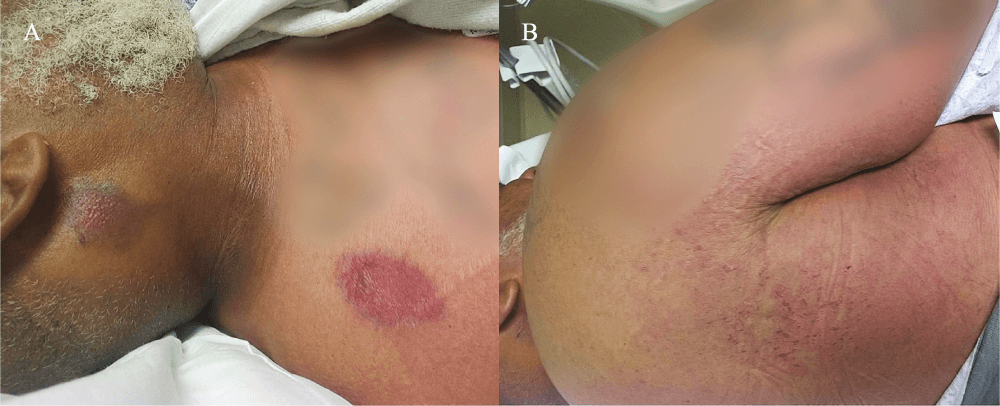
Figure 1. Pressure-related skin changes after suspected fentanyl-contaminated cocaine overdose (A) Right shoulder and neck swelling with patchy erythema; (B) back pressure-related erythema and skin changes.
Laboratory studies on admission were notable for a potassium level of 6.9 mmol/L, blood urea nitrogen of 39 mg/dL, creatinine of 5.22 mg/dL, and a markedly elevated creatine kinase (CK) of 153,500 U/L (Table 1 and Fig. 2). Liver enzymes were also elevated, with an alanine aminotransferase of 513 U/L and aspartate aminotransferase of 876 U/L. The white blood cell count was 11.6 × 10³/µL, hemoglobin was 18 g/dL, and platelet count was 292 × 103/µL. Serum acetaminophen, ethanol, and salicylate levels were negative. A standard urine drug screen returned positive for cocaine, fentanyl, and tetrahydrocannabinol.
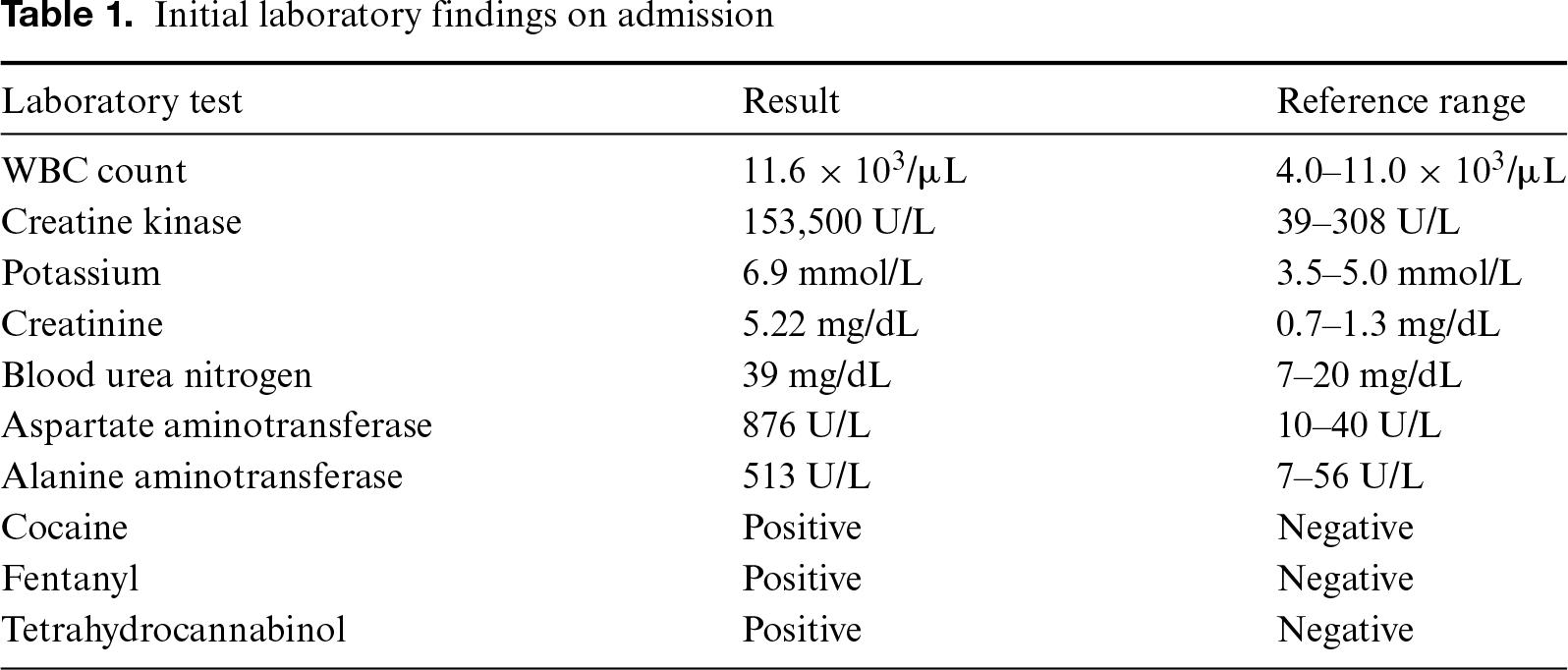
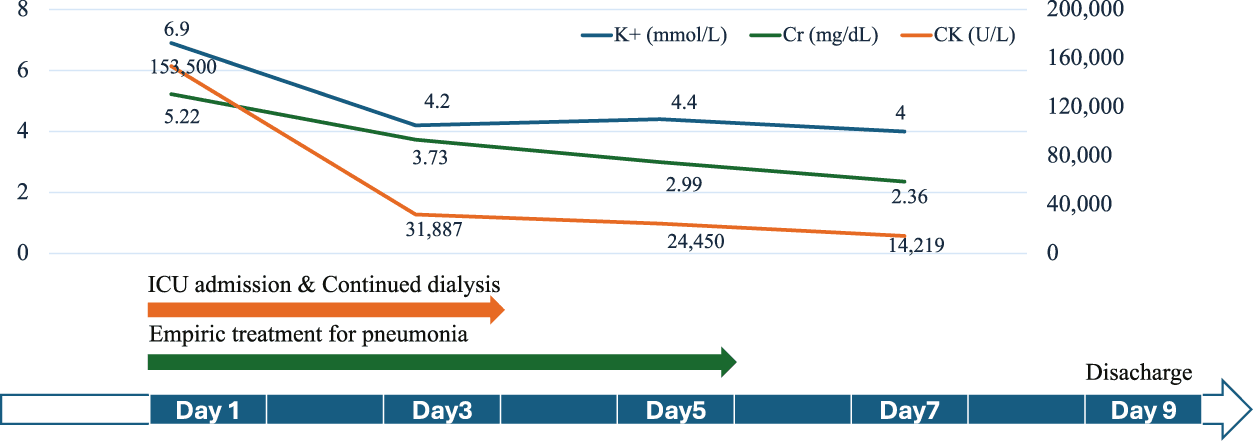
Figure 2. Clinical timeline showing changes in creatine kinase and creatinine levels during hospitalization CK: creatine kinase; Cr: creatinine; ICU: Intensive care unit.
Initial computed tomography (CT) of the head was nonacute; CT of the neck showed no C-spine fracture or subluxation. Right upper extremity x-rays were negative for acute bone injury. CT of the chest, abdomen, and pelvis demonstrated subcutaneous and intramuscular edema or myositis involving the patient’s right shoulder and right upper back musculature (Fig. 3). Micronodular opacities were found in the upper lobe of the right lung and nonspecific, mild subcutaneous edema was seen adjacent to the right buttock. Additionally, the patient was found to have mild urinary bladder thickening and a hyperattenuating material within the lumen of the stomach. Magnetic resonance imaging (MRI) of the brain without contrast revealed an acute small-vessel infarct in the left corona radiata, with follow-up CT performed (Fig. 4). No suspicious white matter signals or abnormalities were noted.
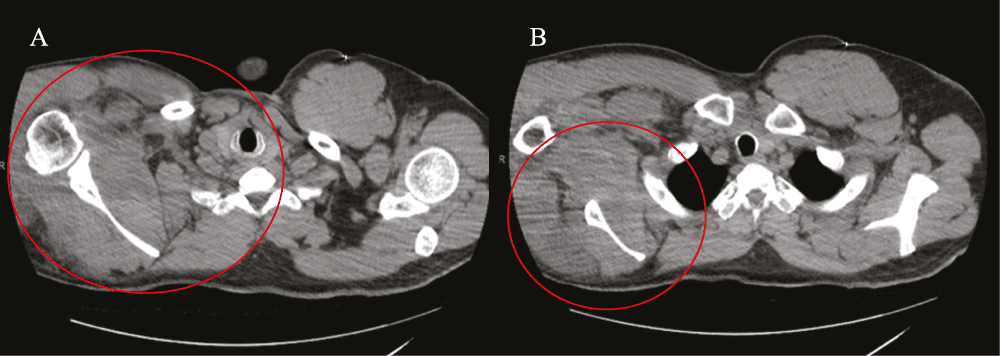
Figure 3. CT findings of pressure-related soft tissue injury (A) Right shoulder soft tissue and intramuscular edema; (B) upper back soft tissue and intramuscular edema.
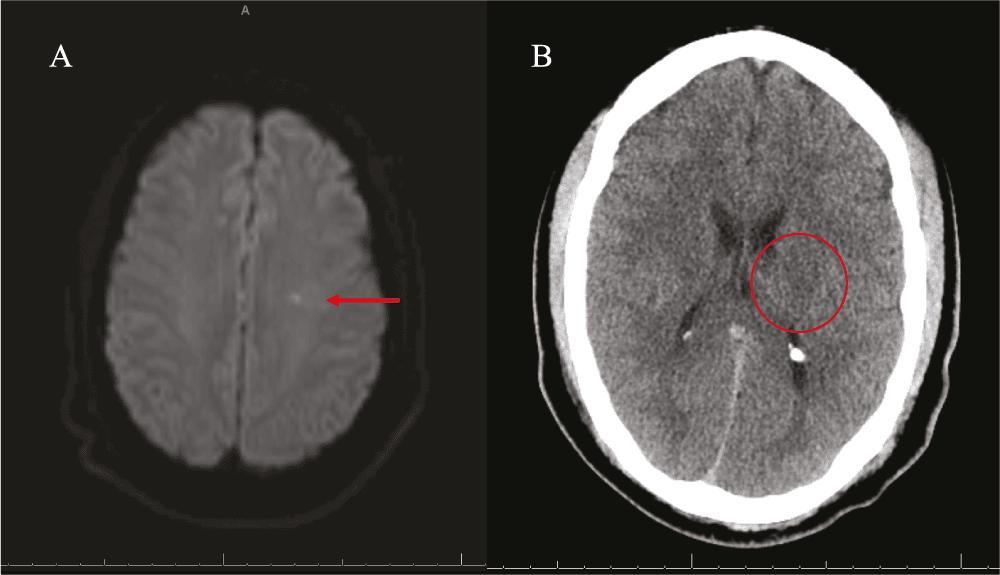
Figure 4. MRI and CT findings of acute small-vessel infarct (A) Magnetic resonance imaging shows a small acute infarct; (B) computed tomography shows subtle corresponding hypodensity.
Based on these investigations, the initial assessment and plan were to address the massively elevated CK levels and acute tubular necrosis secondary to rhabdomyolysis. The patient was sent for emergent dialysis and referred to orthopedics to rule out compartment syndrome, due to a history of prolonged unconsciousness post-overdose. With the patient’s prolonged lateral positioning while unresponsive, the injury was suspected to be secondary to pressure-induced rhabdomyolysis and immobilization. Other concerns, including hypertensive emergency, abnormal liver function tests, lung abnormalities concerning for aspiration or community-acquired pneumonia, and stomach opacity, were likely secondary to rhabdomyolysis and cocaine overdose, and continued to be monitored.
After ruling out compartment syndrome and determining the stroke was likely secondary to drug overdose, the patient continued dialysis and empiric treatment for pneumonia in the hospital. By Day 3 of dialysis, the patient was downgraded to telemetry. By Day 5, the patient had completed a 5-day course of treatment for pneumonia. After 9 days, consultation with nephrology determined the patient’s CK levels were continuing to drop and that kidney function had returned to adequate ranges for discharge back to his home (Fig. 2). The patient was discharged after a 9-day hospital course. Post-discharge, the patient was scheduled to follow up with nephrology in 7 days.
Discussion
Mixed stimulant–opioid overdose is an increasingly prevalent clinical presentation associated with significant multisystem complications.12 Opioid contamination of cocaine introduces an often unrecognized risk, particularly among opioid-naïve individuals, in whom unexpected opioid exposure may worsen clinical outcomes.13 This case is notable because multiple individuals reportedly used what they believed to be cocaine at a social gathering, resulting in two fatalities and one survivor. More importantly, this case highlights the diagnostic complexity of polysubstance exposure involving both stimulant and opioid toxicity, particularly when patients present with overlapping or conflicting toxidromes.
Recent reports have similarly described overdoses occurring in party or social settings in which individuals unknowingly use fentanyl-contaminated stimulants, particularly cocaine.14–16 Such scenarios may delay recognition of opioid toxicity, especially among opioid-naïve individuals who do not anticipate fentanyl exposure after recreational stimulant use.17 Clinically, these presentations can be misleading because patients may exhibit overlapping or atypical findings that do not fit a single expected toxidrome. A reported history of cocaine use should therefore not exclude concurrent opioid exposure, particularly given the increasing recognition of opioid contamination in stimulant supplies. Additionally, patient-reported substance histories may be incomplete or inaccurate because of impaired recall, stigma, uncertainty regarding the composition of illicit substances, or reluctance to disclose opioid use. Clinicians should therefore maintain a broad differential diagnosis and avoid anchoring on a single reported exposure. A normal respiratory rate or oxygen saturation at presentation does not rule out prior opioid toxicity, especially in patients who have partially recovered before medical evaluation.
An important limitation of this case is that confirmatory toxicologic testing beyond standard hospital urine drug screening was not available. Although fentanyl and cocaine were detected, the possibility of additional adulterants, including fentanyl analogs, nitazenes, synthetic opioids, or other contaminants, cannot be excluded.18 Contemporary illicit stimulant supplies may contain multiple substances not routinely identified on standard toxicology screening panels. Consequently, the patient’s presentation may reflect broader polysubstance exposure rather than fentanyl contamination alone.
The combined effects of cocaine and opioids may produce parallel mechanisms of injury. Cocaine is a potent sympathomimetic that promotes hypertension, vasospasm, endothelial injury, platelet activation, and a prothrombotic state, thereby increasing the risk of cerebrovascular events.7,19,20 In contrast, fentanyl produces central nervous system and respiratory depression, which can result in loss of consciousness, prolonged unresponsiveness, and immobilization.21 Together, these effects create a dual-pathway mechanism in which opioid-induced immobilization and stimulant-induced vascular pathology may act simultaneously.
One of the most significant complications observed in this patient was severe rhabdomyolysis with subsequent acute kidney injury requiring dialysis. Prolonged immobilization is a well-established cause of muscle ischemia and necrosis, particularly in patients found unconscious for an unknown duration.22 Sustained pressure on dependent muscle groups leads to myocyte breakdown, release of intracellular contents such as CK and myoglobin, and subsequent renal tubular injury.23 Additionally, stimulant exposure itself may worsen muscle injury through increased muscular activity, vasoconstriction, hyperthermia, and metabolic stress. In this patient, the combined effects of prolonged immobilization and stimulant-associated muscle toxicity likely contributed to the severity of rhabdomyolysis.24 His prolonged lateral positioning while unconscious may have paradoxically contributed to both survival and injury. While lateral positioning may have provided partial airway protection and reduced the likelihood of fatal respiratory compromise, prolonged pressure on the dependent extremity likely contributed to severe unilateral soft tissue injury, rhabdomyolysis, and renal failure. These effects may be further exacerbated by dehydration, vasoconstriction, and direct myotoxicity in the setting of unknown polysubstance use, emphasizing the importance of early recognition and prompt management.24
Neurologic complications may also be overlooked in overdose presentations. In this case, MRI revealed an acute small-vessel infarct, which may be explained by cocaine-associated ischemic stroke. Because altered mental status in overdose patients is often attributed solely to opioid-induced central nervous system depression, focal neurologic pathology may be missed or recognized late.25 This underscores the importance of comprehensive neurologic evaluation in patients with suspected cocaine exposure, unexplained deficits, or atypical recovery patterns.
In addition to rhabdomyolysis, clinicians should maintain a high index of suspicion for compartment syndrome in patients with prolonged immobilization. In this case, unilateral swelling, tension, and tenderness raised concern for evolving compartment syndrome. Early orthopedic consultation is critical when suspicion arises, as delayed diagnosis can result in irreversible neuromuscular damage or limb loss.
This case highlights the importance of avoiding anchoring bias in patients with suspected recreational drug exposure. It would have been easy to attribute this patient’s presentation solely to stimulant intoxication, thereby missing the contribution of opioid-induced immobilization and its associated complications. More broadly, the case reflects an evolving public health concern in which fentanyl contamination of non-opioid substances places individuals at risk for unexpected and severe outcomes. Increased awareness of this phenomenon is essential to support harm-reduction strategies, including expanded naloxone access, education for stimulant users, and broader recognition of fentanyl exposure risk in social or recreational settings.
Conclusion
This case highlights the severe and often underrecognized consequences of mixed stimulant–opioid exposure from fentanyl-contaminated cocaine. Occurring during an overdose event involving multiple unsuspecting individuals and several fatalities, it illustrates how patients may present with overlapping or atypical clinical features rather than a single predictable toxidrome. Clinicians should maintain a high index of suspicion for polysubstance exposure, avoid anchoring on a single agent, and promptly evaluate for multisystem complications. This case also underscores the potential impact of positioning during overdose-related unconsciousness: prolonged immobilization may contribute to rhabdomyolysis and pressure injury, whereas lateral positioning may help preserve airway patency. More broadly, the case reflects the evolving public health threat of fentanyl contamination in non-opioid substances and reinforces the importance of early intervention, careful clinical assessment, and harm-reduction strategies.
Acknowledgment
We thank the patient for consenting to publication and for their support in the preparation of this case report.
Funding Source
None.
Author Contributions
K.A. and R.F. were responsible for data interpretation and drafting of the original manuscript. A.L. contributed to the literature search, manuscript review, and proofreading. G.C. served as project coordinator and contributed to manuscript revision, proofreading, and overall supervision of the project. All authors have read and approved the final manuscript and agree with its content and data.
Data Availability Statement
The datasets used in the current study are available from the corresponding author upon reasonable request.
Generative AI Declaration
During the preparation of this manuscript, the authors used OpenAI to assist with proofreading and image editing to blur identifying body markings for patient confidentiality. All content was subsequently reviewed and edited by the authors, who assume full responsibility for the accuracy and integrity of the published work.
Ethical Statement
The patient provided written informed consent for the publication of this case report. Identifying information has been omitted to protect patient confidentiality.
Conflict of Interest
The authors report no conflicts of interest in this work.
Supplemental Information
Supplemental information for this article can be found online at https://sup.jclinque.com/api/articles/117/download-suppl.
References
[1] Palamar JJ, Fitzgerald N, Carr TH, Cottler LB, Ciccarone D. National and regional trends in fentanyl seizures in the United States, 2017–2023. Int J Drug Policy. 2025;138:104417. doi:10.1016/j.drugpo.2024.104417.
[2] Britch SC, Walsh SL. Treatment of opioid overdose: current approaches and recent advances. Psychopharmacol (Berl). 2022;239(7):2063–2081. doi:10.1007/s00213-022-06125-5.
[3] Martin M, Hecker J, Clark R, et al. China White epidemic: an eastern United States emergency department experience. Ann Emerg Med. 1991;20(2):158–164. doi:10.1016/s0196-0644(05)81216-8.
[4] Ciccarone D. The rise of illicit fentanyls, stimulants and the fourth wave of the opioid overdose crisis. Curr Opin Psychiatry. 2021;34(4):344–350. doi:10.1097/yco.0000000000000717.
[5] Sutter ME, Gerona RR, Davis MT, et al. Fatal Fentanyl: One pill can kill. Acad Emerg Med. 2017;24(1):106–113. doi:10.1111/acem.13034.
[6] Bird HE, Huhn AS, Dunn KE. Fentanyl absorption, distribution, metabolism, and excretion: narrative review and clinical significance related to illicitly manufactured fentanyl. J Addict Med. 2023;17(5):503–508. doi:10.1097/adm.0000000000001185.
[7] Roque Bravo R, Faria AC, Brito-da-Costa AM, et al. Cocaine: an updated overview on chemistry, detection, biokinetics, and pharmacotoxicological aspects including abuse pattern. Toxins (Basel). 2022;14(4):278 (In Eng). doi:10.3390/toxins14040278.
[8] Richards JR, Le JK. Cocaine toxicity. In StatPearls. Treasure Island (FL): StatPearls Publishing. Copyright © 2026, StatPearls Publishing LLC.; 2026.
[9] Kelly PJA, Vento SA, Green TC, et al. Self-reported pathways through which illicitly manufactured fentanyl enters the stimulant supply: novel insights from people incarcerated for drug manufacturing and distribution. SSM-Qual Res Health. 2025;7:100568. doi:10.1016/j.ssmqr.2025.100568.
[10] O'Donnell J, Tanz LJ, Miller KD, et al. Drug overdose deaths with evidence of counterfeit pill use-United States, July 2019–December 2021. MMWR Morb Mortal Wkly Rep. 2023;72(35):949–956. (In Eng). doi:10.15585/mmwr.mm7235a3.
[11] Tanz LJ, Miller KD, Dinwiddie AT, et al. Drug overdose deaths involving stimulants-United States, January 2018–June 2024. MMWR Morb Mortal Wkly Rep. 2025;74(32):491–499. doi:10.15585/mmwr.mm7432a1.
[12] Palis H, Xavier C, Dobrer S, et al. Concurrent use of opioids and stimulants and risk of fatal overdose: a cohort study. BMC Public Health. 2022;22(1):2084. (In Eng). doi:10.1186/s12889-022-14506-w.
[13] Mariano V, Berk J. “Coke in the Dope”: the underrecognized complications of a cocaine-adulterated fentanyl supply. J Addict Med. 2024;18(5):471–473. (In Eng). doi:10.1097/adm.0000000000001319.
[14] Armenian P, Whitman JD, Badea A, et al. Notes from the field: unintentional fentanyl overdoses among persons who thought they were snorting Cocaine-Fresno, California, January 7, 2019. MMWR Morb Mortal Wkly Rep. 2019;68(31):687–688. (In Eng). doi:10.15585/mmwr.mm6831a2.
[15] LaRue L, Twillman RK, Dawson E, et al. Rate of fentanyl positivity among urine drug test results positive for cocaine or methamphetamine. JAMA Netw Open. 2019;2(4):e192851. (In Eng). doi:10.1001/jamanetworkopen.2019.2851.
[16] Wagner KD, Fiuty P, Page K, et al. Prevalence of fentanyl in methamphetamine and cocaine samples collected by community-based drug checking services. Drug Alcohol Depend. 2023;252:110985. doi:10.1016/j.drugalcdep.2023.110985.
[17] DiSalvo P, Cooper G, Tsao J, et al. Fentanyl-contaminated cocaine outbreak with laboratory confirmation in New York City in 2019. Am J Emerg Med. 2021;40:103–105. doi:10.1016/j.ajem.2020.12.002.
[18] Papsun DM, Krotulski AJ, Logan BK. Proliferation of novel synthetic opioids in postmortem investigations after core-structure scheduling for fentanyl-related substances. Am J Forensic Med Pathol. 2022;43(4):315–327. doi:10.1097/paf.0000000000000787.
[19] Rendon LF, Malta S, Leung J, Badenes R, Nozari A, Bilotta F. Cocaine and ischemic or hemorrhagic stroke: a systematic review and meta-analysis of clinical evidence. J Clin Med. 2023;12(16):5207. doi:10.3390/jcm12165207.
[20] Almaghrabi TS, McDonald MM, Cai C, et al. Cocaine use is associated with more rapid clot formation and weaker clot strength in acute stroke patients. Int J Cerebrovasc Dis Stroke. 2019;2(1). doi:10.29011/2688-8734.100010.
[21] Hill R, Santhakumar R, Dewey W, Kelly E, Henderson G. Fentanyl depression of respiration: comparison with heroin and morphine. Br J Pharmacol. 2020;177(2):254–266. doi:10.1111/bph.14860.
[22] Wang F, Zhang QB, Zhou Y, et al. The mechanisms and treatments of muscular pathological changes in immobilization-induced joint contracture: a literature review. Chin J Traumatol. 2019;22(2):93–98. doi:10.1016/j.cjtee.2019.02.001.
[23] de Fallois J, Scharm R, Lindner TH, Scharf C, Petros S, Weidhase L. Kidney replacement and conservative therapies in rhabdomyolysis: a retrospective analysis. BMC Nephrol. 2024;25(1):96. doi:10.1186/s12882-024-03536-8.
[24] Gupta A, Thorson P, Penmatsa KR, Gupta P. Rhabdomyolysis: revisited. Ulster Med J. 2021;90(2):61–69.
[25] Khalili M, Enayati M, Patel S, et al. Identifying diagnostic errors in the emergency department using trigger-based strategies. BMJ Open Qual. 2025;14(3):e003389. doi:10.1136/bmjoq-2025-003389.
 |
Copyright: © 2026 Au et al. This work is licensed under a Creative Commons Attribution 4.0 International License, which permits unrestricted use, distribution, and reproduction in any medium, provided the original work is properly cited. |