| Journal of Clinical Question. 2026; 3(1): e108 https://doi.org/10.69854/jcq.2026.0005 Advance access publication date 24 February 2026 |
 |
Original Research
Risk Factors and Their Predictive Value for Benign Prostatic Hyperplasia: A Retrospective Observational Study in Seniors
Fanjian Zeng 1,#, Zhiyi Chen1,#, Lu Gan1, Jianmiao Li1, Yujiao Jin2, Guixiao Huang1,*
1Department of Urology, Shenzhen Luohu People’s Hospital, Shenzhen, China.
2Health Checkup Department, Shenzhen Luohu People’s Hospital, Shenzhen, China.
#Co-first author
*Corresponding Author: e-mail: huanggx71@163.com
Submitted: January 11, 2026 Accepted: February 23, 2026
Clinical Question Box
Which factors independently predict benign prostatic hyperplasia in older men with lower urinary tract symptoms?
In a retrospective observational study of older men presenting with lower urinary tract symptoms, advanced age, higher prostate-specific antigen levels, hypertension, elevated urine pH, and an increased basophil percentage were independently associated with benign prostatic hyperplasia. A predictive nomogram incorporating these variables demonstrated good performance for individualized risk assessment.
Abstract
Background: Benign prostatic hyperplasia (BPH) is a highly prevalent, age-related condition and a major cause of lower urinary tract symptoms (LUTS) among older men. This study aimed to identify independent risk factors for BPH and to develop a predictive model using routinely available clinical variables. Methods: This retrospective observational study included men aged ≥60 years presenting with lower urinary tract symptoms who underwent prostate ultrasonography at a tertiary medical center between January 2019 and October 2024. Demographic characteristics, comorbidities, laboratory parameters, and urinalysis findings were extracted from electronic medical records. Univariable and multivariable logistic regression analyses were conducted to identify independent factors associated with BPH. A nomogram was constructed based on the final multivariable model, and its performance was assessed using receiver operating characteristic analysis, calibration curves, and decision curve analysis. Results: Among 4,168 eligible participants, 1,586 (38.1%) were diagnosed with BPH. In the multivariable analysis, older age (odds ratio [OR], 1.04; 95% confidence interval [CI], 1.02–1.05), higher prostate-specific antigen (PSA) levels (OR, 1.40; 95% CI, 1.33–1.47), hypertension (OR, 1.21; 95% CI, 1.04–1.40), elevated urine pH (OR, 1.26; 95% CI, 1.07–1.48), and a higher basophil percentage (OR, 1.57; 95% CI, 1.04–2.35) were independently associated with BPH. Diabetes mellitus and dyslipidemia were not independently associated with BPH after multivariable adjustment. The nomogram incorporating these predictors demonstrated good discrimination (area under the curve [AUC], 0.743), satisfactory calibration, and favorable clinical utility. Conclusions: In addition to established risk factors such as age and PSA, hypertension, urine pH, and basophil percentage were independently associated with benign prostatic hyperplasia. These findings suggest that changes in the urinary microenvironment and immune-mediated inflammatory pathways may contribute to the pathogenesis of BPH. The proposed nomogram provides a practical tool for individualized BPH risk assessment using readily available clinical data.
Keywords: Benign prostatic hyperplasia, prostate volume, prostate specific antigen, hypertension, urine pH, basophils
Introduction
Benign prostatic hyperplasia (BPH) is a nonmalignant enlargement of the prostate caused by stromal and epithelial hyperplasia.1 Although histologic BPH is common, not all men develop clinically significant enlargement. Prostatic enlargement may lead to bladder outlet obstruction and lower urinary tract symptoms (LUTS), including urinary frequency, nocturia, weak stream, hesitancy, and incomplete emptying.2 BPH is one of the most prevalent age-related urological conditions, affecting approximately 50% of men by age 60 and up to 80–90% of those older than 80 years.3 BPH-related LUTS impose a substantial burden on quality of life and health systems.4 Symptoms frequently disrupt sleep and are associated with fatigue, functional decline, falls, and depressive symptoms.5–8 Global burden analyses indicate that both the prevalence of BPH and its associated disability have increased in recent decades and are expected to continue rising with population aging.9
Although aging is the primary risk factor, considerable variability exists in the development and progression of prostatic enlargement and LUTS.10 Differences in disease definitions and outcome measures further complicate risk-factor assessment.11 Emerging evidence suggests that metabolic and hormonal factors may contribute to BPH pathogenesis.12 In particular, metabolic syndrome, comprising central obesity, hyperglycemia or diabetes, hypertension, and dyslipidemia, has been associated with an increased risk of BPH, with risk rising as the number of metabolic components increases.13–15 This retrospective study aimed to examine the associations between demographic, clinical, metabolic, and lifestyle-related factors and BPH and to evaluate their predictive value for clinically relevant outcomes, including prostatic enlargement and LUTS.
Methods
Overview
This retrospective observational study was conducted at a tertiary medical institution. The study protocol was approved by the Institutional Review Board of Luohu People’s Hospital of Shenzhen (ID: 2026-LHQRMYY-KYLL-021) and was conducted in accordance with the Declaration of Helsinki. The requirement for informed consent was waived owing to the retrospective nature of the study, and patients were provided the opportunity to opt out.
Data Collection
This retrospective cohort included consecutive outpatients aged ≥60 years with LUTS at our institution. Medical records were searched using the terms ‘benign prostatic hyperplasia’ or ‘suspected benign prostatic hyperplasia’ between January 1, 2019, and October 30, 2024. Baseline demographic and clinical characteristics were extracted from electronic medical records, including age, body mass index (BMI), and comorbidities such as diabetes mellitus, hypertension, and dyslipidemia. Prostate volume and prostate-specific antigen (PSA) levels were recorded, and additional laboratory and clinical variables were collected when available.
Eligibility Criteria
The inclusion criteria were as follows: (1) male sex and age ≥60 years with LUTS; (2) having undergone prostate ultrasonography; and (3) availability of complete demographic, clinical, and laboratory data. Patients were excluded if they met any of the following criteria: (1) a history of prostate cancer, prior prostate surgery, acute prostatitis, or neurogenic bladder dysfunction; (2) incomplete medical records; or (3) refusal to participate in the study.
Outcome and Definition
Given the exploratory nature of the study design, the primary outcome was the identification of risk factors for BPH. The BPH group was defined as patients presenting with LUTS and a prostate volume ≥ 30 mL, as assessed by ultrasonography. The non-BPH group comprised patients with a prostate volume <30 mL on ultrasonography. A prostate volume ≥30 mL is commonly adopted as a pragmatic marker of clinically significant enlargement, especially in large retrospective datasets without consistent clinical detail.16,17
Statistical Analysis
All data processing and statistical analyses were conducted using R software (version 4.1.1; R Foundation for Statistical Computing, Vienna, Austria). Detailed package versions are provided in the R session information. Continuous variables were summarized as the mean ± standard deviation (SD) or median with interquartile range (IQR), as appropriate, whereas categorical variables were presented as frequencies and percentages. All statistical tests were two-sided, and a p value < 0.05 was considered statistically significant. Univariable logistic regression analyses were first performed to identify candidate predictors associated with BPH. Variables with a p value < 0.20 in univariable analyses, as well as those deemed clinically relevant, were subsequently entered into a multivariable logistic regression model. Odds ratios (ORs) with corresponding 95% confidence intervals (CIs) were calculated to identify independent predictors. A nomogram was constructed based on the final multivariable logistic regression model using the rms package in R. Each predictor was assigned a weighted score proportional to its regression coefficient, enabling individualized estimation of BPH risk. Model discrimination was assessed using the area under the receiver operating characteristic curve (AUC), while calibration was evaluated using calibration plots and the Hosmer–Lemeshow goodness-of-fit test.
Results
Baseline Characteristics of the Study Population
A total of 5,819 records were identified through electronic medical record searches, of which 1,651 were excluded due to the absence of prostate ultrasound examination. Ultimately, 4,168 participants were included in the final analysis; among them, 1,586 (38.1%) were diagnosed with BPH, while 2,582 (61.9%) did not have BPH. The baseline demographic, clinical, laboratory, and urinary characteristics of participants with and without BPH are summarized in Table 1. Men with BPH were older (median age, 69 vs. 67 years; p < 0.001) and had slightly higher anthropometric measures, including weight (68.0 vs. 66.3 kg), BMI (24.7 vs. 24.3 kg/m2), waist circumference (88 vs. 86 cm), and height (166 vs. 165 cm), all with p < 0.001. Hypertension was significantly more prevalent among men with BPH than those without BPH (58.16% vs. 41.84%, p < 0.001), whereas the prevalence of diabetes mellitus and dyslipidemia did not differ between groups (p = 0.941 and p = 0.365, respectively).
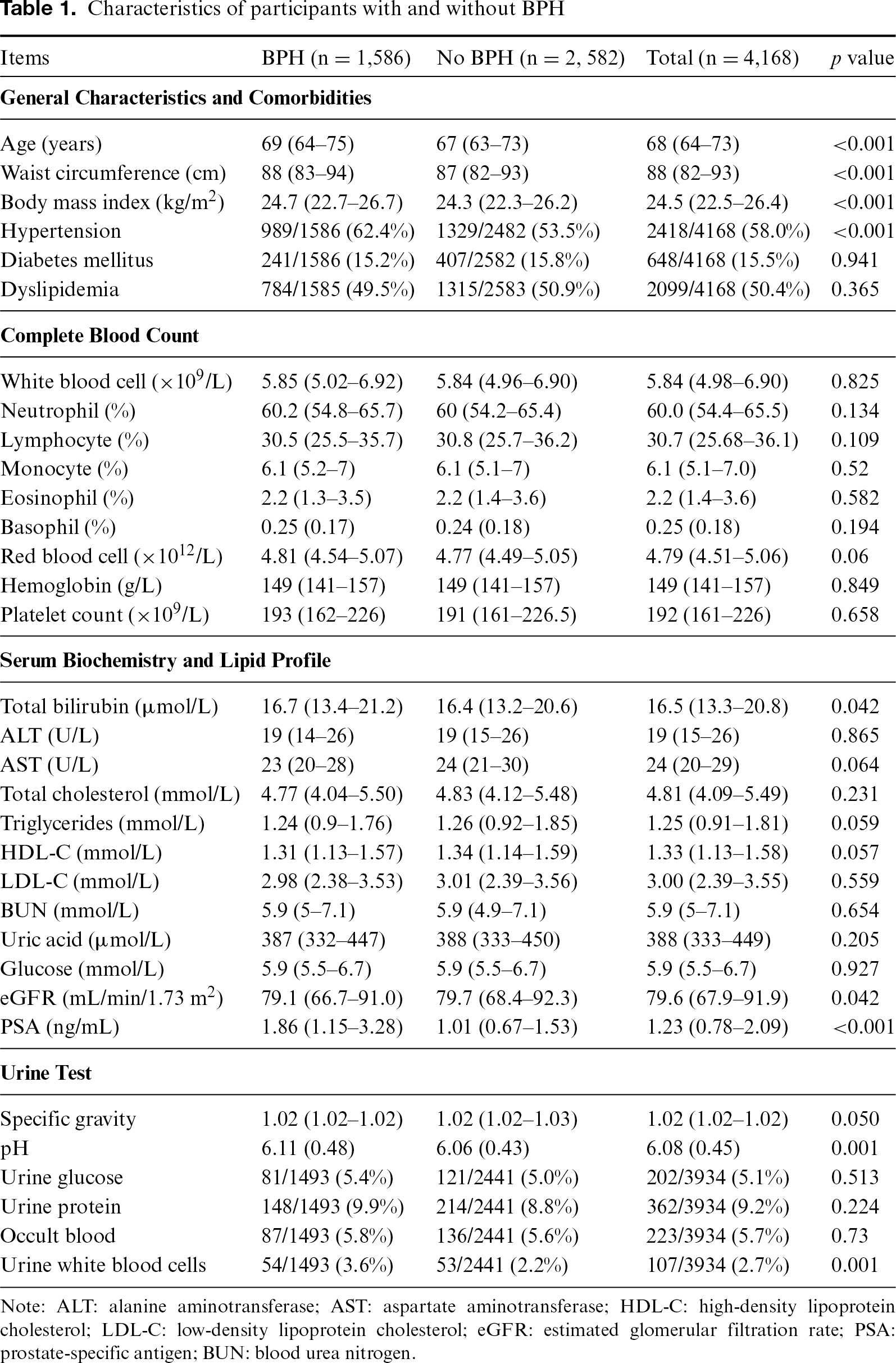
Most hematologic indices, including white blood cell count, differential counts, hemoglobin, and platelet levels, as well as metabolic parameters such as lipids, glucose, and uric acid, and liver enzymes, did not differ significantly between groups (p > 0.05). Total bilirubin levels were marginally higher in the BPH group (16.7 vs. 16.4 μmol/L, p = 0.042), whereas estimated glomerular filtration rate was slightly lower (79.1 vs. 79.7 mL/min/1.73 m2, p = 0.042). PSA levels differed markedly, with substantially higher values observed in the BPH group (1.86 vs. 1.01 ng/mL, p < 0.001). Urinalysis revealed statistically significant differences in urine pH (6.11 vs. 6.06, p = 0.001) and urine white blood cell positivity (50.5% vs. 49.5%, p = 0.001), whereas urine glucose, protein, and occult blood levels were comparable between groups.
Multivariable Logistic Regression Analysis
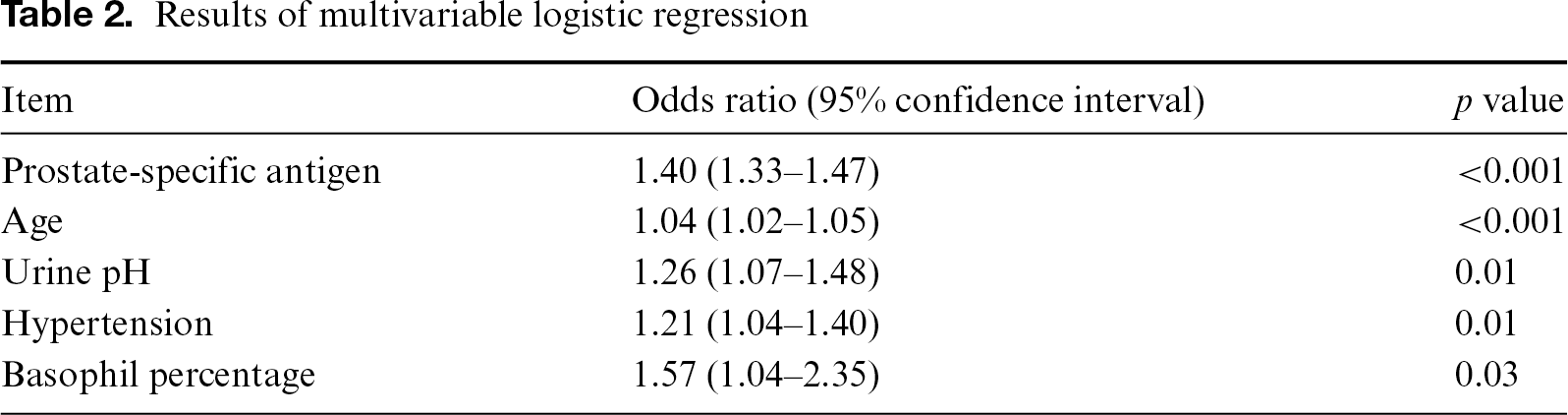
Variables that were clinically relevant or had a p value < 0.2 in univariable analyses were entered into the multivariable logistic regression model, with results summarized in Table 2. In the multivariable analysis, higher prostate-specific antigen levels (OR 1.40, 95% CI 1.33–1.47; p < 0.001), older age (OR 1.04, 95% CI 1.02–1.05; p < 0.001), higher urine pH (OR 1.26, 95% CI 1.07–1.48; p = 0.01), the presence of hypertension (OR 1.21, 95% CI 1.04–1.40; p = 0.01), and a higher basophil percentage (OR 1.57, 95% CI 1.04–2.35; p = 0.03) were independently associated with the outcome.
Nomogram Development
Fig. 1 illustrates positive associations between BPH and the four evaluated factors, with higher PSA levels and older age demonstrating the strongest relationships, whereas basophil percentage and urine pH showed more modest but consistent associations with BPH risk. Based on the independent predictors identified in the multivariable logistic regression analysis, a nomogram was developed to estimate the individual probability of BPH (Fig. 2). The nomogram incorporates prostate-specific antigen, age, urine pH, hypertension, and basophil percentage, with each variable assigned a weighted score according to its regression coefficient; the total score corresponds to an individualized predicted risk of BPH.
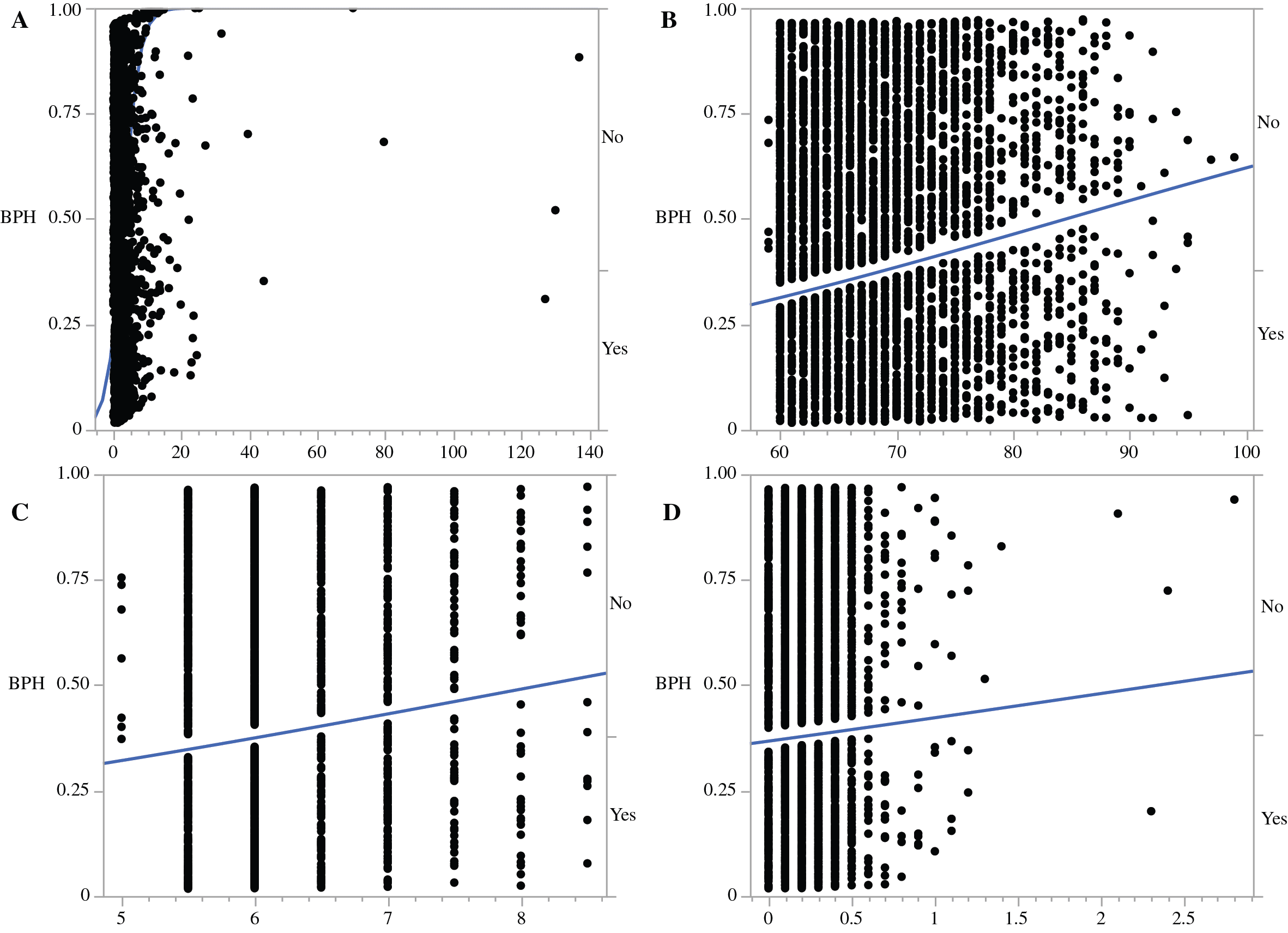
Figure 1. Continuous predictors of benign prostatic hyperplasia. A: PSA; B: age; C: urine pH; and D: basophil percentage.
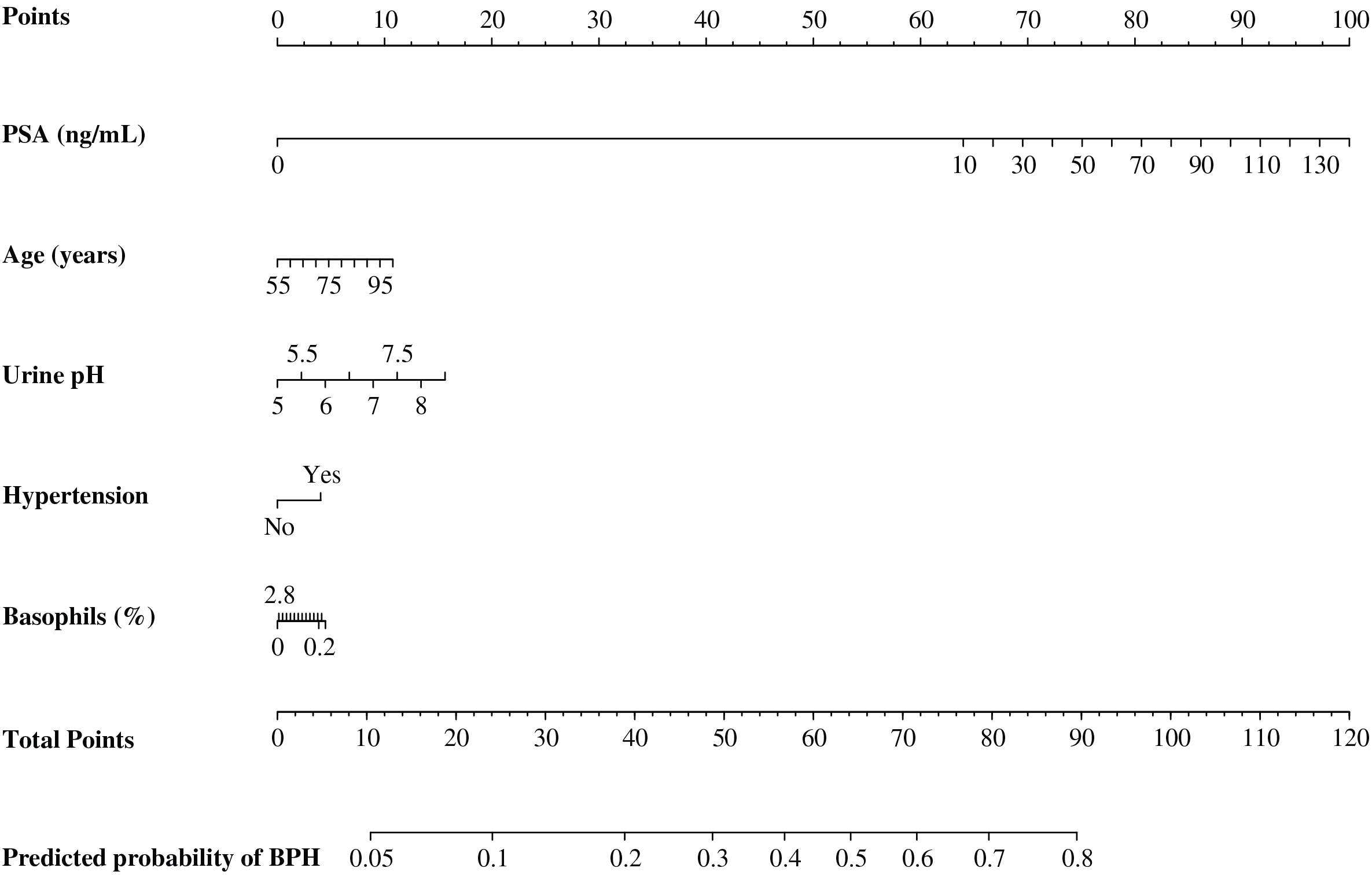
Figure 2. Nomogram of the prediction factors.
The model demonstrated strong performance across multiple validation measures. It showed good discrimination, with an AUC of 0.743, effectively distinguishing between individuals with and without BPH (Fig. 3A). The calibration curve demonstrated close agreement between predicted and observed probabilities, indicating adequate model calibration. In addition, decision curve analysis showed a positive net clinical benefit across a broad range of threshold probabilities, supporting the nomogram’s clinical utility for individualized BPH risk prediction (Fig. 3B).
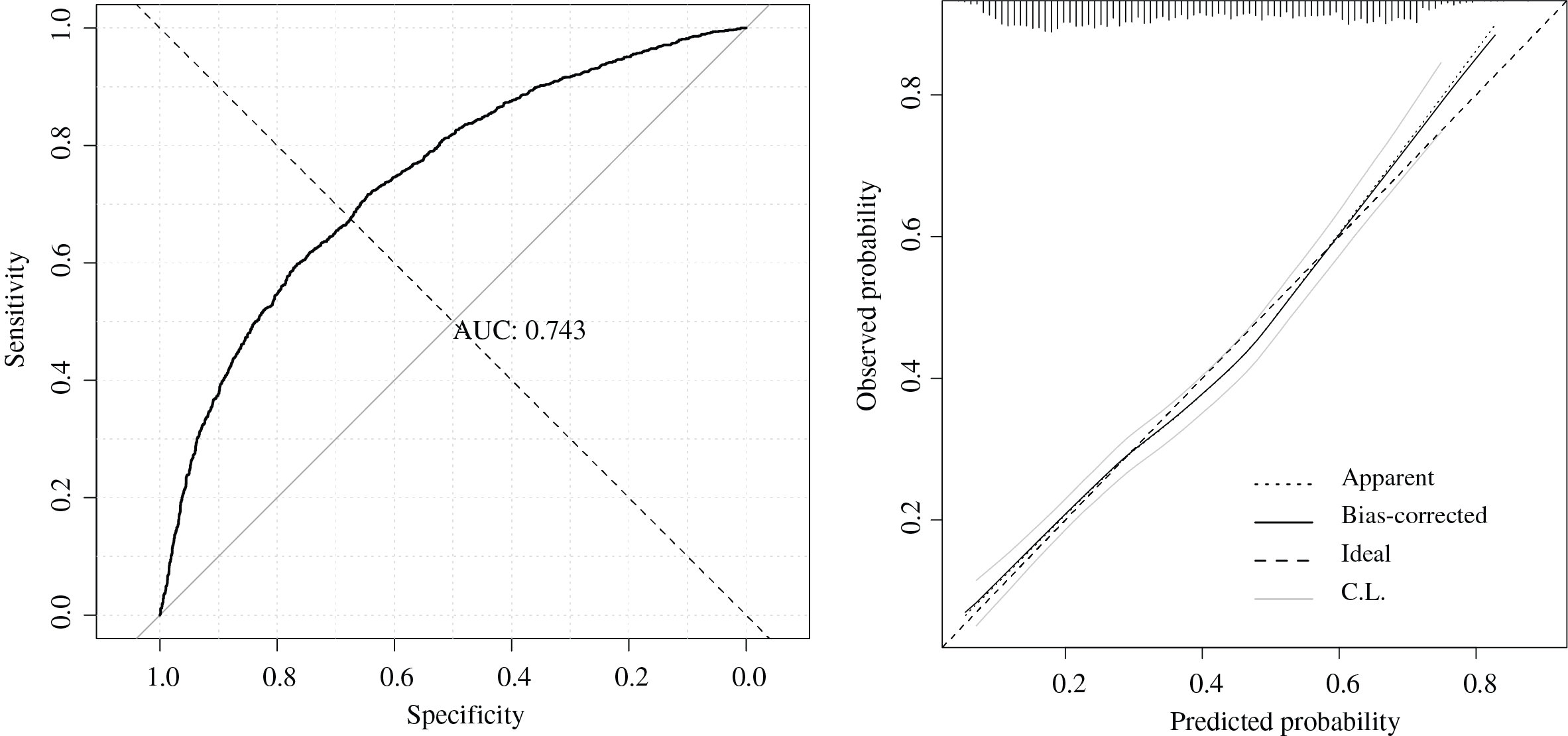
Figure 3. Discrimination, calibration, and clinical utility of the nomogram for BPH prediction. A: Calibration curve, and B: decision curve analysis for BPH prediction.
Discussion
BPH is a highly prevalent condition among aging men and represents a major contributor to lower urinary tract symptoms and healthcare utilization worldwide. In this retrospective study, several demographic, clinical, urinary, and hematologic factors were identified as being independently associated with BPH. Consistent with established evidence, older age and higher PSA levels showed the strongest associations with BPH, reflecting the progressive nature of prostatic enlargement with aging.18,19 Beyond these well-recognized predictors, hypertension, higher urine pH, and an increased basophil percentage were also independently associated with BPH risk. Based on these factors, a nomogram demonstrated good discrimination, calibration, and clinical utility, suggesting that readily available clinical and laboratory parameters may enhance individualized risk assessment for BPH.
The strong associations observed for age and PSA are in close agreement with findings from previous epidemiological and clinical studies. Age-related hormonal changes, stromal–epithelial interactions, and cumulative inflammatory exposure are well-established drivers of prostatic enlargement,20 while PSA remains a widely accepted surrogate marker of prostate volume and overall disease burden.21 The independent association between hypertension and BPH further supports a growing body of evidence of suggesting shared pathophysiological pathways between cardiovascular disease and lower urinary tract disorders.22 By contrast, diabetes mellitus and dyslipidemia were not identified as independent risk factors in the present analysis. This finding may reflect confounding by age and obesity, differences in disease duration or treatment status, or overlapping metabolic pathways that attenuate their independent effects following multivariable adjustment.13
Notably, this study identified urine pH and basophil percentage as independent factors associated with BPH, findings that have been reported less frequently in the literature. An elevated urine pH may reflect alterations in the urinary tract microenvironment, potentially related to chronic inflammation, subclinical infection, or metabolic changes that influence prostatic growth.23 Similarly, basophils, although a minor leukocyte subset, play a role in immune regulation and chronic inflammatory responses.24 Their association with BPH suggests that immune-mediated or allergic-type inflammatory pathways may contribute to disease development, extending the current understanding of inflammation in BPH beyond conventional markers. Importantly, basophil percentage did not demonstrate a statistically significant difference in univariate analysis but emerged as an independent factor in multivariable regression.25 This discrepancy may reflect confounding effects from correlated clinical variables, such as age, total leukocyte count, or other inflammatory markers, which can obscure subtle associations in unadjusted analyses.26 Multivariable modeling enables isolation of the independent contribution of basophils by accounting for these interrelationships, thereby revealing associations that may be masked in univariate comparisons. In addition, given the relatively low absolute proportion and biological variability of basophils, their potential impact may only become evident after adjustment for covariates, supporting a modest yet independent role in the inflammatory milieu associated with BPH.
The integration of both established and newly identified factors into a nomogram offers potential clinical value. Unlike traditional risk assessment approaches that rely primarily on age, PSA, and prostate volume, this model incorporates routinely available laboratory and clinical parameters, enhancing its feasibility for use in general clinical practice. Such a tool may facilitate the early identification of individuals at an increased risk of BPH, support personalized monitoring strategies, and inform shared decision-making, particularly in settings where advanced imaging or urodynamic testing is not readily available.
Several limitations should be considered when interpreting these findings. The retrospective design limits causal inference and precludes the assessment of temporal relationships between risk factors and BPH development. Information on symptom severity, medication use, and additional inflammatory biomarkers was unavailable, which may have resulted in residual confounding. In addition, the use of a prostate size cutoff to define the study groups may have influenced the findings and their generalizability. Moreover, the small between-group differences in urine pH and basophil levels warrant cautious interpretation regarding their clinical significance. The characteristics of the study population may also limit the applicability of these results to other ethnic or geographic groups.
Conclusion
This study confirms the established associations of age, PSA, and hypertension with BPH while also identifying urine pH and basophil percentage as novel correlates of BPH risk. The proposed nomogram demonstrated favorable predictive performance and may serve as a practical tool for individualized risk assessment. These findings contribute to a more comprehensive understanding of the multifactorial nature of BPH and provide a foundation for future longitudinal and mechanistic research.
Acknowledgment
We appreciate the patient’s cooperation in data collection.
Funding Source
This study was funded by the Shenzhen “Medical and Health Three-Famous Project” (No. SASM202201024).
Author Contributions
F.Z. and Z.C. were responsible for data curation, data interpretation, and drafting of the original manuscript. L.G., J.L., Y.J., and G.H. were responsible for the revision. All authors have read and approved the manuscript and agree with the content and data.
Data Availability Statement
The datasets used in the current study are available from the corresponding author upon reasonable request.
Generative AI Declaration
During the preparation of this manuscript, the authors used DeepSeek to assist with proofreading. All content was subsequently reviewed and edited by the authors, who assume full responsibility for the accuracy and integrity of the published work.
Ethical Statement
This study did not involve the participation of any animals. The study was approved by the Institutional Review Board of Shenzhen Luohu People’s Hospital (2026-LHQRMYY-KYLL-021).
Conflict of Interest
The authors report no conflicts of interest in this work.
Supplemental Information
Supplemental information for this article can be found online at https://sup.jclinque.com/api/articles/108/download-suppl.
References
[1] Nagakura Y, Hayashi M, Kajioka S. Lifestyle habits to prevent the development of benign prostatic hyperplasia: analysis of Japanese nationwide datasets. Prost Int. December 01, 2022;10(4):200–206. doi:10.1016/j.prnil.2022.06.004.
[2] Xiang J, Zheng Y, Chen D, et al. The pathogenesis of benign prostatic hyperplasia and the roles of Prdx3, oxidative stress, pyroptosis and autophagy:a review. Review. Front Oncol. August 05, 2025;15:1579539. doi:10.3389/fonc.2025.1579539.
[3] Ng M, Leslie SW, Baradhi KM, Benign prostatic hyperplasia. In: StatPearls. Treasure Island (FL): StatPearls Publishing; October 20, 2024.
[4] Wei JT, Dauw CA, Brodsky CN. Lower urinary tract symptoms in men: a review. JAMA. September 02, 2025;334(9):809–821. doi:10.1001/jama.2025.7045.
[5] Komleva Y, Gollasch M, König M. Nocturia and frailty in older adults: a scoping review. BMC Geriatrics. June 06, 2024;24(1):498. doi:10.1186/s12877-024-05049-3.
[6] Lavadia AC, Kim JH, Yun SW, Noh TI. Nocturia, sleep quality, and mortality: a systematic review and meta-analysis. World J Mens Health. January 2026;44(1):36–48. doi:10.5534/wjmh.240237.
[7] Nonaka H, Suzuki S, Negoro H, et al. Association between nocturia and sleep issues, incorporating the impact of lifestyle habits perceived as promoting sleep in an internet survey. Scient Rep. May 20, 2025;15(1):17508. doi:10.1038/s41598-025-02587-7.
[8] Anderson DJ, Aucoin A, Toups CR, et al. Lower urinary tract symptoms in depression: a review. Health Psychol Res. 2023;11(1):81040. doi:10.52965/001c.81040.
[9] Ye Z, Wang J, Xiao Y, Luo J, Xu L, Chen Z. Global burden of benign prostatic hyperplasia in males aged 60–90 years from 1990 to 2019: results from the global burden of disease study 2019. BMC Urol. September 05, 2024;24(1):193. doi:10.1186/s12894-024-01582-w.
[10] Chen Y, Li Y, Li L, et al. Global, regional, and national lifetime risks of developing benign prostatic hyperplasia in men aged over 40: a population-based cross-sectional study from 1990 to 2021. Trop Med Health. July 14, 2025;53(1):93. doi:10.1186/s41182-025-00770-0.
[11] Kaltsas A, Giannakas T, Stavropoulos M, Kratiras Z, Chrisofos M. Oxidative stress in benign prostatic hyperplasia: mechanisms, clinical relevance and therapeutic perspectives. Diseases. 2025;13(2):53. doi:10.3390/diseases13020053.
[12] Vickman RE, Franco OE, Moline DC, Vander Griend DJ, Thumbikat P, Hayward SW. The role of the androgen receptor in prostate development and benign prostatic hyperplasia: a review. Asian J Urol. July 2020;7(3):191–202. doi:10.1016/j.ajur.2019.10.003.
[13] He J, Pan X, Liu D, et al. Association between metabolic syndrome and risk of benign prostatic hyperplasia: a prospective cohort study of 163 975 participants. J Glob Health. October 03, 2025;15:04275. doi:10.7189/jogh.15.04275.
[14] Li J, Peng L, Cao D, Gou H, Li Y, Wei Q. The association between metabolic syndrome and benign prostatic hyperplasia: a systematic review and meta-analysis. The Aging Male. December 2020;23(5):1388–1399. doi:10.1080/13685538.2020.1771552.
[15] Fu X, Wang Y, Lu Y, Liu J, Li H. Association between metabolic syndrome and benign prostatic hyperplasia: the underlying molecular connection. Life Sci. December 01, 2024;358:123192. doi:10.1016/j.lfs.2024.123192.
[16] Zekraoui O, Bhojani N, Zorn KC, Elterman D, Chughtai B. Management and treatment of benign prostatic hyperplasia symptoms: current insights. Res Rep Urol. 2025;17:401–420. doi:10.2147/rru.S510367.
[17] Xu J, Han B, Xia S, Jing Y. Beyond size: a comprehensive overview of small-volume benign prostatic hyperplasia. Curr Urol. January 2025;19(1):1–5. doi:10.1097/cu9.0000000000000261.
[18] Shao WH, Zheng CF, Ge YC, et al. Age-related changes for the predictors of benign prostatic hyperplasia in Chinese men aged 40 years or older. Asian J Androl. January–February 2023;25(1):132–136. doi:10.4103/aja202223.
[19] Chou YJ, Jong BE, Tsai YC. Integrating PSA change with PSA density enhances diagnostic accuracy and helps avoid unnecessary prostate biopsies. Diagnostics (Basel). August 13, 2025;15(16):2027. doi:10.3390/diagnostics15162027.
[20] Cannarella R, Condorelli RA, Barbagallo F, La Vignera S, Calogero AE. Endocrinology of the aging prostate: current concepts. Review. Front Endocrinol. February 22, 2021;12:554078. doi:10.3389/fendo.2021.554078.
[21] Aigbe E, Irekpita E, Ogbetere FE, Alili UI. Correlation between prostate volume and prostate-specific antigen in Nigerian men with symptomatic histologically-diagnosed benign prostatic hyperplasia. Nigerian J Clin Pract. 2022;25(9):1523–1528. doi:10.4103/njcp.njcp_67_22.
[22] Güven EO, Selvi I, Karaismailoğlu E. Association between benign prostate enlargement-related storage and voiding symptoms and systolic blood pressure: a single-center cross-sectional study. Sao Paulo Med J. September–October 2019;137(5):446–453. doi:10.1590/1516-3180.2018.0543.R3.160919.
[23] Oseni SO, Naar C, Pavlović M, et al. The molecular basis and clinical consequences of chronic inflammation in prostatic diseases: prostatitis, benign prostatic hyperplasia, and prostate cancer. Cancers. 2023;15(12):3110. doi:10.3390/cancers15123110.
[24] Möbs C, Salheiser M, Bleise F, Witt M, Mayer JU. Basophils control T cell priming through soluble mediators rather than antigen presentation. Mini review. Front Immunol. February 09, 2023;13:1032379. doi:10.3389/fimmu.2022.1032379.
[25] Wang H, Peng J, Wang B, et al. Inconsistency between univariate and multiple logistic regressions. Shanghai Arch Psychiatry. April 25, 2017;29(2):124–128. doi:10.11919/j.issn.1002-0829.217031.
[26] Gao Y, Xiang L, Yi H, et al. Confounder adjustment in observational studies investigating multiple risk factors: a methodological study. BMC Med. March 05, 2025;23(1):132. doi:10.1186/s12916-025-03957-8.
 |
Copyright: © 2026 Zeng et al. This work is licensed under a Creative Commons Attribution 4.0 International License, which permits unrestricted use, distribution, and reproduction in any medium, provided the original work is properly cited. |