| Journal of Clinical Question. 2025; 2(4): e78 https://doi.org/10.69854/jcq.2025.0021 Advance access publication date 14 July 2025 |
 |
Meta-Analysis
Oral Antifibrotic Agents for the Treatment of Idiopathic Pulmonary Fibrosis: A Systematic Review and Network Meta-Analysis of Randomized Controlled Trials
Yoichi Tagami , Motoki Kawai, Ken Okamura, Hideya Kitamura*
Department of Respiratory Medicine, Kanagawa Cardiovascular and Respiratory Center, Yokohama, Japan.
*Corresponding Author: e-mail: kitamura.19056@kanagawa-pho.jp
Submitted: June 1, 2025 Accepted: July 14, 2025
Clinical Question Box
Is antifibrotic therapy recommended for patients with idiopathic pulmonary fibrosis (IPF)?
Antifibrotic therapy is recommended for IPF to slow disease progression and preserve lung function. Nintedanib, pirfenidone, and nerandomilast have demonstrated efficacy in reducing the decline in forced vital capacity, with the combination of nintedanib and nerandomilast showing the most pronounced effect. Although a definitive survival benefit has not yet been established, antifibrotic agents remain a cornerstone of IPF treatment.
Abstract
Introduction: Idiopathic pulmonary fibrosis (IPF) is a progressive lung disease marked by a decline in forced vital capacity (FVC). While nintedanib and pirfenidone are standard treatments, the benefits of newer drugs like nerandomilast and combination therapies remain unclear. This study employed a network meta-analysis (NMA) of randomized controlled trials (RCTs) to compare the effectiveness and safety of these treatments. Methods: Following PRISMA (Preferred Reporting Items for Systematic Reviews and Meta-Analyses) guidelines, a systematic review and Bayesian NMA were conducted. Databases were searched up to May 20, 2025, for RCTs involving adult patients with IPF treated with oral antifibrotic agents. The primary outcome was the change in FVC over 1 year; secondary outcomes included all-cause mortality and serious adverse events (SAEs). Results: Seven RCTs involving 4,206 patients were included. The greatest reduction in FVC decline was observed with high-dose nerandomilast combined with nintedanib (190 mL; confidence interval [95% CI]: 170–260), followed by low-dose nerandomilast with nintedanib (180 mL; 95% CI: 120–240), nintedanib monotherapy (120 mL; 95% CI: 80–150), and high-dose nerandomilast with pirfenidone (110 mL; 95% CI: 39–180). These regimens significantly outperformed pirfenidone and the combination of low-dose nerandomilast with pirfenidone. Most antifibrotic regimens, except NRD-LP, demonstrated superiority over placebo. No significant differences were observed among treatments in reducing all-cause mortality or in increasing the incidence of SAEs. Nintedanib showed the lowest risk of all-cause mortality, while high-dose nerandomilast had the most favorable safety profile. Conclusion: This NMA confirms nintedanib’s superior efficacy in IPF, with low-dose nerandomilast emerging as a promising alternative. Combination therapies involving nerandomilast showed limited additional benefit, highlighting the need for personalized treatment strategies and long-term data.
Keywords: Idiopathic pulmonary fibrosis, antifibrotic therapy, nintedanib, pirfenidone, nerandomilast, network meta-analysis
Introduction
Idiopathic pulmonary fibrosis (IPF) is a chronic, progressive, fibrosing interstitial lung disease of unknown etiology that primarily affects individuals over the age of 60.1 It is classified among the idiopathic interstitial pneumonias and is defined by the histopathologic and/or radiographic pattern of usual interstitial pneumonia.2 Unlike other interstitial lung diseases, IPF is limited to the lungs and is not associated with systemic diseases. However, several risk factors have been implicated, including male sex, older age, a history of smoking, and genetic predisposition.3 While most cases are sporadic, a minority of patients have familial clustering, often due to gene mutations related to surfactant proteins or telomere maintenance.4 Environmental and occupational exposures, such as wood, metal, organic dust, air pollutants, and asbestos, have also been suggested as potential contributors.5 Gastroesophageal reflux disease is commonly observed in IPF patients and may play a role in disease pathogenesis.6
IPF is characterized by irreversible scarring of the lung parenchyma, resulting in a gradual decline in pulmonary function and, ultimately, respiratory failure.7 The global incidence of IPF varies considerably, with adjusted estimates ranging from 0.35 to 1.30 per 10,000 population in Asia-Pacific countries, 0.09 to 0.49 in Europe, and 0.75 to 0.93 in North America.8 Patients typically present with an insidious onset of exertional dyspnea and a persistent dry cough that develops over several months. Systemic symptoms, such as fatigue, weight loss, or fever, are less common.9 Fine bibasilar “velcro-like” crackles are often noted on physical examination, and digital clubbing may be present in advanced disease.10
Due to the nonspecific clinical features, a detailed history, including familial and occupational factors, is critical to distinguish IPF from other interstitial lung diseases. Diagnosis requires excluding known causes and confirming characteristic imaging or histopathologic findings.11 IPF has a poor prognosis, with a median survival of approximately 3–5 years after diagnosis, worse than many cancers.12 Beyond its clinical impact, IPF also presents a substantial economic burden due to recurrent hospitalizations, long-term oxygen therapy, and the need for specialized care.
Treatment strategies for IPF focus on slowing disease progression, alleviating symptoms, and improving quality of life, as no curative treatment is currently available.13 Two antifibrotic agents, nintedanib and pirfenidone, form the cornerstone of pharmacologic therapy. Nintedanib, a tyrosine kinase inhibitor, targets multiple growth factor receptors implicated in fibrotic signaling pathways. Pirfenidone exerts both antifibrotic and anti-inflammatory effects, primarily through modulation of transforming growth factor-beta (TGF-beta) and other cytokines. These agents differ in their pharmacokinetic profiles and safety characteristics, but both have been shown to significantly reduce the rate of forced vital capacity (FVC) decline and are recommended for patients with mild to moderate disease.14 Supportive care measures include pulmonary rehabilitation, supplemental oxygen for hypoxemia, and routine vaccinations against respiratory pathogens.15 In cases of advanced or progressive disease unresponsive to medical therapy, lung transplantation remains the only definitive intervention.16 Comprehensive management also entails regular monitoring, patient education, and timely referral to specialized centers. Immunosuppressive therapies are no longer advised, as prior studies have demonstrated an increased risk of harm.1
Recently, nerandomilast, an oral phosphodiesterase 4B (PDE4B) inhibitor, has emerged as a promising therapeutic candidate.17 In the phase 3 FIBRONEER-IPF trial, nerandomilast significantly reduced FVC decline over 52 weeks compared with placebo, regardless of background antifibrotic use. Its safety profile was acceptable, with adverse events and discontinuation rates comparable to placebo.18 These results suggest that nerandomilast may offer an additional treatment option for patients with IPF. However, the lack of direct head-to-head trials among antifibrotic agents limits clinicians’ ability to determine the most effective strategy. Most available evidence comes from placebo-controlled trials, restricting comparative assessments of efficacy and safety. To address this gap, we conducted a systematic review and network meta-analysis (NMA) of randomized controlled trials (RCTs), enabling indirect comparisons across treatments and providing a broader evidence base to inform clinical decision-making.
Methods
Protocol and Registration
This review adhered to the PRISMA (Preferred Reporting Items for Systematic Reviews and Meta-Analyses) guidelines and the PRISMA extension statement for NMA.19,20 The protocol was prospectively registered in a public database, the University Hospital Medical Information Network (UMIN000058009).21
Eligibility Criteria
We included studies that met the following criteria: (1) adults (≥18 years) diagnosed with IPF according to international guidelines; (2) use of oral antifibrotic agents, such as pirfenidone, nintedanib, or nerandomilast, with or without background standard therapy; and (3) RCTs reporting on efficacy or safety outcomes. Studies were excluded if they (1) were subgroup analyses without additional relevant information; (2) were observational studies, case series, or non-comparative trials; or (3) were not published in English.
Information Sources and Search Strategy
We systematically searched PubMed, Embase, Web of Science, and the Cochrane Library from their inception to May 20, 2025. The search strategy combined free-text keywords to identify the disease (“Idiopathic Pulmonary Fibrosis” OR “IPF”), the interventions (“Pirfenidone” OR “Nintedanib” OR “BI 1015550” OR “Nerandomilast” OR “antifibrotic”), and the study design (“randomized controlled trial” OR “RCT” OR “randomised”). Detailed search strategies for each database are provided in Table S1.
Selection Process and Data Collection
Two independent reviewers screened titles and abstracts, followed by full-text reviews of potentially eligible studies. Discrepancies were resolved by discussion or consultation with a third reviewer. The study selection process is summarized in the PRISMA flow diagram (Fig. S1). Data were independently extracted by the same reviewers using a standardized form, capturing study characteristics (author, year, location, sample size, duration), patient demographics (age, sex, baseline FVC, diagnostic criteria), interventions, comparators, and outcomes. Any disagreements were resolved by consensus or with the input of a third reviewer.
Outcomes
The efficacy of individual antifibrotic agents and combinations of specified antifibrotic therapies was compared across studies. The primary outcome was the absolute change in FVC in milliliters from baseline at 1 year (52 weeks). All-cause mortality and serious adverse events (SAEs) were analyzed regardless of follow-up duration.
Effect Measures
A Bayesian random-effects NMA was performed using the “gemtc” package in R (version 4.3.1), employing a Markov Chain Monte Carlo approach. Four chains were run for 100,000 iterations each, following a burn-in of 10,000 iterations. Model convergence was assessed using the Gelman–Rubin diagnostic, with values less than 1.05 considered acceptable. The appearance of the network graphs was enhanced using the “igraph” and “viridis” packages. Mean differences (MDs) and standard deviations were analyzed for FVC change, while log odds ratios (ORs) with 95% confidence intervals (CIs) were calculated for all-cause mortality and SAEs. SDs were derived from standard errors, confidence intervals, or p-values when necessary. Treatments were directly and indirectly compared using placebo as a common comparator. The surface under the cumulative ranking curve (SUCRA) was calculated to rank treatment efficacy. A rankogram is a bar plot that displays the probability of each treatment occupying each possible rank, with the tallest bar indicating the most likely rank for that treatment. Statistical heterogeneity in pairwise comparisons was assessed using the I² statistic, while network inconsistency was evaluated via node-splitting models. Subgroup and sensitivity analyses explored potential sources of heterogeneity.
Risk of Bias and Certainty Assessment
Publication bias was assessed using funnel plots and Egger’s regression test. The risk of bias for the included RCTs was assessed using the Cochrane Risk of Bias 2.0 tool. The certainty of evidence was evaluated using the GRADE (Grading of Recommendations, Assessment, Development, and Evaluations) framework adapted for NMA, considering risk of bias, inconsistency, indirectness, imprecision, and publication bias for each comparison.
Results
Study Selection and Characteristics
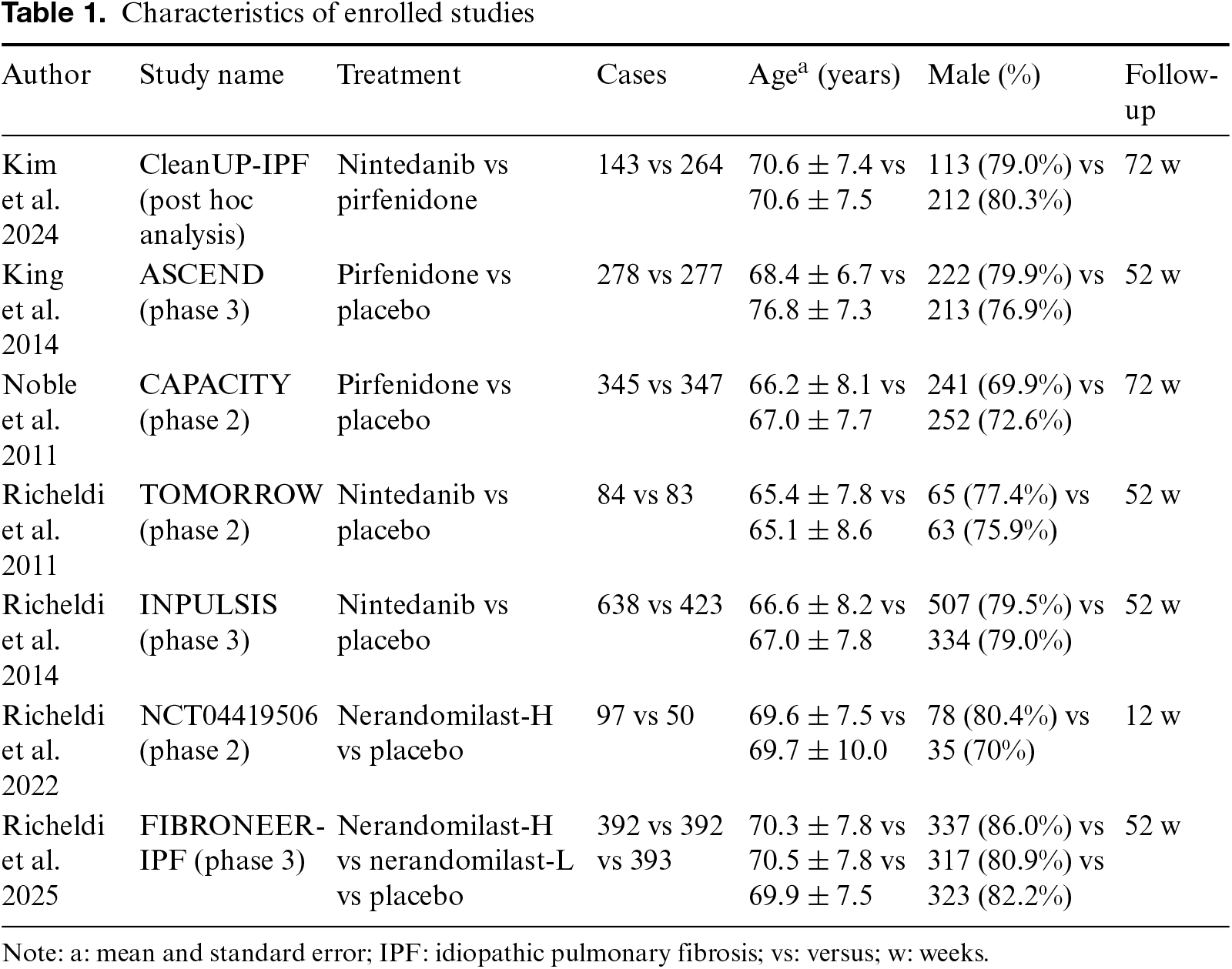
A total of 2,285 records were identified through database searches (PubMed, Embase, Web of Science, and the Cochrane Library). After removing 399 duplicates, 1,797 records remained for title and abstract screening. Following a full-text assessment of 89 articles, 82 were excluded for various reasons (Fig. S1). The qualitative and quantitative synthesis included seven RCTs (Table 1).18,22–27 These studies evaluated the efficacy of nintedanib, pirfenidone, and roflumilast in 4,206 patients with IPF. Sample sizes ranged from 133 to 1,177 participants, with follow-up durations between 12 and 72 weeks. The mean age of participants was comparable across trials, typically between 66 and 71 years, and the proportion of male patients ranged from approximately 70%–86%. Most studies were phase 2 or 3 trials comparing active treatments to placebo, with one post hoc analysis directly comparing nintedanib and pirfenidone.
FVC Decline
The network graph of the included studies is presented in Fig. 1. Eight treatment strategies were compared with placebo, including low-dose nerandomilast (NRD-L), high-dose nerandomilast (NRD-H), NRD-L combined with nintedanib (NRD-LN), NRD-L combined with pirfenidone (NRD-LP), NRD-H combined with nintedanib (NRD-HN), and NRD-H combined with pirfenidone (NRD-HP), as well as nintedanib and pirfenidone monotherapies. Direct comparisons are shown in Fig. 2A, where NRD-HN demonstrated the greatest effect with an MD of 190 mL (95% CI: 170, 260), followed by NRD-LN with 180 mL (95% CI: 120, 240), nintedanib with 120 mL (95% CI: 80, 150), and NRD-HP with 110 mL (95% CI: 39, 180).
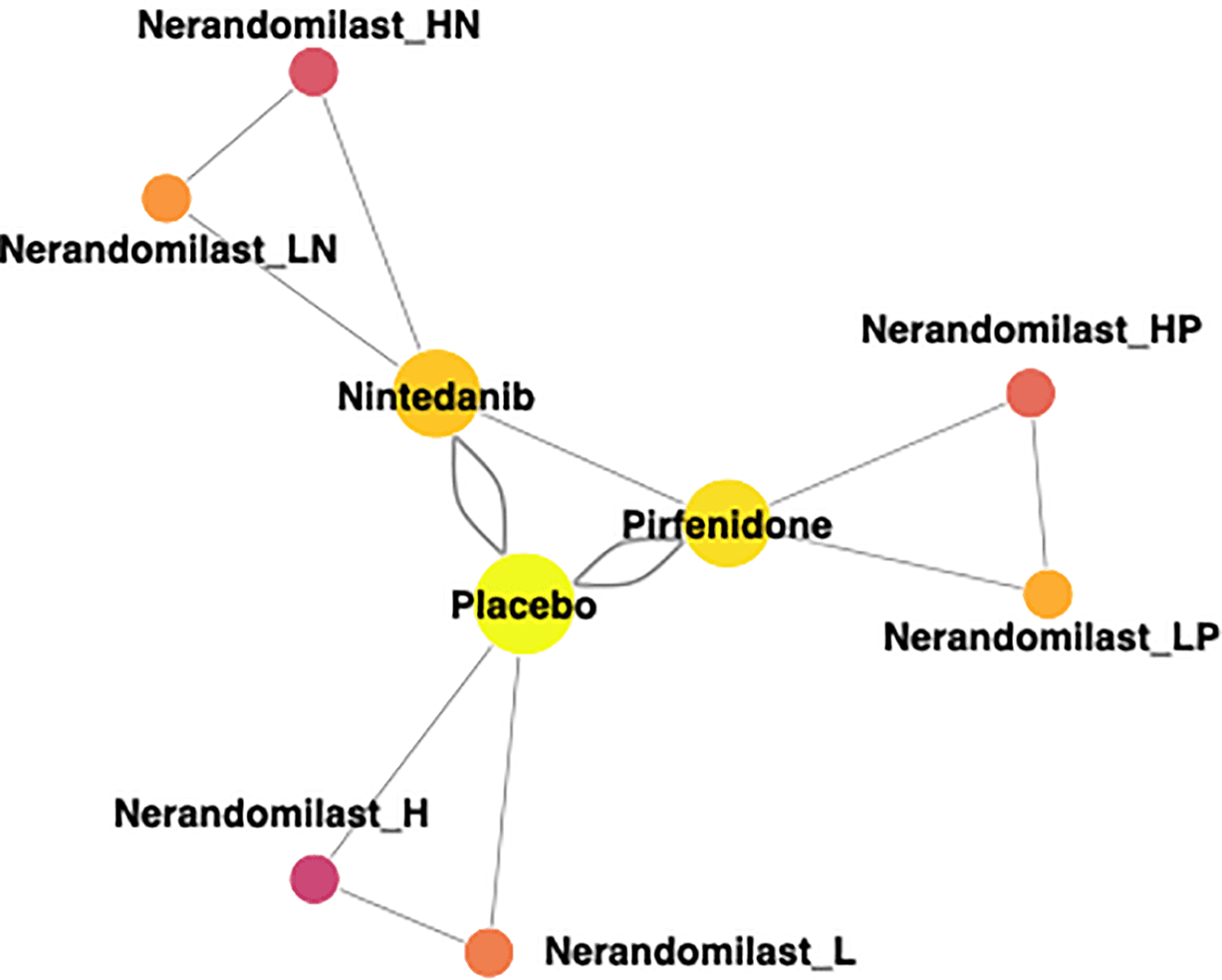
Figure 1. Network graph of included studies assessing FVC decline. H: high dose; HN: high dose with nintedanib; HP: high dose with pirfenidone L: low dose; LN: low dose with nintedanib; LP: high dose with pirfenidone.
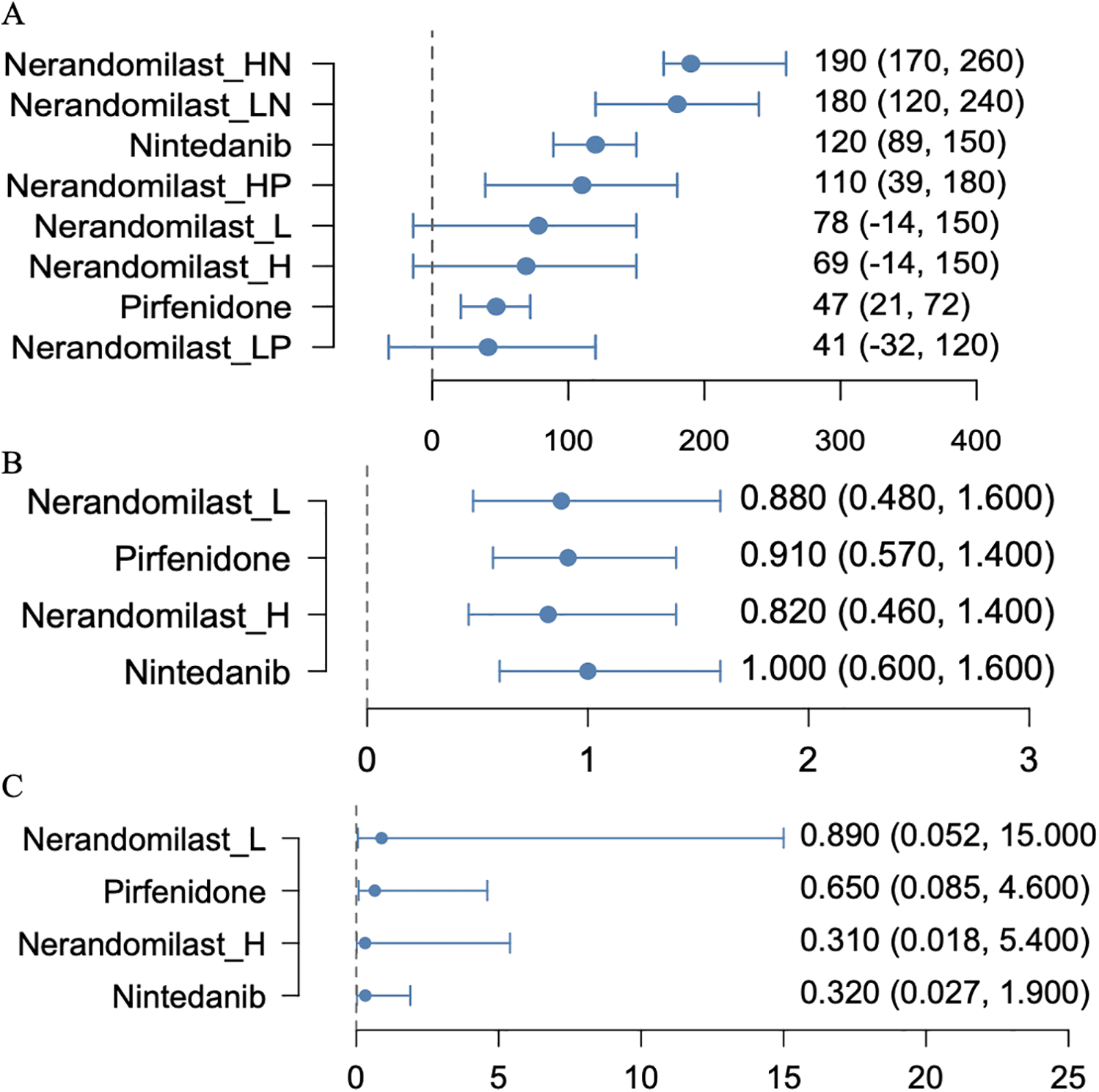
Figure 2. Direct treatment comparisons versus placebo across outcomes. (A) Mean difference in FVC; (B) odds ratio for all-cause mortality; (C) odds ratio for serious adverse events. H: high dose; HN: high dose with nintedanib; HP: high dose with pirfenidone L: low dose; LN: low dose with nintedanib; LP: low dose with pirfenidone.
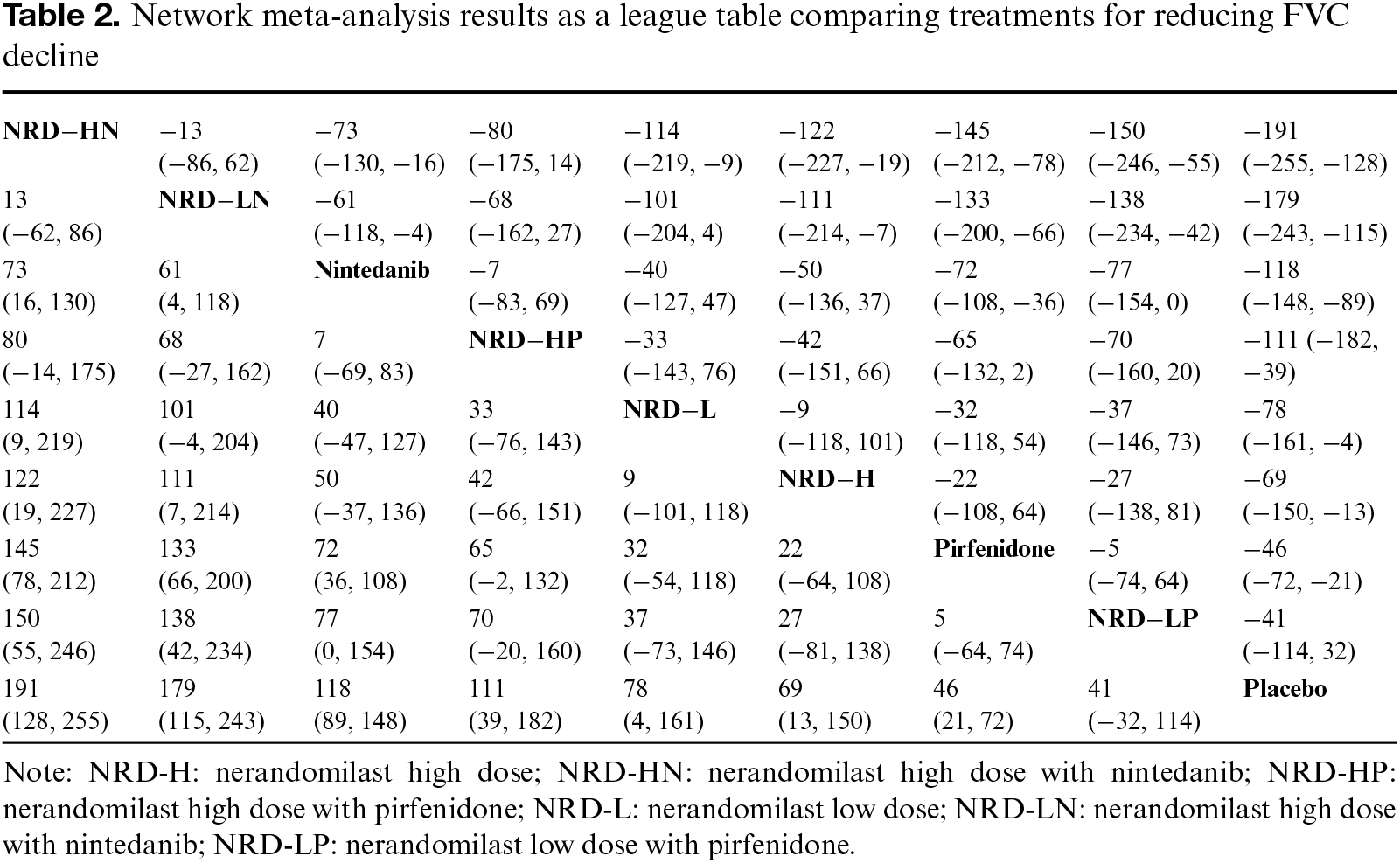
Table 2 summarizes the NMA results. All treatments, except NRD-HN, demonstrated superiority over placebo in reducing FVC decline. Nintedanib was significantly more effective than NRD-L, NRD-H, pirfenidone, and NRD-LP, with MDs of 114 mL (95% CI: 9, 219), 122 mL (95% CI: 19, 227), 145 mL (95% CI: 78, 212), and 150 mL (95% CI: 55, 246), respectively. NRD-LN was superior to NRD-H, pirfenidone, and NRD-LP with MDs of 111 mL (95% CI: 7, 214), 133 mL (95% CI: 66, 200), and 138 mL (95% CI: 42, 234), respectively. Nintedanib was superior to pirfenidone and NRD-LP with MDs of 72 mL (95% CI: 42, 234) and 77 mL (95% CI: 0, 154), respectively. The SUCRA values, ranked from highest to lowest, were as follows: NRD-HN (0.943), NRD-LN (0.903), nintedanib (0.656), NRD-HP (0.623), NRD-L (0.442), NRD-H (0.395), pirfenidone (0.265), NRD-LP (0.247), and placebo (0.027) (Fig. S2).
Direct and indirect comparisons among nintedanib, pirfenidone, and placebo are shown in Fig. S3, indicating no evidence of inconsistency. Publication bias was not detected, as assessed by Egger’s test (p = 0.08), and there was no apparent heterogeneity with I2 = 0%.
All-Cause Mortality
The network graph of the included studies is presented in Fig. S4. Separate data distinguishing whether nerandomilast was used with other antifibrotic agents, such as nintedanib or pirfenidone, were unavailable. The analysis included high- and low-dose nerandomilast, nintedanib, and pirfenidone. Direct comparisons are shown in Fig. 2B, where none of the treatments significantly reduced mortality.
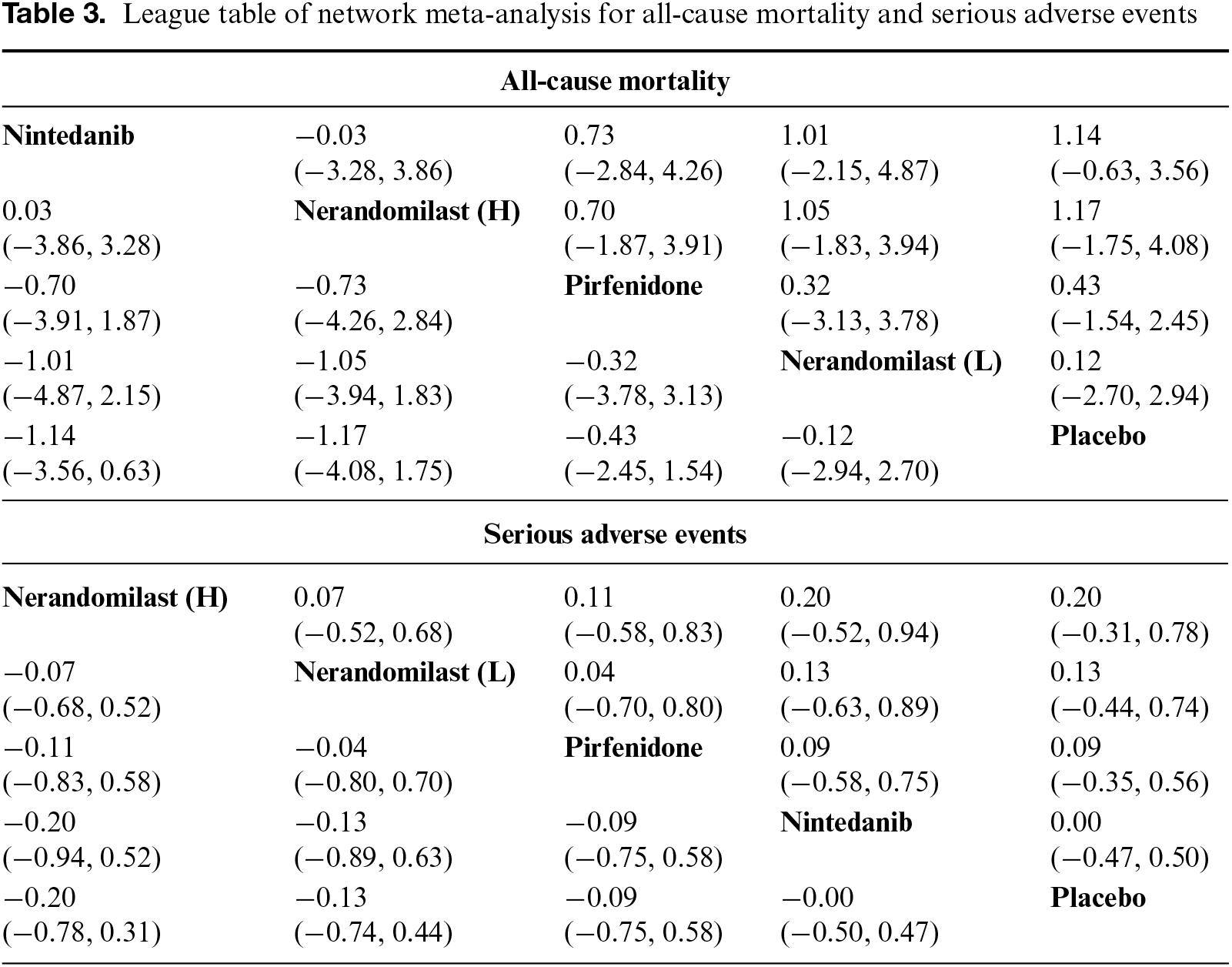
Table 3 summarizes the NMA results based on log ORs; no treatment demonstrated superiority over placebo or other active treatments. The ranking of efficacy based on SUCRA values is presented in Fig. S5. Nintedanib had the highest SUCRA value (0.740), followed closely by NRD-H (0.718). Pirfenidone ranked moderately (0.466), while NRD-L and placebo had lower SUCRA values of 0.335 and 0.241, respectively (Fig. S5). There was no obvious publication bias (Egger’s test, p = 0.13) or heterogeneity (I2 = 0%).
SAEs
Fig. S6 presents the network graph of the included studies for SAEs. Separate data distinguishing whether nerandomilast was used with other antifibrotic agents, such as nintedanib or pirfenidone, were unavailable. The analysis included high- and low-dose nerandomilast, nintedanib, and pirfenidone. Direct comparisons are shown in Fig. 2C, where none of the treatments significantly increased SAEs.
Table 3 summarizes the NMA results based on log ORs, with no treatment showing superiority over placebo or other active treatments. The ranking of safety based on SUCRA values is presented in Fig. S7. NRD-H ranked the highest (0.703), followed by low-dose nerandomilast (0.577), pirfenidone (0.533), and nintedanib (0.367) (Fig. S7). There was no obvious publication bias (Egger’s test, p = 0.08) or heterogeneity (I2 = 12%).
Risk of Bias and Certainty of Evidence
Two studies were rated as having a high risk of bias, one due to issues with randomization and allocation, and the other due to incomplete data and selective reporting. The remaining five studies were assessed as having a low risk of bias. The certainty of evidence was rated high across all outcomes, supporting the efficacy of antifibrotic agents compared to placebo.
Discussion
This NMA evaluated the comparative efficacy and safety of various antifibrotic strategies, including monotherapies and combination regimens, in patients with IPF. At 1 year of follow-up, NRD-HN or NRD-LN and nintedanib alone ranked among the top three most effective treatments, demonstrating superiority over pirfenidone and NRD-LP. NRD-HP, NRD-L, NRD-H, and pirfenidone were all more effective than placebo; however, NRD-HP did not show superiority over placebo. These findings highlight the potential of nerandomilast, particularly in combination with nintedanib, as a promising addition to the antifibrotic treatment options for IPF. This aligns with previous head-to-head and placebo-controlled trials that consistently support the efficacy of nintedanib.22 Notably, this is the first analysis to comprehensively evaluate a broad range of nerandomilast-based combinations within a unified framework, offering new insights into their roles in the antifibrotic treatment landscape. Nevertheless, the limited availability of long-term data beyond 1 year remains a key limitation of this analysis.
From a clinical standpoint, these results carry several important implications. First, the promising efficacy of nerandomilast, especially when combined with nintedanib, suggests it could serve as a valuable alternative or adjunct in IPF management. This positions nerandomilast as a meaningful addition to the antifibrotic treatment landscape, particularly for patients who may benefit from combination strategies. Second, nintedanib consistently demonstrated strong efficacy as a monotherapy in preserving lung function across various trial populations, reaffirming its central role in IPF pharmacotherapy. Among nerandomilast monotherapies, the lower dose tended toward greater effectiveness than the higher dose. In contrast, for pirfenidone, efficacy was observed only when used in high-dose combinations, while other regimens did not offer additional clinical benefit. These findings highlight an essential concept in antifibrotic therapy development: selecting between combination therapy and monotherapy remains challenging, as theoretical advantages do not always translate into superior outcomes. Additionally, all treatments exhibited similar safety profiles, with no significant increase in SAEs, and none demonstrated a survival benefit at 1 year.
While the low dose of nerandomilast demonstrated promising efficacy as a single agent, its combination with pirfenidone did not show superior benefits compared to placebo. One possible explanation is pharmacokinetic interaction, which may alter the metabolism or bioavailability of either drug, thereby reducing overall effectiveness. In addition, both agents target similar profibrotic signaling pathways, such as PDE4B inhibition and TGF-beta suppression.28,29 When one drug sufficiently inhibits these pathways, adding another may yield limited additional benefit due to receptor saturation or negative feedback mechanisms. Another contributing factor could be the phenotypic heterogeneity of IPF; patients may respond differently to treatments depending on disease stage, genetic background, or coexisting conditions, which could obscure the potential benefits of combination therapies in population-level analyses.30 These considerations underscore the importance of future precision medicine trials incorporating biomarkers or molecular profiles to identify the subgroups most likely to benefit from specific treatment strategies. Notably, when evaluating long-term outcomes, 2-year changes in FVC showed no statistically significant difference between pirfenidone and nintedanib, suggesting that despite differences in their mechanisms of action, their long-term efficacy in preserving lung function appears comparable.
This study has several limitations. Chief among them is the relatively short follow-up duration of up to 1 year in the included trials, which limits the ability to evaluate long-term clinical outcomes such as sustained disease stabilization, mortality benefit, or cumulative toxicity. Additionally, some combination arms had small sample sizes or were derived from post hoc subgroup analyses, increasing the potential for selection bias and limiting generalizability. The inability to isolate the effects of nerandomilast when combined with other agents, due to the lack of disaggregated data, further complicates interpretation. Finally, while the overall risk of bias was low and heterogeneity minimal, the relatively narrow evidence base in terms of the number of trials and patient populations limits the scope of indirect comparisons.
Conclusion
This NMA confirms the superior efficacy of nintedanib in attenuating pulmonary function decline in patients with IPF. NRD-L also demonstrated promising efficacy, positioning it as a potential alternative. However, combination regimens involving nerandomilast did not yield additional benefit compared to monotherapies, although their safety profiles were acceptable. These findings highlight the need for personalized treatment strategies and long-term data to inform and optimize IPF management.
Acknowledgment
None.
Funding Source
None.
Author Contributions
Y.T. contributed to the study design and drafting. Y.T. and M.K. worked on the study search, quality check, data extraction, and analysis. K.O. and H.K. worked on data interpretation and revision. All authors have read the manuscript and agree with its content and data.
Data Availability
The corresponding author will make the datasets available upon reasonable request.
Ethical Statement
Institutional Review Board approval was waived due to the nature of the meta-analysis.
Conflict of Interest
The authors report no conflicts of interest in this work.
Supplemental Information
Supplemental information for this article can be found online at https://sup.jclinque.com/api/articles/78/download-suppl.
References
[1] Koudstaal T, Wijsenbeek MS. Idiopathic pulmonary fibrosis. La Presse Médicale. September 01, 2023;52(3):104166. doi:10.1016/j.lpm.2023.104166.
[2] Raghu G, Remy-Jardin M, Richeldi L, et al. Idiopathic pulmonary fibrosis (an update) and progressive pulmonary fibrosis in adults: an official ATS/ERS/JRS/ALAT clinical practice guideline. Am J Respir Crit Care Med. May 01, 2022;205(9):e18–e47. doi:10.1164/rccm.202202-0399ST.
[3] Pergolizzi JV Jr, LeQuang JA, Varrassi M, Breve F, Magnusson P, Varrassi G. What do we need to know about rising rates of idiopathic pulmonary fibrosis? A narrative review and update? Adv Ther. April 2023;40(4):1334–1346. doi:10.1007/s12325-022-02395-9.
[4] Sutton RM, Bittar HT, Sullivan DI, et al. Rare surfactant-related variants in familial and sporadic pulmonary fibrosis. Hum Mutat. December 2022;43(12):2091–2101. doi:10.1002/humu.24476.
[5] Gandhi S, Tonelli R, Murray M, Samarelli AV, Spagnolo P. Environmental causes of idiopathic pulmonary fibrosis. Int J Mol Sci. 2023;24(22):16481. doi:10.3390/ijms242216481.
[6] Dasgupta S. Unravelling genetic commonalities between idiopathic pulmonary fibrosis and gastroesophageal reflux disease: a bioinformatics exploration. Human Gene. February 01, 2025;43(5):201375. doi:10.1016/j.humgen.2025.201375.
[7] Kahvecioglu D. Molecular pathways in idiopathic pulmonary fibrosis: a review of novel insights for drug design. Drug Dev Res. May 2025;86(3):e70094. doi:10.1002/ddr.70094.
[8] Maher TM, Bendstrup E, Dron L, et al. Global incidence and prevalence of idiopathic pulmonary fibrosis. Respir Res. July 2021;7 22(1):197. doi:10.1186/s12931-021-01791-z.
[9] Sankari A, Chapman K, Ullah S, Idiopathic pulmonary fibrosis. In: StatPearls. StatPearls Publishing LLC; 2025.
[10] Glass DS, Grossfeld D, Renna HA, et al. Idiopathic pulmonary fibrosis: molecular mechanisms and potential treatment approaches. Respir Investig. September 01, 2020;58(5):320–335. doi:10.1016/j.resinv.2020.04.002.
[11] Mackintosh JA, Keir G, Troy LK, et al. Treatment of idiopathic pulmonary fibrosis and progressive pulmonary fibrosis: a position statement from the thoracic society of Australia and New Zealand 2023 revision. Respirology. February 2024;29(2):105–135. doi:10.1111/resp.14656.
[12] Alsomali H, Palmer E, Aujayeb A, Funston W. Early diagnosis and treatment of idiopathic pulmonary fibrosis: a narrative review. Pulm Ther. June 2023;9(2):177–193. doi:10.1007/s41030-023-00216-0.
[13] Wang X, Xia X, Hou Y, et al. Diagnosis of early idiopathic pulmonary fibrosis: current status and future perspective. Resp Res. May 19, 2025;26(1):192. doi:10.1186/s12931-025-03270-1.
[14] Amati F, Stainer A, Polelli V, et al. Efficacy of pirfenidone and nintedanib in interstitial lung diseases other than idiopathic pulmonary fibrosis: a systematic review. Int J Mol Sci. April 25, 2023;24(9):7849. doi:10.3390/ijms24097849.
[15] Podolanczuk AJ, Thomson CC, Remy-Jardin M, et al. Idiopathic pulmonary fibrosis: state of the art for 2023. Eur Respir J. April 2023;61(4):2200957. doi:10.1183/13993003.00957-2022.
[16] Son J, Shin C. Indications for lung transplantation and patient selection. J Chest Surg. August 2022;5(4):255–264. doi:10.5090/jcs.22.057.
[17] Herrmann FE, Hesslinger C, Wollin L, Nickolaus P. BI 1015550 is a PDE4B inhibitor and a clinical drug candidate for the oral treatment of idiopathic pulmonary fibrosis. Front Pharmacol. 2022;13:838449. doi:10.3389/fphar.2022.838449.
[18] Richeldi L, Azuma A, Cottin V, et al. Nerandomilast in patients with idiopathic pulmonary fibrosis. N Engl J Med. May 18, 2025;392(22):2193–2202. doi:10.1056/nejmoa2414108.
[19] Page MJ, McKenzie JE, Bossuyt PM, et al. The PRISMA, 2020 statement: an updated guideline for reporting systematic reviews. BMJ. 2021;372:n71. doi:10.1136/bmj.n71.
[20] Veroniki AA, Hutton B, Stevens A, et al. Update to the PRISMA guidelines for network meta-analyses and scoping reviews and development of guidelines for rapid reviews: a scoping review protocol. JBI Evid Synth. March 2025;1(3):517–526. doi:10.11124/jbies-24-00308.
[21] University Hospital Medical Information Network. Oral antifibrotic agents in pulmonary fibrosis. Published May, 2025, Accessed May 30, 2025. https://center6.umin.ac.jp/cgi-open-bin/ctr_e/ctr_view.cgi?recptno=R000066310.
[22] Kim JS, Murray S, Yow E, et al. Comparison of pirfenidone and Nintedanib: post hoc analysis of the CleanUP-IPF study. Chest. May 2024;165(5):1163–1173. doi:10.1016/j.chest.2023.11.035.
[23] King TE Jr, Bradford WZ, Castro-Bernardini S, et al. A phase 3 trial of pirfenidone in patients with idiopathic pulmonary fibrosis. N Engl J Med. May 29, 2014;370(22):2083–2092. doi:10.1056/NEJMoa1402582.
[24] Noble PW, Albera C, Bradford WZ, et al. Pirfenidone in patients with idiopathic pulmonary fibrosis (CAPACITY): two randomised trials. Lancet. May 21, 2011;377(9779):1760–1769. doi:10.1016/s0140-6736(11)60405-4.
[25] Richeldi L, Costabel U, Selman M, et al. Efficacy of a tyrosine kinase inhibitor in idiopathic pulmonary fibrosis. N Engl J Med. September 22, 2011;365(12):1079–1087. doi:10.1056/NEJMoa1103690.
[26] Richeldi L, du Bois RM, Raghu G, et al. Efficacy and safety of nintedanib in idiopathic pulmonary fibrosis. N Engl J Med. May 29, 2014;370(22):2071–2082. doi:10.1056/NEJMoa1402584.
[27] Richeldi L, Azuma A, Cottin V, et al. Trial of a preferential phosphodiesterase 4B inhibitor for idiopathic pulmonary fibrosis. N Engl J Med. June 2022;9(23):2178–2187. doi:10.1056/NEJMoa2201737.
[28] Reininger D, Fundel-Clemens K, Mayr CH, et al. PDE4B inhibition by nerandomilast: Effects on lung fibrosis and transcriptome in fibrotic rats and on biomarkers in human lung epithelial cells. Br J Pharmacol. December 2024;181(23):4766–4781. doi:10.1111/bph.17303.
[29] Jiang M, Bu W, Wang X, et al. Pulmonary fibrosis: from mechanisms to therapies. J Transl Med. May 2025;8 23(1):515. doi:10.1186/s12967-025-06514-2.
[30] Caminati A, Lonati C, Cassandro R, et al. Comorbidities in idiopathic pulmonary fibrosis: an underestimated issue. Eur Respir Rev. September 30, 2019;28(153):190044. doi:10.1183/16000617.0044-2019.
 |
Copyright: © 2025 Tagami et al. This work is licensed under a Creative Commons Attribution 4.0 International License, which permits unrestricted use, distribution, and reproduction in any medium, provided the original work is properly cited. |