| Journal of Clinical Question. 2025; 2(2): e69 https://doi.org/10.69854/jcq.2025.0010 Advance access publication date 30 April 2025 |
 |
Meta-Analysis
Efficacy of Antihypertensive Therapy in Primary IgA Nephropathy in Adults: A Systematic Review and Network Meta-Analysis of Randomized Controlled Trials
Yoshihito Iida1, Guihua Gao2, Chadia Beaini3, Ali Ghanem3, Sandeep Varma4, Magdy Elsharkawy 5,*
5,*
1Department of Nephrology, Okanishi Clinic, Shimada, Japan.
2Department of Nephrology, Oeda Internal Medicine Clinic, Toyohashi, Japan.
3Department of Nephrology, Mediclinic Middle East, Dubai, United Arab Emirates.
4Department of Nephrology, Prime Hospital, Dubai, United Arab Emirates,
5Department of Nephrology, Ain-Shams University, Cairo, Egypt.
*Corresponding Author: e-mail: magdi35@hotmail.com
Submitted: March 03, 2025 Accepted: April 30, 2025
Clinical Question Box
Is antihypertensive treatment recommended for patients with primary IgA nephropathy in adults?
Moderate-certainty evidence supports the use of antihypertensive agents, particularly angiotensin-converting enzyme inhibitors, angiotensin II receptor blockers, and endothelin receptor antagonists, for reducing proteinuria in primary IgA nephropathy. However, there is only low-certainty evidence regarding their effectiveness in improving the estimated glomerular filtration rate and serum creatinine levels. Additionally, there is strong certainty of evidence indicating an increased risk of adverse events associated with these treatments. Nevertheless, antihypertensive therapy is strongly recommended for managing IgA nephropathy due to its proven benefits in reducing proteinuria and slowing disease progression.
Abstract
Background: IgA nephropathy (IgAN) is a leading cause of chronic kidney disease, with proteinuria and hypertension accelerating the disease’s progression. While the renin–angiotensin–aldosterone system inhibitors remain the standard treatment, emerging therapies such as endothelin receptor antagonists (ERAs) offer potential renoprotective benefits. This study conducted a network meta-analysis (NMA) of randomized controlled trials (RCTs) to compare the efficacy of various antihypertensive agents in reducing proteinuria and preserving kidney function in adults with IgAN. Methods: A comprehensive literature search was performed on the PubMed, Cochrane Library, and Web of Science databases through February 28, 2025. RCTs evaluating angiotensin–converting enzyme inhibitors (ACEIs), angiotensin II receptor blockers (ARBs), ERAs, calcium channel blockers, and direct renin inhibitors in adults with biopsy-confirmed IgAN were reviewed in the study. A frequentist random-effects NMA was conducted to assess treatment efficacy in reducing proteinuria, improving estimated glomerular filtration rate (eGFR), and lowering serum creatinine (Scr) levels. Results: Thirteen RCTs, which covered 1,572 patients, were analyzed. Sparsentan exhibited the most significant reduction in proteinuria (mean difference [MD]: 2.42; 95% confidence interval [CI]: 0.06, 4.79), followed by benazepril (MD: 1.92; 95% CI: 0.32, 3.52) and irbesartan (MD: 1.63; 95% CI: −0.51, 3.78). However, not all studies reported outcomes regarding eGFR and Scr. In studies reporting eGFR outcomes, sparsentan ranked highest for improvement (MD: 12.6; 95% CI: −30.7, 55.8), followed by irbesartan (MD: 8.2; 95% CI: −29.8, 46.1) and enalapril (MD: 6.2; 95% CI: −21.4, 33.7). Enalapril demonstrated the most significant Scr reduction (MD: 0.9; 95% CI: −0.07, 1.73), followed by benazepril (MD: 0.74; 95% CI: 0.32, 1.16) and losartan (MD: 0.18; 95% CI: −0.11, 0.47). Conclusion: This NMA confirms that ACEIs and ARBs are suitable first-line treatments for IgAN while highlighting ERAs, particularly sparsentan, as a promising alternative for patients with persistent proteinuria.
Keywords: IgA nephropathy, antihypertensive therapy, proteinuria, endothelin receptor antagonists, network meta-analysis
Introduction
IgA nephropathy (IgAN) is the leading cause of primary glomerulonephritis. Its prevalence is highest among East Asian and White populations, though it remains relatively uncommon in Black individuals.1 IgAN can be diagnosed only upon evaluation of a kidney biopsy with immunofluorescence microscopy. Globally, the incidence of IgAN varies from 0.06 per 100,000 in South Africa to 4.2 per 100,000 in Japan.2 A meta-analysis of US studies calculated an annual IgAN incidence of 1.29 per 100,000 people, translating to a yearly incidence of the disease in 4236 adults and children in the United States.3 IgAN is a significant cause of chronic kidney disease (CKD) and can lead to a progressive decline in kidney function. The severity and progression of IgAN are influenced by proteinuria, hypertension, and histological findings.4 A study analyzing data from the United States Renal Data System reported that patients with IgAN-attributed kidney failure incur annual healthcare costs exceeding $63,000 per patient.5 Patients with high-risk proteinuria (≥1 g/day) and worsening kidney function incur higher healthcare costs, with expenses rising as CKD progresses. Their monthly costs average $3,732, compared to $1,457 for those with lower proteinuria. Moreover, CKD-related costs jump from $2,111 in Stage 1 of the disease to $10,703 in Stage 5.6
Over the past few decades, therapeutic approaches for IgAN have evolved significantly, transitioning from conventional supportive care to more targeted interventions aimed at reducing proteinuria and slowing the disease’s progression.7 Nevertheless, the cornerstone of the therapy remains the blockade of the renin–angiotensin–aldosterone system (RAAS), primarily through angiotensin-converting enzyme inhibitors (ACEIs) and angiotensin II receptor blockers (ARBs), which have consistently demonstrated reduced proteinuria and preserved renal function.8 More recently, novel therapeutic agents have expanded the treatment landscape for IgAN, offering additional renoprotective benefits. Sodium-glucose cotransporter-2 (SGLT2) inhibitors, initially developed for diabetes management, have shown promise in reducing proteinuria and mitigating the decline in estimated glomerular filtration rate (eGFR) in IgAN patients, even those without diabetes.9 Endothelin receptor antagonists (ERAs), which target the endothelin pathway involved in renal fibrosis and inflammation, have emerged as another promising approach for high-risk patients.10 Additionally, corticosteroid-sparing immunosuppressive agents are being investigated as alternatives to traditional immunosuppressive regimens, potentially reducing the adverse effects of long-term steroid use.11
Hypertension is a key modifiable risk factor in IgAN and is critical to the disease’s progression. Elevated blood pressure exacerbates glomerular hypertension, accelerating tubulointerstitial fibrosis and renal function decline.4 Clinical trials have shown that effective blood pressure control significantly reduces proteinuria and slows the decline of eGFR in IgAN patients.12 While RAAS blockade remains the first-line therapy for IgAN, studies on the disease have explored additional antihypertensive agents, such as calcium channel blockers (CCBs) and direct renin inhibitors (DRIs), for their potential benefits.13 Despite various antihypertensive strategies, the optimal treatment approach remains uncertain, underscoring the need for a comprehensive comparative analysis.
However, there are still few direct head-to-head comparisons between these emerging therapies, and the most effective treatment strategies for specific patient subgroups remain unclear. Emerging evidence suggests that ERAs provide additional renoprotective benefits beyond conventional antihypertensive therapies, highlighting their potential role in IgAN management.14 Given the heterogeneity of treatment options and patient responses, a network meta-analysis (NMA) is warranted to systematically compare the efficacy and safety of different antihypertensive regimens. Unlike traditional pairwise meta-analyses, NMAs integrate data from multiple randomized controlled trials (RCTs) to establish a hierarchical ranking of the analyzed therapies. By incorporating ERAs into this framework, the current NMA aims to optimize individualized treatment strategies and improve clinical decision-making in IgAN.
Methods
Protocol and Registration
This NMA was registered with the Open Science Framework.15 The study protocol adhered to the Preferred Reporting Items for Systematic Reviews and Meta-Analyses (PRISMA) 2020 guidelines and was reviewed before analysis to ensure methodological rigor and transparency.16
Eligibility Criteria
The inclusion criteria for this NMA were as follows: (1) adult patients with biopsy-confirmed IgAN; (2) studies focusing on patients with proteinuria ≥0.5 g/24 h; (3) investigations of interventions such as RAAS blockers, CCBs, DRIs, ERAs, or placebo; and (4) inclusion of patients regardless of hypertension. Exclusion criteria included the following: (1) studies involving add-on therapy or immunosuppressive therapy; (2) phase 2 trials; (3) studies incorporating tonsillectomy; (4) studies with insufficient data; and (5) observational study designs. To minimize selection bias, no language restrictions were applied.
Information Sources and Search Strategy
A comprehensive literature search was conducted on the PubMed, the Cochrane Library, and the Web of Science databases from inception to February 28, 2025. The search strategy incorporated controlled vocabulary and relevant keywords to identify targeted patients, including “IgA nephropathy”; interventions, including “hypertension,” “angiotensin-converting enzyme inhibitors,” “angiotensin receptor blockers,” “calcium channel blockers,” “direct renin inhibitors,” and “endothelin receptor antagonists”; and study design, including “randomized” and “controlled.” Additionally, the reference lists of relevant reviews and included studies were screened manually.
Selection Process
Two independent reviewers (Y.I. and G.G.) screened the titles and abstracts of the retrieved records. Full-text articles of potentially eligible studies were assessed according to the inclusion criteria. Disagreements were resolved through discussion or consultation with a third reviewer (M.E.). The selection process was documented using a PRISMA flow diagram, which detailed the number of included and excluded studies at each stage and the reasons for exclusion (Fig. S1).
Data Collection Process
A standardized data extraction form was used to collect key study details, including the first author, publication year, country, sample size, and follow-up duration. Patient characteristics, such as age, sex, baseline serum creatinine (Scr), eGFR, and inclusion criteria, were recorded. Intervention details included the type of drug, dosage, and treatment duration. Outcomes assessed comprised changes in proteinuria, eGFR, and Scr levels, as well as reported adverse events (AEs). A second reviewer independently verified all extracted data to ensure accuracy. Several studies identified usual care primarily through the use of CCBs, and in the data analysis, CCBs were combined with usual care into a single category.
Outcomes
The primary outcomes varied across the selected studies; however, all reported proteinuria. The primary outcome was reduced proteinuria, which was measured as the mean difference (MD) from baseline. Secondary outcomes included the decline in eGFR, changes in Scr levels, and the incidence of AEs.
Statistical Analysis
A frequentist random-effects NMA was conducted using the “meta” and “netmeta” packages in R. Results were reported as MDs or odds ratios (ORs) with 95% confidence intervals (CIs), and a two-tailed p-value <0.05 was considered statistically significant. Treatment efficacy was ranked using the surface under the cumulative ranking curve (SUCRA). Heterogeneity was assessed using the I² statistic and Cochran’s Q test, while inconsistency was evaluated through node-splitting analyses. The sensitivity analyses excluded high-risk-of-bias studies. If substantial heterogeneity (I² > 50%) was observed, subgroup analyses were conducted based on baseline proteinuria levels or hypertension status. Publication bias was assessed using funnel plots and Egger’s tests.
Risk of Bias and Certainty of Evidence
The methodological quality of the included RCTs was assessed using the Cochrane Risk of Bias 2 tool, which evaluates aspects such as randomization, blinding, incomplete outcome data, and selective reporting.17 Two independent reviewers conducted the assessment, while a third reviewer resolved any discrepancies. The certainty of evidence was evaluated using the Grading of Recommendations, Assessment, Development, and Evaluation (GRADE) approach, classifying it as high, moderate, low, or very low based on factors such as risk of bias, inconsistency, indirectness, imprecision, and publication bias.18
Results
Background of Studies
Eight hundred sixty-six articles were identified through database searches for the study’s purpose. After 115 duplicate articles were removed, 662 more were excluded in the first screening and 76 in the second (Fig. S1). Ultimately, 13 RCTs were included in the final analysis, comprising 1,572 participants with IgAN (Table 1).19–31 These studies were conducted across multiple countries, including Australia, Hong Kong, Italy, Japan, Korea, China, Spain, Singapore, and international multicenter trials. Their sample sizes ranged from 20 to 404 participants, whose mean age varied across studies, ranging from 29 to 51 years. The proportion of male participants was relatively high, ranging from 20% to 74%. When reported, Scr levels varied widely from 0.8 to 1.5 mg/dL, while eGFR values ranged from 58 to 111 mL/min/1.73 m².
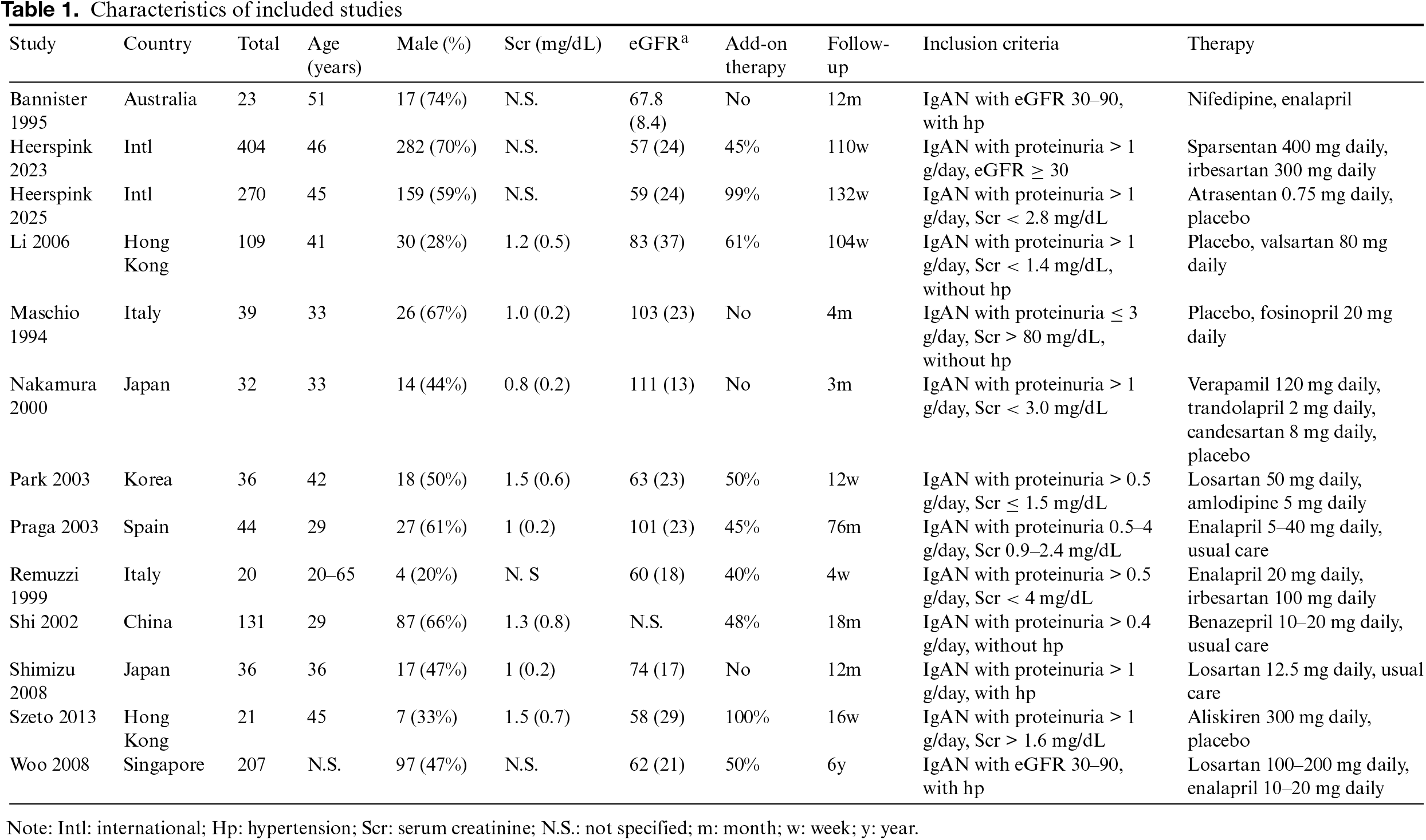
This NMA identified three specific CCBs (amlodipine, nifedipine, verapamil), four types of ACEIs (benazepril, enalapril, fosinopril, and trandolapril), four kinds of ARBs (candesartan, irbesartan, losartan, and valsartan), two types of ERAs (atrasentan and sparsentan), and one DRI (aliskiren). CCB studies were merged into the usual care group, as three previous studies had primarily defined usual care as CCB use. Two studies included patients without hypertension, three included those with hypertension, and others did not specify hypertension status. The use of add-on antihypertensive therapy varied across studies; five studies did not include add-on antihypertensives, while one study combined ACEI or ARB in all patients. Follow-up periods varied widely, from 1 month to 6 years.
Proteinuria Reduction
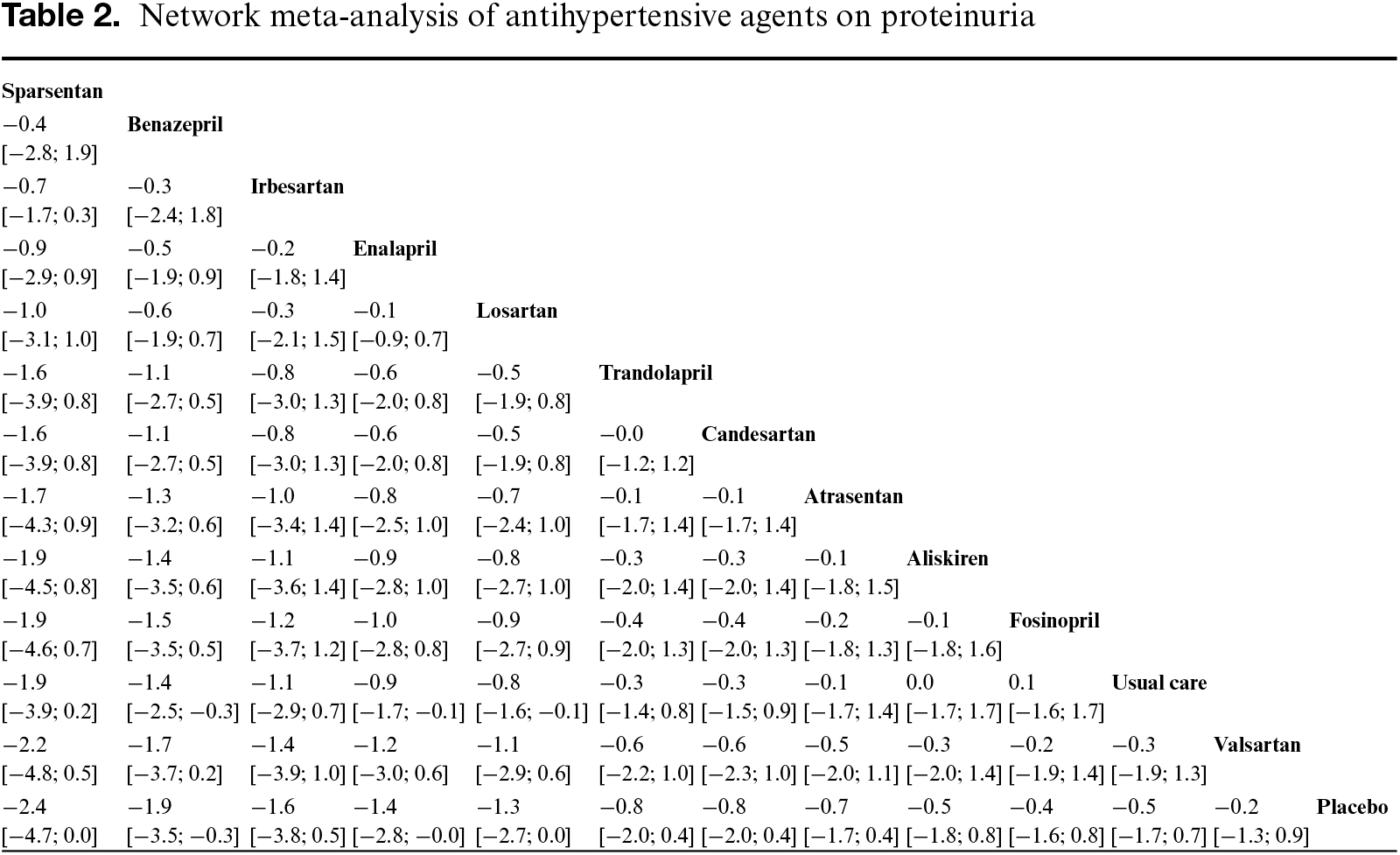
The network graph of the enrolled studies assessing proteinuria is presented in Fig. S2. Six studies used a placebo as the control treatment. Each agent is directly compared with placebo in Fig. 2A. Sparsentan demonstrated the greatest reduction in proteinuria, with a MD of 2.42 (95% CI: 0.06, 4.79), followed by benazepril (MD: 1.92, 95% CI: 0.32, 3.52), irbesartan (MD: 1.63, 95% CI: −0.51, 3.78), enalapril (MD: 1.41, 95% CI: 0, 2.83), losartan (MD: 1.33, 95% CI: −0.03, 2.69), trandolapril (MD: 0.80, 95% CI: −0.37, 1.97), candesartan (MD: 0.80, 95% CI: −0.40, 2.00), atrasentan (MD: 0.69, 95% CI: −0.32, 1.70), usual care (MD: 0.50, 95% CI: −0.66, 1.66), aliskiren (MD: 0.50, 95% CI: −0.77, 1.77), fosinopril (MD: 0.42, 95% CI: −0.75, 1.59), and valsartan (MD: 0.19, 95% CI: −0.94, 1.32).
The NMA results for proteinuria reduction are presented in Table 2. Although sparsentan showed the most significant decrease in proteinuria in direct comparisons, its superiority over benazepril, irbesartan, enalapril, losartan, trandolapril, candesartan, atrasentan, aliskiren, fosinopril, usual care, and valsartan was not statistically significant. The rank of efficiency based on 1,000 simulations is depicted in Fig. S3, with sparsentan (0.880), benazepril (0.827), irbesartan (0.723), enalapril (0.710), losartan (0.684), candesartan (0.464), trandolapril (0.459), atrasentan (0.395), aliskiren (0.343), usual care (0.326), fosinopril (0.323), valsartan (0.235), and placebo (0.132). Cochran’s Q statistic was used to assess heterogeneity and inconsistency, with a total Q value of 9.310 (df = 3, p = 0.025), a within-design Q value of 3.340 (df = 2, p = 0.188), and a between-design Q value of 5.97 0 (df = 1, p = 0.015).
eGFR Improvement
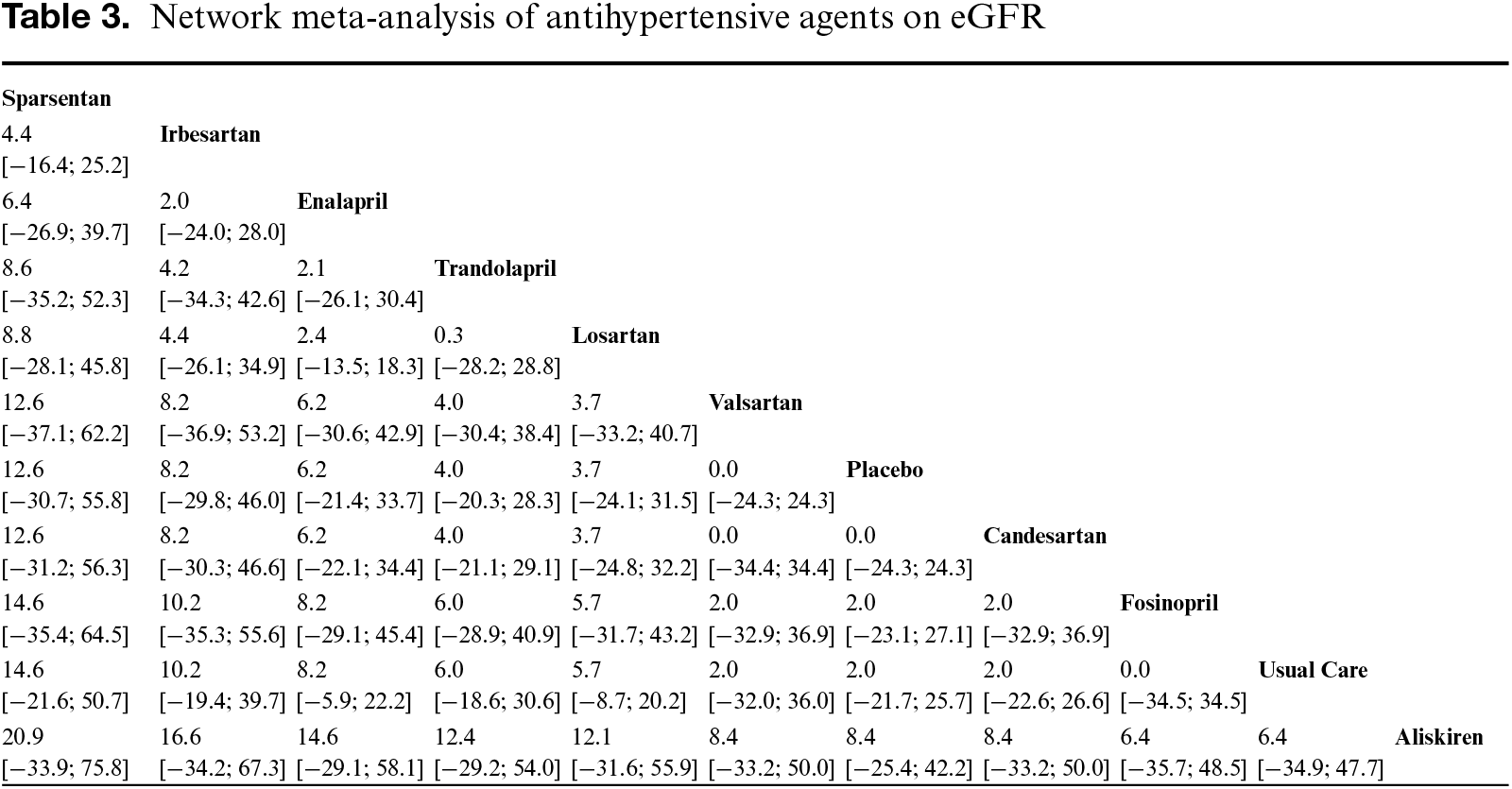
The network graph of the enrolled studies assessing proteinuria is presented in Fig. S4. Seven studies used a placebo as the control. Three studies used a placebo as the control treatment, including one evaluating the ERA atrasentan. The direct comparison of each agent with placebo is presented in Fig. 1B. Sparsentan demonstrated the most significant reduction in proteinuria, with an MD of 12.6 (95% CI: −30.7, 55.8), followed by irbesartan (MD: 8.2, 95% CI: −29.8, 46.1), enalapril (MD: 6.2, 95% CI: −21.4, 33.7), and losartan (MD: 3.73, 95% CI: −24.1, 31.5).
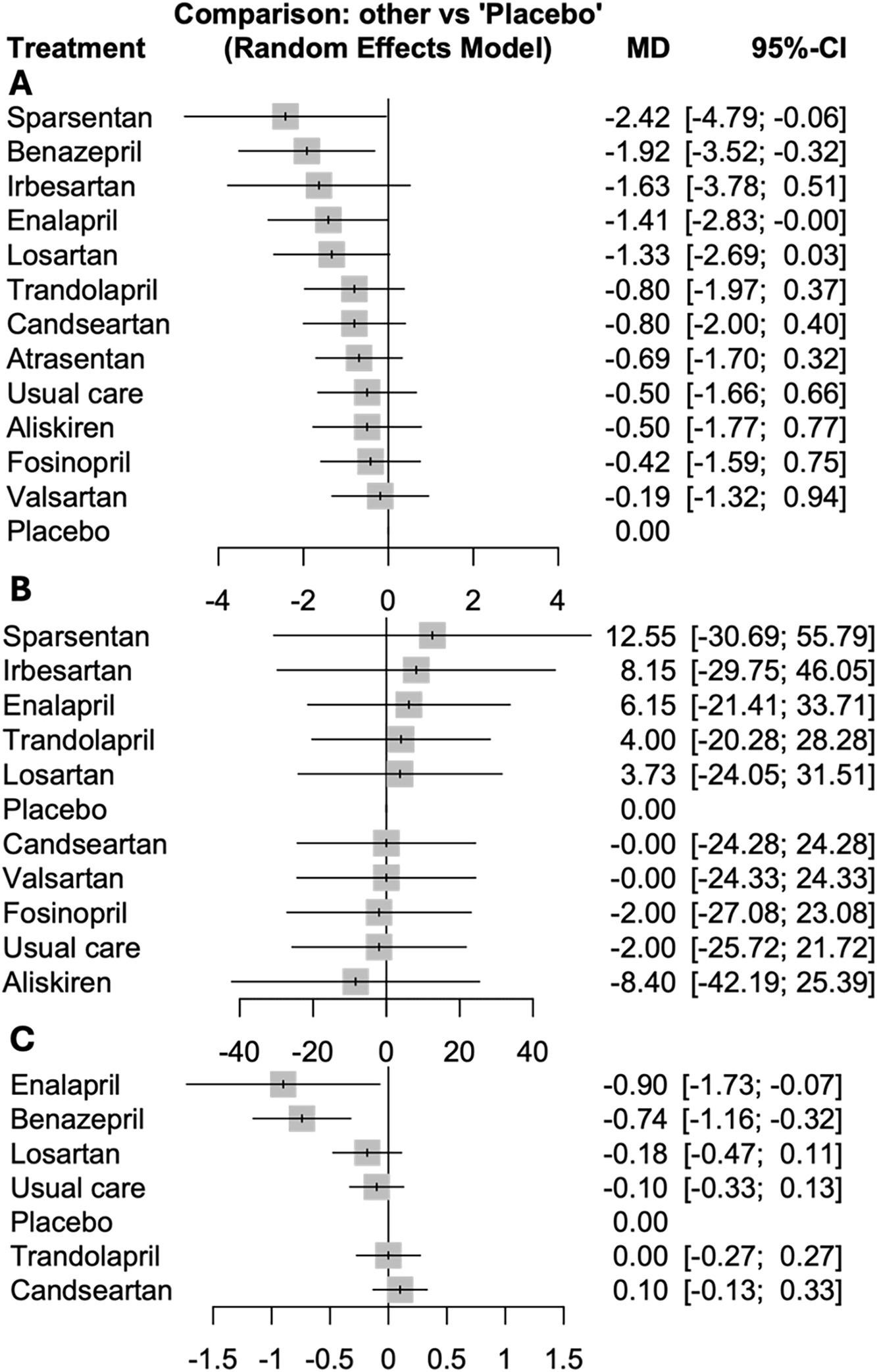
Figure 1. Direct comparisons of proteinuria reduction across treatments. (A) Proteinuria, (B) estimated glomerular filtration rate, and (C) serum creatinine.
The NMA results for proteinuria reduction are presented in Table 3. Although sparsentan showed the most significant improvement in eGFR in direct comparisons, its superiority over irbesartan, enalapril, trandolapril, losartan, and valsartan was not statistically significant. The ranking of efficacy in Scr reduction based on SUCRA values is shown in Fig. S5, with enalapril (0.923), benazepril (0.892), losartan (0.604), usual care (0.477), placebo (0.263), trandolapril (0.254), and candesartan (0.088). Q statistics to assess homogeneity and consistency showed a total Q of 0.18 (df = 1, p = 0.671), with within-design heterogeneity at Q = 0.18 (df = 1, p = 0.671) and no between-design heterogeneity (Q = 0.00, df = 0).
Reducing Scr
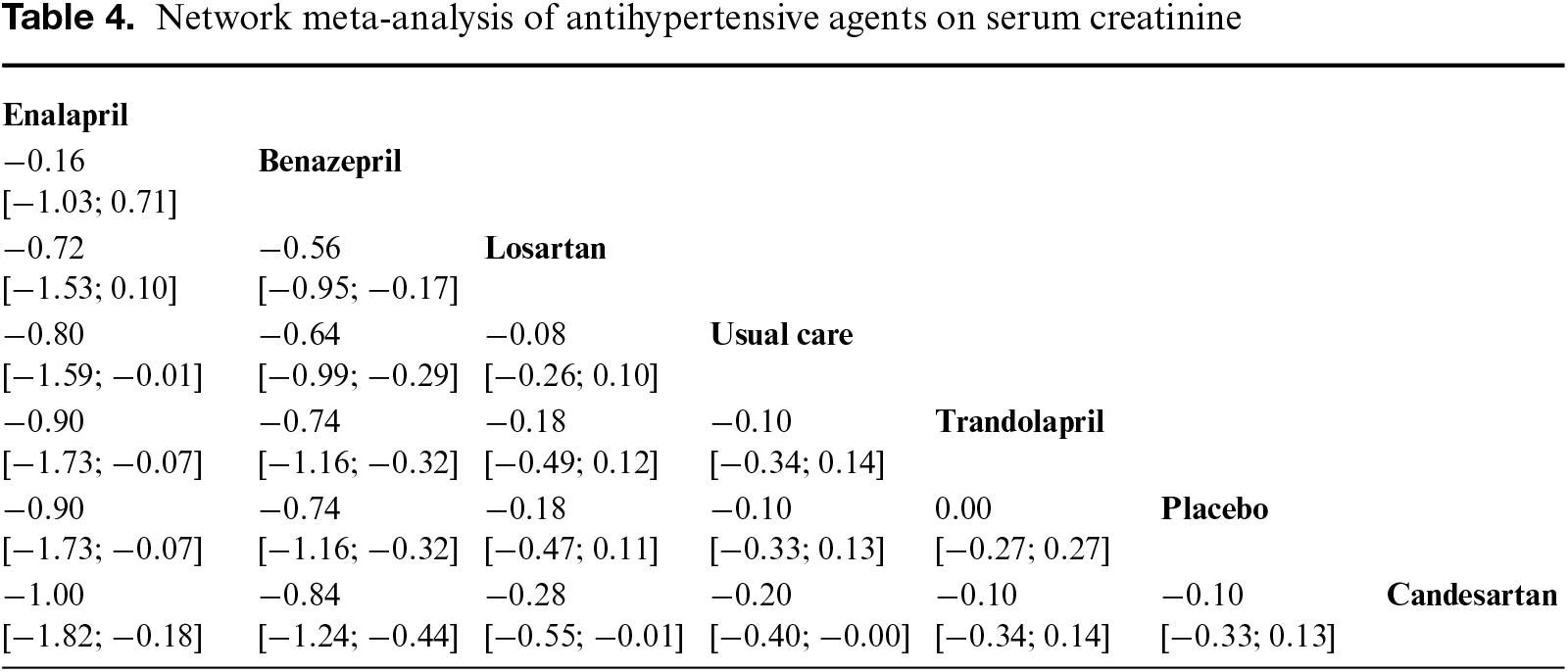
The network graph of the enrolled studies assessing Scr is presented in Fig. S6. Three studies used a placebo as the control treatment. Each agent is directly compared with placebo in Fig. 1C. Enalapril demonstrated the most significant reduction in Scr, with an MD of 0.9 (95% CI: −0.07, 1.73), followed by benazepril (MD: 0.74; 95% CI: 0.32, 1.16), losartan (MD: 0.18; 95% CI: −0.11, 0.47), and usual care (MD: 0.10; 95% CI: −0.13, 0.33).
The NMA results for Scr reduction are presented in Table 4. Enalapril showed statistical superiority over trandolapril and candesartan, with reductions of MDs of 0.90 (95% CI: 0.07, 1.73) and 1.00 (95% CI: 0.18, 1.82), respectively. The ranking of efficiency in eGFR based on SUCRA values is shown in Fig. S5, with sparsentan (0.686), irbesartan (0.643), enalapril (0.610), trandolapril (0.562), losartan (0.545), valsartan (0.465), candesartan (0.448), placebo (0.445), fosinopril (0.433), usual care (0.360), and aliskiren (0.303). Q statistics to assess homogeneity and consistency showed a total Q of 14.26 (df = 3, p = 0.003), with within-design heterogeneity at Q = 6.30 (df = 2, p = 0.043) and between-design heterogeneity at Q = 7.96 (df = 1, p = 0.005).
AEs
Due to the limited number of studies, an NMA could not be conducted for AE assessment. Instead, a meta-analysis evaluated atrasentan, valsartan, and aliskiren compared to placebo, yielding an OR of 0.93 (95% CI: 0.58–1.48, p = 0.122; I² = 52.3%; Fig. S8).
Bias and Certainty of Evidence
Egger’s test for proteinuria reduction, eGFR, Scr reduction, and AEs yielded p-values of 0.388, 0.062, 0.142, and 0.473, respectively, indicating no significant evidence of publication bias. Heat plots for proteinuria reduction and Scr were presented in Figs. S9 and S10, respectively. Notably, the comparison between enalapril and losartan demonstrated a higher degree of inconsistency. The risk of bias assessment, shown in Fig. S11, indicated that two studies had a high risk, seven had some concerns, and four had a low risk of bias. According to the GRADE approach, the certainty of evidence for proteinuria reduction was rated as moderate and downgraded due to the risk of bias. The certainty of evidence for eGFR was rated as low, downgraded due to heterogeneity and risk of bias, while the certainty of evidence for Scr was also rated as low, downgraded due to the risk of bias and imprecision.
Discussion
This NMA comprehensively evaluated the efficacy of various antihypertensive agents in IgAN, providing valuable insights into their relative renoprotective effects. Among these agents, sparsentan emerged as the most effective in reducing proteinuria and preserving eGFR; however, its superiority over other treatments could not be statistically confirmed. Benazepril, enalapril, and irbesartan ranked highest among ACEIs and ARBs for proteinuria reduction and eGFR improvement, reinforcing their well-established role in IgAN management. Additionally, other ACEIs and ARBs demonstrated greater renoprotective effects than usual care, which primarily involved CCBs, further supporting their preferential use in clinical practice. In contrast, DRIs exhibited relatively lower effectiveness in renoprotection, suggesting that they play a more limited role in IgAN treatment. Within ERAs, differences in efficacy were observed between sparsentan and atrasentan, underscoring the need for further investigation into class-specific variations. Notably, no significant safety concerns were identified, although the available data on AEs were limited. These findings are consistent with previous studies emphasizing the benefits of ACEIs and ARBs while highlighting ERAs, particularly sparsentan, as a promising emerging therapeutic option for IgAN.32
The findings of this NMA have important clinical implications for IgAN management. The consistent renoprotective benefits observed with ACEIs and ARBs reinforce their role as first-line therapy, in line with current guidelines.33,34 Benazepril, enalapril, and irbesartan, which ranked highest within their respective classes, may be preferred for maximizing proteinuria reduction and eGFR preservation. The superior efficacy of sparsentan, despite the lack of statistically confirmed superiority over other agents, highlights its potential as an emerging treatment option, particularly given its dual inhibition of the endothelin and angiotensin pathways. The absence of statistical significance may be attributed to limited sample sizes, overlapping CIs, and variations in study design and patient characteristics across included trials.
The observed differences in efficacy among ERAs suggest further research to establish their optimal use in IgAN treatment. Additionally, the relatively lower effectiveness of DRIs suggests that they may play a limited role in clinical practice. Importantly, no major safety concerns were identified, supporting these treatments’ feasibility in real-world settings. These findings align with previous research demonstrating the renoprotective effects of RAAS blockade while introducing ERAs as a promising adjunctive strategy for patients at high risk of progression despite standard therapies.
The therapeutic effects of antihypertensive agents in IgAN extend beyond blood pressure control; they target key pathophysiological mechanisms involved in disease progression.35 ACEIs and ARBs remain the cornerstone of treatment by inhibiting the RAAS, reducing intraglomerular pressure, and exerting anti-inflammatory and antifibrotic effects.36 Their superior ranking in this NMA reinforces their role as first-line therapies. ERAs, such as sparsentan and atrasentan, target the endothelin system, with sparsentan offering dual RAAS and endothelin-1 inhibition, potentially enhancing renoprotection. Differences in efficacy between ERAs warrant further investigation. DRIs, which act upstream in the RAS, demonstrate relatively lower efficacy, possibly due to compensatory mechanisms limiting their renoprotective impact.37 While CCBs aid blood pressure control, their direct renoprotective effects appear inferior to RAAS inhibitors.
Combination therapy in IgAN presents a promising approach to enhance renoprotection by targeting multiple pathophysiological mechanisms. Combining ERAs, particularly sparsentan, with ACEIs or ARBs may reduce proteinuria by addressing the angiotensin II and endothelin-1 pathways.38 Similarly, SGLT2 inhibitors have emerged as adjunctive therapies that reduce glomerular hyperfiltration and inflammation, demonstrating significant renoprotective effects in combination with RAAS inhibitors.39 For high-risk IgAN patients, corticosteroids or immunosuppressants may be used alongside RAAS inhibition, as evidenced by the TESTING trial. However, careful patient selection is necessary due to potential adverse effects.40 Combination strategies should be tailored to disease severity and individual patient risk, and further studies are needed to refine their long-term efficacy and safety.
This study has several limitations that need to be considered when interpreting the findings. First, although NMA allows indirect comparisons between treatments, the inherent variability in study designs, patient populations, and treatment regimens may introduce heterogeneity, which can affect the robustness of the results. Second, while this analysis identified sparsentan as the most effective agent for proteinuria reduction and eGFR preservation, its superiority over other treatments was not statistically confirmed. This highlights the need for more direct head-to-head trials. Third, data on combination therapies, particularly ERAs with RAAS or SGLT2 inhibitors, remain limited, necessitating further clinical studies to establish their optimal use and long-term effects. Additionally, due to the limited availability of safety data, especially for newer agents such as sparsentan and atrasentan, a comprehensive assessment of the risk–benefit profiles of these agents cannot be conducted. Finally, because of the limited availability of safety data across included trials, a formal NMA for AEs could not be undertaken, which restricts the ability to compare the safety profiles of interventions. This underscores the need for future RCTs to incorporate standardized and comprehensive safety outcome reporting.
Conclusion
This NMA reinforces the renoprotective roles of ACEIs and ARBs in IgAN, while highlighting emerging therapies such as ERAs. Sparsentan, a dual ERA and angiotensin receptor blocker, demonstrates excellent efficacy in reducing proteinuria, suggesting its potential as a promising treatment option. However, its superiority over other agents cannot be statistically confirmed. Furthermore, benazepril, enalapril, and irbesartan rank highest among RAAS inhibitors, demonstrating superior proteinuria reduction and eGFR preservation.
Acknowledgement
None.
Funding Source
None.
Author Contributions
M.E. contributed to the study design and drafting. Y.I. and G.G. performed the literature search, quality assessment, data extraction, and analysis. A.G., S.V., and C.B. contributed to data interpretation and manuscript revision. All authors have read the manuscript and agree with its content and data.
Data Availability
The datasets are available from the corresponding author upon reasonable request.
Ethical Statement
Institutional Review Board approval was waived due to the nature of this meta-analysis.
Conflict of Interest
The authors report no conflicts of interest in this work.
Supplemental Information
Supplemental information for this article can be found online at https://sup.jclinque.com/api/articles/69/download-suppl.
References
[1] Lee M, Suzuki H, Nihei Y, Matsuzaki K, Suzuki Y. Ethnicity and IgA nephropathy: worldwide differences in epidemiology, timing of diagnosis, clinical manifestations, management and prognosis. Clin Kidney J. 2023;16(Supplement_2):ii1–ii8. doi:10.1093/ckj/sfad199.
[2] Kiryluk K, Freedberg DE, Radhakrishnan J, et al. Global incidence of IgA nephropathy by race and ethnicity: a systematic review. Kidney 360. 2023;4(8):1112–1122. doi:10.34067/kid.0000000000000165.
[3] Kwon CS, Daniele P, Forsythe A, Ngai C. A systematic literature review of the epidemiology, health-related quality of life impact, and economic burden of immunoglobulin A nephropathy. J Health Econ Outcomes Res. 2021;8(2):36–45. doi:10.36469/001c.26129.
[4] Cattran DC, Floege J, Coppo R. Evaluating progression risk in patients with immunoglobulin A nephropathy. Kidney Int Rep. December 01, 2023;8(12):2515–2528. doi:10.1016/j.ekir.2023.09.020.
[5] Bensink ME, Goldschmidt D, Zhou ZY, Wang K, Lieblich R, Bunke MC. Kidney failure attributed to immunoglobulin A nephropathy: a USRDS retrospective cohort study of epidemiology, treatment modalities, and economic burden. Kidney Med. February 2024;6(2):100759. doi:10.1016/j.xkme.2023.100759.
[6] Lerma EV, Bensink ME, Thakker KM, et al. Impact of proteinuria and kidney function decline on health care costs and resource utilization in adults with IgA nephropathy in the United States: a retrospective analysis. Kidney Med. 2023;5(9):100693. doi:10.1016/j.xkme.2023.100693.
[7] Del Vecchio L, Allinovi M, Comolli S, Peiti S, Rimoldi C, Locatelli F. Drugs in development to treat IgA nephropathy. Drugs. May 2024;84(5):503–525. doi:10.1007/s40265-024-02036-1.
[8] Bagchi S, Mani K, Swamy A, et al. Supportive management of IgA nephropathy with renin-angiotensin blockade, the AIIMS primary IgA nephropathy cohort (APPROACH) study. Kidney Int Rep. June 01, 2021;6(6):1661–1668. doi:10.1016/j.ekir.2021.02.018.
[9] Barratt J, Liew A, Yeo SC, et al. Phase 2 trial of cemdisiran in adult patients with IgA nephropathy: a randomized controlled trial. Clin J Am Soc Nephrol. April 2024;1(4):452–462. doi:10.2215/cjn.0000000000000384.
[10] Lim RS, Yeo SC, Barratt J, Rizk DV. An update on current therapeutic options in IgA nephropathy. J Clin Med. February 2024;7 13(4):947. doi:10.3390/jcm13040947.
[11] Roccatello D, Careddu A, Ferro M, et al. The steroid-sparing effects of a mycophenolate mofetil-based regimen in the management of immunoglobulin A nephropathy in patients with histologically active lesions: a comparison with a control cohort receiving conventional therapy. J Nephrol. November 2023;36(8):2223–2231. doi:10.1007/s40620-023-01636-6.
[12] Floege J, Bernier-Jean A, Barratt J, Rovin B. Treatment of patients with IgA nephropathy: a call for a new paradigm. Kidney Int. January 31, 2025;107(4):640–651. doi:10.1016/j.kint.2025.01.014.
[13] Iino Y, Hayashi M, Kawamura T, et al. Interim evidence of the renoprotective effect of the angiotensin II receptor antagonist losartan versus the calcium channel blocker amlodipine in patients with chronic kidney disease and hypertension: a report of the Japanese Losartan Therapy Intended for Global Renal Protection in Hypertensive Patients (JLIGHT) Study. Clin Exp Nephrol. September 2003;7(3):221–230. doi:10.1007/s10157-003-0241-3.
[14] Hunter-Dickson M, Wong MG. The role of endothelin receptor antagonists in IgA nephropathy. Nephrology (Carlton). September 2024;29 Suppl 2:30–33. doi:10.1111/nep.14364.
[15] Open Science Framework. Efficacy of antihypertensive therapy in primary IgA nephropathy in adults: a systematic review and network meta-analysis of randomized controlled trials. doi:10.17605/OSF.IO/TYPJ610.69854/jcq.2025.0010. Published 2025, Accessed March 25, 2025. https://osfio/typj6.
[16] Page MJ, McKenzie JE, Bossuyt PM, et al. The PRISMA, 2020 statement: an updated guideline for reporting systematic reviews. Bmj. March 2021;29 372(n71):n71. doi:10.1136/bmj.n71.
[17] Sterne JAC, Savović J, Page MJ, et al. RoB 2: a revised tool for assessing risk of bias in randomised trials. Bmj. August 28, 2019;366:l4898. doi:10.1136/bmj.l4898.
[18] Shao S-C, Kuo L-T, Huang Y-T, Lai P-C, Chi C-C. Using Grading of Recommendations Assessment, Development, and Evaluation (GRADE) to rate the certainty of evidence of study outcomes from systematic reviews: a quick tutorial. Dermatol Sin. 2023;41(1):3–7. doi:10.4103/ds.DS-D-22-00154.
[19] Bannister KM, Weaver A, Clarkson AR, Woodroffe AJ. Effect of angiotensin-converting enzyme and calcium channel inhibition on progression of IgA nephropathy. Contrib Nephrol. 1995;111:184–192. discussion 192–3. doi:10.1159/000423895.
[20] Heerspink HJL, Radhakrishnan J, Alpers CE, et al. Sparsentan in patients with IgA nephropathy: a prespecified interim analysis from a randomised, double-blind, active-controlled clinical trial. Lancet. May 13, 2023;401(10388):1584–1594. doi:10.1016/s0140-6736(23)00569-x.
[21] Heerspink HJL, Jardine M, Kohan DE, et al. Atrasentan in patients with IgA nephropathy. N Engl J Med. February 06, 2025;6(6):544–554. doi:10.1056/NEJMoa2409415.
[22] Li PK, Leung CB, Chow KM, et al. Hong Kong study using valsartan in IgA nephropathy (HKVIN): a double-blind, randomized, placebo-controlled study. Am J Kidney Dis. May 2006;47(5):751–760. doi:10.1053/j.ajkd.2006.01.017.
[23] Maschio G, Cagnoli L, Claroni F, et al. ACE inhibition reduces proteinuria in normotensive patients with IgA nephropathy: a multicentre, randomized, placebo-controlled study. Nephrol Dial Transplant. 1994;9(3):265–269. doi:10.1093/ndt/9.3.265.
[24] Nakamura T, Ushiyama C, Suzuki S, et al. Effects of angiotensin-converting enzyme inhibitor, angiotensin II receptor antagonist and calcium antagonist on urinary podocytes in patients with IgA nephropathy. Am J Nephrol. September–October 2000;20(5):373–379. doi:10.1159/000013619.
[25] Park HC, Xu ZG, Choi S, et al. Effect of losartan and amlodipine on proteinuria and transforming growth factor-beta1 in patients with IgA nephropathy. Nephrol Dial Transplant. June 2003;18(6):1115–1121. doi:10.1093/ndt/gfg090.
[26] Praga M, Gutiérrez E, González E, Morales E, Hernández E. Treatment of IgA nephropathy with ACE inhibitors: a randomized and controlled trial. J Am Soc Nephrol. June 2003;14(6):1578–1583. doi:10.1097/01.asn.0000068460.37369.dc.
[27] Remuzzi A, Perico N, Sangalli F, et al. ACE inhibition and ANG II receptor blockade improve glomerular size-selectivity in IgA nephropathy. Am J Physiol. March 1999;276(3):F457–66. doi:10.1152/ajprenal.1999.276.3.F457.
[28] Shi Y, Chen W, Jalal D, et al. Clinical outcome of hyperuricemia in IgA nephropathy: a retrospective cohort study and randomized controlled trial. Kidney Blood Press Res. 2012;35(3):153–160. doi:10.1159/000331453.
[29] Shimizu A, Takei T, Uchida K, Tsuchiya K, Nitta K. Low-dose losartan therapy reduces proteinuria in normotensive patients with immunoglobulin A nephropathy. Hypertens Res. September 2008;31(9):1711–1717. doi:10.1291/hypres.31.1711.
[30] Szeto CC, Kwan BC, Chow KM, Leung CB, Li PK. The safety and short-term efficacy of aliskiren in the treatment of immunoglobulin a nephropathy–a randomized cross-over study. PLoS One. 2013;8(5):e62736. doi:10.1371/journal.pone.0062736.
[31] Woo KT, Chan CM, Choong HL, et al. High dose Losartan and ACE gene polymorphism in IgA nephritis. Genomic Med. December 2008;2(3–4):83–91. doi:10.1007/s11568-009-9030-8.
[32] Noor SM, Abuazzam F, Mathew R, Zhang Z, Abdipour A, Norouzi S. IgA nephropathy: a review of existing and emerging therapies. Front Nephrol. 2023;3:1175088. doi:10.3389/fneph.2023.1175088.
[33] Rovin BH, Adler SG, Barratt J, et al. Clinical practice guideline for the management of glomerular diseases. Kidney Int. 2021;100(4):S1–S276. doi:10.1016/j.kint.2021.05.021.
[34] Vivarelli M, Samuel S, Coppo R, et al. IPNA clinical practice recommendations for the diagnosis and management of children with IgA nephropathy and IgA vasculitis nephritis. Pediatr Nephrol. February 2025;40(2):533–569. doi:10.1007/s00467-024-06502-6.
[35] Maixnerova D, Hartinger J, Tesar V. Expanding options of supportive care in IgA nephropathy. Clin Kidney J. December 2023;16(Suppl 2):ii47–ii54. doi:10.1093/ckj/sfad201.
[36] Alcocer LA, Bryce A, De Padua Brasil D, et al. The pivotal role of angiotensin-converting enzyme inhibitors and angiotensin II receptor blockers in hypertension management and cardiovascular and renal protection: a critical appraisal and comparison of international guidelines. Am J Cardiovasc Drugs. November 2023;23(6):663–682. doi:10.1007/s40256-023-00605-5.
[37] Bomback AS, Toto R. Dual blockade of the Renin-Angiotensin–Aldosterone system: beyond the ACE inhibitor and angiotensin-II receptor blocker combination. Am J Hypertens. 2009;22(10):1032–1040. doi:10.1038/ajh.2009.138.
[38] Kohan DE, Bedard PW, Jenkinson C, Hendry B, Komers R. Mechanism of protective actions of sparsentan in the kidney: lessons from studies in models of chronic kidney disease. Clin Sci (Lond). June 2024;5(11):645–662. doi:10.1042/cs20240249.
[39] Bailey CJ, Day C, Bellary S. Renal protection with SGLT2 inhibitors: effects in acute and chronic kidney disease. Curr Diab Rep. January 2022;22(1):39–52. doi:10.1007/s11892-021-01442-z.
[40] Lv J, Wong MG, Hladunewich MA, et al. Effect of oral methylprednisolone on decline in kidney function or kidney failure in patients with IgA nephropathy: the TESTING randomized clinical trial. J Am Med Assoc. 2022;327(19):1888–1898. doi:10.1001/jama.2022.5368.
 |
Copyright: © 2025 Iida et al. This work is licensed under a Creative Commons Attribution 4.0 International License, which permits unrestricted use, distribution, and reproduction in any medium, provided the original work is properly cited. |