| Journal of Clinical Question, 2024, Vol. 1, No. 2, 57–66 https://doi.org/10.69854/jcq.2024.0006 Advance access publication date 22 October 2024 |
 |
Meta-Analysis
Effectiveness of Goreisan Herbal Medicine in Preventing Recurrence After Chronic Subdural Hematoma Surgery: A Systematic Review and Meta-Analysis
1International Education College, Shandong University of Traditional Chinese Medicine, Jinan, China.
2Department of Public Health, International College, Krirk University, Bangkok, Thailand.
*Corresponding Author: e-mail: zhao.ye@staff.krirk.ac.th
Submitted: September 19, 2024 Accepted: October 21, 2024
Clinical Question Box
Is Goreisan effective in preventing the recurrence of chronic subdural hematoma?
Meta-analysis of randomized controlled trials suggested a trend toward reducing recurrence without statistical significance. However, a comprehensive meta-analysis, including both prospective and retrospective studies, demonstrated a statistically significant reduction in the recurrence of chronic subdural hematoma. No prominent adverse events were observed in the Goreisan group, but the evidence supporting the use of Goreisan remains weak.
Abstract
Introduction: Chronic subdural hematoma (CSDH) is a common condition among older adults that frequently necessitates surgical intervention. Despite advancements in surgical techniques, recurrence remains a significant concern. Goreisan, a traditional herbal medicine, has been proposed as a potential treatment to reduce the recurrence rate of CSDH. Methods: On August 1, 2024, a systematic search was conducted using PubMed, Web of Science, Cochrane Library, Wanfang Data, and Ichushi databases to identify studies evaluating the effect of Goreisan on CSDH recurrence. Data from randomized controlled trials (RCTs) and retrospective studies were extracted and pooled using a random-effects model. Results: A total of ten studies involving 8,073 patients were analyzed, with 4,699 patients receiving treatment with Goreisan. The pooled analysis of RCTs showed an odds ratios (OR) of 0.55 (95% confidence interval [CI]: 0.30 to 1.02, p = 0.06; I2 = 20%), suggesting a trend toward reducing recurrence. Retrospective studies revealed an OR of 0.67 (95% CI: 0.44 to 1.01, p = 0.05; I2 = 46%). The overall analysis of all included studies for CSDH recurrence reduction showed an OR of 0.64 (95% CI: 0.46 to 0.88, p = 0.006; I2 = 35%), indicating a statistically significant reduction in recurrence. A meta-analysis of three studies reporting adverse events yielded an OR of 4.95 (95% CI: 0.56 to 43.97, p = 0.15; I2 = 0%), with no significant increase in adverse events. Conclusion: Goreisan appears to be a promising adjunctive option for preventing the recurrence of CSDH. Its favorable safety profile supports its consideration in clinical settings.
Keywords: Goreisan, chronic subdural hematoma, recurrence, effectiveness, meta-analysis.
Introduction
Chronic subdural hematomas (CSDH) are traditionally thought to arise from slow venous bleeding, often involving the bridging veins on the brain’s surface.1 The exact pathophysiology of CSDH is complex and not entirely understood.2 Beyond recurrent microhemorrhages from delicate neovascular structures within the hematoma membrane, CSDH may involve other processes. Recent research investigates additional factors, including angiogenesis, blood vessel development, and inflammatory responses.3 Studies indicate an annual incidence of 1 to 13.5 cases per 100,000 individuals, with the rate escalating with age, particularly among older adults.4 For individuals aged 65 or older, the incidence rises significantly to 58.1 per 100,000, highlighting the impact of an aging demographic.5
For an aging patient population, there is an increasing need for more minimally invasive surgeries and effective pharmacotherapies. Over the decades, burr holes and craniotomy have been the standard methods for removing hematomas, with innovations occurring worldwide.6 Since 2000, middle meningeal artery embolization has been considered a valuable approach for initial or secondary treatment of CSDH.7 However, the recurrence rate after surgical evacuation has been reported to be 12%.8 Apart from surgical interventions, CSDH develops and progresses through trauma and inflammation that lead to the formation of membranes with leaky neovessels. Various drugs targeting these mechanisms are currently being explored as potential treatment options.9
Goreisan, also known as Wu Ling San in China and Oreongsan in Korea, is a traditional herbal medicine that has been used for centuries in East Asian cultures.10 It consists of five ingredients: Alismatis Rhizoma, Polyporus, Poria, Cinnamomi Cortex, and Atractylodis Lanceae Rhizoma.11 Goreisan is known for its diuretic and anti-inflammatory effects and has been applied in treating conditions related to fluid retention due to its ability to inhibit aquaporin (AQP) water channels.12 Recently, Goreisan has attracted interest for its potential role in preventing CSDH recurrence, primarily due to its effects on microcirculation and inflammation modulation. The first report on its effectiveness in treating CSDH was published in 2009 on PubMed.13 Several randomized controlled trials (RCTs) have identified the effectiveness of Goreisan in preventing the recurrence of CSDH after surgery; however, the conclusions have not been consistent.14,15
Several studies have summarized Goreisan’s effectiveness in treating CSDH.16,17 However, no comprehensive meta-analysis has been conducted to determine its efficacy in preventing CSDH recurrence. This study aimed to provide solid evidence for the role of Goreisan as an adjunctive treatment in CSDH management by compiling data from available studies.
Methods
Search Strategy and Selection Criteria
A comprehensive literature search was conducted on August 1, 2024, using multiple databases, including PubMed, Cochrane Library, Web of Science, Wanfang Data, and Ichushi. The search strategy was designed to capture all relevant studies, using “chronic subdural hematoma” as the patient population and “Goreisan”, “Wu Ling San”, or “Oreongsan” as the intervention. No language restrictions were applied, allowing the inclusion of studies from diverse regions and languages. Additional sources, such as reference lists of critical articles and relevant reviews, were manually searched to ensure comprehensive coverage.
Inclusion and Exclusion Criteria
Studies were included if they met the following criteria: (1) involved patients diagnosed with CSDH, (2) included intervention with Goreisan, (3) compared the intervention with standard treatment or placebo, and (4) reported outcomes on the recurrence of CSDH. Both RCTs and retrospective cohort studies were eligible for inclusion. The exclusion criteria were: (1) lacking a control group, (2) not reporting on recurrence outcomes, or (3) including fewer than ten cases, as smaller studies could contribute to increased bias and variability in the meta-analysis.
Data Extraction and Quality Assessment
This study adhered to the Preferred Reporting Items for Systematic Reviews and Meta-Analyses (PRISMA) guidelines. Two reviewers (M.T. and J.M.) independently collected data using a predefined, standardized data extraction form. The extracted data included study characteristics (e.g., study design, sample size), participant demographics, intervention details (such as dosage and administration methods), follow-up duration, and recurrence rates. Discrepancies between the reviewers were resolved through discussion or consultation with a third reviewer (O.O.) to ensure accuracy and consistency.
The quality of RCTs was assessed using the Cochrane Risk of Bias tool, which evaluates methodological rigor across domains such as random sequence generation, allocation concealment, blinding of participants and personnel, and handling of incomplete outcome data. For retrospective cohort studies, quality was appraised using the Newcastle-Ottawa Scale, which evaluates selection bias, comparability of study groups, and the robustness of outcome assessment.
Outcomes
The primary outcome of interest was the recurrence rate of CSDH following intervention with Goreisan. Secondary outcomes included treatment-related adverse effects, a subgroup analysis of Goreisan for different types of CSDH, and a comparison of antithrombotic usage between the Goreisan and control groups. CSDH types were classified as homogeneous, separated, laminar, and trabecular. The homogeneous and separated types were considered more prone to recurrence, while the laminar and trabecular types were less prone.18
Statistical Analysis
A meta-analysis employed a random-effects model to account for study variability and provide more generalized estimates applicable across different study settings. For dichotomous outcomes, odds ratios (ORs) with 95% confidence intervals (CIs) were calculated. Subgroup analyses were performed based on study design (RCT versus retrospective cohort). Statistical heterogeneity was assessed using the I2 statistic; values greater than 50% indicated substantial heterogeneity.19 All statistical analyses were performed using Review Manager version 5.3 (Cochrane Collaboration, Oxford, UK), and p-values less than 0.05 were considered statistically significant.
Results
Study Characteristics
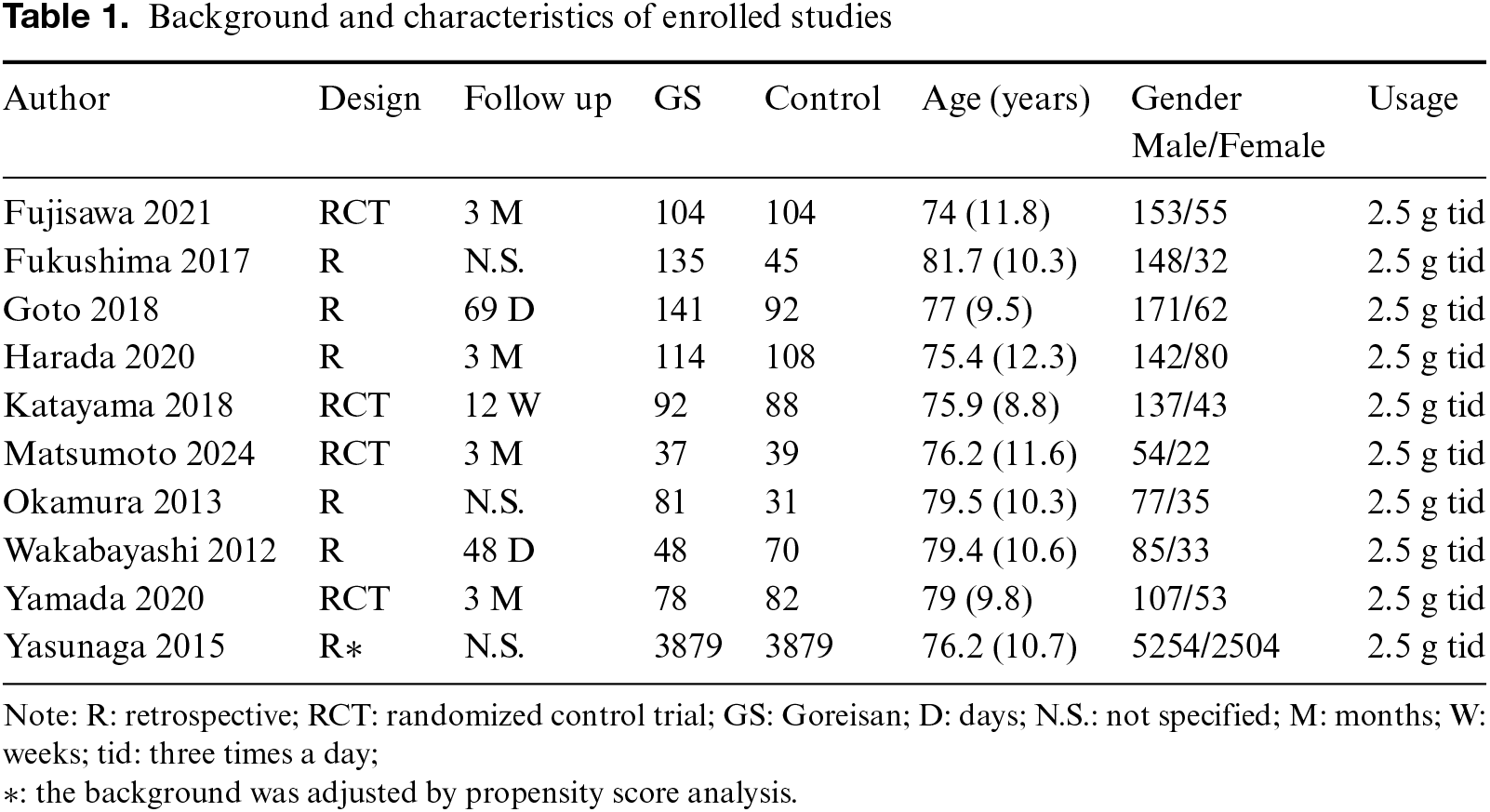
After searching the database, 103 studies were identified (Fig. S1). After removing duplicates and completing the first and second screenings, ten studies met the inclusion criteria: four RCTs and six retrospective cohort studies (Table 1).14,15,20–27 All studies were conducted in Japan, and Goreisan was administered at a dosage of 2.5 g three times daily. A total of 8,073 patients were analyzed, with 4,699 patients receiving Goreisan and 3,374 serving as controls. The duration of Goreisan treatment varied from 12 weeks to 3 months. The mean age of participants ranged from 74 to 81.7 years, with a male predominance in all studies.
Recurrence of CSDH
The pooled analysis of RCTs demonstrated that Goreisan reduced the recurrence of CSDH compared to the control group, with an OR of 0.55 (95% CI: 0.30 to 1.02, p = 0.06; I2 = 20%) (Fig. 1). The pooled analysis of retrospective studies revealed an OR of 0.67 (95% CI: 0.44 to 1.01, p = 0.05; I2 = 46%). The pooled analysis of all studies for the reduction of CSDH recurrence revealed an OR of 0.64 (95% CI: 0.46 to 0.88, p = 0.006; I2 = 35%), indicating a statistically significant difference.
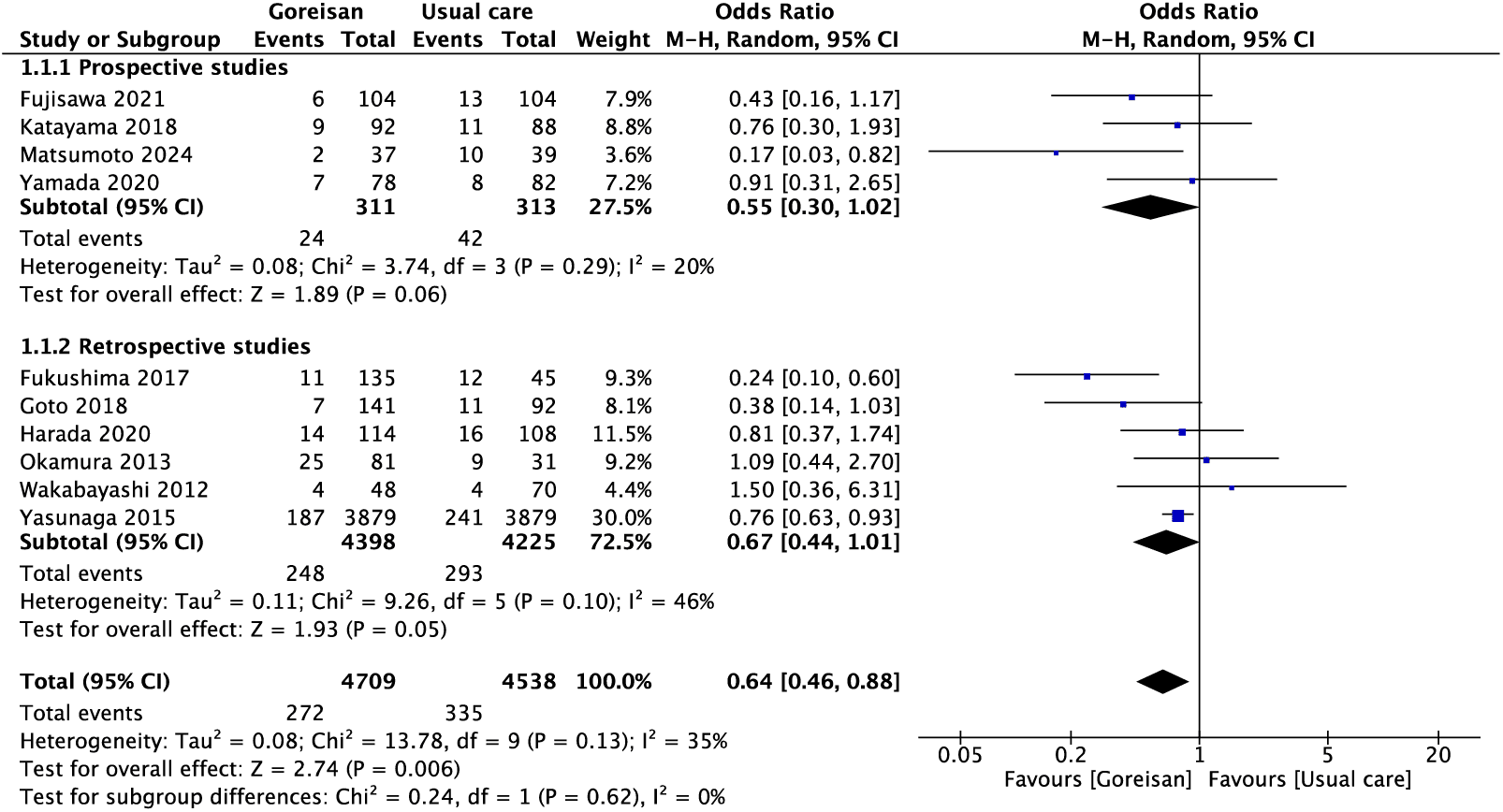
Figure 1. Meta-analysis of recurrence in prospective and retrospective studies. CI: confidence interval.
Recurrence of CSDH by Types
Subgroup analysis based on the types of CSDH is presented in Fig. 2. Two studies evaluated the efficacy of Goreisan for homogeneous and separated types, yielding an OR of 0.55 (95% CI: 0.19 to 1.29, p = 0.15; I2 = 44%). For laminar and trabecular types of CSDH, the OR was 1.34 (95% CI: 0.21 to 8.47, p = 0.76; I2 = 0%). The overall effect across all CSDH types exhibited an OR of 0.60 (95% CI: 0.32 to 1.14, p = 0.35, I2 = 0%). All subgroups demonstrated no statistically significant differences.
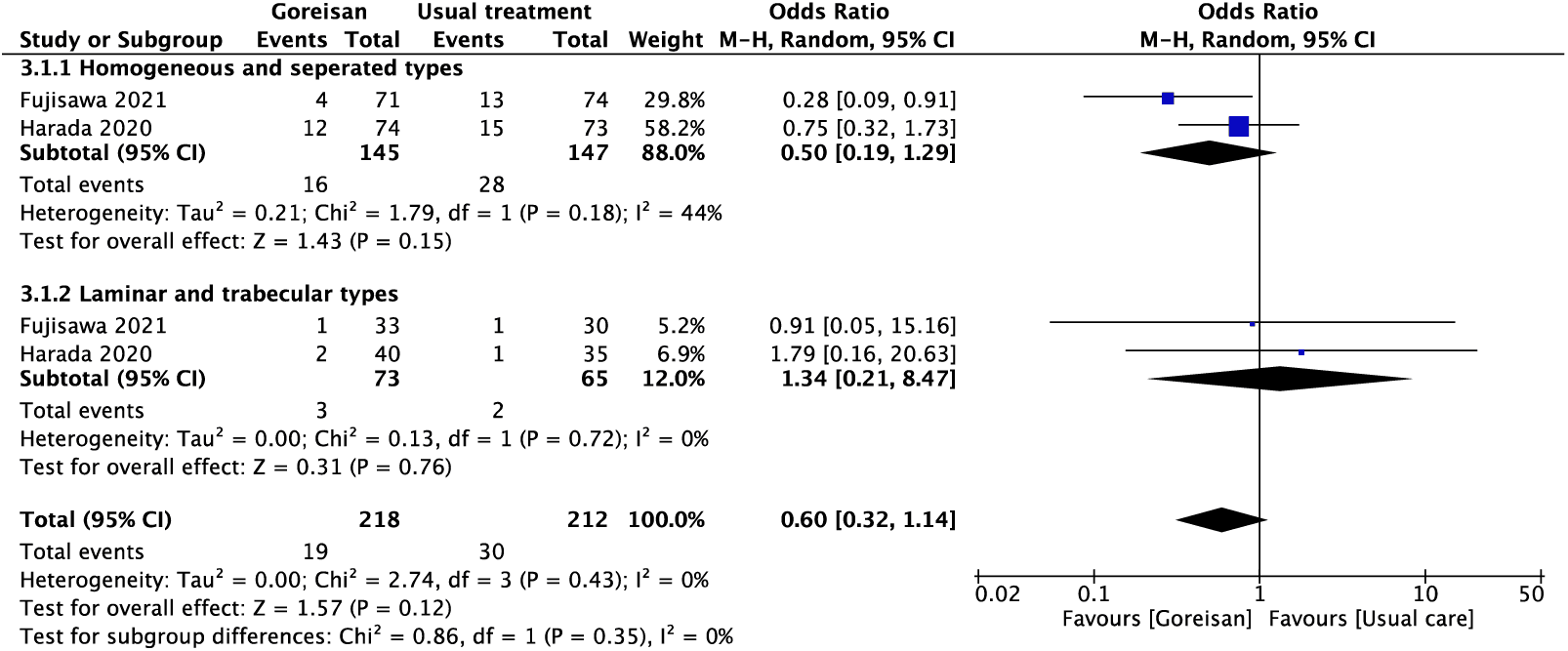
Figure 2. Effectiveness of Goreisan in different chronic subdural hematoma types. CI: confidence interval.
Background of Antithrombotic Usage
The risk difference (RD) in antithrombotic usage between the Goreisan and control groups is shown in Fig. 3. The pooled analysis of six studies indicated that the control group had a higher prevalence of antiplatelet usage, with an RD of 0.07 (95% CI: 0.03 to 0.11, p < 0.001; I2 = 0%). In contrast, the pooled analysis did not reveal a significant difference in anticoagulant usage between the Goreisan and control groups, with an RD of 0.01 (95% CI: −0.03 to 0.06, p = 0.55; I2 = 46%). Overall, the pooled analysis showed that the control group had a higher usage of antiplatelet or anticoagulant agents, with a lower RD of 0.03 (95% CI: 0.01 to 0.06, p = 0.02; I2 = 74.3%).
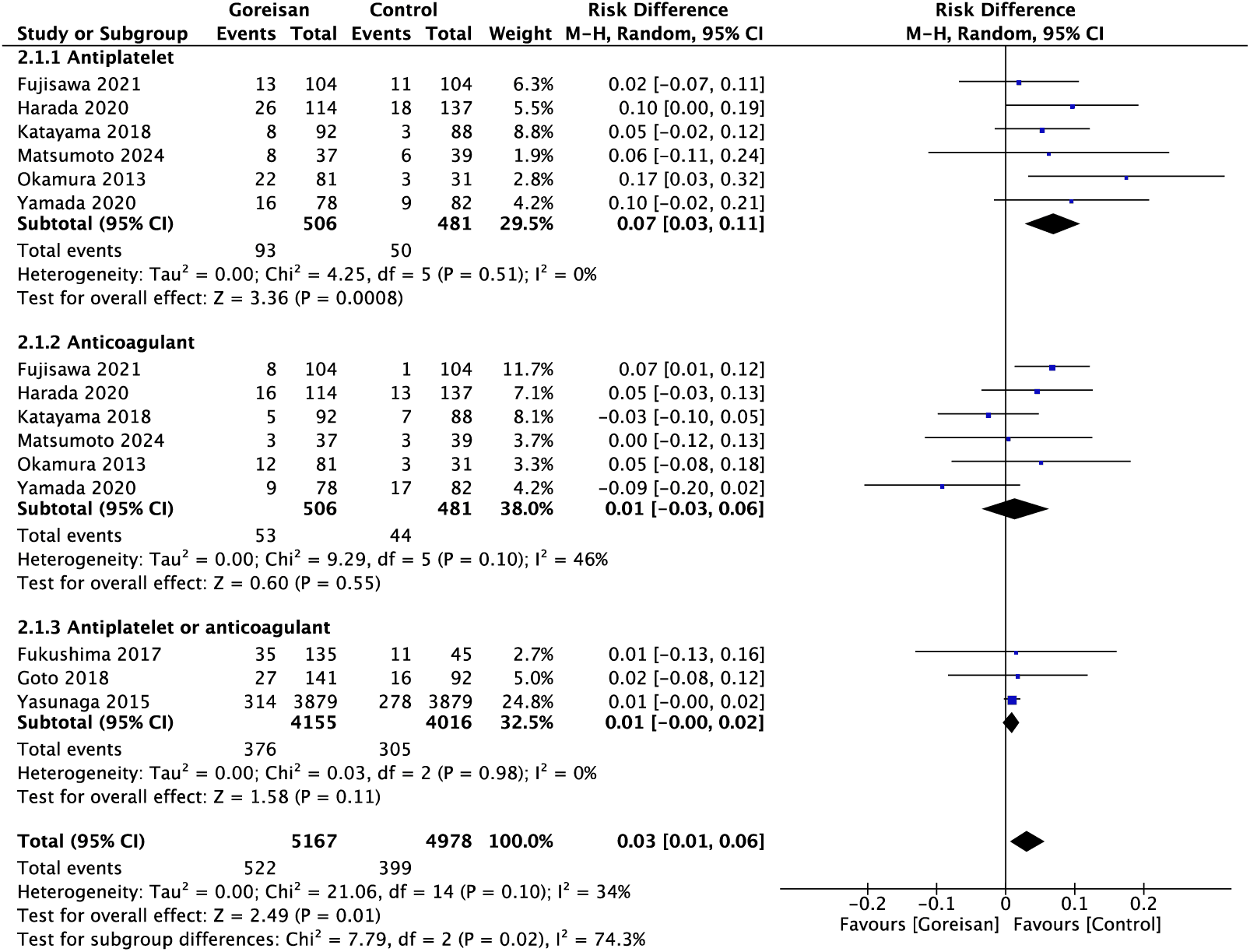
Figure 3. Background of antithrombotic usage in two groups. CI: confidence interval.
Adverse Events
Three studies reported adverse events in both groups. A pooled analysis revealed an OR of 4.95 (95% CI: 0.56 to 43.97, p = 0.15; I2 = 0%) for adverse events (Fig. 4). No statistical difference was found between the Goreisan and control groups. Six studies reported adverse events in the Goreisan group alone, and the pooled incidence of adverse events was 1% (95% CI: 0 to 2%) (Fig. S2).

Figure 4. Adverse events analysis of Goreisan treatment. CI: confidence interval.
Risk Assessment
The risk of bias for RCTs is presented in Fig. S3. Due to the absence of an additional placebo in the control group, all studies exhibited performance bias. For retrospective studies, the risk of bias was assessed using the Newcastle-Ottawa Assessment Scale (S. Table). Most studies were rated between seven and eight stars. The risk of publication bias is shown in Figs. S4 to S7, and no significant publication bias was detected.
Discussion
This meta-analysis provides strong evidence supporting the effectiveness of Goreisan in the recurrence of chronic subdural hematoma (CSDH) following burr hole surgery. The analysis, which included data from 8,073 patients across randomized controlled trials (RCTs) and retrospective cohort studies, revealed a significant decrease in recurrence rates with the use of Goreisan. These findings are consistent with prior research suggesting the potential benefits of Goreisan, reinforcing its role as an adjunctive therapy for CSDH.27 However, the efficacy of Goreisan was not conclusively demonstrated in several RCTs, likely due to an overestimated effect and small sample sizes with a p-value of 0.06.15,26 This promising result should be interpreted with caution. The limited sample sizes in these studies may limit the statistical power to detect a significant effect, particularly for rare outcomes such as the prevention of CSDH with Goreisan. Therefore, larger, well-powered RCTs are needed to confirm the effectiveness of Goreisan in preventing CSDH. Additionally, our findings addressed inconsistencies in earlier studies by providing a more comprehensive analysis with a larger patient cohort. This analysis underscores the added value of Goreisan beyond traditional surgical approaches, aligning with previous studies highlighting its anti-inflammatory and diuretic properties.28
Although the subgroup analysis based on CSDH types did not yield statistically significant results, it is important to consider the potential clinical implications. The lack of statistical significance does not necessarily negate the possibility of meaningful clinical differences between CSDH subtypes. Further research should also explore whether specific subtypes may respond differently to therapeutic interventions, providing a more tailored approach to CSDH management. The use of antiplatelet or anticoagulant agents is likely to increase the risk of CSDH.29 It was observed that patients in the control groups were less likely to use antiplatelet agents compared to those receiving Goreisan. Patients undergoing antithrombotic treatment may be more inclined to use Goreisan as an adjunct therapy for CSDH prevention.
The potential mechanism of Goreisan in preventing the recurrence of CSDH is primarily linked to its ability to modulate inflammation and enhance microcirculatory function.30,31 Studies have reported that Goreisan regulates the expression and function of AQP4, which is expressed in the outer membranes of CSDH and associated with the extent of inflammatory cell infiltration.32 The anti-inflammatory properties of Cinnamomi Cortex and Atractylodis Lanceae Rhizoma may help attenuate the persistent inflammatory response within the hematoma cavity, a factor known to contribute to recurrence. Inhibiting AQP4 channels and enhancing blood-brain barrier integrity may reduce the risk of microhemorrhages and the formation of new subdural collections, thereby targeting key pathological processes involved in CSDH recurrence. Additionally, components of the herbal formulation, such as Alismatis Rhizoma and Poria, are known for their diuretic effects, which can aid in reducing fluid accumulation and edema.33,34
Burr hole surgery and middle meningeal artery embolization are commonly employed treatment options for managing the recurrence of CSDH.35,36 In addition, several studies have explored the potential benefits of adjuvant pharmacotherapies—including atorvastatin, dexamethasone, and tranexamic acid—in reducing the risk of recurrence in CSDH patients.37–39 However, evidence suggests that atorvastatin and dexamethasone have not effectively prevented recurrence. Given the limited number of pharmacotherapies available for CSDH recurrence prevention, Goreisan has emerged as a promising alternative due to its potential therapeutic benefits and favorable safety profile. However, it is essential to note that herbal medicines like Goreisan are more prevalent in Asia and face regulatory restrictions in many European countries, where stringent regulations and a lack of comprehensive clinical evidence often limit their acceptance and integration into mainstream medical practice. The potential integration of herbal medicine, such as Goreisan, into standard treatment strategies should be carefully considered, ensuring that its safety and efficacy are thoroughly validated through robust clinical trials.
This study has several limitations that should be considered. Firstly, all included studies were conducted in Japan, which may limit the generalizability of the findings to other populations due to potential differences in genetic, environmental, and healthcare system factors. Future research should focus on replicating these findings in different populations through multicenter trials in various regions with more diverse patient groups. This approach will help clarify whether the observed benefits of Goreisan extend beyond Japanese populations and provide more robust evidence for its use globally. Secondly, while the safety profile of Goreisan appears favorable based on the available data, it is essential to recognize that only a few studies have reported on adverse events. This is a limitation, as the absence of adverse events may reflect a genuinely low incidence or result from underreporting or insufficient sample sizes. Therefore, caution should be exercised in interpreting these findings, and further studies with a specific focus on safety are warranted to solidify our understanding of the risk profile associated with Goreisan. Additionally, there was variability in follow-up durations and administration protocols across studies, which could influence the observed efficacy of Goreisan. Despite employing methods such as propensity score adjustments, the inherent heterogeneity among retrospective studies and potential biases also present challenges in interpreting the findings.
Conclusion
Goreisan shows promise as an effective adjunctive treatment for preventing the recurrence of chronic subdural hematoma. The herbal medicine’s favorable safety profile and potential benefits in reducing recurrence make it a valuable consideration in clinical practice.
Acknowledgments
None.
Funding Source
This research received no external funding.
Author Contributions
M.T. contributed to the study search, quality check, data extraction, and drafting. As principal investigators, T.K. and J.M. worked on the study search, quality check, data extraction, and analysis. M.T., J.M., and Y.Z. worked on data interpretation and the revision process. All authors have read the manuscript and agree with its content and data.
Data Availability
The data supporting this study’s findings are available from the corresponding author upon reasonable request.
Ethical Statement
Institutional Review Board is waived due to the nature of meta-analysis.
Conflict of Interest
The authors report no conflicts of interest in this work.
Supplemental Information
Supplemental information for this article can be found online at https://sup.jclinque.com/api/articles/43/download-suppl.
References
[1] Nouri A, Gondar R, Schaller K, et al. Chronic Subdural Hematoma (cSDH): a review of the current state of the art. Brain Spine. 2021;1:100300. doi:10.1016/j.bas.2021.100300.
[2] Mühl-Benninghaus R. Middle meningeal artery embolization for treatment of chronic subdural hematoma. Radiologie (Heidelb). December 2022;62(Suppl 1):17–21. Embolisation der A. meningea media zur Behandlung von chronischen Subduralhämatomen. doi:10.1007/s00117-022-01074-8.
[3] Edlmann E, Giorgi-Coll S, Whitfield PC, et al. Pathophysiology of chronic subdural haematoma: inflammation, angiogenesis and implications for pharmacotherapy. J Neuroinflamm. May 30, 2017;14(1):108. doi:10.1186/s12974-017-0881-y.
[4] Zhong D, Cheng H, Xian Z, et al. Advances in pathogenic mechanisms, diagnostic methods, surgical and non-surgical treatment, and potential recurrence factors of Chronic Subdural Hematoma: a review. Clin Neurol Neurosurg. July 2024;242(9):108323. doi:10.1016/j.clineuro.2024.108323.
[5] Yu J, Tang J, Chen M, et al. Traumatic subdural hygroma and chronic subdural hematoma: a systematic review and meta-analysis. J Clin Neurosci. January 2023;107:23–33. doi:10.1016/j.jocn.2022.11.010.
[6] Uno M. Chronic subdural hematoma-evolution of etiology and surgical treatment. Neurol Med Chir (Tokyo). January 15, 2023;63(1):1–8. doi:10.2176/jns-nmc.2022-0207.
[7] Mandai S, Sakurai M, Matsumoto Y. Middle meningeal artery embolization for refractory chronic subdural hematoma. Case Rep J Neurosurg. October 2000;93(4):686–688. doi:10.3171/jns.2000.93.4.0686.
[8] Maroufi SF, Farahbakhsh F, Macdonald RL, et al. Risk factors for recurrence of chronic subdural hematoma after surgical evacuation: a systematic review and meta-analysis. Neurosurg Rev. October 16, 2023;46(1):270. doi:10.1007/s10143-023-02175-1.
[9] Feghali J, Yang W, Huang J. Updates in chronic subdural hematoma: epidemiology, etiology, pathogenesis, treatment, and outcome. World Neurosurg. September 2020;141:339–345. doi:10.1016/j.wneu.2020.06.140.
[10] Inada R, Miyamoto K, Tanaka N, et al. Oryeongsan (Goreisan) ameliorates experimental autoimmune encephalomyelitis. Intern Med. January 1, 2020;59(1):55–60. doi:10.2169/internalmedicine.3030-19.
[11] Jo M, Trujillo AN, Shibahara N, et al. Impact of Goreisan components on rat mesenteric collecting lymphatic vessel pumping. Microcirculation. April 2023;30(2–3):e12788. doi:10.1111/micc.12788.
[12] Nakano T, Nishigami C, Irie K, et al. Goreisan prevents brain edema after cerebral ischemic stroke by inhibiting Aquaporin 4 upregulation in mice. J Stroke Cerebrovasc Dis. March 2018;27(3):758–763. doi:10.1016/j.jstrokecerebrovasdis.2017.10.010.
[13] Miyagami M, Kagawa Y. Effectiveness of Kampo medicine Gorei-San for chronic subdural hematoma. No Shinkei Geka. August 2009;37(8):765–770.
[14] Fujisawa N, Oya S, Yoshida S, et al. A prospective randomized study on the preventive effect of Japanese herbal kampo medicine goreisan for recurrence of chronic subdural hematoma. Neurol Med Chir (Tokyo). January 15, 2021;61(1):12–20. doi:10.2176/nmc.oa.2020-0287.
[15] Katayama K, Matsuda N, Kakuta K, et al. The effect of goreisan on the prevention of chronic subdural hematoma recurrence: multi-center randomized controlled study. J Neurotrauma. July 1, 2018;35(13):1537–1542. doi:10.1089/neu.2017.5407.
[16] Kwon S, Jin C, Cho KH. Oreongsan, an herbal medicine prescription developed as a new alternative treatment in patients with chronic subdural hematoma: a narrative review. Integr Med Res. March 2019;8(1):26–30. doi:10.1016/j.imr.2018.11.003.
[17] Yang Z, Zeng Y, Hu J, et al. Effectiveness of traditional herbal Kampo medicine Goreisan on chronic subdural hematoma recurrence: a meta-analysis. Front Pharmacol. 2024;15:1412190. doi:10.3389/fphar.2024.1412190.
[18] Kung WM, Wang YC, Chen WJ, et al. Homogeneous chronic subdural hematoma with diverse recurrent possibilities. Diagn (Basel). November 4, 2022;12(11):2695. doi:10.3390/diagnostics12112695.
[19] Higgins JP, Thompson SG, Deeks JJ, et al. Measuring inconsistency in meta-analyses. BMJ. September 6, 2003;327(7414):557–560. doi:10.1136/bmj.327.7414.557.
[20] Fukushima D, Ueda K, Nagao T, et al. Usefulness and side effect of Kampo medicine (Goreisan and Saireito) for chronic subdural hematoma. J Neurosurg Kampo Med. September 2017;3:6–10. doi:10.57364/jnkm.3.1_6.
[21] Goto S, Kato K, Yamamoto T, et al. Effectiveness of Goreisan in preventing recurrence of chronic subdural hematoma. Asian J Neurosurg. April–June 2018;13(2):370–374. doi:10.4103/ajns.AJNS_174_16.
[22] Harada Y, Yoshida K, Nojiri S, et al. Identification of chronic subdural hematoma types most responsive to Goreisan, Kampo medicine: a retrospective study. J Clin Neurosci. August 2020;78:198–202. doi:10.1016/j.jocn.2020.04.063.
[23] Matsumoto H, Matsumoto A, Miyata S, et al. The effect of japanese herbal medicines (Kampo) goreisan and saireito on the prevention of recurrent chronic subdural hematoma: a prospective randomized study. Neurosurgery. January 1, 2024;94(1):80–89. doi:10.1227/neu.0000000000002649.
[24] Okamura A, Kawamoto Y, Sakoda E, et al. Evaluation of recurrence factors and Gorei-san administration for chronic subdural hematoma after percutaneous subdural tapping. Hiroshima J Med Sci. December 2013;62(4):77–82.
[25] Wakabayashi Y, Yamashita M, Asano T, et al. Effect of Gorei-san with tranexamic acid for preventing recurrence of chronic subdural hematoma. No Shinkei Geka. November 2012;40(11):967–971.
[26] Yamada T, Natori Y. Prospective study on the efficacy of orally administered tranexamic acid and goreisan for the prevention of recurrence after chronic subdural hematoma burr hole surgery. World Neurosurg. February 2020;134:e549–e553. doi:10.1016/j.wneu.2019.10.134.
[27] Yasunaga H. Effect of Japanese herbal kampo medicine goreisan on reoperation rates after burr-hole surgery for chronic subdural hematoma: analysis of a national inpatient database. Evid Based Complement Alternat Med. 2015;2015:817616. doi:10.1155/2015/817616.
[28] Tatsumi H, Akatsuka M, Kuroda H, et al. Clinical effect of the traditional Japanese herbal medicine goreisan on water balance in patients with severe acute pancreatitis. Cureus. June 2024;16(6):e63103. doi:10.7759/cureus.63103.
[29] Nathan S, Goodarzi Z, Jette N, et al. Anticoagulant and antiplatelet use in seniors with chronic subdural hematoma: systematic review. Neurology. May 16, 2017;88(20):1889–1893. doi:10.1212/WNL.0000000000003918.
[30] Teragawa H, Oshita C, Uchimura Y. Japanese herbal medicine (Kampo) as a possible treatment for ischemia with non-obstructive coronary artery disease. Cureus. April 2023;15(4):e38239. doi:10.7759/cureus.38239.
[31] Suenaga A, Seto Y, Funamoto M, et al. TJ-17 (Goreisan) mitigates renal fibrosis in a mouse model of folic acid-induced chronic kidney disease. J Pharmacol Sci. September 2023;153(1):31–37. doi:10.1016/j.jphs.2023.07.001.
[32] Yano Y, Yano H, Takahashi H, et al. Goreisan inhibits upregulation of Aquaporin 4 and formation of cerebral edema in the rat model of juvenile hypoxic-ischemic encephalopathy. Evid Based Complement Alternat Med. 2017;2017:3209219. doi:10.1155/2017/3209219.
[33] Shu Z, Wang X, Zhao P, et al. Advanced data post-processing method for rapid identification and classification of the major triterpenoids of Alismatis rhizoma by ultra-performance liquid chromatography coupled with quadrupole time-of-flight tandem mass spectrometry. Phytochem Anal. July 2023;34(5):528–539. doi:10.1002/pca.3232.
[34] Wei C, Wang H, Sun X, et al. Pharmacological profiles and therapeutic applications of pachymic acid (Review). Exp Ther Med. September 2022;24(3):547. doi:10.3892/etm.2022.11484.
[35] Adegboyega G, Gillespie CS, Watson M, et al. Seniority of surgeon in chronic subdural hematoma recurrence: a systematic review and meta-analysis. World Neurosurg. September 2024;189:381–386.e1. doi:10.1016/j.wneu.2024.06.071.
[36] Chen H, Colasurdo M, Kan PT. Middle meningeal artery embolization as standalone treatment versus combined with surgical evacuation for chronic subdural hematomas: systematic review and meta-analysis. J Neurosurg. March 1, 2024;140(3):819–825. doi:10.3171/2023.7.JNS231262.
[37] Monteiro GA, Queiroz TS, Gonçalves OR, et al. Efficacy and safety of atorvastatin for chronic subdural hematoma: an updated systematic review and meta-analysis. World Neurosurg. August 2024;188:177–184. doi:10.1016/j.wneu.2024.05.069.
[38] Shoaib A, Arif F, Khan M, et al. Comparative efficacy of dexamethasone versus surgery for chronic subdural hematoma: a systematic review and meta-analysis. Clin Neurol Neurosurg. June 2024;241:108288. doi:10.1016/j.clineuro.2024.108288.
[39] Albalkhi I, Alaswad M, Saleh T, et al. Adjuvant tranexamic acid for reducing postoperative recurrence of chronic subdural hematoma in the elderly: a systematic review and meta-analysis. World Neurosurg. February 2024;182:e829–e836. doi:10.1016/j.wneu.2023.12.054.
 |
Copyright: © 2024 Toshiyoshi et al. This work is licensed under a Creative Commons Attribution 4.0 International License, which permits unrestricted use, distribution, and reproduction in any medium, provided the original work is properly cited. |