| Journal of Clinical Question, 2024, Vol. 1, No. 1, 5–11 https://doi.org/10.69854/jcq.2024.0002 Advance access publication date 31 July 2024 |
 |
Meta-Analysis
Effectiveness and Safety of Cell-Free and Concentrated Ascites Reinfusion Therapy in the Treatment of Gynecological Malignancy-Related Ascites: A Systematic Review and Meta-Analysis
1Department of Gynecology, Wuxi Maternity and Child Health Care Hospital, Wuxi, China.
2Department of Obstetrics, Beijing Obstetrics and Gynecology Hospital, Capital Medical University, Beijing, China.
*Corresponding Author: e-mail: luchang@ccmu.edu.cn
Submitted: July 04, 2024 Accepted: July 30, 2024
Abstract:
Introduction: Gynecological malignancy-related ascites (GMRA) cause discomfort symptoms in advanced gynecological cancer patients, especially in ovarian cancer. Cell-free and concentrated ascites reinfusion therapy (CART) is a palliative treatment for GMRA. Methods: Literature was searched from PubMed, CENTRAL, and Web of Science for relevant studies in all languages through May 31, 2024. The effectiveness of CART for GMRA was identified from data provided by full articles, brief reports, and conference abstracts. Results: Seven studies, comprising 166 patients with GMRA and 387 CART procedures, were examined in this study. The mean volume of GMRA obtained and reinfused after concentrating was 3.95 L (95% confidence interval [CI] 3.25–4.26 L) and 0.51 L (95% CI 0.38–0.65), respectively. Total protein and albumin reinfused were 98.6 g (95% CI 75.4–121.8 g) and 44.8 g (95% CI 37.2–52.5 g) on average, respectively. The mean CART-CART interval was 26.9 days (95% CI 24.2–29.7). No severe adverse events were observed during the CART procedures. Conclusions: CART is considered one of the palliative therapies for GMRA with proven safety and effectiveness.
Keywords: Gynecological malignant related ascites, palliative treatments, cell-free and concentrated ascites reinfusion therapy, CART, gynecological malignant.
Clinical Question Box
Is cell-free and concentrated ascites reinfusion therapy effective in the treatment of gynecological malignancy-related ascites?
This study supports the use of cell-free and concentrated ascites reinfusion therapy as a safe and effective method for controlling gynecological malignancy-related ascites. By using cell-free and concentrated ascites reinfusion therapy, patients experienced reduced ascites and improved total protein and albumin levels after reinfusion, without severe adverse events.
1. Introduction
Ascites associated with malignancies significantly compromise the quality of life, primarily due to elevated intra-abdominal pressures.1 Common symptoms among patients include nausea, pain, anorexia, fatigue, vomiting, and shortness of breath. Notably, ovarian adenocarcinomas stand as the predominant contributors to gynecological malignancy-related ascites (GMRA), constituting about 10% of all ascite cases.2 These patients often present with substantial ascitic fluid accumulation, typically indicative of peritoneal metastases, prevalent in nearly 89% of advanced-stage cases.3
Patients presenting with higher volumes and frequent accumulations of ascitic fluid generally have a poorer prognosis.4 Studies have highlighted that ascite volumes exceeding 1.8 liters significantly correlate with reduced overall survival rates.5 Although paracentesis offers symptomatic relief, it may lead to protein loss and potential complications such as fatigue and hemodynamic instability.6 Notably, paracentesis-induced circulatory dysfunction represents a significant risk for patients undergoing extensive fluid removal.7
Current guidelines for managing GMRA are sparse.8,9 The application of cell-free and concentrated ascites reinfusion therapy (CART), initially introduced in the 1970s for cirrhotic ascites, is now being adapted for malignancy-related conditions.10 Various treatments, including simple drainage, peritoneovenous shunting, and CART, have been explored for alleviating symptoms.11 While a recent meta-analysis confirmed the safety and efficacy of CART in treating malignancy-related ascites, its impact on GMRA specifically remains under-researched.12 This article delves into the role of CART in enhancing clinical outcomes and mitigating adverse events in GMRA cases.
2. Materials and Methods
2.1. Study Overview
This investigation adhered to the Preferred Reporting Items for Systematic Reviews and Meta-Analyses (PRISMA) guidelines.13 Given the meta-analytical framework of this study, Institutional Review Board (IRB) approval was not required. The study was registered on the University Hospital Medical Information Network Clinical Trials Registry (UMIN 000044822).14
2.2. Literature Search
The research involved a comprehensive search across PubMed, Cochrane, and Web of Science from January 1, 2000, to May 31, 2024. The search strategy for PubMed included: (cell-free and concentrated ascites reinfusion therapy) OR (ascites reinfusion therapy) OR (CART) AND (gynecological malignant ascites). Duplicate entries were removed, and titles and abstracts were initially screened. Subsequently, full-text articles were assessed for eligibility by two independent reviewers (S.Z. and C.L.). Any disputes were resolved through consultation with a third reviewer.
2.3. Eligibility Criteria
The study did not restrict the types of articles or languages, provided they furnished data on the safety or efficacy of CART in treating GMRA. Inclusion criteria comprised: (1) patients with GMRA, (2) data on the effectiveness of CART, and (3) comprehensive details of the CART procedure. Exclusions were: (1) studies focusing solely on procedural data, (2) studies dealing only with cirrhosis-related ascites, or (3) studies lacking efficacy data on CART.
2.4. Assessment of Bias
The study included only observational studies. The modified Newcastle-Ottawa Scale was utilized for quality assessment, conducted independently by two reviewers (S.Z. and C.L.). Conflicts were settled by a third reviewer, Y.G.
2.5. Evaluation of Outcomes
Key metrics, such as the volume of ascites collected or reinfused, were noted. Efficacy indicators included changes in body weight, abdominal circumference, and lab values (serum albumin, total protein, creatinine). Patient functional status was gauged using the Eastern Cooperative Oncology Group (ECOG) performance status.15 Adverse events were classified according to the Common Terminology Criteria for Adverse Events (CTCAE ver5.0).16
2.6. Statistical Methods
Analysis was performed using Review Manager ver. 5.3 (Cochrane Collaboration, Oxford, UK). Outcomes were presented as mean differences with 95% confidence intervals (95% CIs). Heterogeneity was assessed using the I2 statistic, interpreted as follows: I2 of 0% indicates no heterogeneity, up to 25% minimal, 25–50% mild, 50–75% moderate, and over 75% significant heterogeneity.17 A p-value of less than 0.05 was deemed statistically significant.
3. Results
3.1. General Condition
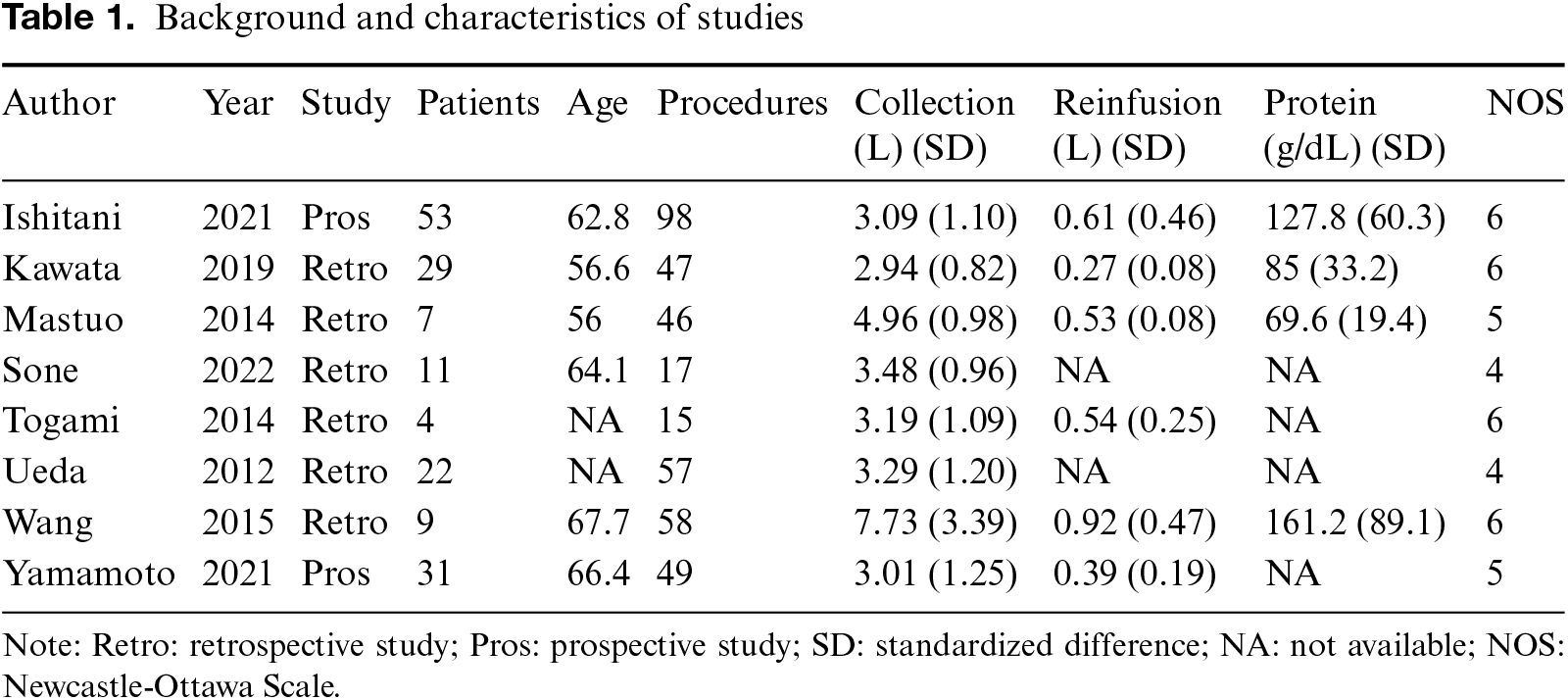
According to the pre-set search strategy, 95 articles, including two by hand-searching, were found. After removing duplicates, screening, and reading the full articles, 63, 39, and eight articles were left, respectively (Supplementary Fig. 1). Finally, 166 patients with MRA, compromising 387 CART procedures, were identified in this meta-analysis (Table 1).18–25 Due to the indication that CART was only approved in Japan, and all of them were reported from Japan, with one article reported in Japanese.18 In all studies, AHF-UP and AHF-MO (Asahi Kasei Medical Co., Ltd., Tokyo, Japan) were used as ascitic filtration and concentration filters, respectively. The mean GMRA collected and reinfused were 3.97 L (95% CI 3.26–4.68 L) and 0.51 L (95% CI 0.38–0.65 l), respectively. The mean of total protein and albumin that were reinfused were 98.6 g (95% CI 75.4–121.8 g) and 44.8 g (95% CI 37.2–52.5 g), respectively. The mean CART-CART interval was 26.9 days (95% CI 24.2–29.7 days) (Supplementary Figs. 2–5).
3.2. Efficiency
After the procedure of puncture, the body weight was reduced to 2.97 kg (95% CI 1.27–4.67 kg; p < 0.001; I2 = 0%, p for heterogeneity = 1.0) on average (Fig. 1), and abdominal circumference was reduced to 7.26 cm (95% CI 5.69–8.83 cm; p < 0.001; I2 = 0%, p for heterogeneity = 0.44) (Fig. 2), respectively. After the procedure of reinfusion, a mean elevation of serum was observed by 0.15 mg/dL (95% CI 0.02–0.28 mg/dL; p = 0.02; I2 = 53%, p for heterogeneity = 0.06) (Fig. 3), and total protein was increased to 0.21 mg/dL (95% CI 0.10–0.33 mg/dL; p < 0.001; I2 = 2%, p for heterogeneity = 0.36) on average (Supplementary Fig. 7), respectively. Creatinine was decreased by 0.1 g/dL (95% CI 0.07–0.13 g/dL; p < 0.001; I2 = 0%, p for heterogeneity = 0.94) (Fig. 4).

Figure 1. Changes in body weight before and after cell-free and concentrated ascites reinfusion therapy. CART: cell-free and concentrated ascites reinfusion therapy; SD: standard deviation; CI: confidence interval.

Figure 2. Changes in abdominal circumference before and after cell-free and concentrated ascites reinfusion therapy. CART: cell-free and concentrated ascites reinfusion therapy; SD: standard deviation; CI: confidence interval.
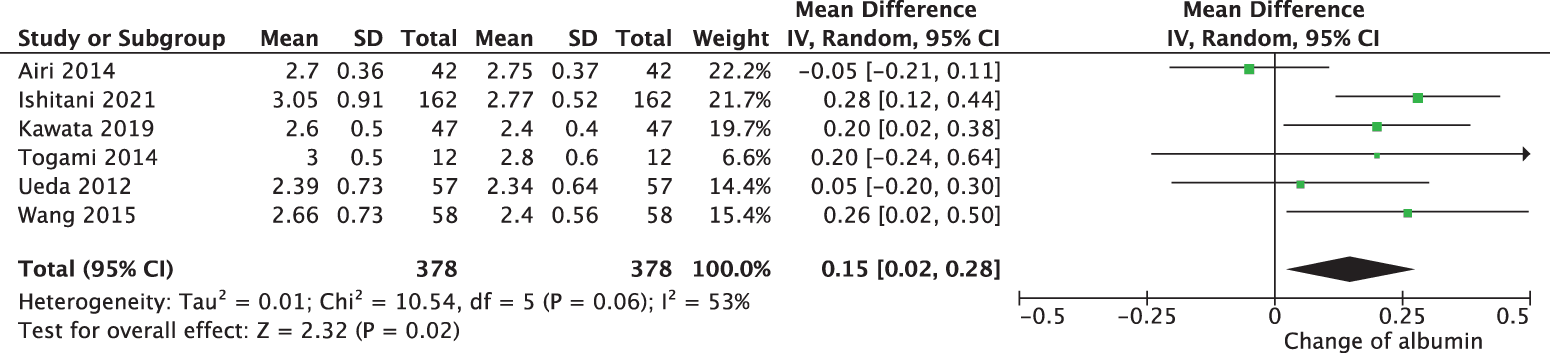
Figure 3. Changes in serum albumin before and after cell-free and concentrated ascites reinfusion therapy. SD: standard deviation; CI: confidence interval.

Figure 4. Changes in creatine before and after cell-free and concentrated ascites reinfusion therapy. CART: cell-free and concentrated ascites reinfusion therapy; SD: standard deviation; CI: confidence interval.
3.3. Safety
In all studies, a prescription of 100 or 200 mg of hydrocortisone was given to prevent fever during reinfusion; increased body temperature was observed by 0.7°C (95% CI 0.11–1.28°C) on average (Supplementary Fig. 7). According to CTCAE, there were 18 and two episodes of Grade 1 and Grade 2 fever, respectively. After the procedure of reinfusion, a decrease in the number of platelets was also observed 5.64 × 10⁴/μL (95% CI 1.15–10.12 × 10⁴/μL; p = 0.01; I2 = 0%, p for heterogeneity = 0.97) (Supplementary Fig. 8).
4. Discussion
By evaluating 387 procedures, our analysis identified the efficiency of CART. A reduction of body weight and abdominal circumference was confirmed after the procedure of puncture, and an elevation of serum albumin and total protein was observed after the procedure of reinfusion, with a mean duration to the next puncture of 26.9 days. Platelets decreased after CART; however, there were no reports of a necessity for platelet transfusion. Although body temperature increased (mean increase of 0.7°C) after the procedure, it was not clinically significant. These findings were coordinated with previous studies.26 Only limited adverse events, including two episodes of Grade 2 fever, were reported.
While the potential benefits of CART in gynecological malignancy-related ascites, such as OS, progression-free survival (PFS), and PS, are critical outcomes to evaluate, the current literature is limited in this regard. This limitation is primarily due to the heterogeneity of gynecological malignancies studied, making it challenging to draw comprehensive conclusions. A few studies have addressed PS,18,19 but variations in the intervals, volumes of ascites puncture, and timing of PS assessment complicate direct comparisons. Therefore, while CART shows promise, further research with standardized protocols is necessary to understand its impact on these important clinical outcomes fully. Additionally, limited studies directly compare the cost of the CART procedure with the usual treatment of puncture and albumin infusion. However, it is important to note that CART can potentially reduce the risk of viral infections compared to albumin infusion. This reduction in infection risk could lead to lower overall healthcare costs and improved patient safety, highlighting a potential economic and clinical benefit of CART despite the lack of extensive cost comparison studies.
The presence of ascites is significantly associated with shorter PFS and OS, which is considered to increase the chance of suboptimal cytoreduction.27,28 Several studies looking at the absence of ascites were associated with long-term survivor status.7 Hyperthermic intraperitoneal chemotherapy is an effective treatment that results in prolonged OS.29 Ovarian Cancer The use of CART followed by chemotherapy for advanced or recurrent malignancies is currently being investigated in previous studies.19,30 The development of checkpoint blockade inhibitors has revolutionized cancer immunotherapy and has led to durable survival outcomes in some patients with metastatic disease.31 Cellular immunotherapies, for example, with the use of gamma-delta T cells, are expected to be applied during the procedure of CART.32
There were several limitations in this study. First, the effectiveness of CART analyzed in this meta-analysis was considered as short-term efficiency. The change in body weight, abdominal girth, and laboratory findings such as serum albumin were checked before and after the procedure of paracentesis and reinfusion in CART, which were not a long-term efficiency parameter. Although some studies reported PS before and after CART, the duration of this effect was still unclear. Secondly, a standard protocol of CART is lacking in the CART procedure. Thirdly, only two prospective studies were included, and risk for selection bias potentially exists.
5. Conclusions
CART is considered an effective therapy for GMRA without severe side effects. However, further studies are necessary to identify a long-term effect of GMAR treatment.
Acknowledgement
None.
Funding Source
No financial support was provided.
Author Contributions
Conceptualization: S. Z., Y. G., Y.L., and C.L.; Formal Analysis: S.Z, and C.L.; Writing, review, and editing: S. Z., Y. G., Y.L., and C.L.
Data Availability Statement
The data that support the findings of this study are available from the corresponding author upon a reasonable request.
Ethical Statement
Institutional Review Board approval was waived due to the nature of the meta-analysis.
Conflict of Interest
The authors report no conflicts of interest in this work.
Supplemental Information
Supplemental information for this article can be found online at https://sup.jclinque.com/api/articles/38/download-suppl.
References
[1] Stukan M. Drainage of malignant ascites: patient selection and perspectives. Cancer Manag Res. 2017;9:115–130. doi:10.2147/cmar.S100210.
[2] Becker G. Acites. In: Schwab M, ed. Encyclopedia of Cancer. Berlin, Heidelberg: Springer; 2009;16–18.
[3] Cerne K, Kobal B. Ascites in advanced ovarian cancer. 2017. doi:10.5772/intechopen.72698.
[4] Ayantunde AA, Parsons SL. Pattern and prognostic factors in patients with malignant ascites: a retrospective study. Ann Oncol. May 2007;18(5):945–949. doi:10.1093/annonc/mdl499.
[5] Huang H, Li YJ, Lan CY, et al. Clinical significance of ascites in epithelial ovarian cancer. Neoplasma. 2013;60(5):546–552. doi:10.4149/neo_2013_071.
[6] Decruze SB, Macdonald R, Smith G, et al. Paracentesis in ovarian cancer: a study of the physiology during free drainage of ascites. J Palliat Med. March 2010;13(3):251–254. doi:10.1089/jpm.2009.0158.
[7] Ford CE, Werner B, Hacker NF, et al. The untapped potential of ascites in ovarian cancer research and treatment. Br J Cancer. July 2020;123(1):9–16. doi:10.1038/s41416-020-0875-x.
[8] Saif MW, Siddiqui IA, Sohail MA. Management of ascites due to gastrointestinal malignancy. Ann Saudi Med. September–October 2009;29(5):369–377. doi:10.4103/0256-4947.55167.
[9] Becker G, Galandi D, Blum HE. Malignant ascites: systematic review and guideline for treatment. Eur J Cancer. March 2006;42(5):589–597. doi:10.1016/j.ejca.2005.11.018.
[10] Ito T, Hanafusa N. CART: cell-free and concentrated ascites reinfusion therapy against malignancy-related ascites. Transfus Apher Sci. October 2017;56(5):703–707. doi:10.1016/j.transci.2017.08.018.
[11] Matsusaki K, Aridome K, Emoto S, et al. Clinical practice guideline for the treatment of malignant ascites: section summary in Clinical Practice Guideline for peritoneal dissemination (2021). Int J Clin Oncol. January 2022;27(1):1–6. doi:10.1007/s10147-021-02077-6.
[12] Chen H, Ishihara M, Horita N, et al. Effectiveness of cell-free and concentrated ascites reinfusion therapy in the treatment of malignancy-related ascites: a systematic review and meta-analysis. Cancers (Basel). September 29, 2021;13(19):4873. doi:10.3390/cancers13194873.
[13] Urrútia G, Bonfill X. PRISMA declaration: a proposal to improve the publication of systematic reviews and meta-analyses. Med Clin (Barc). October 9, 2010;135(11):507–511. Declaración PRISMA: una propuesta para mejorar la publicación de revisiones sistemáticas y metaanálisis. doi:10.1016/j.medcli.2010.01.015.
[14] Cooperative Organization for National Medical Schools in Japan. University Hospital Medical Information Network (UMIN) center. Accessed June 30, 2024. https://upload.umin.ac.jp/cgi-bin/ctr/ctr_view_reg.cgi?recptno=R000051191
[15] Oken MM, Creech RH, Tormey DC, et al. Toxicity and response criteria of the Eastern Cooperative Oncology Group. Am J Clin Oncol. December 1982;5(6):649–655.
[16] Basch E, Reeve BB, Mitchell SA, et al. Development of the National Cancer Institute’s patient-reported outcomes version of the common terminology criteria for adverse events (PRO-CTCAE). J Natl Cancer Inst. September 2014;106(9). doi:10.1093/jnci/dju244.
[17] Higgins JP, Thompson SG, Deeks JJ, et al. Measuring inconsistency in meta-analyses. BMJ. September 6, 2003;327(7414):557–560. doi:10.1136/bmj.327.7414.557.
[18] Mastuo A, Kawahara S, Izumi Y, et al. Cell-free and concentrated ascites reinfusion therapy (CART) for refractory malignant ascites in seven cases of gynecological cancer. Adv Obster Gynecol (JP). 2014;66(2):169–176.
[19] Ishitani K, Isoai A, Ito T, et al. Clinical usefulness of cell-free and concentrated ascites reinfusion therapy (CART) in combination with chemotherapy for malignant ascites: a post-marketing surveillance study. Int J Clin Oncol. June 2021;26(6):1130–1138. doi:10.1007/s10147-021-01883-2.
[20] Kawata Y, Nagasaka K, Matsumoto Y, et al. Usefulness of cell-free and concentrated ascites reinfusion therapy in the therapeutic management of advanced ovarian cancer patients with massive ascites. Int J Clin Oncol. April 2019;24(4):420–427. doi:10.1007/s10147-018-1371-7.
[21] Togami S, Hori S, Kamio M, et al. Clinical usefulness of concentrated ascites reinfusion therapy (CART) for gynecological cancer patients with refractory massive ascites due to cancerous peritonitis. Eur J Gynaecol Oncol. 2014;35(3):301–303.
[22] Ueda T, Maehara M, Takahashi Y, et al. Clinical significance of cell-free and concentrated ascites re-infusion therapy for advanced and recurrent gynecological cancer. Anticancer Res. June 2012;32(6):2353–2357.
[23] Wang L, Okubo T, Shinsaka M, et al. Efficacy and safety of cell-free and concentrated ascites reinfusion therapy (CART) in gynecologic cancer patients with a large volume of ascites. J Obstet Gynaecol Res. October 2015;41(10):1614–1620. doi:10.1111/jog.12763.
[24] Yamamoto K, Nagao S, Tsu T, et al. Quality of life assessment of cell-free and concentrated ascites reinfusion therapy during initial treatment for advanced ovarian cancer: a prospective cohort study. J Obstet Gynaecol Res. April 2021;47(4):1536–1543. doi:10.1111/jog.14670.
[25] Sone K, Taguchi A, Kawata A, et al. Transiently elevated D-dimer levels post-concentrated ascites reinfusion therapy cannot be used to predict deep vein thrombosis-pulmonary embolism. J Obstet Gynaecol Res. March 2022;48(3):817–823. doi:10.1111/jog.15162.
[26] Hanafusa N, Isoai A, Ishihara T, et al. Safety and efficacy of cell-free and concentrated ascites reinfusion therapy (CART) in refractory ascites: post-marketing surveillance results. PLoS One. 2017;12(5):e0177303. doi:10.1371/journal.pone.0177303.
[27] du Bois A, Reuss A, Pujade-Lauraine E, et al. Role of surgical outcome as prognostic factor in advanced epithelial ovarian cancer: a combined exploratory analysis of 3 prospectively randomized phase 3 multicenter trials: by the Arbeitsgemeinschaft Gynaekologische Onkologie Studiengruppe Ovarialkarzinom (AGO-OVAR) and the Groupe d’Investigateurs Nationaux Pour les Etudes des Cancers de l’Ovaire (GINECO). Cancer. March 15, 2009;15(6):1234–1244. doi:10.1002/cncr.24149.
[28] Anuradha S, Webb PM, Blomfield P, et al. Survival of Australian women with invasive epithelial ovarian cancer: a population-based study. Med J Aust. September 1, 2014;201(5):283–288. doi:10.5694/mja14.00132.
[29] van Driel WJ, Koole SN, Sikorska K, et al. Hyperthermic intraperitoneal chemotherapy in ovarian cancer. N Engl J Med. January 18, 2018;378(3):230–240. doi:10.1056/NEJMoa1708618.
[30] Nagata Y, Kato K, Miyamoto T, et al. Safety and efficacy of cell-free and concentrated ascites reinfusion therapy (CART) in gastrointestinal cancer patients with massive ascites treated with systemic chemotherapy. Support Care Cancer. December 2020;28(12):5861–5869. doi:10.1007/s00520-020-05401-4.
[31] Pulendran B, Davis MM. The science and medicine of human immunology. Science. September 25, 2020;369(6511):67. doi:10.1126/science.aay4014.
[32] Abe Y, Kobayashi H, Akizawa Y, et al. Possible application of ascites-infiltrating gamma-delta T cells for adoptive immunotherapy. Anticancer Res. July 2018;38(7):4327–4331. doi:10.21873/anticanres.12732.
 |
Copyright: © 2024 Zhao et al. This work is licensed under a Creative Commons Attribution 4.0 International License, which permits unrestricted use, distribution, and reproduction in any medium, provided the original work is properly cited. |