| Journal of Clinical Question. 2025; 2(5): e90 https://doi.org/10.69854/jcq.2025.0032 Advance access publication date 23 October 2025 |
 |
Meta-Analysis
Comparative Efficacy and Safety of Semaglutide, Cagrilintide, and CagriSema for the Treatment of Type 2 Diabetes Mellitus: A Bayesian Network Meta-Analysis
Ting Jin 1, Yange Meng2, Luping Ren3 and Yue Wang4,*
1Department of Endocrinology, Sir Run Run Shaw Hospital, Zhejiang University School of Medicine, Hangzhou, China.
2Department of General Practice, Sir Run Run Shaw Hospital, Zhejiang University School of Medicine, Hangzhou, China.
3Endocrinology Department, Hebei General Hospital, Shijiazhuang, China.
4UPMC Hillman Cancer Center, University of Pittsburgh, Pittsburgh, USA.
*Corresponding Author: e-mail: yue.wang@pitt.edu
Submitted: August 23, 2025 Accepted: October 22, 2025
Clinical Question Box
In adults with type 2 diabetes mellitus, does CagriSema provide better outcomes than semaglutide or cagrilintide alone?
A Bayesian network meta-analysis of five randomized controlled trials provides moderate-certainty evidence that cagrilintide–semaglutide combination (CagriSema0 results in greater reductions in glycated hemoglobin and body weight compared with semaglutide or cagrilintide alone. Evidence regarding serious adverse events, treatment discontinuation, and gastrointestinal side effects was also of moderate certainty, indicating that while CagriSema’s efficacy is promising, its tolerability must be carefully considered.
Abstract
Introduction: Type 2 diabetes mellitus (T2DM) is commonly associated with obesity and increased cardiometabolic risk, highlighting the need for therapies that optimize both glycemic control and weight management. Cagrilintide, a long-acting amylin analogue, and semaglutide, a glucagon-like peptide-1 receptor agonist, target complementary pathways, and their co-formulation (CagriSema) may provide synergistic benefits. Methods: A Bayesian network meta-analysis was conducted using randomized controlled trials (RCTs) comparing semaglutide, cagrilintide, and CagriSema in adults with T2DM. Major databases and clinical trial registries were searched through July 31, 2025. The primary outcome was change in glycated hemoglobin (HbA1c), while secondary outcomes included changes in body weight and safety endpoints, such as serious adverse events (SAEs), treatment discontinuation, and gastrointestinal symptoms. Mean differences (MDs) and odds ratios (ORs) with 95% confidence intervals (CIs) were calculated. Results: Five RCTs including 2,780 participants were analyzed. CagriSema produced the greatest HbA1c reduction vs. placebo (MD, −1.5%; 95% CI, −2.4 to −0.7), followed by semaglutide (−1.3%; 95% CI, −2.0 to −0.8) and cagrilintide (-0.1%; 95% CI, −1.4 to 1.0). Regarding body weight, CagriSema achieved the largest reduction (−13.2 kg; 95% CI, −20.2 to −6.0), outperforming semaglutide (−5.5 kg; 95% CI, −10.5 to −0.5) and sagrilintide (−7.1 kg; 95% CI, −16.5 to 2.5). No significant differences were observed among the treatments in terms of SAEs or treatment discontinuation. However, gastrointestinal symptoms were more frequent with semaglutide (OR, 3.3; 95% CI, 2.0 to 5.2) and CagriSema (OR, 5.5; 95% CI, 3.1 to 13.0) compared with placebo. Conclusions: CagriSema provides superior reductions in HbA1c and body weight compared with semaglutide or cagrilintide alone, without increasing the risk of SAEs. Semaglutide also demonstrated strong efficacy, whereas cagrilintide conferred only modest metabolic benefits. Gastrointestinal tolerability remains an important consideration for semaglutide and CagriSema.
Keywords: Type 2 diabetes mellitus, T2DM, semaglutide, cagrilintide, CagriSema, network meta-analysis
Introduction
Type 2 diabetes mellitus (T2DM) remains a leading cause of cardiovascular and renal morbidity worldwide, with both its prevalence and complexity continuing to rise.1 The International Diabetes Federation’s 11th Diabetes Atlas (2025) estimated that 589 million adults had diabetes in 2024. This corresponds to approximately one in nine adults globally. The number is projected to increase to about 853 million by 2050. Notably, over 250 million cases are believed to be undiagnosed, underscoring substantial residual risk and therapeutic inertia at the population level.2 The global economic burden of T2DM is immense, with diabetes-related expenditures expected to rise from USD 1.3 trillion in 2015 to USD 2.5 trillion by 2030, representing up to 2.2% of the global gross domestic product.3 Although high-income countries incur considerably higher per-person costs (approximately USD 10,801 annually) compared to USD 242 in low-income nations, low- and middle-income countries still experience substantial relative financial strain due to limited healthcare resources.4
Over the past decade, glycemic management has evolved from a glucose-centric paradigm to a comprehensive cardiorenal-metabolic approach, emphasizing weight reduction and risk modification alongside HbA1c lowering.5 Between 2024 and early 2025, pivotal evidence further broadened the therapeutic scope of semaglutide, a potent glucagon-like peptide-1 receptor agonist (GLP-1 RA). The FLOW trial, a dedicated kidney outcomes study in individuals with T2DM and chronic kidney disease (CKD), demonstrated a 24% relative risk reduction in the progression of kidney disease, kidney failure, and cardiovascular death, corresponding to an absolute risk reduction of approximately 5% over 3 years.6 Subsequently, on January 28, 2025, the U.S. Food and Drug Administration (FDA) approved an expanded indication for semaglutide to reduce the risk of progression of kidney disease, end-stage kidney disease, and cardiovascular death in adults with T2DM and CKD.7 In the 2025 Standards of Care issued by the American Diabetes Association, the use of GLP-1 RAs and/or sodium-glucose cotransporter-2 inhibitors is strongly recommended for individuals with T2DM who are at high cardiovascular or kidney risk, irrespective of baseline HbA1c or metformin therapy.8 Taken together, these developments elevate semaglutide from a glucose-lowering agent to a disease-modifying therapy with benefits across multiple organ systems.9
Parallel to GLP-1–based therapies, amylin biology has re-emerged as a therapeutic target. Cagrilintide (AM833) is a long-acting, acylated amylin analogue that acts on amylin/calcitonin family receptors and is designed for once-weekly subcutaneous administration.10 By complementing GLP-1 pathways, amylin primarily reduces meal size, slows gastric emptying, suppresses postprandial glucagon, and promotes satiety. Cagrilintide offers mechanistic synergy when combined with GLP-1 RAs.11 These complementary actions provide a strong physiological rationale for dual-hormone approaches in T2DM, particularly among individuals with obesity or weight-related complications, where energy balance is central to glycemic durability and cardiometabolic outcomes.12 Clinically, the cagrilintide–semaglutide combination (CagriSema) has advanced through randomized trials.13 In a 32-week phase 2 trial in T2DM, CagriSema produced significantly greater weight loss than semaglutide alone (−15.6% vs. −5.1%) and showed a nonsignificant trend toward greater HbA1c reduction, with mostly mild gastrointestinal adverse events and no severe hypoglycemia.14 A subsequent 68-week phase 3 trial reported a −13.7% weight reduction, with 73.5% of participants achieving HbA1c ≤6.5% with combination therapy versus placebo, although gastrointestinal events were common.15 As of 2025, CagriSema remains investigational and is not approved by the U.S. FDA.
Despite extensive clinical data on semaglutide and growing evidence supporting cagrilintide-based regimens, important comparative-effectiveness questions in T2DM management remain unresolved. Network meta-analysis (NMA) offers a rigorous and systematic framework to integrate heterogeneous, multi-arm evidence, enabling simultaneous assessment of direct and indirect comparisons. This NMA aims to comprehensively evaluate the comparative efficacy and safety of semaglutide, cagrilintide, and CagriSema, providing clinicians with evidence-based insights to guide therapeutic decision-making in T2DM.
Methods
Study Design and Protocol Registration
This NMA was conducted in accordance with the Preferred Reporting Items for Systematic Reviews and Meta-Analyses incorporating Network Meta-Analyses guidelines and methodological recommendations from the Cochrane Handbook for Systematic Reviews of Interventions. The study protocol was prospectively registered in the Open Science Framework database (registration number: osf.io/m3f6w), which included prespecified inclusion criteria, data extraction methods, risk-of-bias assessment, and statistical approaches. Because only aggregated data from previously published clinical trials were analyzed, institutional ethical approval was not required. The study adhered to the principles of the Declaration of Helsinki and complied with standards for good scientific reporting.
Data Sources and Search Strategy
A comprehensive literature search was conducted from database inception through July 31, 2025, across PubMed, Embase, the Cochrane Library, and Web of Science. The strategy combined Medical Subject Headings and free-text terms related to T2DM, semaglutide, cagrilintide, and relevant comparators, including “T2DM,” “type 2 diabetes mellitus,” “Semaglutide,” “Cagrilintide,” “CagriSema,” “GLP-1 receptor agonists,” “amylin analogue,” and “randomized controlled trial.” Reference lists of eligible studies, prior meta-analyses, and systematic reviews were manually screened to ensure completeness.
Eligibility Criteria
Randomized controlled trials (RCTs) enrolling adults (≥18 years) with T2DM, diagnosed according to the American Diabetes Association criteria, were considered eligible for inclusion. Eligible interventions included oral or once-weekly subcutaneous semaglutide, subcutaneous cagrilintide, and CagriSema. Comparators comprised placebo, lifestyle interventions, or other active glucose-lowering agents. Studies exclusively involving participants with type 1 diabetes, gestational diabetes, or latent autoimmune diabetes were excluded. Additionally, subgroup analyses that did not provide information beyond the primary trial results were excluded.
Outcomes of Interest
The primary efficacy outcome was the change in HbA1c (%) from baseline to the end of follow-up. Secondary outcomes included changes in body weight (%), the incidence of serious adverse events (SAEs), and treatment discontinuations due to adverse events. Gastrointestinal symptoms, including nausea, vomiting, diarrhea, and constipation, were also assessed.
Study Selection and Data Extraction
All retrieved records were imported into EndNote 21 for de-duplication. Titles and abstracts were independently screened by two reviewers (T.J. and Y.M.), followed by full-text assessment to confirm eligibility. Discrepancies were resolved by consensus or, when necessary, by adjudication from a third reviewer (Y.W.). Data were extracted using a standardized form, capturing study characteristics (design, publication year, geographic setting, sample size, and follow-up duration), participant demographics, details of interventions and comparators, and outcome measures, including mean changes, standard deviations, proportions, and 95% confidence intervals (CIs). When necessary, study authors were contacted to obtain missing or unpublished data.
Statistical Analysis
A Bayesian NMA was conducted to integrate direct and indirect evidence from the eligible trials. The treatment network was visualized using node-link diagrams, in which nodes represented interventions and edges indicated direct comparisons. A Bayesian hierarchical random-effects model was employed to account for variability in baseline characteristics and background therapies. Analyses were performed in R (version 4.5.1) using the gemtc and BUGSnet packages, with four parallel Markov Chain Monte Carlo chains of 50,000 iterations each, including a 20,000-iteration burn-in period. Convergence was assessed using the Gelman–Rubin diagnostic (R-hat <1.05) and by inspecting trace plots. Effect sizes were reported as mean differences (MDs) or percentage changes with 95% CIs for continuous outcomes and as odds ratios (ORs) or log ORs (LORs) with 95% CIs for dichotomous outcomes. Treatment rankings were generated using the surface under the cumulative ranking curve (SUCRA) to estimate the probability of each intervention being the most effective or the safest.
Certainty of Evidence
Global inconsistency was assessed using a design-by-treatment interaction model, whereas local inconsistency was evaluated via the node-splitting approach. Publication bias was examined using Egger’s test. The risk of bias was independently assessed by two reviewers using the Cochrane Risk of Bias 2.0 tool, which evaluates randomization, allocation concealment, blinding, missing data, outcome measurement, and selective reporting; disagreements were resolved by consensus. The certainty of evidence for each outcome was graded according to the Grading of Recommendations, Assessment, Development, and Evaluation (GRADE) framework, adapted for NMAs, taking into account study limitations, inconsistency, indirectness, imprecision, and publication bias.
Results
Study Selection
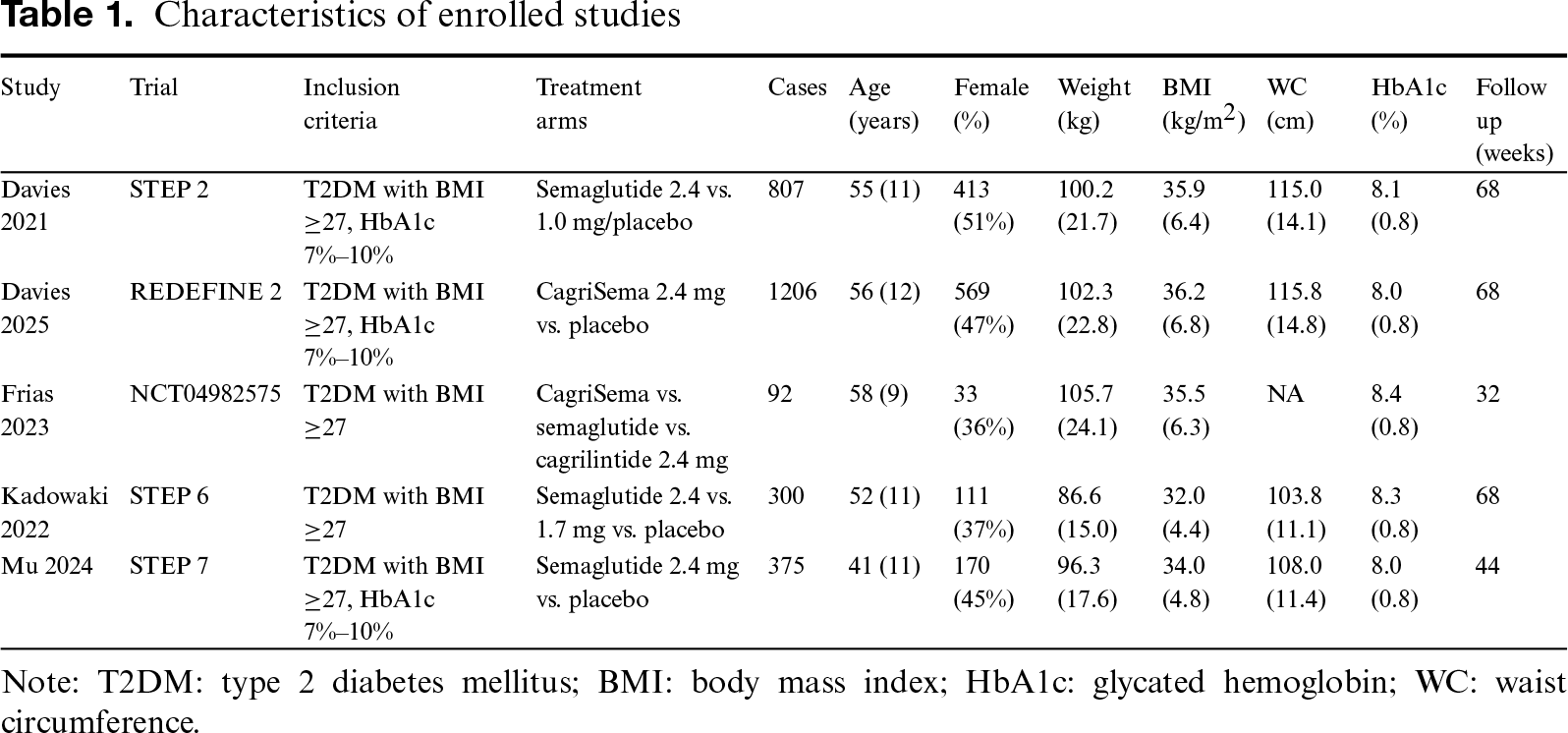
A total of 2,800 records were identified through database searches: PubMed (n = 289), Embase (n = 1,476), Cochrane Library (n = 788), and Web of Science (n = 247) (Fig. 1). After removing 475 duplicates, 2,325 records were screened by title and abstract, of which 2,191 were excluded. Full-text assessment was conducted for 134 reports, and 129 were subsequently excluded for the following reasons: review articles (n = 47), not RCTs (n = 33), not focused on T2DM (n = 29), or duplicate publications (n = 20).14–18 Ultimately, five RCTs met the inclusion criteria and were incorporated into the NMA. These trials were REDEFINE 2 (Davies et al., 2025), STEP 7 (Mu et al., 2024), STEP 2 (Davies et al., 2021), STEP 6 (Kadowaki et al., 2022), and a phase 2 trial by Frias et al. (2023), collectively enrolling 2,780 participants (Table 1). The studies evaluated semaglutide, cagrilintide, and CagriSema. Across the trials, adults aged 41 to 58 years with a BMI ≥27 kg/m2 and baseline HbA1c levels of 7%–10% were included. Sample sizes ranged from 92 to 1,206 participants, with 36%–51% female, and mean waist circumference between 103.8 and 115.8 cm. Baseline characteristics were broadly comparable across studies, supporting the transitivity assumption required for valid indirect comparisons.
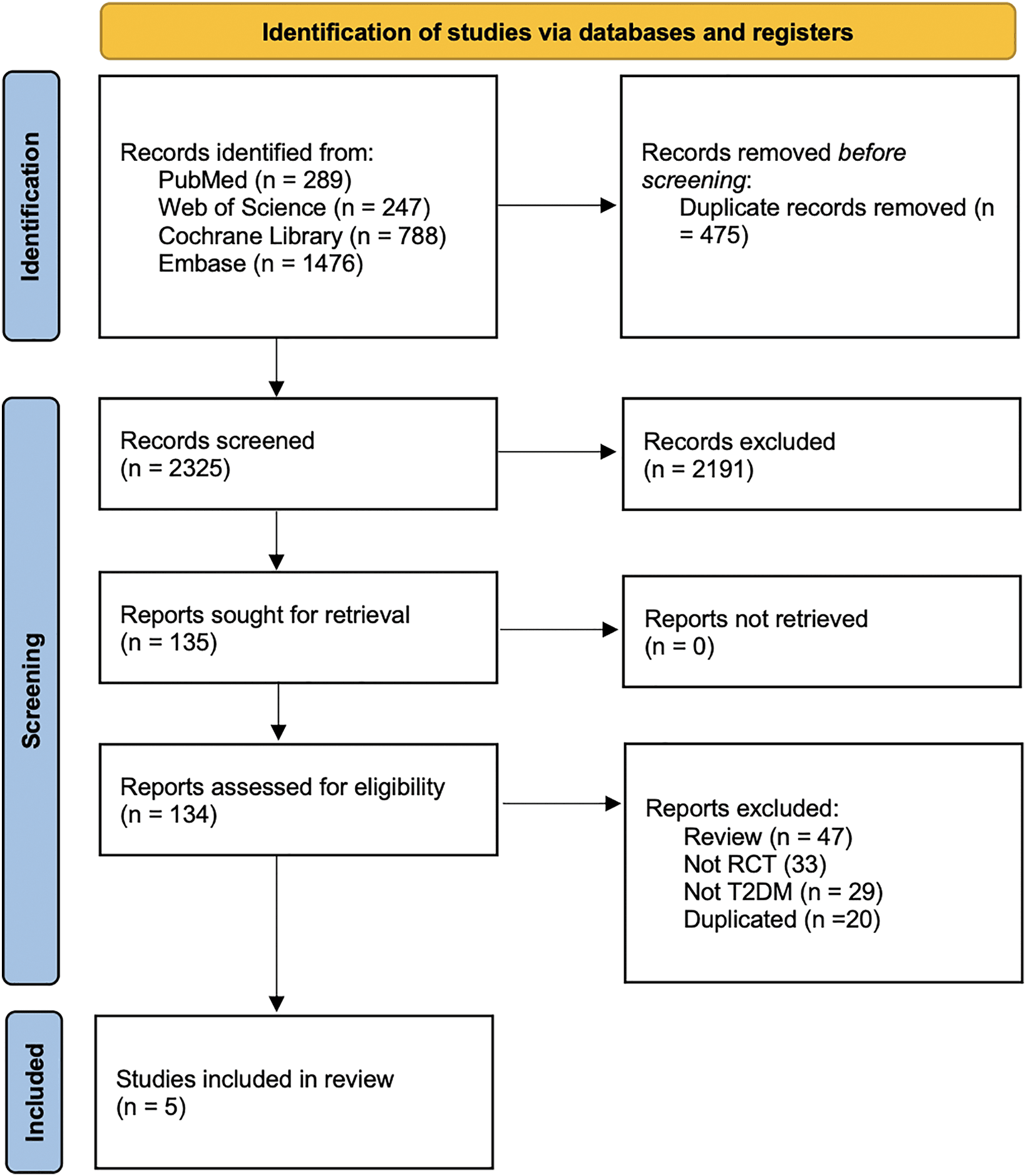
Figure 1. Flowchart of the enrolled studies.
HbA1c
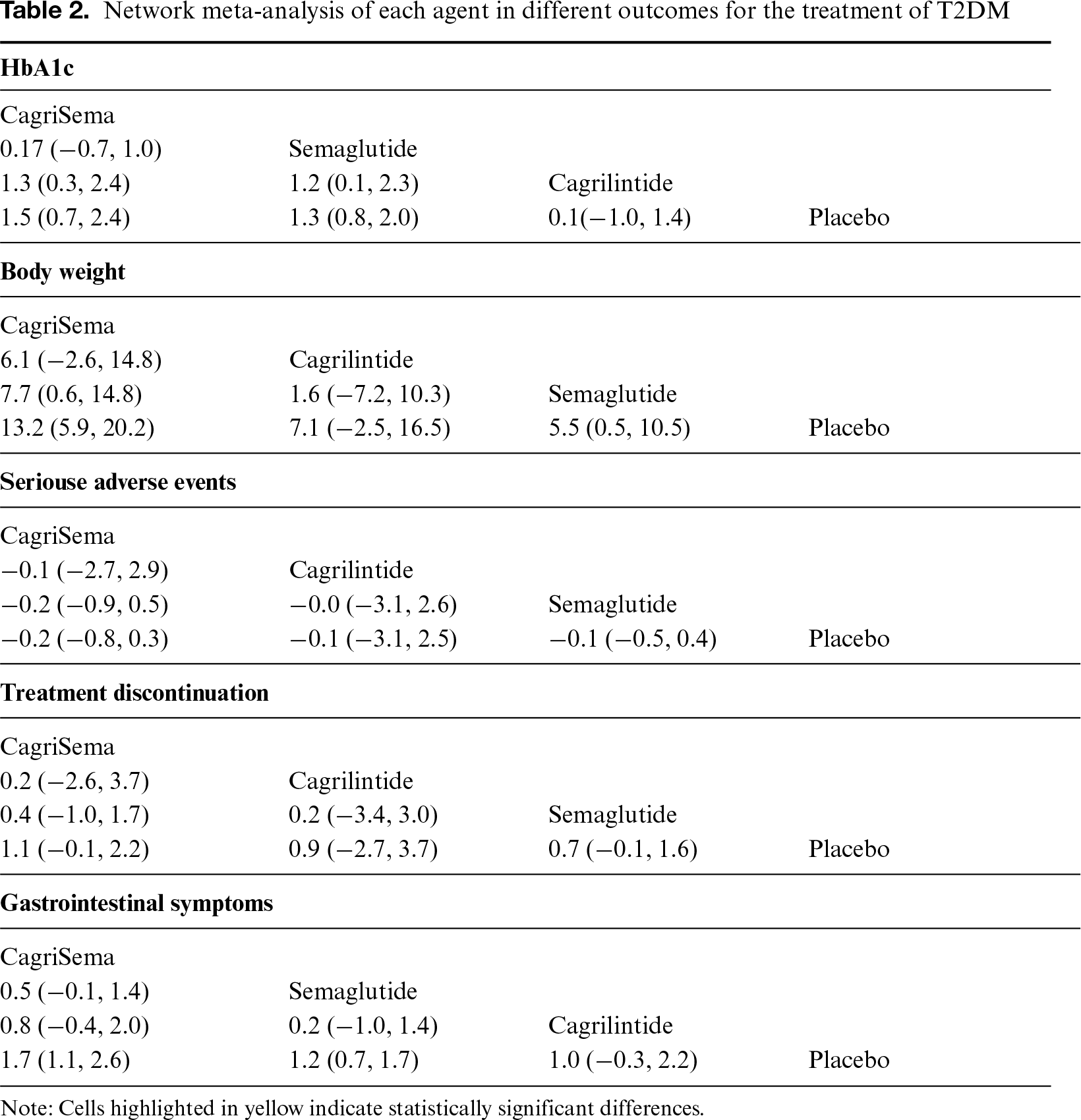
The network graph for the NMA assessing changes in HbA1c is shown in Fig. 2. Three studies compared semaglutide with placebo, whereas no study directly compared cagrilintide with placebo. The effects of the different agents versus placebo are illustrated in Fig. 3A. The greatest mean reduction in HbA1c was observed with CagriSema (MD, −1.5%; 95% CI, −2.4 to −0.7), followed by semaglutide (MD, −1.3%; 95% CI, −2.0 to −0.8) and cagrilintide (MD, −0.1%; 95% CI, −1.4 to 1.0). Results of all pairwise comparisons are summarized in Table 2. Indirect comparisons favored both CagriSema and semaglutide over cagrilintide, with MDs of −1.3% (95% CI, −2.4 to −0.3) and −1.2% (95% CI, −2.3 to −0.1), respectively. Based on SUCRA rankings, the probability of being the most effective was highest for CagriSema (0.908), followed by semaglutide (0.744), cagrilintide (0.225), and placebo (0.123) (Fig. S1). Assessment of inconsistency between direct, indirect, and network estimates revealed no significant inconsistency (p ≥ 0.05) (Fig. S2).
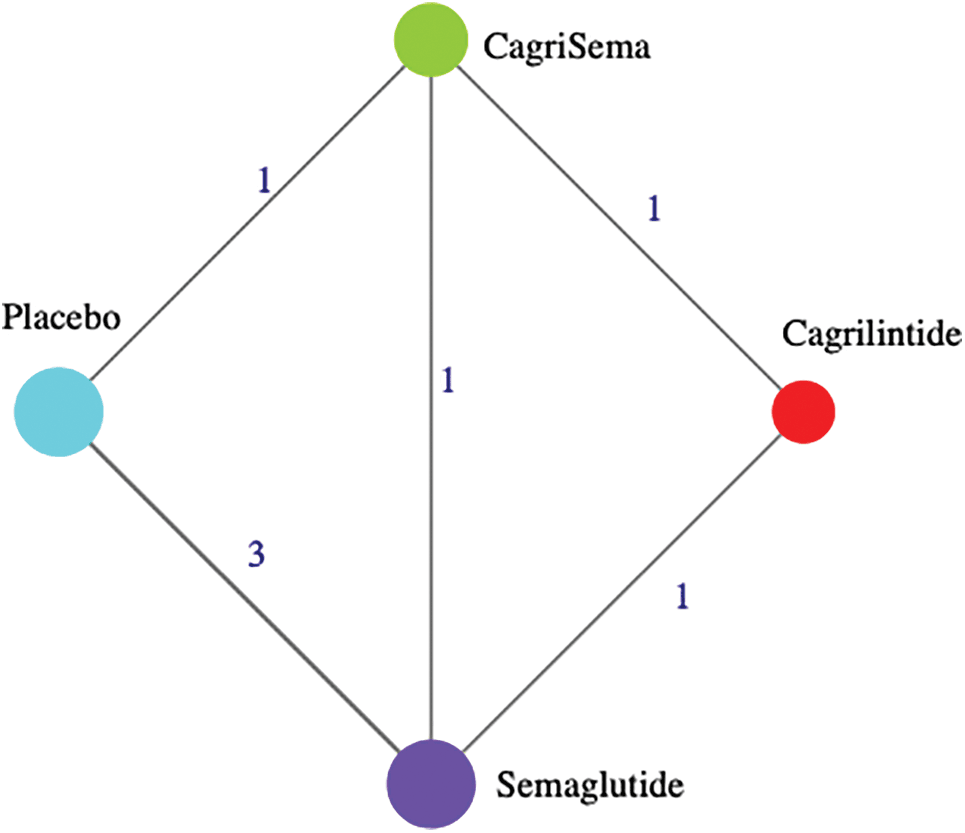
Figure 2. Network graph of enrolled studies.
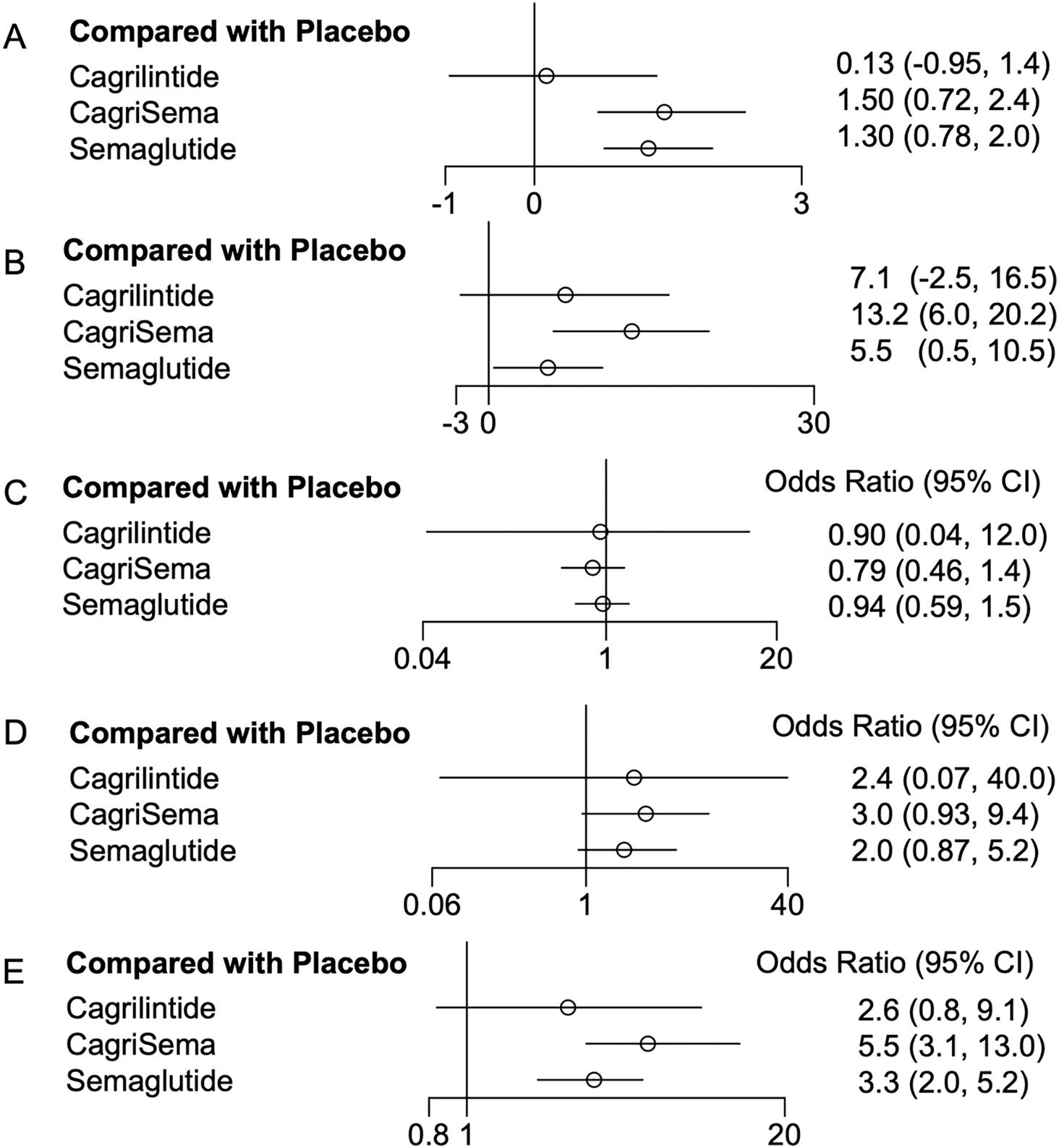
Figure 3. Direct comparison of semaglutide and cagrilintide in the treatment of T2DM. (A) HbA1c; (B) body weight; (C) serious adverse events; (D) treatment discontinuation; (E) gastrointestinal symptoms.
Body Weight
The studies assessing body weight were identical to those evaluating HbA1c outcomes (Fig. 2). Comparisons vs. placebo are presented in Fig. 3B. CagriSema produced the greatest reduction in body weight (MD, −13.2 kg; 95% CI, −20.2 to −6.0), followed by cagrilintide (MD, −7.1 kg; 95% CI, −16.5 to 2.5) and semaglutide (MD, −5.5 kg; 95% CI, −10.5 to −0.5). Results of all pairwise comparisons are summarized in Table 2. Indirect comparisons favored CagriSema over semaglutide (MD, −7.7 kg; 95% CI, −14.8 to −0.6), but not over cagrilintide (MD, −6.1 kg; 95% CI, −14.8 to 2.6). According to SUCRA rankings, the probability of being the most effective was highest for CagriSema (0.972), followed by cagrilintide (0.568), semaglutide (0.435), and placebo (0.025) (Fig. S3). Evaluation of inconsistency among direct, indirect, and network estimates revealed no significant inconsistency (p ≥ 0.05) (Fig. S4).
SAEs
The studies assessing SAEs were identical to those evaluating HbA1c outcomes (Fig. 2). Results of comparisons vs. placebo are presented in Fig. 3C. The ORs for cagrilintide, CagriSema, and semaglutide compared with placebo were 0.90 (95% CI, 0.04–12.0), 0.79 (95% CI, 0.46–1.40), and 0.94 (95% CI, 0.59–1.50), respectively. All pairwise comparisons of LORs are summarized in Table 2. No therapy demonstrated a significantly increased risk of SAEs compared with placebo or other active treatments. According to SUCRA rankings, the probability of being the safest was highest for CagriSema (0.678), followed by cagrilintide (0.517), semaglutide (0.461), and placebo (0.343) (Fig. S5). Assessment of inconsistency between direct, indirect, and network estimates revealed no significant inconsistency (p ≥ 0.05) (Fig. S6).
Treatment Discontinuation
The studies assessing treatment discontinuation were identical to those evaluating HbA1c outcomes (Fig. 2). Results of comparisons with placebo are presented in Fig. 3D. The ORs for cagrilintide, CagriSema, and semaglutide compared with placebo were 2.4 (95% CI, 0.1 to 40.0), 3.0 (95% CI, 0.9 to 9.4), and 2.0 (95% CI, 0.9 to 5.2), respectively. All pairwise comparisons of LORs are summarized in Table 2. No therapy demonstrated a significantly increased risk of treatment discontinuation compared with placebo or other active treatments. According to SUCRA rankings, the probability of being the safest was highest for placebo (0.879), followed by semaglutide (0.440), cagrilintide (0.434), and CagriSema (0.261) (Fig. S7). Assessment of inconsistency between direct, indirect, and network estimates revealed no significant inconsistency (p ≥ 0.05) (Fig. S8).
Gastrointestinal Symptoms
The studies assessing gastrointestinal symptoms were the same as those evaluating HbA1c outcomes (Fig. 2). Results of comparisons vs. placebo are shown in Fig. 3E. The ORs for cagrilintide, CagriSema, and semaglutide compared with placebo were 2.6 (95% CI, 0.8 to 9.1), 5.5 (95% CI, 3.1 to 13.0), and 3.3 (95% CI, 2.0 to 5.2), respectively. Results of all pairwise comparisons of LORs are summarized in Table 2. Both CagriSema and semaglutide were associated with a higher risk of gastrointestinal symptoms compared with placebo, with LORs of 1.7 (95% CI, 1.1 to 2.6) and 1.2 (95% CI, 0.7 to 1.7), respectively. However, no significant differences in safety were observed among the three active agents. Based on SUCRA rankings, the probability of being the safest was highest for placebo (0.980), followed by cagrilintide (0.548), semaglutide (0.431), and CagriSema (0.042) (Fig. S9). Assessment of inconsistency between direct, indirect, and network estimates revealed no significant inconsistency (p ≥ 0.05) (Fig. S10).
Bias and Certainty of Evidence
The risk of bias assessment is presented in Fig. S11. Two studies were judged to have a low risk of bias, while three raised some concerns. Publication bias was evaluated using Egger’s test (p = 0.43, 0.47, 0.23, 0.18, and 0.49), indicating no significant evidence of publication bias. According to the GRADE framework, the certainty of evidence was rated as moderate for outcomes related to HbA1c reduction, body weight reduction, risk of SAEs, treatment discontinuation, and gastrointestinal symptoms.
Discussion
This NMA synthesized evidence from five RCTs evaluating semaglutide, cagrilintide, and CagriSema in adults with T2DM. The findings indicate that CagriSema consistently produced the largest reductions in HbA1c and body weight compared with placebo and active comparators, aligning with phase 2 data that support the synergistic efficacy of combining GLP-1RAs and amylin analogue therapy.19 Semaglutide alone was also effective in improving glycemic control and reducing body weight, consistent with the SUSTAIN and STEP programs, while cagrilintide demonstrated modest benefits, particularly in weight loss, albeit with greater uncertainty due to wider CIs.20,21 Importantly, none of the agents was associated with an increased risk of SAEs or treatment discontinuation compared with placebo, consistent with prior semaglutide trials. However, gastrointestinal adverse events were more common with semaglutide and CagriSema, reflecting the known tolerability profile of GLP-1RAs. Overall, these findings reinforce the potential of CagriSema as a next-generation treatment strategy for T2DM, while highlighting the need for long-term cardiovascular outcome trials to establish durability and broader clinical impact.
A major strength of this analysis is the use of an NMA framework, which allowed for indirect comparisons where head-to-head data are lacking. The included studies were generally of moderate quality, with no significant evidence of publication bias, lending credibility to the findings. Baseline comparability across trials also supports the validity of transitivity assumptions. The superior reductions in HbA1c and body weight observed with CagriSema align with mechanistic expectations, as the combination targets both the GLP-1 and amylin pathways.22 The weight loss effects from the NMA appear large compared to prior trials, suggesting potential overestimation due to indirect evidence or small-study bias. Previous studies have highlighted the complementary actions of these hormones in regulating appetite, satiety, and glucose metabolism.23 The findings reinforce recent clinical enthusiasm for dual-agonist strategies in managing metabolic diseases.
The efficacy of semaglutide observed in this analysis is consistent with prior large-scale RCTs,24,25 where reductions in both HbA1c and body weight were clinically meaningful. In contrast, cagrilintide alone appears less effective for glycemic control but shows promise for weight reduction, suggesting its utility may lie more in obesity management rather than as a standalone therapy for T2DM.26 The absence of significant differences in SAEs or discontinuation rates across agents is reassuring; however, the elevated likelihood of gastrointestinal symptoms with semaglutide and CagriSema warrants clinical attention. These adverse events are dose-dependent and may impact long-term adherence, a key consideration in chronic disease management. Interestingly, SUCRA rankings for safety outcomes placed placebo highest for both discontinuation and gastrointestinal tolerability, highlighting the balance between efficacy and tolerability among antidiabetic therapies.
Clinically, these findings suggest that CagriSema represents a promising therapeutic option for patients with T2DM and overweight or obesity, offering superior efficacy in both glycemic control and weight management compared with existing monotherapies.27 However, the increased risk of gastrointestinal events underscores the need for individualized treatment selection, patient education, and careful dose titration. Future research should prioritize longer-duration head-to-head trials of CagriSema vs. semaglutide and other emerging dual or triple agonists. Additionally, real-world studies are needed to clarify adherence patterns, long-term cardiovascular outcomes, and the cost-effectiveness of combination strategies.
Nonetheless, several limitations should be acknowledged. First, only five RCTs were included, limiting the precision of some comparisons and the robustness of inconsistency assessments. Second, follow-up durations varied, leaving longer-term efficacy and safety outcomes uncertain. Third, although gastrointestinal adverse events were thoroughly evaluated, other tolerability measures (e.g., injection-site reactions, treatment satisfaction) were inconsistently reported. Fourth, data on cardiovascular outcomes were lacking, and the study populations exhibited limited ethnic diversity. Finally, all included trials enrolled participants with a BMI ≥27 kg/m2, which may restrict the generalizability of these findings to individuals with lower BMI or differing metabolic characteristics.
Conclusion
This NMA indicates that CagriSema provides the greatest overall benefit in terms of HbA1c reduction and weight loss in patients with T2DM without increasing the risk of SAEs. Semaglutide also demonstrated robust efficacy, while cagrilintide showed modest but promising effects, particularly for weight management. The increased risk of gastrointestinal symptoms associated with GLP-1–based therapies underscores the importance of balancing efficacy with tolerability. These findings support the growing role of combination therapies in metabolic disease management and pave the way for future trials to confirm long-term safety, durability of effect, and comparative effectiveness in broader patient populations.
Acknowledgment
None.
Funding
None.
Author Contributions
T.J. and Y.M. designed the study, conducted the literature search, performed the quality assessment, extracted data, carried out the analyses, and drafted the manuscript. L.Y. and Y.W. contributed to data interpretation and critically revised the manuscript. All authors have read and approved the final version of the manuscript and agree with its content and data.
Data Availability
The datasets used and analyzed in this study are available from the corresponding author upon reasonable request.
Ethical Statement
Institutional Review Board approval was waived, as this study is a meta-analysis of previously published data.
Conflict of Interest
The authors declare no conflicts of interest.
Supplemental Information
Supplemental information for this article can be found online at https://sup.jclinque.com/api/articles/90/download-suppl.
References
[1] Chew NWS, Pan XH, Chong B, Chandramouli C, Muthiah M, Lam CSP. Type 2 diabetes mellitus and cardiometabolic outcomes in metabolic dysfunction-associated steatotic liver disease population. Diabetes Res Clin Pract. May 2024;211:111652. doi:10.1016/j.diabres.2024.111652.
[2] International Diabetes Federation. DF Diabetes Atlas. 11th ed. Published July 2025, Accessed September 7, 2025. https://diabetesatlas.org/resources/idf-diabetes-atlas-2025/.
[3] Singer ME, Dorrance KA, Oxenreiter MM, Yan KR, Close KL. The type 2 diabetes ‘modern preventable pandemic’ and replicable lessons from the COVID-19 crisis. Prev Med Rep. February 2022;25:101636. doi:10.1016/j.pmedr.2021.101636.
[4] Butt MD, Ong SC, Rafiq A, et al. A systematic review of the economic burden of diabetes mellitus: contrasting perspectives from high and low middle-income countries. J Pharm Policy Pract. 2024;17(1):2322107. doi:10.1080/20523211.2024.2322107.
[5] Jacob S, Krentz AJ, Deanfield J, Rydén L. Evolution of Type 2 diabetes management from a glucocentric approach to cardio-renal risk reduction: the new paradigm of care. Drugs. August 2021;81(12):1373–1379. doi:10.1007/s40265-021-01554-6.
[6] Mann JFE, Rossing P, Bakris G, et al. Effects of semaglutide with and without concomitant SGLT2 inhibitor use in participants with type 2 diabetes and chronic kidney disease in the FLOW trial. Nat Med. October 2024;30(10):2849–2856. doi:10.1038/s41591-024-03133-0.
[7] MacIsaac RJ. Semaglutide: a key medication for managing cardiovascular-kidney-metabolic syndrome. Future Cardiol. July 2025;21(9):663–683. doi:10.1080/14796678.2025.2511412.
[8] Committee ADAPP. Pharmacologic approaches to glycemic treatment: standards of care in diabetes—2025. Diabetes Care. 2024;48(Supplement_1):S181–S206. doi:10.2337/dc25-S009.
[9] Maretty L, Gill D, Simonsen L, et al. Proteomic changes upon treatment with semaglutide in individuals with obesity. Nat Med. January 2025;31(1):267–277. doi:10.1038/s41591-024-03355-2.
[10] D'Ascanio AM, Mullally JA, Frishman WH. Cagrilintide: a long-acting amylin analog for the treatment of obesity. Cardiol Rev. January–February 01, 2024;32(1):83–90. doi:10.1097/crd.0000000000000513.
[11] Zheng Z, Zong Y, Ma Y, et al. Glucagon-like peptide-1 receptor: mechanisms and advances in therapy. Signal Transduct Target Ther. September 18, 2024;9(1):234. doi:10.1038/s41392-024-01931-z.
[12] Son JW, Lim S. Glucagon-like peptide-1 based therapies: a new horizon in obesity management. Endocrinol Metab (Seoul). April 2024;39(2):206–221. doi:10.3803/EnM.2024.1940.
[13] Dutta D, Nagendra L, Harish BG, et al. Efficacy and safety of cagrilintide alone and in combination with semaglutide (Cagrisema) as anti-obesity medications: a systematic review and meta-analysis. Indian J Endocrinol Metab. September–October 2024;28(5):436–444. doi:10.4103/ijem.ijem_45_24.
[14] Frias JP, Deenadayalan S, Erichsen L, et al. Efficacy and safety of co-administered once-weekly cagrilintide 2·4 mg with once-weekly semaglutide 2·4 mg in type 2 diabetes: a multicentre, randomised, double-blind, active-controlled, phase 2 trial. Lancet. August 26, 2023;402(10403):720–730. doi:10.1016/s0140-6736(23)01163-7.
[15] Davies MJ, Bajaj HS, Broholm C, et al. Cagrilintide-semaglutide in adults with overweight or obesity and type 2 diabetes. N Engl J Med. August 14, 2025;393(7):648–659. doi:10.1056/NEJMoa2502082.
[16] Davies M, Færch L, Jeppesen OK, et al. Semaglutide 2·4 mg once a week in adults with overweight or obesity, and type 2 diabetes (STEP 2): a randomised, double-blind, double-dummy, placebo-controlled, phase 3 trial. Lancet. March 13, 2021;397(10278):971–984. doi:10.1016/s0140-6736(21)00213-0.
[17] Kadowaki T, Isendahl J, Khalid U, et al. Semaglutide once a week in adults with overweight or obesity, with or without type 2 diabetes in an east Asian population (STEP 6a randomised, double-blind, double-dummy, placebo-controlled, phase 3a trial. Lancet Diabetes Endocrinol. March 2022;10(3):193–206. doi:10.1016/s2213-8587(22)00008-0.
[18] Mu Y, Bao X, Eliaschewitz FG, et al. Efficacy and safety of once weekly semaglutide 2·4 mg for weight management in a predominantly east Asian population with overweight or obesity (STEP 7): a double-blind, multicentre, randomised controlled trial. Lancet Diabetes Endocrinol. March 2024;12(3):184–195. doi:10.1016/s2213-8587(23)00388-1.
[19] Gogineni P, Melson E, Papamargaritis D, Davies M. Oral glucagon-like peptide-1 receptor agonists and combinations of entero-pancreatic hormones as treatments for adults with type 2 diabetes: where are we now? Expert Opin Pharmacother. May 2024;25(7):801–818. doi:10.1080/14656566.2024.2356254.
[20] Wu R, Xing B, Huang Y, et al. Effect of semaglutide on arrhythmic, major cardiovascular, and microvascular outcomes in patients with type 2 diabetes: a systematic review and meta-analysis. Front Endocrinol (Lausanne). 2025;16:1554795. doi:10.3389/fendo.2025.1554795.
[21] Marso SP, Bain SC, Consoli A, et al. Semaglutide and cardiovascular outcomes in patients with type 2 diabetes. N Engl J Med. November 10, 2016;375(19):1834–1844. doi:10.1056/NEJMoa1607141.
[22] Bailey CJ, Flatt PR, Conlon JM. Multifunctional incretin peptides in therapies for type 2 diabetes, obesity and associated co-morbidities. Peptides. May 2025;187:171380. doi:10.1016/j.peptides.2025.171380.
[23] Zafer M, Tavaglione F, Romero‐Gómez M, Loomba R. Review article: GLP-1 receptor agonists and glucagon/GIP/GLP-1 receptor dual or triple agonists-mechanism of action and emerging therapeutic landscape in MASLD. Aliment Pharmacol Ther. June 2025;61(12):1872–1888. doi:10.1111/apt.70196.
[24] Ashraf T, Bai S, Kumar A, et al. A meta-analytic review of the safety and efficacy of semaglutide in type 2 diabetes mellitus and chronic kidney disease patients. Ann Med Surg (Lond). April 2025;87(4):2278–2285. doi:10.1097/ms9.0000000000003126.
[25] Gao X, Hua X, Wang X, et al. Efficacy and safety of semaglutide on weight loss in obese or overweight patients without diabetes: a systematic review and meta-analysis of randomized controlled trials. Front Pharmacol. 2022;13:935823. doi:10.3389/fphar.2022.935823.
[26] Carvas AO, Leuthardt A, Kulka P, et al. Cagrilintide lowers bodyweight through brain amylin receptors 1 and 3. EBioMedicine. August 2025;118:105836. doi:10.1016/j.ebiom.2025.105836.
[27] Alfaris N, Waldrop S, Johnson V, Boaventura B, Kendrick K, Stanford FC. GLP-1 single, dual, and triple receptor agonists for treating type 2 diabetes and obesity: a narrative review. EClinicalMedicine. September 2024;75(10397):102782. doi:10.1016/j.eclinm.2024.102782.
 |
Copyright: © 2025 Jin et al. This work is licensed under a Creative Commons Attribution 4.0 International License, which permits unrestricted use, distribution, and reproduction in any medium, provided the original work is properly cited. |