| Journal of Clinical Question. 2026; 3(3): e276 https://doi.org/10.69854/jcq.2026.0019 Advance access publication date 30 June 2026 |
 |
Meta-Analysis
Comparative Efficacy and Safety of Medical Treatments for IgG4-Related Disease: A Systematic Review and Network Meta-Analysis of Randomized Controlled Trials
Rui Zhang1, Bensu Du1, Xu Wang 2,*, Xiaofei Zhang3,*
1School of First Clinical, China Medical University, Shenyang, China.
2Department of Gastroenterological Endoscopy, The First Hospital of China Medical University, Shenyang, China.
3Department of Gastroenterological Endoscopy, The Second Affiliated Hospital of Liaoning University of Traditional Chinese Medicine, Shenyang, China.
*Corresponding Authors: e-mail: wangxu@cmu.edu.cn; e-mail: 305020843@qq.com
Submitted: April 20, 2026 Accepted: June 30, 2026
Clinical Question Box
In patients with IgG4-related disease, which medical treatment strategy provides the best balance of remission induction, relapse prevention, and safety compared with glucocorticoids alone?
Given the low certainty of evidence, the glucocorticoids plus thalidomide treatment strategy ranked highest for remission induction but was associated with the least favorable adverse-event profile. Glucocorticoids plus inebilizumab also demonstrated favorable remission efficacy, ranking second for remission induction, although relapse prevention data were not available in the network. Glucocorticoids plus leflunomide ranked highest for relapse prevention, whereas glucocorticoids plus mycophenolate mofetil appeared to offer the most favorable safety profile and a balanced efficacy–safety pattern.
Abstract
Introduction: IgG4-related disease (IgG4-RD) is a chronic, immune-mediated fibroinflammatory disorder commonly treated with glucocorticoids; however, relapse and steroid-related toxicity remain major challenges. Therefore, this systematic review and network meta-analysis compared the efficacy and safety of medical treatments for IgG4-RD. Methods: The PubMed, Web of Science, Embase, and Cochrane Library databases were searched from inception to April 15, 2025. Randomized controlled trials evaluating medical therapies for IgG4-RD and reporting remission, relapse, or adverse events were eligible for inclusion. A frequentist network meta-analysis was performed using odds ratios (ORs) with 95% confidence intervals (CIs). Results: Five randomized controlled trials, including 376 patients, were included in the review. Treatment strategies comprised glucocorticoids alone, glucocorticoid cessation, and glucocorticoids combined with thalidomide, mycophenolate mofetil, inebilizumab, or leflunomide. For remission, the glucocorticoids plus thalidomide strategy ranked highest and was superior to glucocorticoids alone (OR, 31.3; 95% CI, 5.74–171), followed by glucocorticoids plus inebilizumab (OR, 12.9; 95% CI, 5.13–32.5). Glucocorticoids plus mycophenolate mofetil also improved remission (OR, 3.07; 95% CI, 1.09–8.62). For relapse prevention, glucocorticoids plus leflunomide ranked highest and reduced relapse compared with glucocorticoids alone (OR, 0.33; 95% CI, 0.10–0.93). For adverse events, mycophenolate mofetil had the most favorable safety ranking, whereas thalidomide had the least favorable profile. The overall risk of bias was high, and the certainty of evidence was low. Conclusion: Combination therapy with selected steroid-sparing agents may improve outcomes in patients with IgG4-RD. Thalidomide ranked highest for remission but had more adverse events, leflunomide ranked highest for relapse prevention, and mycophenolate mofetil showed the most favorable safety profile. However, given the limited evidence base and sparse treatment network, the treatment rankings and pooled estimates should be interpreted cautiously.
Keywords: IgG4-related disease, glucocorticoids, thalidomide, leflunomide, mycophenolate mofetil, inebilizumab
Introduction
IgG4-related disease (IgG4-RD) is a chronic, immune-mediated fibroinflammatory disorder characterized by tumefactive lesions, dense lymphoplasmacytic infiltration, storiform fibrosis, and, in many cases, elevated serum IgG4 concentrations.1 It can involve virtually any organ system—such as the pancreas, biliary tract, salivary and lacrimal glands, kidneys, lungs, retroperitoneum, and lymph nodes—leading to diverse clinical manifestations that range from incidental radiologic findings to subacute mass-like lesions or diffuse organ enlargement.2 Constitutional symptoms are often absent in this disorder, although allergic manifestations such as asthma or atopic symptoms are reported in a substantial proportion of patients. Significant weight loss may occur in those with multiorgan disease, particularly when IgG4-related autoimmune pancreatitis or gastrointestinal involvement is present.3,4 The epidemiology of IgG4-RD remains incompletely defined due to its heterogeneous presentation and relatively recent recognition as a systemic disease entity; nevertheless, a 2023 U.S. population-based study estimated that IgG4-RD incidence had increased from 0.78 to 1.39 per 100,000 person-years between 2015 and 2019.5 IgG4-RD typically affects middle-aged to older adults and has been reported more frequently in men, although age and sex distributions may vary according to organ involvement and geographic region.6
IgG4-RD is frequently detected incidentally through radiologic abnormalities or histopathologic examination of tissue specimens obtained for suspected malignancy or other inflammatory conditions.7–9 Imaging modalities such as computed tomography, magnetic resonance imaging, and positron emission tomography may demonstrate focal or diffuse organ enlargement, mass-forming lesions, ductal abnormalities, or fibrotic changes in individuals with IgG4-RD.10 Because IgG4-RD can closely mimic malignancy, infection, and other autoimmune or inflammatory disorders, its diagnosis requires careful integration of clinical, serologic, radiologic, and histopathologic findings. Several diagnostic and classification frameworks have been proposed to support the evaluation of suspected IgG4-RD. The 2019 American College of Rheumatology/European League Against Rheumatism classification criteria provide a weighted scoring system incorporating clinical, serologic, radiologic, and pathologic features after applying entry and exclusion criteria.11 In addition, the 2020 revised comprehensive diagnostic criteria for IgG4-RD in Japan emphasize three diagnostic domains: clinical and radiological features, serological diagnosis, and pathological diagnosis.12 They also note that patients with possible or probable IgG4-RD can be diagnosed as definite IgG4-RD if they fulfill relevant organ-specific criteria, including those for IgG4-related kidney disease.13
Measurement of serum IgG4 is recommended in patients with suspected IgG4-RD. A serum IgG4 concentration of 135 mg/dL or higher is commonly used as the threshold for hyper-IgG4-emia in comprehensive and organ-specific diagnostic criteria.14 However, serum IgG4 elevation alone is insufficient to establish the diagnosis, as IgG4 concentrations may be normal in some patients with biopsy-proven IgG4-RD and elevated in other inflammatory, allergic, infectious, or malignant conditions.15 Therefore, histopathologic confirmation from an involved organ is strongly preferred. Typical histologic findings include dense lymphoplasmacytic infiltration, storiform fibrosis, obliterative phlebitis, and increased IgG4-positive plasma cell infiltration, which is often assessed by the IgG4-positive/IgG-positive plasma cell ratio and the number of IgG4-positive plasma cells per high-power field.14 Despite this, histopathologic findings alone are not diagnostic in isolation and must be interpreted in the context of compatible clinical and radiologic features and after exclusion of relevant mimicking diseases.
Initial therapy with glucocorticoids, sometimes in combination with an immunosuppressive or biologic agent, is required in most patients with IgG4-RD.16 The primary goal of this therapy is to induce disease remission, defined by the resolution of active disease manifestations and normalization or substantial improvement of biochemical and radiologic abnormalities. However, relapse is common during glucocorticoid tapering or after treatment discontinuation, and prolonged steroid exposure is associated with substantial toxicity.17 Therefore, additional therapies are often required to maintain remission or re-induce remission in patients with recurrent disease activity. To address these limitations of glucocorticoids, steroid-sparing immunosuppressive agents and B-cell-depleting therapy, particularly rituximab, have been increasingly used in clinical practice.18 Nevertheless, the optimal therapeutic strategy for IgG4-RD treatment remains uncertain, particularly regarding comparative efficacy, relapse prevention, and safety.
Although several randomized controlled trials (RCTs) have evaluated medical treatments for IgG4-RD,19–21 direct head-to-head comparisons among all relevant interventions remain limited. Conventional pairwise meta-analysis is restricted to direct comparisons and, thus, may be insufficient to determine the relative performance of multiple competing therapies. A network meta-analysis enables the integration of direct and indirect evidence within a unified analytical framework, allowing simultaneous comparison and ranking of multiple interventions, including those that have not been directly compared in randomized trials. Therefore, the present systematic review and network meta-analysis of RCTs was conducted to compare the efficacy and safety of medical treatments for IgG4-RD. The aim was to provide a more comprehensive evidence base for treatment selection and clarify the relative ranking of currently available therapeutic strategies.
Methods
Protocol and Registration
This systematic review and network meta-analysis was conducted following the Preferred Reporting Items for Systematic Reviews and Meta-Analyses extension statement for network meta-analyses (PRISMA-NMA).22 The study protocol was prospectively registered in the Open Science Framework under registration number (10.17605/OSF.IO/B4J2E).23 Since this study was based exclusively on previously published aggregate data and did not involve individual patient data or direct contact with human participants, institutional review board approval and informed consent were not required.
Eligibility Criteria
Studies were eligible for inclusion in this systematic review if they met the following criteria: (1) they were RCTs; (2) their participants were patients diagnosed with IgG4-RD; (3) they evaluated medical treatments for IgG4-RD, including glucocorticoids, rituximab, or other immunosuppressive agents; and (4) they reported at least one relevant clinical outcome, such as remission, relapse, treatment response, or adverse events (AEs).
Studies were excluded from the review if they could not separately identify or extract the effects of individual immunosuppressive agents. Non-randomized studies, retrospective studies, case reports, case series, reviews, systematic reviews, meta-analyses, editorials, comments, conference abstracts without sufficient data, or other non-original articles were also excluded.
Information Sources and Search Strategy
A comprehensive literature search was conducted in the PubMed, Web of Science, Embase, and Cochrane Library databases for studies published from database inception to April 15, 2025. The search strategy combined controlled vocabulary terms where available and free-text terms related to IgG4-RD, medical treatments, and clinical outcomes. Search terms included IgG4-RD, glucocorticoids, corticosteroids, rituximab, azathioprine, mycophenolate, methotrexate, cyclophosphamide, tacrolimus, treatment outcome, trial, cohort, comparative, and prospective studies. Non-original articles and studies unlikely to provide extractable treatment-specific data, including reviews, systematic reviews, meta-analyses, editorials, comments, case reports, case series, and retrospective studies, were excluded using database-specific filters and keywords where appropriate. Database-specific search strategies were adapted for each platform, and the detailed search strategy for each database is presented in Table S1. The reference lists of relevant studies were also manually screened to identify additional eligible articles.
Study Selection and Data Extraction
After duplicate records were removed, two reviewers independently screened the studies’ titles and abstracts for eligibility. Full-text articles of potentially relevant studies were then independently assessed according to the predefined inclusion and exclusion criteria. Disagreements were resolved through discussion and, when necessary, consultation with a third reviewer. Data were independently extracted by the two reviewers using a standardized data extraction form. The following information was collected: first author, publication year, country, study design, sample size, patient characteristics, treatment regimens, comparator groups, follow-up duration, and reported outcomes. Any discrepancies were resolved through discussion and consensus.
Definition and Outcomes
The IgG4-RD Responder Index (IgG4-RD RI) is a disease activity assessment tool used to quantify organ-specific IgG4-RD activity.24 Remission was defined as achieving an IgG4-RD RI score of <3 or a decline of ≥2 points, together with successful completion of glucocorticoid tapering without relapse. Relapse was defined as an increase in IgG4-RD RI score of ≥2 points in any single domain compared with the previous follow-up. The primary outcome was remission, while secondary outcomes included relapse rate and the incidence of AEs of any grade.
Statistical Analysis
A network meta-analysis was conducted to compare the relative efficacy and safety of the included interventions. All statistical analyses were performed using R software, version 4.3.2 (R Foundation for Statistical Computing, Vienna, Austria), with the netmeta package. Direct and indirect evidence were synthesized within a frequentist framework. Given the clinical heterogeneity among studies, a random-effects frequentist network meta-analysis model was used as the primary model. For each outcome, pooled effect estimates were reported as odds ratios (ORs) with 95% confidence intervals (CIs). Network plots were generated to illustrate the structure of treatment comparisons. Heterogeneity and inconsistency were assessed through standard methods implemented in the netmeta package. Consistency assessment was planned using available approaches implemented in the netmeta package where feasible. However, because most comparisons were informed by single trials and the evidence networks were sparse, formal consistency testing and sensitivity analyses were limited. Therefore, indirect comparisons and treatment rankings were interpreted cautiously. Treatment rankings were estimated using P-scores. A two-sided P-value of <0.05 was considered statistically significant. The transitivity assumption was assessed qualitatively by comparing key trial characteristics, including patient population, disease manifestations, glucocorticoid regimen, add-on treatment, follow-up duration, and outcome definitions across the included studies, although formal assessment was limited by the small number of trials.
Risk of Bias Assessment and Certainty of Evidence
As all included studies were RCTs, methodological quality was assessed using the Cochrane Risk of Bias tool.25 Publication bias was assessed through funnel plots when a sufficient number of studies were available. The certainty of evidence for each outcome was evaluated using the GRADE approach while considering risk of bias, inconsistency, indirectness, imprecision, and publication bias.26
Results
Study Selection and Characteristics
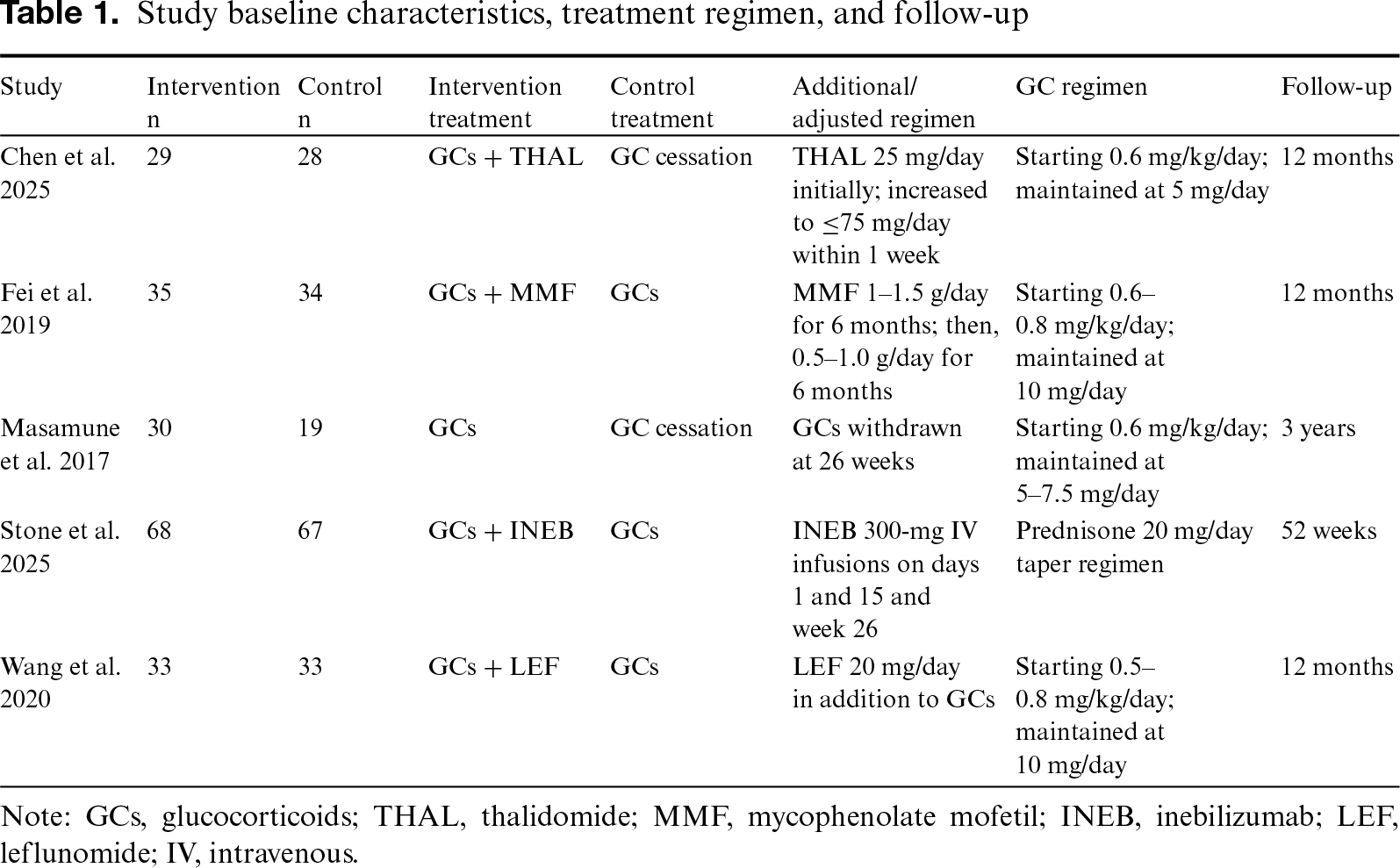
A total of 971 studies were identified through database searches, and 67 duplicates were removed. During screening, 817 records were excluded at the first stage, and 87 full-text reports were assessed at the second stage. This resulted in 5 RCTs being included in the final review (Fig. 1). The characteristics of the enrolled studies are shown in Table 1.19,27–30 Overall, 376 patients were included in the review. The included studies evaluated medical treatments for IgG4-RD and were published between 2017 and 2025. The trials compared treatments with glucocorticoids alone; glucocorticoid cessation; and glucocorticoids combined with immunomodulatory or biologic agents, including thalidomide, mycophenolate mofetil, inebilizumab, and leflunomide. Glucocorticoid regimens varied across studies, with initial doses ranging from 0.5 to 0.8 mg/kg/day in most trials, followed by tapering to maintenance doses of 5–10 mg/day where applicable. In the inebilizumab trial, patients received prednisone 20 mg/day with a tapering regimen. Follow-up duration ranged from 52 weeks to 3 years. Most patients were male, with 232 male participants accounting for 61.7% of the total population, and the mean age across studies ranged from 55.3 to 63.4 years (Table S2). Three studies were conducted in China, one in Japan, and one was a multicountry study.
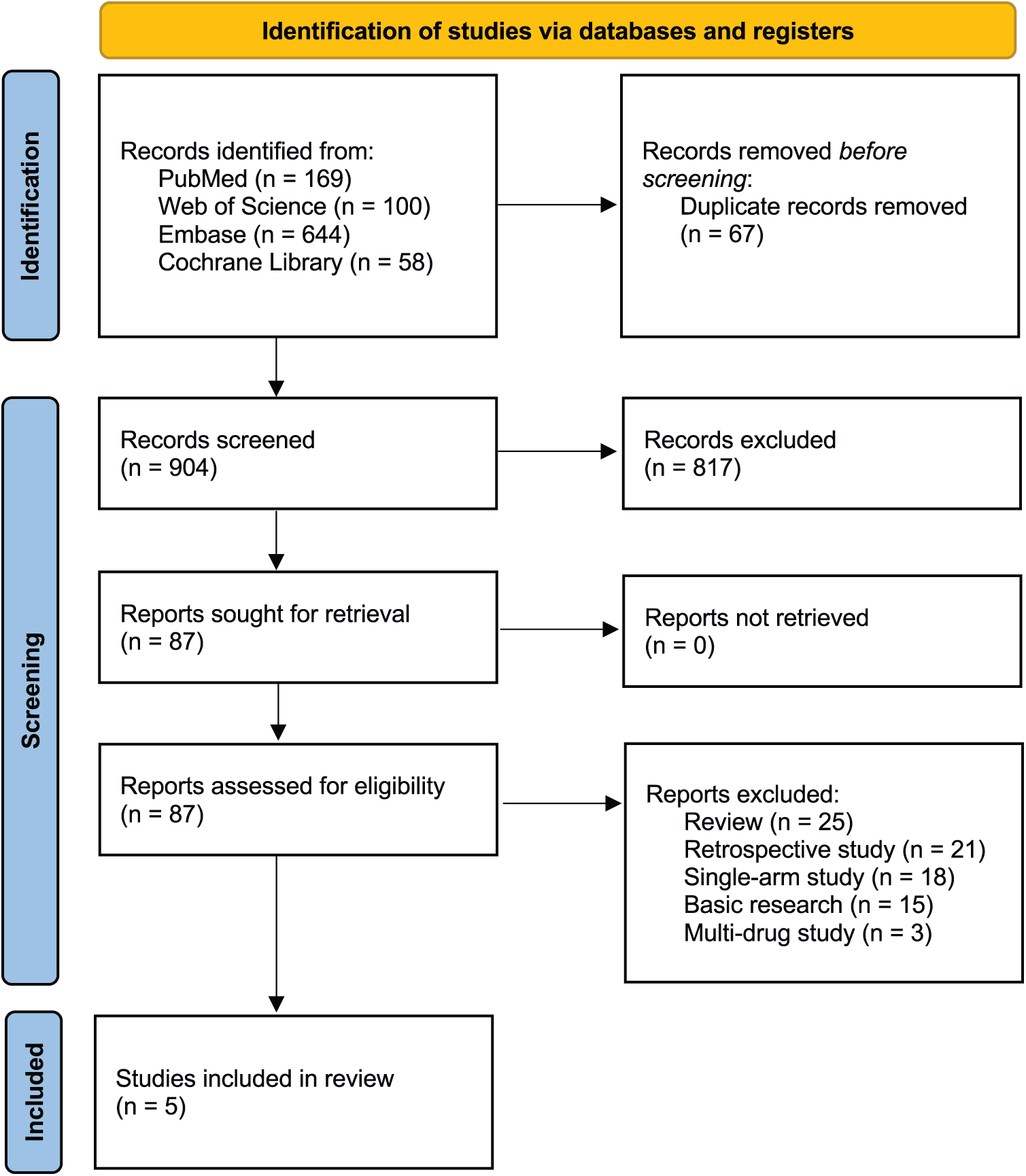
Figure 1. Flowchart of study screening.
Remission
The treatment network included six strategies: glucocorticoids alone, glucocorticoid cessation, glucocorticoids plus thalidomide, glucocorticoids plus mycophenolate mofetil, glucocorticoids plus inebilizumab, and glucocorticoids plus leflunomide (Fig. 2A). Direct evidence was available primarily for comparisons of combination therapy versus glucocorticoids alone, as well as glucocorticoid maintenance therapy versus glucocorticoid cessation.
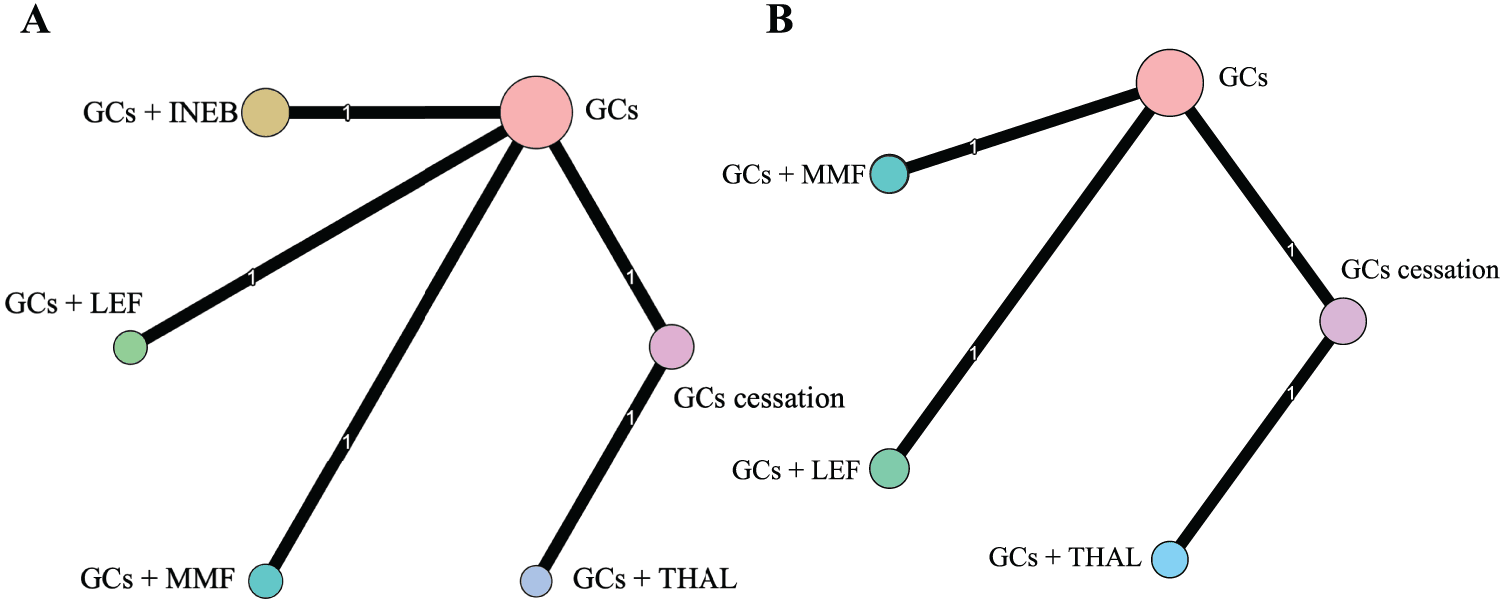
Figure 2. Network plot of enrolled studies. GCs, glucocorticoids; THAL, thalidomide; MMF, mycophenolate mofetil; INEB, inebilizumab; LEF, leflunomide.
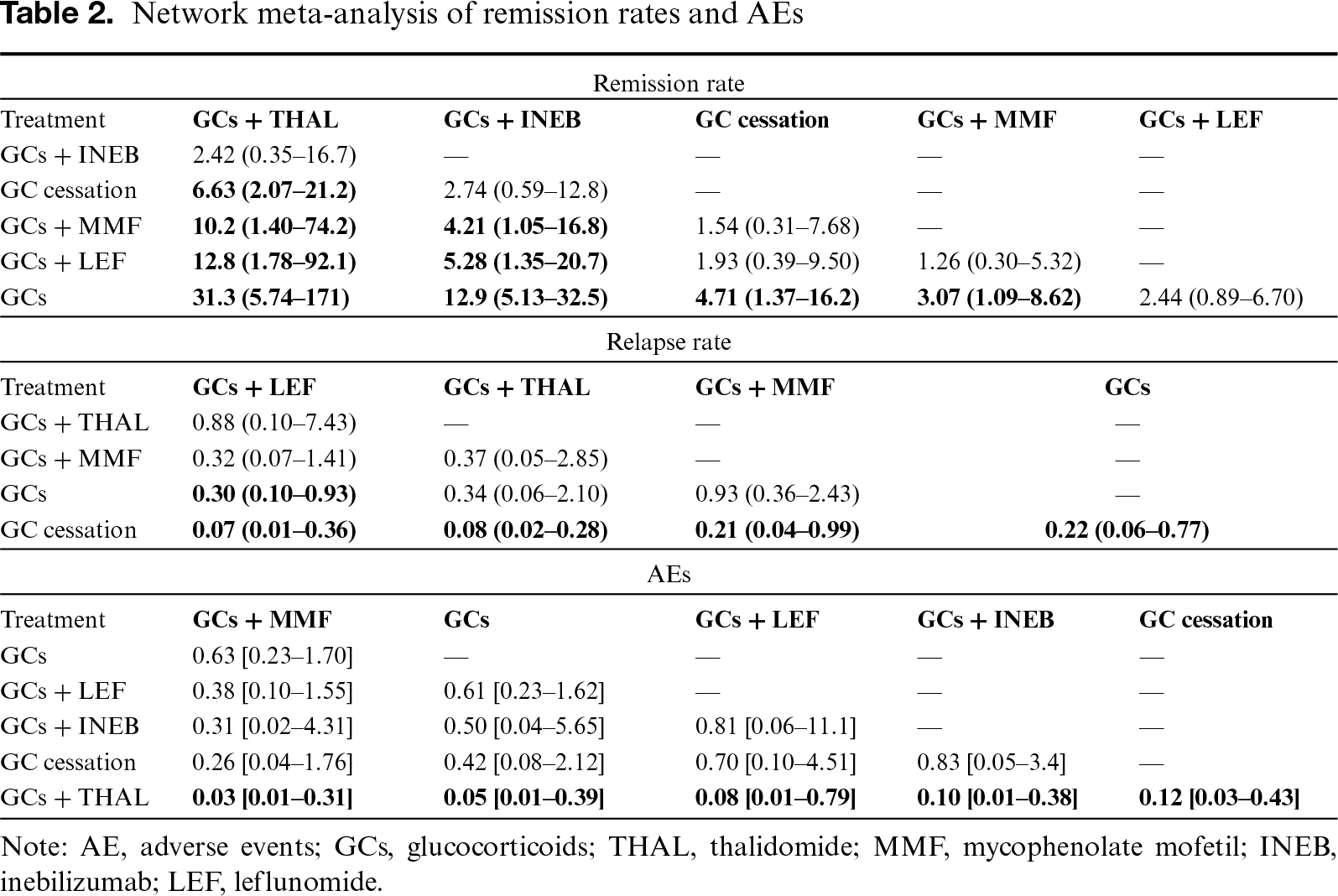
Compared with glucocorticoids alone, the strongest relative effect was observed for glucocorticoids plus thalidomide, followed by glucocorticoids plus inebilizumab, glucocorticoid cessation, and glucocorticoids plus mycophenolate mofetil (Fig. 3A). In the network meta-analysis, glucocorticoids plus thalidomide was associated with a significantly higher remission rate compared with glucocorticoids alone (OR, 31.3; 95% CI, 5.74–171) (Table 2). Similarly, glucocorticoids plus inebilizumab (OR, 12.9; 95% CI, 5.13–32.5), glucocorticoid cessation (OR, 4.71; 95% CI, 1.37–16.2), and glucocorticoids plus mycophenolate mofetil (OR, 3.07; 95% CI, 1.09–8.62) were associated with significantly higher remission rates compared with glucocorticoids alone, whereas glucocorticoids plus leflunomide was not (Table 2). Glucocorticoids plus thalidomide also showed superiority over glucocorticoid cessation (OR, 6.63; 95% CI, 2.07–21.2), glucocorticoids plus mycophenolate mofetil (OR, 10.2; 95% CI, 1.40–74.2), and glucocorticoids plus leflunomide (OR, 12.8; 95% CI, 1.78–92.1). However, it was not significantly superior to glucocorticoids plus inebilizumab (OR, 2.42; 95% CI, 0.35–16.7).
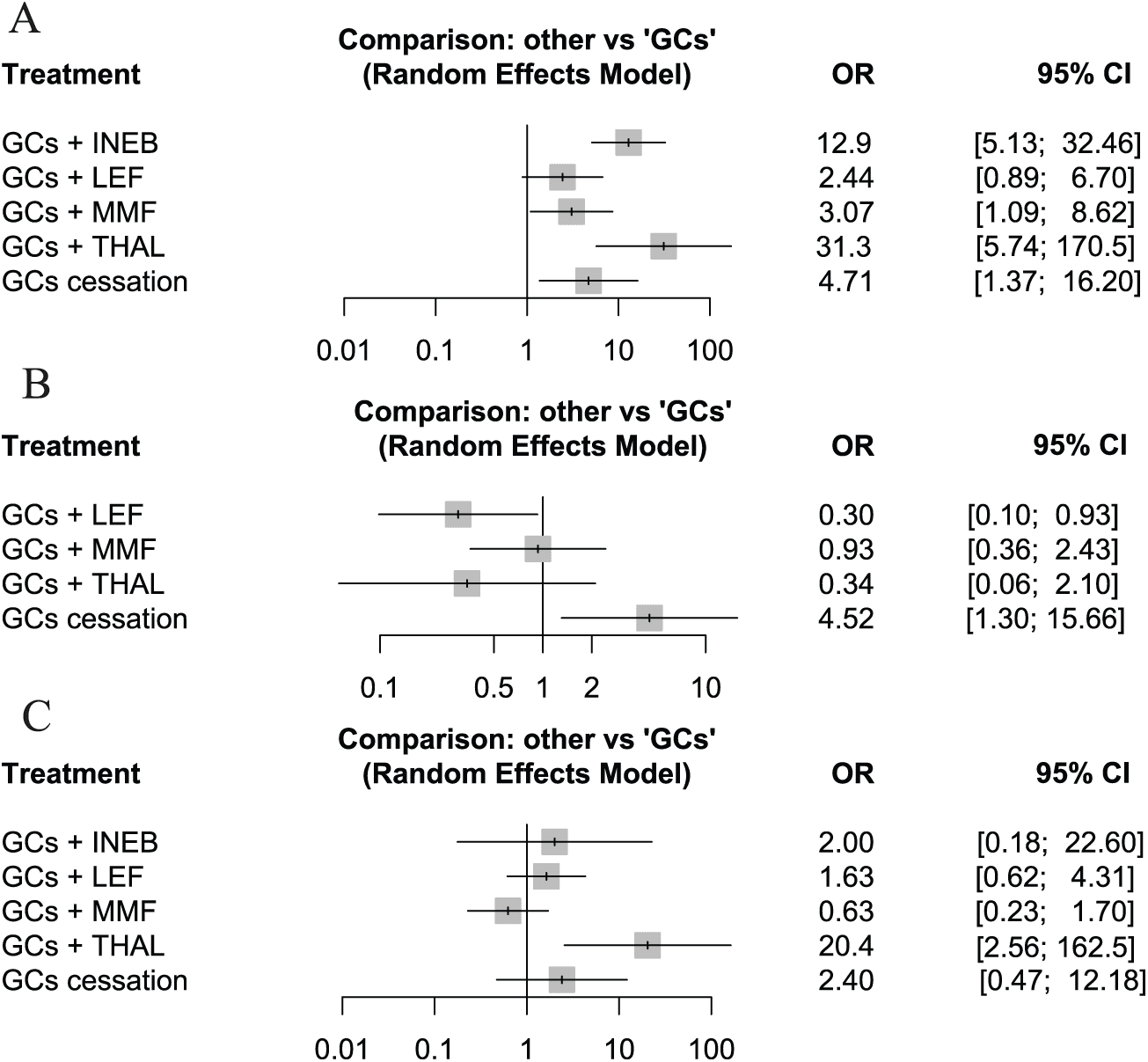
Figure 3. Direct comparation for different treatment strategy with glucocorticoids. (A) Remission; (B) relapse; and (C) adverse events. GCs, glucocorticoids; OR, odds rtio; CI, confidence interval; THAL, thalidomide; MMF, mycophenolate mofetil; TNEB, inebilizumab; LEF, leflunomide.
The highest P-score was observed for glucocorticoids plus thalidomide (0.960), indicating that it was the most favorable among the treatment options. This was followed by glucocorticoids plus inebilizumab (0.811) and glucocorticoid cessation (0.517). Glucocorticoids plus mycophenolate mofetil (0.388) and glucocorticoids plus leflunomide (0.312) exhibited lower rankings in this regard, while glucocorticoids alone had the lowest P-score (0.013), which suggests that it was the least favorable option in this comparison (Fig. S1). There was no assessable heterogeneity or inconsistency in the network.
Relapse
The studies reporting relapse rates included five treatment strategies: glucocorticoids alone, glucocorticoid cessation, glucocorticoids plus thalidomide, glucocorticoids plus mycophenolate mofetil, and glucocorticoids plus leflunomide (Fig. 2B). In the network meta-analysis of relapse, glucocorticoid cessation was associated with a higher risk of relapse compared with glucocorticoids alone (Fig. 3B). The network meta-analysis showed that, compared with glucocorticoid cessation, glucocorticoids plus leflunomide had a lower risk of relapse (OR, 0.07; 95% CI, 0.01–0.36), followed by glucocorticoids plus thalidomide (OR, 0.08; 95% CI, 0.02–0.28), glucocorticoids plus mycophenolate mofetil (OR, 0.21; 95% CI, 0.04–0.99), and glucocorticoids alone (OR, 0.22; 95% CI, 0.06–0.77). Glucocorticoids plus leflunomide also showed a lower risk of relapse compared with glucocorticoids alone (OR, 0.30; 95% CI, 0.10–0.93).
The highest P-score was observed for glucocorticoids plus leflunomide (0.865), indicating that it was the most favorable treatment option for reducing relapse. This was followed by glucocorticoids plus thalidomide (0.790), glucocorticoids plus mycophenolate mofetil (0.442), and glucocorticoids alone (0.394). Glucocorticoid cessation had the lowest P-score (0.009), which suggests that it was the least favorable strategy in this comparison (Fig. S2). There was no assessable heterogeneity or inconsistency in the network.
AEs
The studies reporting AEs included six strategies, the same as those for the outcome of remission (Fig. 2A). In the network meta-analysis of AEs, no clear significant difference was observed among most active treatment strategies, including glucocorticoids alone, glucocorticoids plus mycophenolate mofetil, glucocorticoids plus leflunomide, glucocorticoids plus inebilizumab, and glucocorticoid cessation, except for glucocorticoids plus thalidomide (Fig. 3C). CIs were generally wide, indicating uncertainty in the comparative safety estimates. The network meta-analysis showed that, compared with glucocorticoids plus thalidomide, glucocorticoids plus mycophenolate mofetil (OR, 0.03; 95% CI, 0.01–0.31), glucocorticoids alone (OR, 0.05; 95% CI, 0.01–0.39), glucocorticoids plus leflunomide (OR, 0.08; 95% CI, 0.01–0.79), glucocorticoids plus inebilizumab (OR, 0.10; 95% CI, 0.01–0.38), and glucocorticoid cessation (OR, 0.12; 95% CI, 0.03–0.43). For AEs, the highest P-score was observed for glucocorticoids plus mycophenolate mofetil (0.891), which indicates that it had the most favorable safety ranking among the treatment strategies. This was followed by glucocorticoids alone (0.716), glucocorticoids plus leflunomide (0.491), glucocorticoids plus inebilizumab (0.478), and glucocorticoid cessation (0.405). Glucocorticoids plus thalidomide had the lowest P-score (0.019), which suggests that it was the least favorable option with respect to AEs (Fig. S3). Because AE reporting differed across trials, the comparative safety ranking should be interpreted cautiously. There was no assessable heterogeneity or inconsistency in the network.
Risk of Bias and Certainty of Evidence
The risk of bias for remission, relapse, and AEs is shown in Figs. S4–S6 and was considered high for all three outcomes. The certainty of evidence for the key outcomes is summarized in Table S3. Overall, the certainty of evidence was rated as low, mainly because of risk of bias, sparse evidence networks, and imprecision. Because of the limited number of included trials, the impact of study quality on pooled estimates could not be fully explored through sensitivity analyses.
Discussion
In this systematic review and network meta-analysis of RCTs, combination therapy with glucocorticoids and selected steroid-sparing agents appeared to provide greater clinical benefit than did glucocorticoid monotherapy in patients with IgG4-RD. The principal finding was that glucocorticoids plus thalidomide ranked highest for remission and were superior to most other treatment strategies, except glucocorticoids plus inebilizumab. However, this regimen was also associated with the highest risk of AEs. Glucocorticoids plus leflunomide ranked highest for relapse prevention, though this strategy showed the lowest efficacy for remission induction. Glucocorticoids plus mycophenolate mofetil also improved remission compared with glucocorticoids alone and demonstrated the most favorable safety ranking among the evaluated strategies. In contrast, glucocorticoid cessation was associated with the least favorable relapse profile, supporting the clinical observation that relapse is common after glucocorticoid tapering or discontinuation. The apparently favorable remission result for glucocorticoid cessation should be interpreted cautiously, as it may reflect patient selection or trial design rather than true superiority over conventional glucocorticoid therapy. Overall, these findings are consistent with previous clinical experience, which shows that glucocorticoids are effective for induction therapy but limited by relapse and cumulative toxicity, while immunomodulatory or biologic agents may serve as steroid-sparing approaches.31,32 Therefore, these findings should inform, rather than determine, treatment selection and should be interpreted in the context of individual patient characteristics and treatment-related risks. P-score rankings may be unstable in sparse networks and should be interpreted together with the corresponding CIs.
Glucocorticoids remain the cornerstone of initial IgG4-RD treatment because they usually lead to rapid improvement in clinical symptoms, organ enlargement, inflammatory markers, and radiologic abnormalities.2 Nevertheless, long-term disease control remains challenging. The present analysis reinforces this concern by showing that glucocorticoids alone ranked lowest for remission and that glucocorticoid cessation ranked lowest for relapse prevention. These results suggest that although glucocorticoids are effective in inducing initial disease control, they may be insufficient as a standalone long-term strategy for many patients. This is particularly relevant because IgG4-RD often affects older adults and may involve multiple organs, which makes prolonged glucocorticoid exposure undesirable due to the risks of infection, diabetes, osteoporosis, hypertension, cataracts, and other steroid-related complications.31 Therefore, treatment strategies that improve remission while reducing relapse and limiting steroid exposure are clinically important.
The inclusion of inebilizumab is notable because it reflects the growing interest in B-cell-directed therapy for IgG4-RD. The glucocorticoids plus inebilizumab strategy was associated with a significantly higher remission rate than glucocorticoids alone and ranked second for remission. This finding supports the concept that B-cell depletion or B-cell pathway targeting may be effective in IgG4-RD, a disease characterized by plasmablast expansion and dysregulated humoral immunity.32 However, relapse data were not available for inebilizumab in the network, limiting conclusions about the durability of response. Moreover, longer follow-up is needed to better define infection risk, hypogammaglobulinemia, vaccination response, and the optimal timing of retreatment. The promising efficacy signal of inebilizumab also highlights a key evidence gap: although rituximab is commonly used in refractory, relapsing, or organ-threatening IgG4-RD, randomized controlled evidence for rituximab was not available for inclusion in this analysis. As a result, the present network cannot determine whether rituximab is superior, equivalent, or inferior to thalidomide, leflunomide, mycophenolate mofetil, inebilizumab, or glucocorticoids alone. This limitation has important implications for interpretation and clinical application. Rituximab has been widely adopted in practice based on observational studies, mechanistic rationale, and clinical experience, particularly for patients with recurrent disease, contraindications to glucocorticoids, or multiorgan involvement.33 Future randomized trials comparing rituximab with glucocorticoids, conventional immunosuppressants, and newer B-cell-targeted agents are needed to clarify its relative efficacy, relapse-prevention capacity, safety, cost-effectiveness, and optimal retreatment schedule.
Among the evaluated interventions, glucocorticoids plus thalidomide showed the strongest association with remission. The effect size was substantially greater than that of glucocorticoids alone, and thalidomide also ranked highly for preventing relapse. This suggests that thalidomide may have meaningful immunomodulatory activity in IgG4-RD when used alongside glucocorticoids. Its potential benefit may be related to the suppression of inflammatory cytokines, modulation of lymphocyte activity, and antifibrotic effects, all of which are biologically plausible in a fibroinflammatory disorder such as IgG4-RD.34 However, the favorable efficacy signal must be interpreted alongside the safety results. Glucocorticoids plus thalidomide exhibited the least favorable ranking for AEs, and other treatment strategies showed significantly lower odds of AEs when compared with thalidomide-containing therapy. This finding is clinically important because thalidomide is associated with neuropathy, sedation, constipation, thromboembolic risk, and teratogenicity. Therefore, although thalidomide may be effective, its role may be limited to carefully selected patients, with close monitoring and individualized risk–benefit assessment.
Glucocorticoids plus leflunomide ranked highest for relapse prevention and significantly reduced relapse compared with both glucocorticoid cessation and glucocorticoids alone. This finding suggests that leflunomide may be particularly useful as a maintenance or relapse-prevention strategy. Relapse prevention is a major treatment goal in IgG4-RD because recurrent inflammation can lead to progressive fibrosis and irreversible organ damage, particularly in the pancreas, biliary tract, kidneys, retroperitoneum, and other critical organs. The apparent benefit of leflunomide may reflect its inhibitory effect on lymphocyte proliferation and downstream immune activation. However, leflunomide did not show a significant remission advantage over glucocorticoids alone in this analysis. This may indicate that leflunomide is more effective for sustaining disease control than for inducing remission, although the small number of trials and wide CIs limit firm conclusions. Hepatotoxicity, cytopenia, gastrointestinal intolerance, hypertension, and drug interactions should also be considered when selecting leflunomide for long-term therapy.35
Glucocorticoids plus mycophenolate mofetil showed a more balanced profile, with improved remission compared with glucocorticoids alone and the most favorable safety ranking. Although its efficacy ranking was lower than that of thalidomide for remission and lower than that of leflunomide for relapse prevention, mycophenolate mofetil may represent a practical steroid-sparing option for patients in whom tolerability is a priority. This may be especially relevant for patients with comorbidities that increase the risk of steroid toxicity or in those for whom thalidomide or leflunomide would be less suitable. The safety ranking should be interpreted cautiously because AE reporting differed across trials, and CIs were wide. Mycophenolate mofetil can still cause gastrointestinal symptoms, leukopenia, infection risk, and teratogenicity, requiring appropriate laboratory monitoring and patient counseling.36
Several additional limitations should be considered. First, only five RCTs involving 376 patients were included, resulting in sparse networks and wide CIs across several comparisons. The small sample size and sparse treatment network may reduce the stability of the network estimates, particularly for treatment rankings based on P-scores. Second, the overall risk of bias was high for remission, relapse, and AEs, and the certainty of evidence was rated as low due to risk of bias and imprecision. Third, clinical heterogeneity may have influenced the results. IgG4-RD is a highly heterogeneous disease, and treatment response may differ according to organ involvement, baseline disease activity, degree of fibrosis, serum IgG4 concentration, prior relapse history, and glucocorticoid regimen. These differences may have acted as potential effect modifiers, thereby affecting the transitivity assumption and the validity of indirect comparisons. Fourth, definitions of remission, relapse, and AEs may have varied across studies, despite attempts to standardize outcomes. Fifth, follow-up duration ranged from 52 weeks to 3 years, which may be insufficient to fully assess long-term relapse, irreversible organ damage, cumulative toxicity, or late safety events. Finally, because direct head-to-head evidence was limited and the sparse network structure restricted formal assessment of consistency, transitivity, and sensitivity analyses, treatment rankings should be considered hypothesis-generating rather than definitive.
Conclusion
This network meta-analysis suggests that combining glucocorticoids with selected steroid-sparing agents may improve outcomes compared with glucocorticoids alone in patients with IgG4-RD. Glucocorticoids plus thalidomide ranked highest for remission but had the least favorable safety profile, whereas glucocorticoids plus leflunomide ranked highest for relapse prevention despite lower remission efficacy. Glucocorticoids plus mycophenolate mofetil showed a favorable balance between efficacy and safety, whereas glucocorticoid cessation was associated with the poorest relapse profile. Given the small sample sizes, risk of bias, low certainty of evidence, and lack of randomized rituximab trials, these findings should be interpreted cautiously. Larger, high-quality trials are needed to define the optimal steroid-sparing strategy for IgG4-RD.
Acknowledgment
Not applicable.
Funding Source
No financial support was provided.
Author Contributions
R.Z. and B.D. independently performed the literature search, data extraction, and data synthesis. Discrepancies were resolved through discussion with X.W. X.Z. supervised the study and provided critical revisions to the manuscript. All authors have read and approved the final manuscript and agree with its content and data.
Data Availability Statement
The data supporting the findings of this study are available from the corresponding author upon reasonable request.
Generative AI Declaration
During the preparation of this manuscript, the authors used ChatGPT to assist with proofreading. All content was subsequently reviewed and edited by the authors, who assume full responsibility for the accuracy and integrity of the published work.
Ethical Statement
The article does not involve the participation of any animals.
Conflict of Interest
The authors report no conflicts of interest in this work.
Supplemental Information
Supplemental information for this article can be found online at https://sup.jclinque.com/api/articles/120/download-suppl.
References
[1] Arias-Intriago M, Gomolin T, Jaramillo F, et al. IgG4-related disease: current and future insights into pathological diagnosis. Int J Molec Sci. 2025;26(11):5325. doi:10.3390/ijms26115325.
[2] Wallace ZS, Katz G, Hernandez-Barco YG, Baker MC. Current and future advances in practice: IgG4-related disease. Rheumatol Adv Pract. 2024;8(2):732. doi:10.1093/rap/rkae020.
[3] D'Astous-Gauthier K, Ebbo M, Chanez P, Schleinitz N. Implication of allergy and atopy in IgG4-related disease. World Allergy Organ J. April 2023;16(4):100765. doi:10.1016/j.waojou.2023.100765.
[4] Michailidou D, Schwartz DM, Mustelin T, Hughes GC. Allergic aspects of IgG4-related disease: implications for pathogenesis and therapy. Review. Front Immunol. July 07, 2021;12:693192. doi:10.3389/fimmu.2021.693192.
[5] Wallace ZS, Miles G, Smolkina E, et al. Incidence, prevalence and mortality of IgG4-related disease in the USA: a claims-based analysis of commercially insured adults. Ann Rheum Dis. July 2023;82(7):957–962. doi:10.1136/ard-2023-223950.
[6] Wallace ZS, Katz G, Hernandez-Barco YG, Baker MC. Current and future advances in practice: IgG4-related disease. Rheumatol Adv Pract. 2024;8(2):rkae020. doi:10.1093/rap/rkae020.
[7] Zhou W, Murray T, Cartagena L, et al. IgG4-related disease as mimicker of malignancy. SN Compreh Clin Med. September 01, 2021;3(9):1904–1913. doi:10.1007/s42399-021-00957-6.
[8] Wu S, Wang H. IgG4-related digestive diseases: diagnosis and treatment. Review. Front Immunol. October 05, 2023;14:1278332. doi:10.3389/fimmu.2023.1278332.
[9] Mizushima I, Morikage N, Ito E, et al. Validation of the diagnostic criteria for IgG4-related periaortitis/periarteritis and retroperitoneal fibrosis (IgG4PA/RPF) 2018, and proposal of a revised 2023 version for IgG4-related cardiovascular/retroperitoneal disease. Circ J. 2024;88(10):1679–1688. doi:10.1253/circj.CJ-24-0026.
[10] Huynh KN, Kong MJ, Nguyen BD. Anatomic and functional imaging of immunoglobulin G4-related disease and its mimics. Radiographics. March 2023;43(3):e220097. doi:10.1148/rg.220097.
[11] Wallace ZS, Naden RP, Chari S, et al. The 2019 American college of rheumatology/European league against rheumatism classification criteria for IgG4-related disease. Arthritis Rheumatol. January 2020;72(1):7–19. doi:10.1002/art.41120.
[12] Umehara H, Okazaki K, Kawa S, et al. The 2020 revised comprehensive diagnostic (RCD) criteria for IgG4-RD. Mod Rheumatol. May 2021;31(3):529–533. doi:10.1080/14397595.2020.1859710.
[13] Saeki T, Kawano M, Nagasawa T, et al. Validation of the diagnostic criteria for IgG4-related kidney disease (IgG4-RKD) 2011, and proposal of a new 2020 version. Clin Exp Nephrol. February 2021;25(2):99–109. doi:10.1007/s10157-020-01993-7.
[14] Umehara H, Okazaki K, Kawa S, et al. The 2020 revised comprehensive diagnostic (RCD) criteria for IgG4-RD. Modern Rheumatol. 2021;31(3):529–533. doi:10.1080/14397595.2020.1859710.
[15] Chang C-T, Chan T-M, Yu H-H, Yu K-H. Diagnostic utility of serum IgG4 level in IgG4-related diseases: a comprehensive systematic review and meta-analysis. RMD Open. 2023;9(4):e003498. doi:10.1136/rmdopen-2023-003498.
[16] Orozco-Gálvez O, Fernández-Codina A, Lanzillotta M, et al. Development of an algorithm for IgG4-related disease management. Autoimm Rev. March 01, 2023;22(3):103273. doi:10.1016/j.autrev.2023.103273.
[17] Löhr JM, Beuers U, Vujasinovic M, et al. European guideline on IgG4-related digestive disease-UEG and SGF evidence-based recommendations. United Eur Gastroen J. July 2020;8(6):637–666. doi:10.1177/2050640620934911.
[18] Colquhoun M, Barwick TD, Bolton E, et al. A protocol for targeted B-lymphocyte depletion for the treatment of IgG4-related disease. Rheumatology. 2025;64(5):2847–2854. doi:10.1093/rheumatology/keae675.
[19] Stone JH, Khosroshahi A, Zhang W, et al. Inebilizumab for treatment of IgG4-related disease. N Engl J Med. March 27, 2025;392(12):1168–1177. doi:10.1056/NEJMoa2409712.
[20] Peng L, Nie Y, Zhou J, et al. Withdrawal of immunosuppressants and low-dose steroids in patients with stable IgG4-RD (WInS IgG4-RD): an investigator-initiated, multicentre, open-label, randomised controlled trial. Ann Rheum Dis. April 11, 2024;83(5):651–660. doi:10.1136/ard-2023-224487.
[21] Wu Q, Chang J, Chen H, et al. Efficacy between high and medium doses of glucocorticoid therapy in remission induction of IgG4-related diseases: a preliminary randomized controlled trial. Int J Rheum Dis. May 2017;20(5):639–646. doi:10.1111/1756-185x.13088.
[22] Hutton B, Salanti G, Caldwell DM, et al. The PRISMA extension statement for reporting of systematic reviews incorporating network meta-analyses of health care interventions: checklist and explanations. Ann Intern Med. June 2, 2015;162(11):777–784. doi:10.7326/m14-2385.
[23] Open Science Framework. Comparative efficacy and safety of medical treatments for IgG4-related disease: a systematic review and network meta-analysis of randomized controlled trials. Published 2026, Accessed June 2, 2026. https://osf.io/b4j2e/overview.
[24] Carruthers MN, Stone JH, Deshpande V, Khosroshahi A. Development of an IgG4-RD responder index. Int J Rheumatol. 2012;2012:259408. doi:10.1155/2012/259408.
[25] Sterne JAC, Savović J, Page MJ, et al. RoB 2: a revised tool for assessing risk of bias in randomised trials. Bmj. August 28, 2019;366:l4898. doi:10.1136/bmj.l4898.
[26] Balshem H, Helfand M, Schünemann HJ, et al. GRADE guidelines: 3. Rating the quality of evidence. J Clin Epidemiol. April 2011;64(4):401–406. doi:10.1016/j.jclinepi.2010.07.015.
[27] Chen Y, Ye C, Yang P, et al. Thalidomide can effectively prevent relapse in IgG4-related disease outweighing its side effects: a multicentre, randomised, double-blinded, placebo-controlled study. Ann Rheum Dis. July 2025;84(7):1246–1252. doi:10.1016/j.ard.2025.01.033.
[28] Yunyun F, Yu P, Panpan Z, et al. Efficacy and safety of low dose Mycophenolate mofetil treatment for immunoglobulin G4-related disease: a randomized clinical trial. Rheumatology (Oxford). January 1, 2019;58(1):52–60. doi:10.1093/rheumatology/key227.
[29] Masamune A, Nishimori I, Kikuta K, et al. Randomised controlled trial of long-term maintenance corticosteroid therapy in patients with autoimmune pancreatitis. Gut. March 2017;66(3):487–494. doi:10.1136/gutjnl-2016-312049.
[30] Wang Y, Zhao Z, Gao D, et al. Additive effect of leflunomide and glucocorticoids compared with glucocorticoids monotherapy in preventing relapse of IgG4-related disease: a randomized clinical trial. Semin Arthritis Rheum. December 2020;50(6):1513–1520. doi:10.1016/j.semarthrit.2020.01.010.
[31] Wallace ZS, Park JY, Serra E, et al. Burden of glucocorticoid use and risk of toxicities among patients with immunoglobulin-G4-related disease: a retrospective US-based claims study. Rheumatol Therapy. June 01, 2025;12(3):547–560. doi:10.1007/s40744-025-00763-9.
[32] González-García A, Starita-Fajardo G, Lucena López D, et al. New developments in the treatment of IgG4-related disease: a comprehensive clinical approach. J Clin Med. 2025;14(19):6774. doi:10.3390/jcm14196774.
[33] Patel U, Saxena A, Patel D, et al. Therapeutic uses of rituximab and clinical features in immunoglobulin G4-related disease: a systematic review. Cureus. September 2023;15(9):e45044. doi:10.7759/cureus.45044.
[34] Liu T, Guo F, Zhu X, He X, Xie L. Thalidomide and its analogues: a review of the potential for immunomodulation of fibrosis diseases and opthalmopathy. Exp Ther Med. December 2017;14(6):5251–5257. doi:10.3892/etm.2017.5209.
[35] Padda IS, Goyal A. Leflunomide. In: StatPearls. Treasure Island (FL): StatPearls Publishing; June 3, 2023.
[36] Furundaoturan O, Akçay P, Selver OB. Use of systemic mycophenolate mofetil therapy in ocular surface inflammatory pathologies at the initiative and responsibility of the ophthalmologist. Middle East Afr J Ophthalmol. October–December 2022;29(4):209–215. doi:10.4103/meajo.meajo_109_23.
 |
Copyright: © 2026 Zhang et al. This work is licensed under a Creative Commons Attribution 4.0 International License, which permits unrestricted use, distribution, and reproduction in any medium, provided the original work is properly cited. |