| Journal of Clinical Question. 2026; 3(3): e269 https://doi.org/10.69854/jcq.2026.0013 Advance access publication date 25 June 2026 |
 |
Case Report
Case Report of Tumour Response to Capivasertib after Exposure to Alpelisib in PIK3CA-Mutated Metastatic Breast Cancer
Han Yi Lee *, Joshua Zhi Chien Tan, Raymond Chee Hui Ng
Division of Medical Oncology, National Cancer Centre Singapore, Singapore.
*Corresponding Author: e-mail: lee.han.yi@singhealth.com.sg
Submitted: March 07, 2026 Accepted: June 24, 2026
Clinical Question Box
Can capivasertib be effective after prior alpelisib exposure in patients with phosphatidylinositol 3-kinase (PIK3CA)-mutated hormone receptor-positive, human epidermal growth factor receptor 2-negative metastatic breast cancer?
In our heavily pre-treated patient, fulvestrant plus capivasertib achieved a good partial response in the liver with stable disease in the lungs and bone. This case suggests that capivasertib may retain efficacy after prior alpelisib exposure, supporting sequential PI3K/protein kinase B pathway targeting as a potential therapeutic strategy in selected patients.
Abstract
Sequential targeting of the phosphatidylinositol 3-kinase (PI3K)/protein kinase B pathway in hormone receptor-positive, human epidermal growth factor receptor 2 (HER2)-negative metastatic breast cancer remains poorly described. We report a case of a 67-year-old woman with heavily pre-treated metastatic hormone receptor-positive, HER2-negative, PIK3CA-mutated breast cancer who achieved a meaningful response to fulvestrant plus capivasertib despite prior treatment with fulvestrant plus alpelisib. After progression through multiple lines of therapy, she was started on capivasertib and fulvestrant following stereotactic radiosurgery for intracranial metastasis. Treatment was complicated by a maculopapular rash, which improved with corticosteroids, temporary interruption, and dose reduction. Imaging after 3 months showed a good partial response in the liver, with stable disease in the lungs and bone. This case suggests that capivasertib may retain clinical activity after prior alpelisib exposure in selected patients with PIK3CA-mutated metastatic breast cancer.
Keywords: Alpelisib, breast cancer, capivasertib, case report, PIK3CA
Introduction
Breast cancer remains the most frequently diagnosed malignancy among women worldwide and a major cause of cancer-related mortality.1 Among its biological subtypes, hormone receptor (HR)-positive, human epidermal growth factor receptor 2 (HER2)-negative disease accounts for the largest proportion of cases.2 Although endocrine therapy constitutes the cornerstone of treatment for this subtype, the development of acquired resistance remains a major therapeutic challenge in the metastatic setting.3 Increasing understanding of the molecular mechanisms underlying endocrine resistance has led to the integration of genomic profiling into clinical practice and has facilitated the development of biomarker-driven therapeutic strategies.
The phosphatidylinositol 3-kinase (PI3K)/protein kinase B (AKT)/phosphatase and tensin homolog (PTEN) signalling pathway plays a central role in tumour cell proliferation, survival, and resistance to endocrine therapy in HR-positive breast cancer.4 Among the genomic alterations affecting this pathway, activating mutations in PIK3CA are particularly common and represent one of the most frequent actionable molecular abnormalities in HR-positive, HER2-negative metastatic breast cancer.5 The identification of these alterations through next-generation sequencing (NGS) has contributed to a paradigm shift in treatment selection, enabling the use of targeted agents directed against components of the PI3K/AKT pathway.
There has been a paradigm shift in the treatment of HR-positive metastatic breast cancer with the advent of NGS and further molecular-based targeted therapy. Alterations in the PIK3CA, PTEN, and pAKT genes that are involved in the PI3K signalling pathway have become the target of several newer targeted therapeutics. Alpelisib is an alpha-isoform-specific PI3K inhibitor that demonstrated a progression-free survival (PFS) benefit in combination with fulvestrant compared to fulvestrant alone in the SOLAR-1 trial for patients with PIK3CA-mutated hormone-positive, HER2-negative metastatic breast cancer.6 More recently, the AKT inhibitor capivasertib achieved United States Food and Drug Administration approval for the treatment of patients with metastatic HR-positive, HER2-negative breast cancer with mutations in AKT, PTEN, or PIK3CA based on the PFS benefit seen in the CAPItello-291 trial.7 There are limited reports on sequential treatment with alpelisib followed by capivasertib. In this report, we describe a heavily pre-treated patient with PIK3CA-mutated, HR-positive, HER2-negative metastatic breast cancer who achieved a partial response to fulvestrant plus capivasertib after previously deriving clinical benefit from fulvestrant plus alpelisib.
Case Report
A 67-year-old woman with a history of left breast cancer, initially diagnosed in November 2007, underwent left mastectomy and axillary clearance, followed by 5 years of adjuvant tamoxifen therapy (Fig. 1). Detailed pathology information from the initial diagnosis was unavailable for review. In September 2014, she presented with a symptomatic pleural effusion, and further evaluation confirmed pleural recurrence. Cytology demonstrated oestrogen receptor-positive, progesterone receptor-negative, and HER2-negative disease. She commenced exemestane plus everolimus and achieved a prolonged partial response until February 2016.
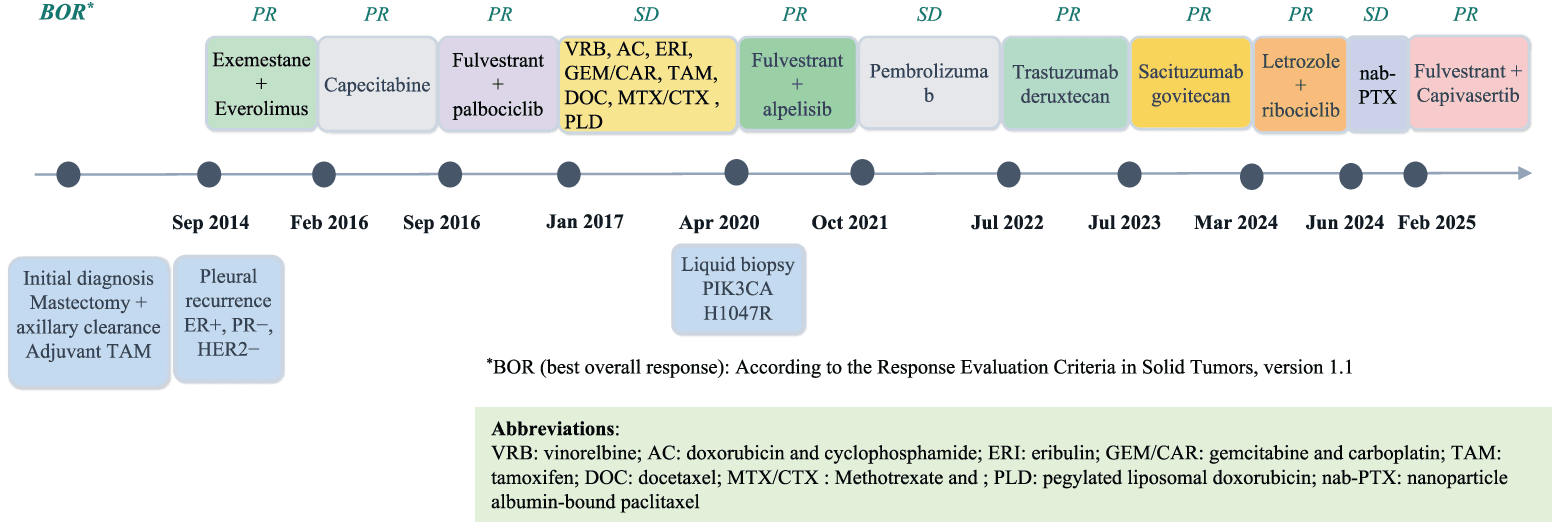
Figure 1. Timeline of systemic treatments and responses.
In February 2016, disease progression led to a switch to capecitabine chemotherapy. Subsequent treatments included megestrol therapy, followed by fulvestrant and palbociclib initiated in September 2016. In January 2017, she opted for oral vinorelbine due to a preference for oral therapy. Between April and June 2017, she received a combination of doxorubicin and cyclophosphamide, followed by eribulin from June to August 2017. In August 2017, she responded to gemcitabine and carboplatin chemotherapy. After 6 months, she was transitioned to maintenance tamoxifen, but disease progression led to the initiation of docetaxel chemotherapy in June 2018. She completed 6 cycles of docetaxel chemotherapy in November 2018 and continued on metronomic cyclophosphamide and methotrexate until June 2019, when she opted for a chemotherapy break. In August 2019, disease progression was noted, and she was reinitiated on pegylated liposomal doxorubicin, first achieving stable disease before later progression.
In April 2020, a liquid biopsy identified a PIK3CA exon 21 missense substitution c.3140A>G (p.H1047R) mutation. She was started on fulvestrant plus alpelisib and achieved a partial response, as assessed according to the Response Evaluation Criteria in Solid Tumors, version 1.1 (RECIST 1.1), with disease control maintained until October 2021. In March 2022, she was started on pembrolizumab as a single agent because NGS showed that her tumour mutational burden was high; however, disease progression occurred in July 2022. A repeat pleural biopsy showed HER2 immunohistochemistry 1+ disease, and she was initiated on trastuzumab deruxtecan in July 2022, initially achieving a good partial response before progression in July 2023. She was switched to sacituzumab govitecan and achieved a partial response before disease progression in March 2024. Following rechallenge with letrozole and ribociclib in June 2024, disease progression was noted, and she received rechallenge nab-paclitaxel, which resulted in a partial response.
In February 2025, she developed intracranial metastasis and underwent stereotactic radiosurgery before initiating fulvestrant and capivasertib at 400 mg twice daily for 4 days on then 3 days off. She developed a generalized maculopapular rash 2 weeks after initiation, requiring cessation of capivasertib and initiation of antihistamines and systemic corticosteroids. There was rapid improvement of the rashes after initiation of corticosteroids, and capivasertib was reinitiated; however, attempts at tapering off corticosteroids failed in view of the recurrence of the rashes. Capivasertib was later dose reduced to 320 mg twice daily, with successful cessation of corticosteroids. Interval imaging after 1 month of treatment showed a good partial response in the liver and stable disease in the lungs and bone (Fig. 2).
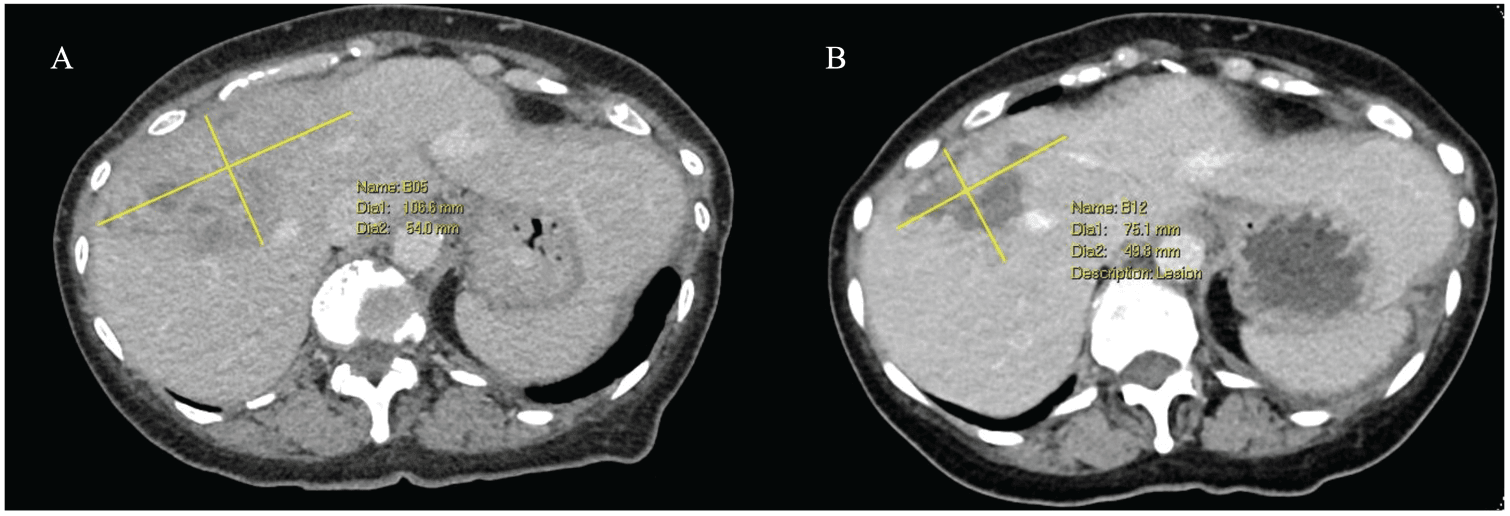
Figure 2. Liver computed tomography images obtained before and after fulvestrant plus capivasertib. (A) January 24, 2025; (B) February 22, 2025.
Discussion
The data supporting the usage of capivasertib with fulvestrant in patients with extensive prior treatment, including that of prior fulvestrant with alpelisib, is limited. The pivotal phase III CAPItello-291 trial that led to the approval of this drug combination excluded patients with prior fulvestrant, AKT, PI3K, or mTOR inhibitors.7 Additionally, this trial only allowed up to 2 prior lines of endocrine treatment and up to 1 line of chemotherapy in the advanced setting. In one single-centre retrospective study examining patients with advanced hormone-positive, HER2-negative breast cancer treated with capivasertib, 13 out of 34 patients (38.2%) had received prior alpelisib.8 In the entire population, 4 patients had a partial response, 6 patients had stable disease, and the median PFS was 3.5 months. In one case report, response to fulvestrant and capivasertib was also demonstrated in a patient with prior alpelisib use.9 There were some similarities between the patient described in this case report and the patient described in ours. Both patients were heavily pre-treated, and both had previously responded to alpelisib.
The PI3K pathway plays an important role in translating extracellular growth signals into intracellular actions that facilitate growth. Alterations in this pathway can lead to dysregulation in growth and promote cancer growth.10 Activating mutations in the PIK3CA gene, which encodes the p110-α catalytic subunit of PI3K, can lead to hyperactivation of the enzyme.10 The PI3K enzyme facilitates phosphatidylinositol 3,4,5-trisphosphate (PIP3) production at the plasma membrane. PIP3 can bind to AKT, which subsequently propagates the growth signal by directly phosphorylating proteins involved in glucose uptake, glycogen synthesis, cell growth, and cell survival. PTEN is a phosphatase encoded by the PTEN tumour suppressor gene that dephosphorylates PIP3, acting as an inhibitor to the PI3K pathway.11 Activating mutations in PIK3CA or AKT1 and inactivating mutations in PTEN occur in around 50% of hormone-positive, HER2-negative breast cancers.12–14
Alpelisib is an oral bioavailable, small-molecule α-specific PI3K inhibitor that selectively inhibits the alpha isoform (p110α) of PI3K, approximately 50 times as strongly as other isoforms, and is effective in tumours with a hotspot mutation in PIK3CA.15 Capivasertib is an oral bioavailable, small-molecule inhibitor of all three AKT isoforms (AKT1, AKT2, AKT3) and is effective in patients with PIK3CA, AKT, and PTEN mutations.16 The differences in the pathway targeting between the 2 drugs might explain the ability of capivasertib to be effective even in patients with prior progression on alpelisib. Alpelisib selectively inhibits PI3Kα, whereas AKT activation may be maintained through alternative PI3K isoforms, receptor tyrosine kinase bypass signalling, or downstream alterations such as PTEN loss or AKT amplification; thus, AKT-level inhibition may overcome selected PI3K inhibitor resistance mechanisms.17
Persistence of the PIK3CA mutation was not confirmed by repeat liquid biopsy before capivasertib initiation. Nevertheless, the patient’s approximately 18-month clinical benefit from fulvestrant plus alpelisib, which exceeded the median PFS reported in SOLAR-1, may suggest substantial dependence on PI3K/AKT pathway signalling and provide biological plausibility for the subsequent response to capivasertib. This interpretation remains speculative in the absence of paired molecular analyses at alpelisib progression and before capivasertib initiation. Further research is needed to clarify resistance mechanisms and determine the optimal sequencing of PI3K- and AKT-targeted therapies.
Conclusion
This case shows that metastatic HR-positive, HER2-negative, PIK3CA-mutated breast cancer can still respond well to fulvestrant plus capivasertib after prior fulvestrant and alpelisib. This combination may be a reasonable option for patients with limited treatment choices, even after prior alpelisib exposure. A prior response to alpelisib may help predict benefit, but more studies are needed to identify factors associated with effectiveness.
Acknowledgment
We would like to thank the patient and family members for agreeing to us writing up her case.
Funding Source
This research received no external funding.
Author Contributions
H.Y.L. and J.Z.C.T. contributed to the study search, interpretation of data, extraction, and drafting. R.C.H.N. worked on the data extraction and the revision process. All authors have read the manuscript and agree with the content and data.
Data availability
The data supporting this study’s findings are available from the corresponding author upon reasonable request.
Ethical Statement
Informed consent was obtained from the subject involved in the study.
Conflict of Interest
The authors report no conflicts of interest in this work.
Supplemental Information
Supplemental information for this article can be found online at https://sup.jclinque.com/api/articles/119/download-suppl.
References
[1] Bray F, Laversanne M, Sung H, et al. Global cancer statistics 2022: GLOBOCAN estimates of incidence and mortality worldwide for 36 cancers in 185 countries. CA: A Cancer J Clin. May 01, 2024;74(3):229–263. doi:10.3322/caac.21834.
[2] Tittmann J, Ágh T, Erdősi D, et al. Breast cancer stage and molecular subtype distribution: real-world insights from a regional oncological center in Hungary. Discov Oncol. June 22, 2024;15(1):240. doi:10.1007/s12672-024-01096-9.
[3] Ferro A, Campora M, Caldara A, et al. Novel treatment strategies for hormone receptor (HR)-positive, HER2-negative metastatic breast cancer. J Clin Med. June 20, 2024;13(12):3611. doi:10.3390/jcm13123611.
[4] Gong C, Hu Y, Liu Y, et al. Precision diagnosis and treatment of PI3K/AKT/PTEN signaling pathway in HR-positive advanced breast cancer: perspectives from Chinese experts. Transl Breast Cancer Res. 2025;6:36. doi:10.21037/tbcr-24-52.
[5] Pepe F, Venetis K, Cursano G, et al. PIK3CA testing in hormone receptor-positive/HER2-negative metastatic breast cancer: real-world data from Italian molecular pathology laboratories. Pharmacogenomics. February 2024;25(3):161–169. doi:10.2217/pgs-2023-0238.
[6] Andre F, Mills D, Taran T. Alpelisib for PIK3CA-mutated advanced breast cancer. Reply. N Engl J Med. August 15, 2019;381(7):687. doi:10.1056/NEJMc1907856.
[7] Turner NC, Oliveira M, Howell SJ, et al. Capivasertib in hormone receptor-positive advanced breast cancer. New England J Med. 2023;388(22):2058–2070. doi:10.1056/NEJMoa2214131.
[8] Joshi U, Whiting J, Avila J, et al. Single center study of efficacy and safety of capivasertib in hormone receptor-positive (HR+), HER2-negative metastatic breast cancer (MBC). J Clin Oncol. 2025;43(16_suppl):e13101. doi:10.1200/JCO.2025.43.16_suppl.e13101.
[9] Rajput S, Giridhar KV. Abstract P1-12-17: a case of sequential alpelisib and capivasertib in a patient with metastatic breast cancer harboring both a PIK3CA and AKT mutations. Clin Cancer Res. 2025;31(12_Supplement):P1-12-17. doi:10.1158/1557-3265.Sabcs24-p1-12-17.
[10] Goncalves MD, Hopkins BD, Cantley LC. Phosphatidylinositol 3-kinase, growth disorders, and cancer. New England J Med. 2018;379(21):2052–2062. doi:10.1056/NEJMra1704560.
[11] Georgescu MM. PTEN tumor suppressor network in PI3K-akt pathway control. Genes Cancer. December 2010;1(12):1170–1177. doi:10.1177/1947601911407325.
[12] Millis SZ, Ikeda S, Reddy S, Gatalica Z, Kurzrock R. Landscape of phosphatidylinositol-3-kinase pathway alterations across 19 784 diverse solid tumors. JAMA Oncol. December 1, 2016;2(12):1565–1573. doi:10.1001/jamaoncol.2016.0891.
[13] The Cancer Genome Atlas Network. Comprehensive molecular portraits of human breast tumours. Nature. October 4, 2012;490(7418):61–70. doi:10.1038/nature11412.
[14] Pereira B, Chin SF, Rueda OM, et al. The somatic mutation profiles of 2,433 breast cancers refines their genomic and transcriptomic landscapes. Nat Commun. May 10, 2016;7(1):11479. doi:10.1038/ncomms11479.
[15] Fritsch C, Huang A, Chatenay-Rivauday C, et al. Characterization of the novel and specific PI3Kα inhibitor NVP-BYL719 and development of the patient stratification strategy for clinical trials. Molec Cancer Therap. 2014;13(5):1117–1129. doi:10.1158/1535-7163.Mct-13-0865.
[16] Davies BR, Greenwood H, Dudley P, et al. Preclinical pharmacology of AZD5363, an inhibitor of AKT: pharmacodynamics, antitumor activity, and correlation of monotherapy activity with genetic background. Molec Cancer Therap. 2012;11(4):873–887. doi:10.1158/1535-7163.Mct-11-0824-t.
[17] Vasan N, Toska E, Scaltriti M. Overview of the relevance of PI3K pathway in HR-positive breast cancer. Ann Oncol. 2019;30(4):x3–x11. doi:10.1093/annonc/mdz281.
 |
Copyright: © 2026 Lee et al. This work is licensed under a Creative Commons Attribution 4.0 International License, which permits unrestricted use, distribution, and reproduction in any medium, provided the original work is properly cited. |