| Journal of Clinical Question, 2024, Vol. 1, No. 3, 167–171 https://doi.org/10.69854/jcq.2024.0015 Advance access publication date 20 December 2024 |
 |
Case Report
Blood Transfusions and Elevated Serum Phosphatidylethanol: Implications for Liver Transplant Eligibility: A Case Report
California Northstate University College of Medicine.
*Corresponding Author: e-mail: garychumd@gmail.com
Submitted: September 24, 2024 Accepted: December 19, 2024
Clinical Question Box
How do blood transfusions affect the accuracy of phosphatidylethanol (PEth) levels in monitoring alcohol abstinence?
As PEth is a serum biomarker formed in the presence of alcohol, blood transfusions can lead to falsely elevated PEth levels, reflecting alcohol use from the donor rather than the recipient. This misrepresentation could falsely suggest that a patient is not abstaining from alcohol, potentially impacting clinical decisions and transplant eligibility.
Abstract
Background: Phosphatidylethanol (PEth) is a specific biomarker for alcohol consumption that reflects intake over weeks rather than days, making it valuable for assessing long-term abstinence and liver transplant eligibility in patients with alcoholic liver disease. However, since PEth is found in red blood cells, blood transfusions can lead to falsely elevated levels. Case Presentation: A middle-aged patient had PEth levels of <10 ng/ml a few days prior to hospital admission, indicating alcohol abstinence. To protect the patient’s identity, demographic details were anonymized. During hospitalization, the patient received one unit of packed red blood cells. A few weeks later, testing revealed a mildly elevated PEth level of 25 ng/ml, suggesting alcohol use. Consequently, the patient was dismissed from the transplant clinic and required to restart the liver transplant process due to the elevated PEth level. Conclusion: This case underscores the challenges of monitoring alcohol abstinence for liver transplant eligibility, particularly when elevated PEth levels may result from blood transfusions or unintentional alcohol exposure. Additional biomarker testing during transfusions could help clarify the source of PEth elevation, ensuring fair and accurate decision-making.
Keywords: Phosphatidylethanol (PEth), Blood Transfusion, Alcohol Abstinence, Liver Transplant Monitoring, Case Report
Introduction
Phosphatidylethanol (PEth) is a highly specific biomarker for alcohol consumption, formed when the enzyme phospholipase D (PLD) in erythrocyte membranes converts phosphatidylcholine to PEth in the presence of ethanol.1–3 Unlike blood alcohol content or urine tests with short detection windows, PEth reflects alcohol intake over weeks, making it a more reliable marker for long-term monitoring.3–5 This makes PEth particularly useful in monitoring patients who need to demonstrate sustained abstinence, such as those awaiting liver transplantation.6 PEth levels correlate directly with the amount of alcohol consumed, and because it forms only when ethanol is present, it eliminates the risk of false positives from other metabolites, increasing its reliability in detecting recent alcohol intake.3
PEth testing is a critical tool in liver transplant monitoring, as even minimal alcohol consumption can significantly affect liver health and post-transplant outcomes.7,8 For patients with end-stage liver disease, a liver transplant often represents their last chance for survival, requiring strict abstinence from alcohol. Given the long waiting lists and the high demand for transplants, ethical and legal considerations are vital in organ allocation.2 PEth testing offers transplant teams an objective and quantitative method to assess a patient’s adherence to required lifestyle changes, ensuring fair and informed decisions.5 Studies have shown that increasing alcohol intake by 1–2 drinks per day raises PEth levels by approximately 71 ng/ml while reducing intake by the same amount leads to a comparable decrease.9,10 Unlike self-reported abstinence or less sensitive biomarkers, PEth provides a more accurate and reliable measure of alcohol use, guiding decisions about transplant eligibility with greater confidence.
However, incidental exposure to ethanol through non-beverage sources, such as mouthwashes, certain medications, or fermented foods, can sometimes lead to elevated PEth levels.11 Blood transfusion has also been shown to increase PEth levels, with one case report demonstrating a patient’s PEth concentration rising from <10 ng/ml to 57 ng/ml after receiving four units of packed red blood cells.12 These incidental exposures can complicate the interpretation of results, especially when patients deny consuming alcohol. This case report explores the potential for blood transfusions to cause falsely elevated PEth levels in a patient with a history of chronic alcohol use and end-stage liver disease.
Case Presentation
The patient is a middle-aged person with a past medical history of alcohol-associated cirrhosis, chronic anemia, stable jaundice, hepatic encephalopathy, chronic alcohol abuse, and spontaneous bacterial peritonitis (SBP). The family reports that she has been abstinent from alcohol for over nine months and has been working with a transplant clinic in the hopes of receiving a liver transplant. The patient’s baseline condition indicates that she is bedbound and relies on her family members for instrumental activities of daily living, such as cooking, laundry, and grocery shopping. During a routine follow-up with her gastroenterologist, the patient was found to have acute kidney injury and hyponatremia. The family also reported increased confusion, along with frequent nausea and vomiting over the past three days. The patient was sent directly to the emergency department (ED) from the clinic for evaluation of possible SBP and encephalopathy.
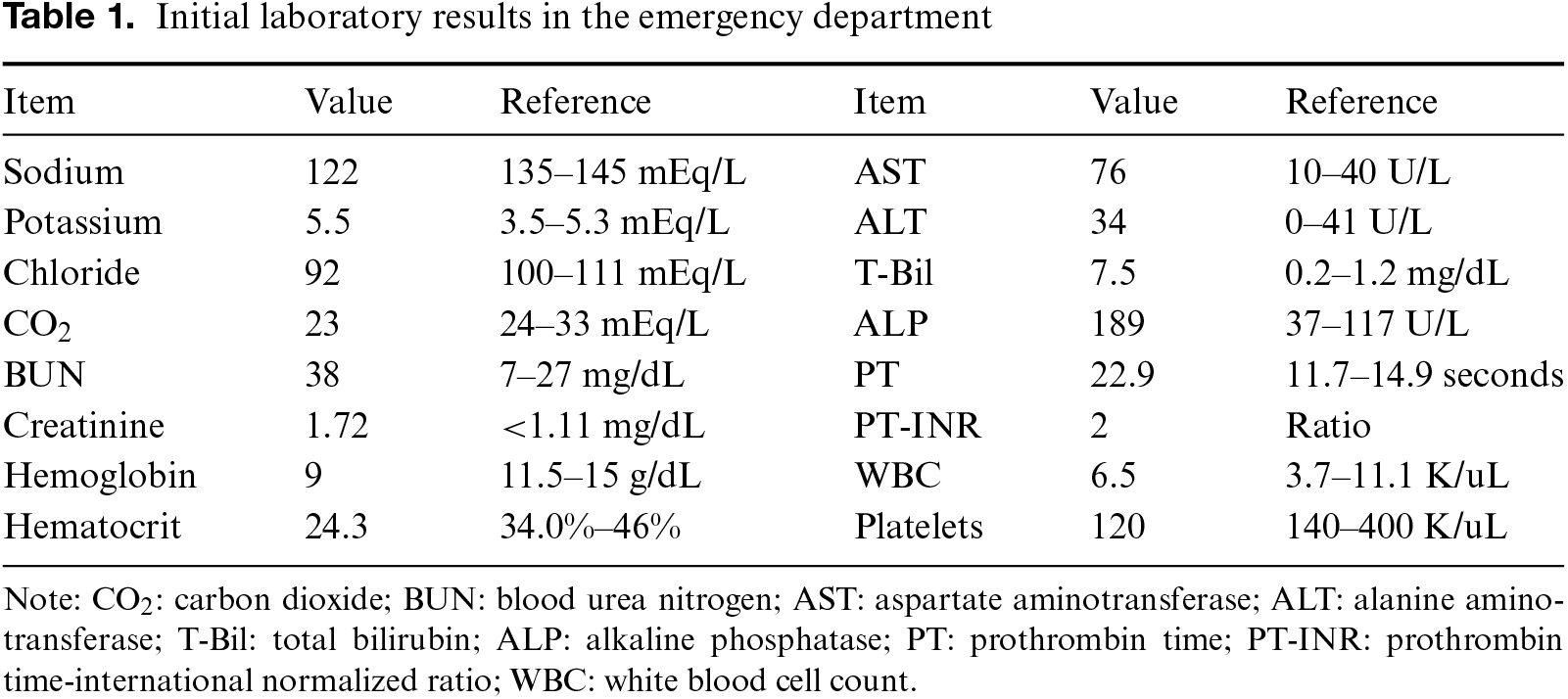
In the ED, the patient was alert and oriented to person, place, and time. They denied any recent fever or chills and reported taking all prescribed medications as directed, except for their SBP prophylactic ciprofloxacin. The patient stated that they typically underwent paracentesis every two weeks but were unable to have the procedure last week due to low levels of peritoneal fluid. Physical examination revealed jaundice, spider angiomas on the chest, and a nontender, distended abdomen. The initial laboratory evaluation showed multiple abnormal results (Table 1).
While in the ED, the patient received an albumin infusion, antibiotics due to concern for SBP, and their home medications, including lactulose and rifaximin. They continued to have low levels of intraperitoneal fluid, which did not require a paracentesis. Over the course of their hospital stay, the patient’s laboratory values, nausea, and vomiting improved. Although she did not exhibit any signs of overt bleeding during her admission, she required one unit of packed red blood cells (PRBCs) prior to discharge due to symptomatic anemia, with a hemoglobin level of 6.9 g/dL. The patient’s condition improved, including renal function and mental status, and cultures were negative for SBP. The patient was discharged on day six.
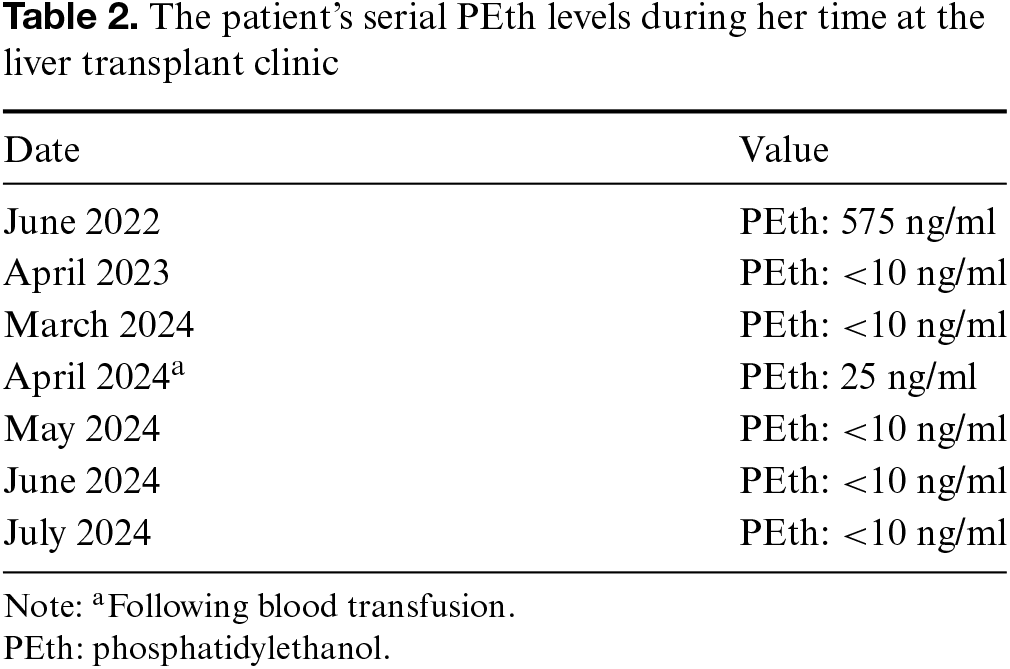
Directly prior to the hospitalization, the patient tested negative for alcohol use on a serum PEth test at <10 ng/ml. Twenty-eight days after the blood transfusion, on a routine PEth test ordered by the liver transplant clinic, the patient’s blood showed an elevated plasma PEth level of 25 ng/ml (Table 2). At baseline, the patient is bed-bound and is cared for by her daughter. Both the patient and her daughter denied that the patient had any alcoholic beverages, although they reported regular use of Listerine and occasional fermented fruit (preserved jam). A repeat PEth test drawn eight weeks after the blood transfusion was negative. Nevertheless, the patient was dismissed from their transplant clinic for a liver transplant due to the initial positive PEth test, resulting in the patient needing to restart the entire transplant process from the beginning.
Discussion
In the setting of advanced liver disease secondary to chronic alcohol use, liver transplant remains an important therapeutic procedure, and monitoring for alcohol abstinence continues to be an important step in this process.13 Recently, serum PEth levels have been used to help identify non-abstinent behaviors, and there have been discussions on how long PEth levels remain elevated within the blood. Some studies have placed the mean half-life of PEth levels between 3–5 days, with others reporting a mean-half-life between 5–12 days.5 In the same study reporting a mean-half-life of 3–5 days, it was reported that 64.3% of chronic alcohol users continued to have detectable levels of PEth in their blood even after 28 days of sobriety.5
As PEth is a blood marker, this raises the question of how blood transfusion can affect its level. One case report demonstrated a patient moving from undetectable PEth levels to levels indicating moderate alcohol consumption (POPEth 57 ng/ml and PLPEth 38 ng/ml) after receiving four units of PRBCs in the hospital.12 While this may not be as important in some patient populations, patients with severe liver disease often need transfusions. This is demonstrated by one study showing that 40.5% of cirrhotic patients received a blood component transfusion during their stay at a tertiary liver care center, with 65.4% of the blood components transfused being PRBCs.14 This is complicated by another study that has reported that more than 40% of whole blood and apheresis donors had a PEth level >10 ng/ml, with the maximum recorded level being 587 ng/ml.15 After the whole blood was turned into PRBCs, the maximum recorded value increased to 711 ng/ml and only experienced a 17.3% decrease in PEth levels after five weeks of storage.15 With a commonly used serum PEth level cutoff for moderate alcohol use being 20 ng/ml and the frequent need for transfusions in patients with severe liver disease, the use of PEth in alcohol abstinence monitoring becomes complicated.5,16
The patient’s negative PEth test the day before hospitalization, six-day hospital stay, and constant caregiver supervision at home due to her bedbound status make it unlikely that she consumed enough alcohol to account for the elevated PEth levels without detection. While it is possible that a blood transfusion from a chronic alcohol user could result in detectable PEth levels for over 28 days,5 it is unclear whether the transfusion of just one unit of PRBCs would lead to a meaningful elevation. Adding to the complexity, the patient reported intermittent ingestion of fermented fruit and use of Listerine, though both she and her family strongly denied alcohol consumption. Homemade fruit jams, unlike commercially produced ones, might ferment and contribute to PEth elevation, but this remains uncertain.17 Moreover, the patient had used mouthwash regularly during abstinence monitoring without prior PEth elevations, making it a less likely cause. The absence of pre- and post-transfusion PEth testing leaves the source of the elevation ambiguous, making it difficult to determine whether it was due to the transfusion or unintentional alcohol exposure.
Conclusion
This case highlights the challenges in monitoring alcohol abstinence for liver transplant eligibility, particularly in interpreting elevated PEth levels. Factors such as blood transfusions or unintentional alcohol exposure must be considered, as misattributing the cause could lead to severe consequences, including removal from the transplant list. While rare, there is also the possibility that the lab may have accidentally swapped patient samples, which could further complicate the interpretation of test results. It is unfortunate that the transplant team did not repeat the test to confirm the positive value, as additional PEth testing around transfusions or after potential errors could help clarify the source of elevations. This would improve decision-making and ultimately enhance patient outcomes.
Acknowledgment
We appreciate the patient’s cooperation in the data collection.
Funding Source
No financial support was provided.
Author Contributions
T.S. and O.W. were responsible for data curation. T.S. and G.C. interpreted the data and drafted the original manuscript. T.S. and O.W. made substantial contributions to revising the manuscript drafts. All authors have read the manuscript and agree with the content and data.
Data Availability Statement
The datasets used in the current study are available from the corresponding author upon reasonable request.
Ethical Statement
The article does not involve the participation of any animals. The patient gave written informed consent to the publication of this report and accompanying images.
Conflict of Interest
The authors report no conflicts of interest in this work.
References
[1] Andreassen TN, Havnen H, Spigset O, et al. High throughput UPLC®-MSMS method for the analysis of phosphatidylethanol (PEth) 16:0/18:1, a specific biomarker for alcohol consumption, in whole blood. J Anal Toxicol. January 1, 2018;42(1):33–41. doi:10.1093/jat/bkx075.
[2] Gustavsson L. ESBRA 1994 award lecture. Phosphatidylethanol formation: specific effects of ethanol mediated via phospholipase D. Alcohol Alcohol. July 1995;30(4):391–406.
[3] Moonat S, Starkman BG, Sakharkar A, et al. Neuroscience of alcoholism: molecular and cellular mechanisms. Cell Mol Life Sci. January 2010;67(1):73–88. doi:10.1007/s00018-009-0135-y.
[4] Aradottir S, Asanovska G, Gjerss S, et al. Phosphatidylethanol (PEth) concentrations in blood are correlated to reported alcohol intake in alcohol-dependent patients. Alcohol Alcohol. July–August 2006;41(4):431–437. doi:10.1093/alcalc/agl027.
[5] Viel G, Boscolo-Berto R, Cecchetto G, et al. Phosphatidylethanol in blood as a marker of chronic alcohol use: a systematic review and meta-analysis. Int J Mol Sci. November 13, 2012;13(11):14788–14812. doi:10.3390/ijms131114788.
[6] Fleming MF, Smith MJ, Oslakovic E, et al. Phosphatidylethanol detects moderate-to-heavy alcohol use in liver transplant recipients. Alcohol Clin Exp Res. April 2017;41(4):857–862. doi:10.1111/acer.13353.
[7] Arab JP, Izzy M, Leggio L, et al. Management of alcohol use disorder in patients with cirrhosis in the setting of liver transplantation. Nat Rev Gastroenterol Hepatol. January 2022;19(1):45–59. doi:10.1038/s41575-021-00527-0.
[8] Marroni CA, Fleck AM Jr., Fernandes SA, et al. Liver transplantation and alcoholic liver disease: history, controversies, and considerations. World J Gastroenterol. July 14, 2018;24(26):2785–2805. doi:10.3748/wjg.v24.i26.2785.
[9] Skråstad RB, Aamo TO, Andreassen TN, et al. Quantifying alcohol consumption in the general population by analysing phosphatidylethanol concentrations in whole blood: results from 24,574 subjects included in the HUNT4 study. Alcohol Alcohol. 2023;9(3):258–265. doi:10.1093/alcalc/agad015.
[10] Trius-Soler M, Praticò G, Gürdeniz G, et al. Biomarkers of moderate alcohol intake and alcoholic beverages: a systematic literature review. Genes Nutr. April 19, 2023;18(1):7. doi:10.1186/s12263-023-00726-1.
[11] Reisfield GM, Teitelbaum SA, Jones JT, et al. Blood phosphatidylethanol concentrations following regular exposure to an alcohol-based mouthwash. J Anal Toxicol. 2021;45(9):950–956. doi:10.1093/jat/bkaa147.
[12] Snozek CLH, Kinard TN, Alegria KN, et al. Artificial elevation of phosphatidylethanol due to red blood cell transfusion. Clin Biochem. October 2023;120(5):110651. doi:10.1016/j.clinbiochem.2023.110651.
[13] Barrio P, Gual A, Lligoña A, et al. Phosphatidylethanol for monitoring alcohol use in liver transplant candidates: an observational study. J Clin Med. September 22, 2020;9(9):3060. doi:10.3390/jcm9093060.
[14] Kakkar B, Maiwall R, Bajpai M. Transfusion practices in cirrhotic patients at a tertiary liver care center from Northern India. Hematol Transfus Cell Ther. July–September 2021;43(3):280–286. doi:10.1016/j.htct.2020.05.010.
[15] Kinard TN, Sharma P, Alegria KN, et al. Characterization of the alcohol biomarker phosphatidylethanol in donor whole blood and apheresis red blood cells: implications for transfusion recipients. Transfusion. July 9 2024;64(9):1617–1622. doi:10.1111/trf.17942.
[16] Liu J, Man K. Biomarkers for monitoring alcohol sobriety after liver transplantation for alcoholic liver disease. J Gastroenterol Hepatol. August 2023;38(8):1227–1232. doi:10.1111/jgh.16269.
[17] Alcohol and Tobacco Tax and Trade Bureau (TTB). Kombucha information and resources. August, 2019. Accessed September 18, 2024. https://wwwttbgov/regulated-commodities/beverage-alcohol/kombucha/kombucha-general.
 |
Copyright: © 2024 Short et al. This work is licensed under a Creative Commons Attribution 4.0 International License, which permits unrestricted use, distribution, and reproduction in any medium, provided the original work is properly cited. |