| Journal of Clinical Question. 2026; 3(4): e371 https://doi.org/10.69854/jcq.2026.0027 Advance access publication date 29 August 2026 |
 |
Review
Bispecific Antibodies Targeting PD-1/PD-L1 and VEGF in Non-Small Cell Lung Cancer
Aleena Kuriakose1,#, Salem Gogah2,#, Elina Beleva 3,4,*
3,4,*
1Department of Biology, Union College, Schenectady, NY, United States.
2Faculty of Science, Helwan University, Cairo, Egypt.
3Clinic of Hematology, Military Medical Academy, Sofia, Bulgaria.
4QSAR and Molecular Modelling, Institute of Biophysics and Biomedical Engineering, Bulgarian Academy of Sciences, Sofia, Bulgaria.
#Aleena Kuriakose and Salem Gogah contributed equally
*Corresponding Author: e-mail: elina.beleva@biomed.bas.bg
Submitted: July 03, 2026 Accepted: August 27, 2026
Clinical Question Box
What is the current clinical evidence for bispecific antibodies targeting programmed cell death protein 1 (PD-1) or programmed death-ligand 1 (PD-L1) and vascular endothelial growth factor (VEGF) in non-small cell lung cancer (NSCLC), and what role might these agents have in future treatment strategies?
PD-(L)1/VEGF bispecific antibodies are an emerging therapeutic strategy in NSCLC. Ivonescimab currently provides the strongest proof of concept, with randomized phase III trials demonstrating improvements in progression-free survival and, in selected settings, overall survival. Other agents, including pumitamig, HB0025, and IMM2510, have also shown encouraging antitumor activity, although most supporting evidence remains derived from early-phase or nonrandomized studies. As of August 2026, ivonescimab has been approved in China for three NSCLC indications, including first-line treatment of advanced squamous NSCLC, while regulatory approval outside China remains pending. The future role of this class will depend on confirmatory survival data, long-term safety, optimal patient selection, and predictive biomarker development.
Abstract
Immune checkpoint inhibition has transformed the treatment of advanced non-small cell lung cancer (NSCLC), but primary and acquired resistance remain common. Vascular endothelial growth factor (VEGF) contributes to both tumor angiogenesis and immune suppression by promoting abnormal vasculature, limiting lymphocyte trafficking, and fostering an immunosuppressive tumor microenvironment. These complementary mechanisms provide a rationale for simultaneously targeting the programmed cell death protein 1 (PD-1)/programmed death-ligand 1 (PD-L1) and VEGF pathways. Bispecific antibodies integrating checkpoint blockade and VEGF neutralization within a single molecule have therefore emerged as a rapidly developing therapeutic strategy in NSCLC. Ivonescimab, a PD-1/VEGF bispecific antibody, currently has the most mature evidence, with randomized phase III trials demonstrating improvements in progression-free survival and, in selected settings, overall survival compared with established PD-1-based regimens. Other PD-1/VEGF agents, including PF-08634404, MK-2010, and JS207, have shown encouraging early activity but require randomized validation. Among PD-L1/VEGF bispecific antibodies, pumitamig, HB0025, and IMM2510 have demonstrated promising antitumor activity, although evidence is derived predominantly from early-phase or single-arm studies. Multiple phase III trials are evaluating these agents in first-line, post-immunotherapy, epidermal growth factor receptor (EGFR)-mutated, and stage III consolidation settings. VEGF-associated toxicities, including hypertension, proteinuria, hemorrhage, and thromboembolism, remain clinically relevant. Moreover, differences in checkpoint target, molecular architecture, target affinity, fragment crystallizable (Fc) engineering, pharmacokinetics, and VEGF-binding strategy preclude the assumption of a uniform class effect. The fixed bispecific configuration also prevents independent dose adjustment of the checkpoint and antiangiogenic components, which may complicate toxicity management. Mature randomized survival data, longer-term safety assessments, and biomarker development are needed to define optimal patient selection and the clinical role of PD-(L)1/VEGF bispecific antibodies in NSCLC.
Keywords: Non-small cell lung cancer, bispecific antibody, PD-1, PD-L1, vascular endothelial growth factor, immunotherapy
Introduction
Non-small cell lung cancer (NSCLC) accounts for approximately 85% of all lung cancers and remains a major global health challenge. In 2022, lung cancer accounted for an estimated 2.5 million new cases and 1.8 million deaths worldwide, corresponding to more than 2 million incident NSCLC cases globally.1,2 Despite advances in screening, diagnostic imaging, molecular profiling, surgery, radiotherapy, and systemic treatment, many patients are diagnosed with locally advanced or metastatic disease, for which long-term survival remains limited. NSCLC also imposes a substantial economic burden on patients, caregivers, and healthcare systems. This burden reflects not only the costs of systemic therapy, diagnostic testing, hospitalization, supportive care, and management of treatment-related adverse events, but also productivity loss and caregiver requirements. Available economic studies consistently indicate that healthcare resource utilization and direct medical costs increase with advancing stage and disease progression, underscoring the clinical and societal importance of durable disease control.3,4
The introduction of programmed cell death protein 1 (PD-1) and programmed death-ligand 1 (PD-L1) inhibitors has transformed the treatment landscape of advanced NSCLC. In patients with metastatic NSCLC and tumors with high PD-L1 expression, first-line immune checkpoint inhibitor monotherapy can produce a durable survival benefit. In the phase III KEYNOTE-024 trial, pembrolizumab monotherapy increased the 5-year overall survival (OS) rate to 31.9%, compared with 16.3% with platinum-based chemotherapy, in patients with a PD-L1 tumor proportion score of at least 50%.5 Similarly, in the phase III IMpower110 trial, atezolizumab monotherapy improved median OS to 20.2 months versus 13.1 months with chemotherapy among patients with high PD-L1 expression and epidermal growth factor receptor (EGFR)/anaplastic lymphoma kinase (ALK) wild-type NSCLC (hazard ratio [HR], 0.59; 95% confidence interval [CI], 0.40–0.89).6
For patients with advanced NSCLC irrespective of PD-L1 expression, the addition of PD-1 blockade to platinum-based chemotherapy has also produced substantial and durable improvements in clinical outcomes. In KEYNOTE-189, pembrolizumab plus pemetrexed and platinum chemotherapy improved median OS from 10.6 to 22.0 months in metastatic nonsquamous NSCLC (HR, 0.60; 95% CI, 0.50–0.72), with 5-year OS rates of 19.4% and 11.3%, respectively.7 In metastatic squamous NSCLC, KEYNOTE-407 showed a median OS of 17.2 months with pembrolizumab plus carboplatin and taxane chemotherapy, compared with 11.6 months with chemotherapy alone (HR, 0.71; 95% CI, 0.59–0.85); corresponding 5-year OS rates were 18.4% and 9.7%.8 Collectively, these results establish PD-(L)1 inhibition as a cornerstone of first-line therapy for advanced NSCLC. However, most patients eventually develop primary or acquired resistance, partly because increased VEGF expression and neoangiogenesis promote an immunosuppressive tumor microenvironment; bispecific antibodies targeting both immune checkpoints and VEGF may help overcome these mechanisms.9
Vascular endothelial growth factor (VEGF)-directed therapy is an established component of treatment for selected patients with advanced nonsquamous NSCLC. In the phase III Eastern Cooperative Oncology Group (ECOG) 4599 trial, adding bevacizumab to carboplatin plus paclitaxel improved the objective response rate (ORR) (35% vs 15%), median progression-free survival (PFS) (6.2 vs 4.5 months; HR, 0.66; P < 0.001), and median OS (12.3 vs 10.3 months; HR, 0.79; P = 0.003), establishing a survival benefit for antiangiogenic therapy in an appropriately selected population.10 More recently, in the final analysis of the phase III IMpower150 study, atezolizumab plus bevacizumab, carboplatin, and paclitaxel improved median OS (19.5 vs 14.7 months; HR, 0.80; 95% CI, 0.67–0.95) and median PFS (8.4 vs 6.8 months; HR, 0.57; 95% CI, 0.48–0.67) versus bevacizumab plus carboplatin and paclitaxel in chemotherapy-naïve patients with EGFR/ALK wild-type metastatic nonsquamous NSCLC.11 These data establish the clinical value of VEGF inhibition and support integrated immune-angiogenic treatment strategies. However, because bevacizumab was included in both comparison groups, IMpower150 did not isolate the incremental contribution of VEGF inhibition; rather, it demonstrated the efficacy of the PD-L1/VEGF/chemotherapy strategy.
Biological and Pharmacological Rationale
The relationship between angiogenesis and immune evasion constitutes an integrated tumor–vascular–immune axis rather than two independent oncogenic processes. VEGF-driven formation of immature, hyperpermeable, and poorly perfused vessels increases interstitial pressure, hypoxia, and heterogeneous drug distribution, creating physical and physiological barriers to lymphocyte recruitment and tumor penetration (Fig. 1). VEGF also promotes endothelial anergy by suppressing adhesion molecules such as intercellular adhesion molecule 1 (ICAM-1) and vascular cell adhesion molecule 1 (VCAM-1), thereby limiting leukocyte adhesion and extravasation. In parallel, VEGF impairs dendritic cell maturation, promotes regulatory T-cell and myeloid-derived suppressor cell activity, and contributes to T-cell dysfunction.12,13
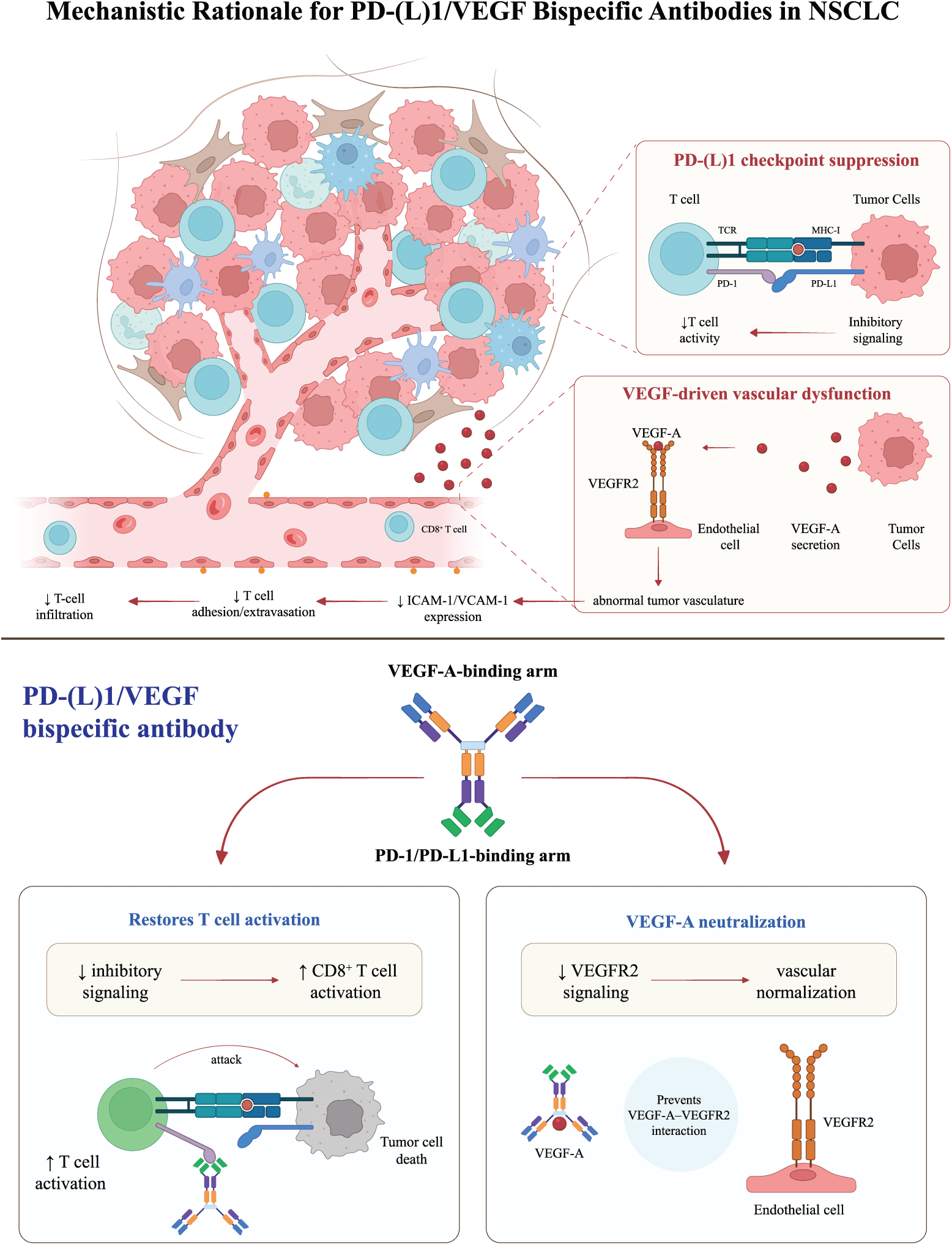
Figure 1. Mechanistic rationale for PD-(L)1/VEGF bispecific antibodies in non-small cell lung cancer.
Inhibition of the VEGF–vascular endothelial growth factor receptor (VEGFR) axis can induce a transient vascular-normalization window characterized by improved perfusion, reduced vascular permeability, and enhanced immune cell trafficking. It may also reverse endothelial anergy and restore adhesion molecule expression. Preclinical studies have shown that combined vascular endothelial growth factor receptor 2 (VEGFR2) and PD-L1 blockade can induce high endothelial venule–like structures and increase cytotoxic lymphocyte infiltration, although this effect is tumor context-dependent.14 These observations provide a biological rationale for simultaneously targeting VEGF-mediated vascular immunosuppression and the PD-1/PD-L1 immune checkpoint axis.
PD-1×VEGF and PD-L1×VEGF bispecific antibodies integrate these complementary activities within a single molecule but may differ in their spatial and functional behavior. PD-1-directed constructs bind predominantly to PD-1-expressing activated or exhausted immune cells, potentially coupling VEGF neutralization to sites of ongoing antitumor immune activity. Preclinical studies of ivonescimab and JS207 have demonstrated cooperative target engagement, whereby VEGF binding enhances PD-1 binding and checkpoint-blocking activity; VEGF also enhances PD-1 internalization and T-cell activation with JS207.9,15 In contrast, PD-L1-directed constructs can bind PD-L1 expressed by tumor cells, antigen-presenting cells, and other cells within the tumor microenvironment, potentially increasing local retention of the VEGF-neutralizing component. Preclinical studies of HB0025 and IMM2510 support simultaneous checkpoint and VEGF blockade, and IMM2510 has additionally demonstrated cooperative binding and fragment crystallizable (Fc)-mediated effector functions.16,17 These properties are construct-specific, and whether either targeting strategy produces clinically meaningful tumor-selective VEGF inhibition or reduces systemic antiangiogenic toxicity remains unproven.
Bispecific delivery also introduces important pharmacological constraints. The two functional components have a fixed molecular configuration and shared pharmacokinetic profile, thereby preventing the independent dose optimization possible with separately administered agents. Moreover, differences in checkpoint target (PD-1 versus PD-L1), molecular format, valency, target affinity, epitope specificity, Fc engineering, VEGF-binding strategy, and cooperative binding may influence target engagement, pharmacodynamic activity, tissue distribution, and ultimately efficacy and safety.18 Some constructs are Fc-silent, whereas others retain or enhance Fc-mediated effector activity, further limiting assumptions of a uniform class effect. Accordingly, PD-1×VEGF and PD-L1×VEGF bispecific antibodies should be considered related but pharmacologically distinct therapeutic strategies, and individual agents should be evaluated as separate molecular entities rather than interchangeable members of a single class.
Clinical Evidence for PD-1/VEGF Bispecific Antibodies
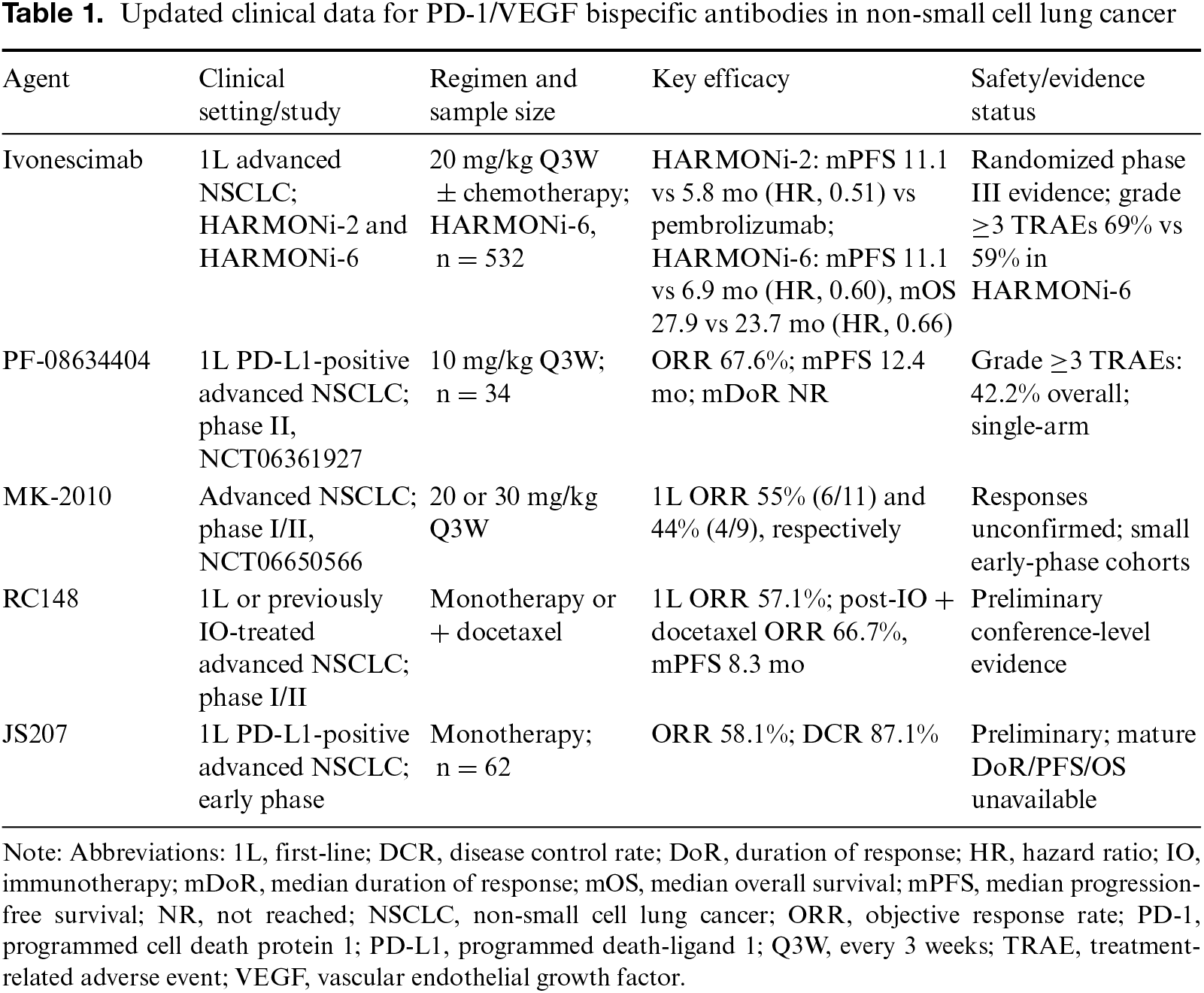
The clinical evidence for PD-1/VEGF bispecific antibodies in NSCLC is more advanced than that for PD-L1/VEGF-directed agents, largely because ivonescimab has demonstrated efficacy in multiple randomized phase III trials. However, none of these bispecific antibodies has been approved by either the US Food and Drug Administration or the European Medicines Agency; ivonescimab is approved in China, including in combination with chemotherapy for first-line advanced squamous NSCLC since August 2026, supporting the feasibility of PD-1/VEGF blockade in this histology and strengthening its domestic market position.19 Other agents, including PF-08634404, MK-2010, and JS207, remain in earlier stages of clinical development and are supported primarily by single-arm studies or preliminary conference data. Table 1 summarizes the available clinical findings. As these studies differ substantially in patient populations, histology, treatment setting, therapeutic backbone, follow-up duration, and response assessment, cross-trial comparisons should be interpreted cautiously.
Ivonescimab
Ivonescimab (AK112; SMT112) is a tetravalent bispecific antibody targeting PD-1 and VEGF-A and currently has the most mature clinical evidence in this class. In the randomized, double-blind phase III HARMONi-2 trial, 398 patients with previously untreated, PD-L1-positive advanced NSCLC without sensitizing EGFR or ALK alterations received ivonescimab 20 mg/kg or pembrolizumab every 3 weeks.20 Ivonescimab significantly prolonged median PFS compared with pembrolizumab (11.1 vs 5.8 months; HR, 0.51; 95% CI, 0.38–0.69), with consistent benefit across PD-L1 expression and histologic subgroups. Grade ≥3 treatment-related adverse events (TRAEs) occurred in 29% and 16% of patients, respectively, while grade ≥3 immune-related adverse events were similar between groups.
The phase III HARMONi-6 trial further evaluated ivonescimab plus carboplatin and paclitaxel versus tislelizumab plus the same chemotherapy in 532 patients with previously untreated advanced squamous NSCLC. Median PFS was 11.1 versus 6.9 months (HR, 0.60; 95% CI, 0.46–0.78). At a median follow-up of 21.4 months, median OS was 27.9 versus 23.7 months (HR, 0.66; 95% CI, 0.50–0.87), demonstrating a significant survival benefit. Grade ≥3 TRAEs occurred in 69% versus 59%, and grade ≥3 hemorrhage occurred in 3% versus 1%, respectively.21
Ivonescimab has also demonstrated efficacy after targeted therapy. In the phase III HARMONi-A trial of 322 patients with EGFR-mutated nonsquamous NSCLC after EGFR tyrosine kinase inhibitor (TKI) failure, ivonescimab plus carboplatin and pemetrexed improved median PFS compared with chemotherapy alone (7.1 vs 4.8 months; HR, 0.46) and subsequently improved median OS (16.8 vs 14.1 months; HR, 0.74; 95% CI, 0.58–0.95).22,23 Collectively, these randomized data provide the strongest clinical validation of simultaneous PD-1 and VEGF blockade in NSCLC. Nevertheless, most phase III evidence has been generated in China, and ongoing multiregional studies are needed to establish the generalizability of these benefits and further characterize VEGF-associated toxicity.
PF-08634404
PF-08634404 (SSGJ-707) is a tetravalent PD-1/VEGF bispecific antibody evaluated as first-line monotherapy in a phase II study of patients with PD-L1-positive advanced NSCLC. At the selected phase III dose of 10 mg/kg every 3 weeks (n = 34), the confirmed ORR was 67.6%, with a median PFS of 12.4 months; median duration of response (DoR) was not reached after a median follow-up of 15.2 months. Responses were observed across histologic and PD-L1 subgroups, with ORRs of 63.6% in nonsquamous and 75.0% in squamous NSCLC. Across all treated patients (n = 83), grade ≥3 TRAEs occurred in 42.2%; at the 10-mg/kg dose, treatment-related discontinuation occurred in 2.9%, with no grade 5 TRAEs.24
These results suggest durable antitumor activity with single-agent PF-08634404, including in tumors with lower PD-L1 expression. However, the absence of a randomized comparator limits conclusions regarding superiority over established PD-1-based therapy. The ongoing phase III Symbiotic-Lung-01 trial will therefore be important for determining whether PF-08634404 combined with chemotherapy improves clinical outcomes compared with pembrolizumab-based chemoimmunotherapy.
MK-2010
MK-2010 (LM-299) is a PD-1/VEGF bispecific antibody currently being evaluated in a phase I/II first-in-human study. Among 112 treated patients, 72 were enrolled in an NSCLC expansion cohort evaluating doses of 20 or 30 mg/kg every 3 weeks. In previously untreated patients, the unconfirmed ORR was 55% (6/11) at 20 mg/kg and 44% (4/9) at 30 mg/kg. Among previously treated patients, corresponding ORRs were 18% and 22%. Grade ≥3 TRAEs occurred in 17% and 27% of patients in the 20- and 30-mg/kg cohorts, respectively, with no treatment-related deaths. VEGF-associated toxicities included hypertension, bleeding, and proteinuria.25
Although these findings provide an early signal of activity in both treatment-naïve and previously treated NSCLC, including immunotherapy-refractory disease, the efficacy estimates are based on small cohorts and unconfirmed responses, with limited follow-up. Dose selection and comparative efficacy therefore remain to be established in larger prospective studies.
JS207
JS207 is a recombinant humanized PD-1/VEGF bispecific antibody undergoing clinical development across several solid tumors. In preliminary data presented at the European Society for Medical Oncology (ESMO) Asia 2025 meeting, 62 patients with PD-L1-positive NSCLC received JS207 monotherapy as first-line treatment, resulting in an ORR of 58.1% and a disease control rate (DCR) of 87.1%.15 Mature data regarding DoR, PFS, OS, and detailed treatment-related toxicity have not yet been reported.
The observed response rate supports further evaluation of JS207, but the current evidence remains substantially less mature than that for ivonescimab and PF-08634404. Larger studies with longer follow-up and randomized comparisons will be necessary to determine the durability of benefit and the relative contribution of dual PD-1/VEGF blockade.
Clinical Evidence for PD-L1/VEGF Bispecific Antibodies
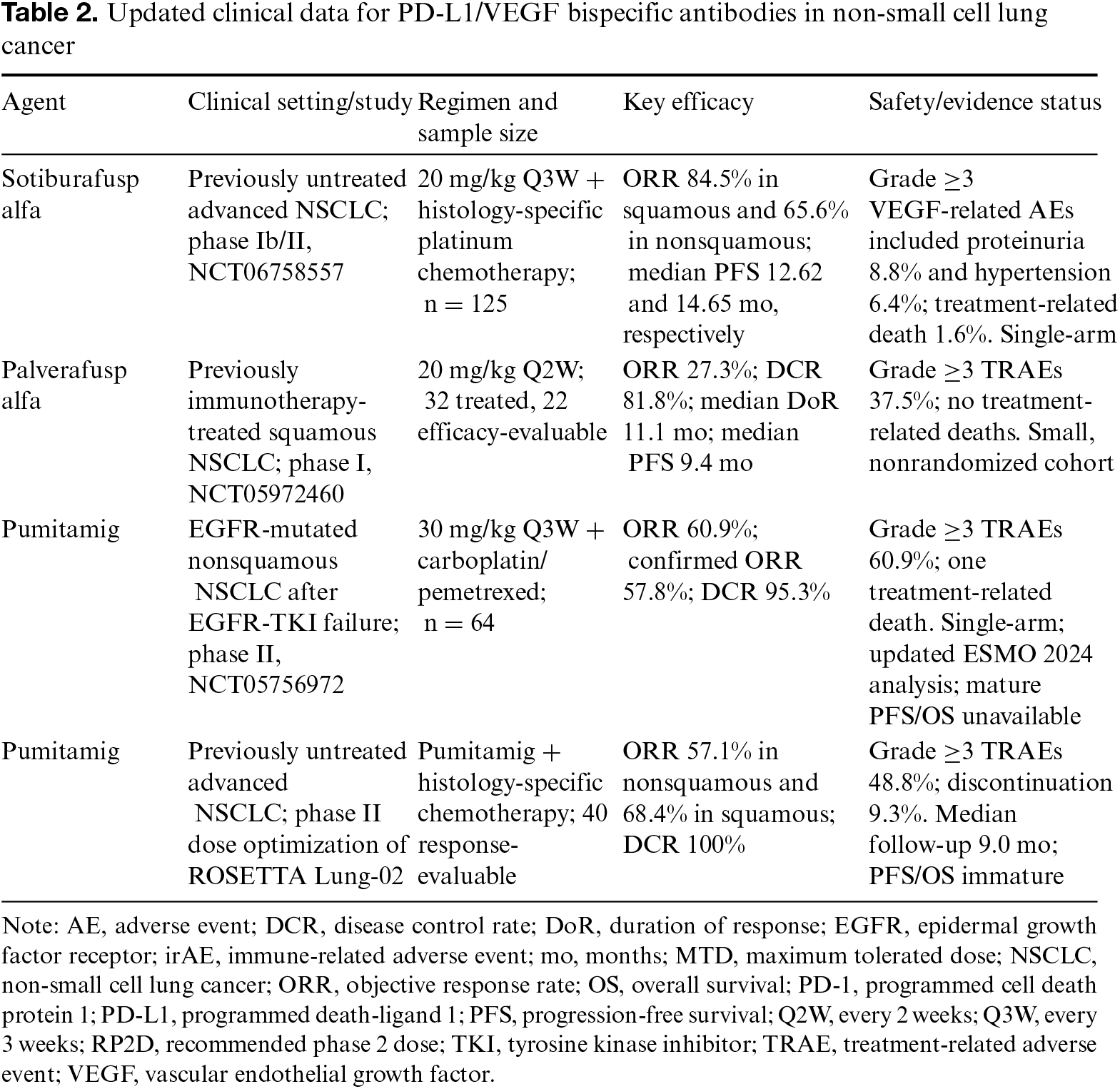
The clinical evidence for PD-L1/VEGF bispecific antibodies in NSCLC remains immature and is based largely on early-phase, nonrandomized studies, conference abstracts, and sponsor updates. Table 2 summarizes the available findings for HB0025, PM8002/BNT327 (pumitamig), IMM2510, B1962/AP505, and CVL006. Interpretation requires caution because these studies encompass biologically and clinically distinct populations, histologic subtypes, treatment settings, therapeutic backbones, sample sizes, follow-up durations, and response-assessment procedures. Accordingly, the reported response rates should be viewed as preliminary signals of activity rather than evidence of comparative efficacy across agents.
HB0025
HB0025 (sotiburafusp alfa) is an anti-PD-L1 monoclonal antibody fused to a vascular endothelial growth factor receptor 1 (VEGFR1)-derived VEGF-trap domain. In an updated phase Ib/II study, HB0025 (20 mg/kg every 3 weeks) was combined with histology-specific platinum chemotherapy in first-line NSCLC.25 At the data cutoff of January 5, 2026, 125 patients had been enrolled (62 squamous and 63 nonsquamous), with 119 evaluable for response.25 The ORR was 84.5% in squamous and 65.6% in nonsquamous NSCLC, with median PFS values of 12.62 and 14.65 months, respectively; median DoR in the nonsquamous cohort was 12.06 months, while OS remained immature after 10.55 months of follow-up.25 Grade ≥3 VEGF-associated adverse events included proteinuria (8.8%), hypertension (6.4%), hemorrhage (4.0%), and thromboembolism (4.0%). Treatment-related discontinuation and death occurred in 4.8% and 1.6% of patients, respectively.25
These updated data provide more robust estimates of response durability and progression-free survival. However, the single-arm design precludes assessment of HB0025’s incremental benefit over standard histology-specific chemoimmunotherapy. Despite the high response rate in squamous NSCLC, grade ≥3 VEGF-related toxicities, including proteinuria, hypertension, hemorrhage, and thromboembolism, indicate persistent systemic antiangiogenic risk. Randomized trials with mature survival and safety data are needed, particularly in patients at increased risk of pulmonary hemorrhage.26,27
IMM2510
IMM2510 (palverafusp alfa; AXN-2510) is a PD-L1/VEGF bispecific fusion protein evaluated as monotherapy in a phase I dose-escalation and expansion study.28 In the updated cohort of patients with advanced squamous NSCLC previously treated with immunotherapy, 32 patients received therapy and 22 were evaluable for efficacy. The ORR was 27.3% (6/22), the DCR was 81.8% (18/22), and the median duration of response was 11.1 months. After a median follow-up of 8.3 months, median PFS was 9.4 months, whereas median OS had not been reached. Grade ≥3 treatment-emergent and treatment-related adverse events occurred in 53.1% and 37.5% of patients, respectively. Treatment-related toxicity led to discontinuation in 3.1%, and no treatment-related deaths were reported.29 These findings provide more mature survival and safety data, although interpretation remains limited by the small efficacy-evaluable cohort, heterogeneity in prior therapy and dose exposure, and absence of a comparator.
Pumitamig (PM8002/BNT327)
PM8002, subsequently developed as BNT327 and now designated pumitamig (BMS-986545), is a bispecific antibody targeting PD-L1 and VEGF-A. In a phase II study of 64 patients with EGFR-mutated nonsquamous NSCLC after EGFR-TKI failure, pumitamig was combined with carboplatin and pemetrexed. At the initial data cutoff of April 12, 2024, the ORR was 54.7% and the DCR was 95.3%.30 With longer follow-up through July 24, 2024, the investigator-assessed ORR increased to 60.9%, with a confirmed ORR of 57.8% and a DCR of 95.3%.18 Grade ≥3 treatment-related AEs occurred in 60.9% of patients, with treatment discontinuation in 14.1% and one treatment-related death.31
Pumitamig has entered first-line development in the randomized phase II dose-optimization component of the global phase II/III ROSETTA Lung-02 study.32 Among 40 response-evaluable patients with advanced NSCLC without actionable genomic alterations, confirmed ORRs were 57.1% in nonsquamous and 68.4% in squamous disease, with a DCR of 100% in both cohorts; at the lower dose, ORRs were 63.6% and 72.7%, respectively. Based on dose optimization, 1500 mg every 3 weeks was selected for phase III evaluation. After a median follow-up of 9.0 months, PFS and OS remained immature. Grade ≥3 treatment-related adverse events occurred in 48.8% of patients, including pumitamig-related grade ≥3 events in 23.3%; immune-related adverse events occurred in 37.2% (grade ≥3, 4.7%), bleeding events in 20.9%, and treatment discontinuation in 9.3%.
The first-line findings support continued clinical development but are derived from a small interim cohort and cannot establish a benefit over standard chemoimmunotherapy. The randomized phase III comparison with pembrolizumab plus histology-specific chemotherapy is therefore essential to determine whether pumitamig improves progression-free survival, overall survival, response durability, and patient-reported outcomes without a clinically unacceptable increase in toxicity.
Ongoing Clinical Development for PD-1/VEGF Bispecific Antibodies
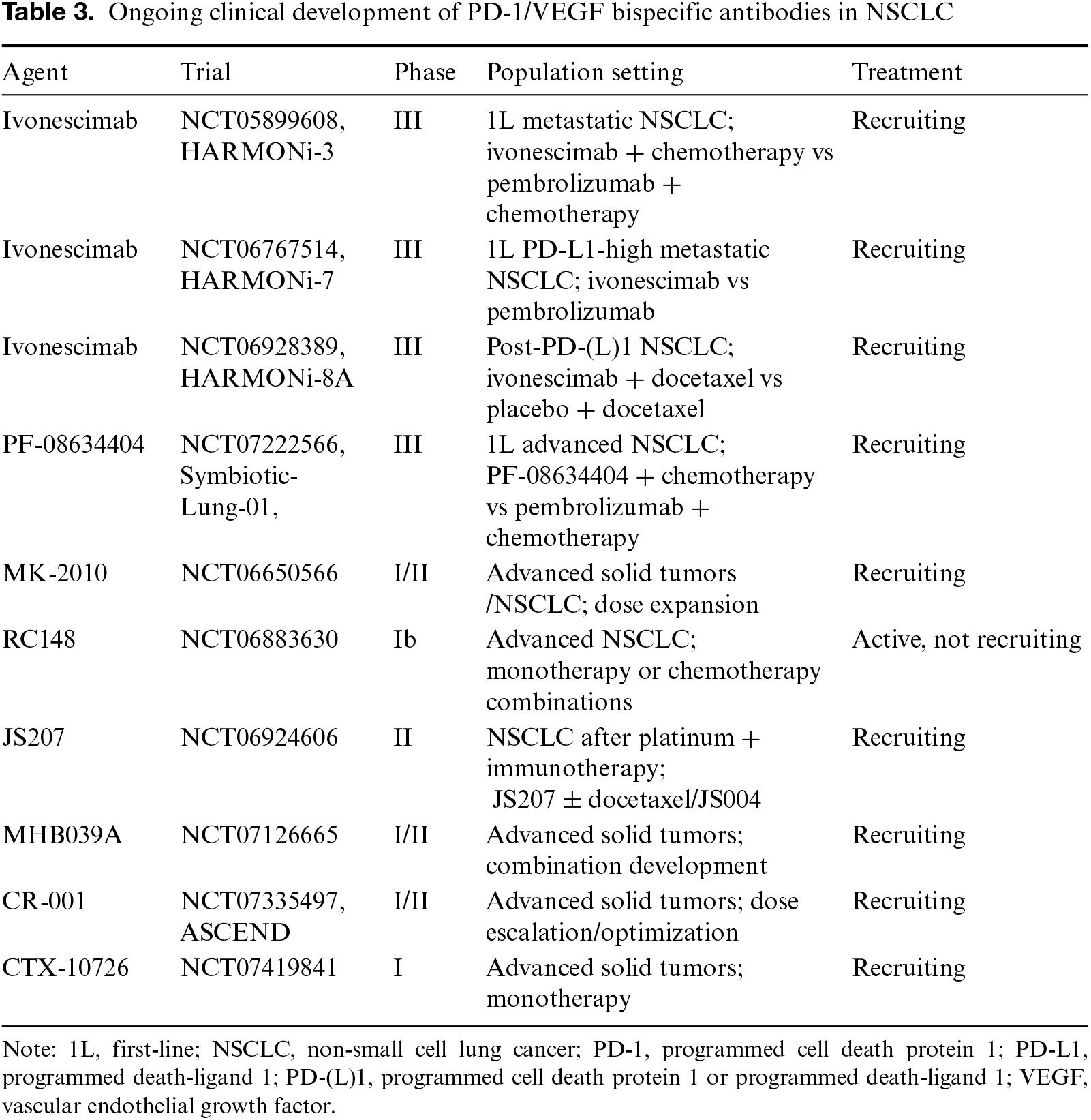
Clinical development of PD-1/VEGF bispecific antibodies in NSCLC has progressed rapidly from early-phase monotherapy studies to large randomized phase III trials across first-line and post-immunotherapy settings. Ivonescimab currently has the most extensive registrational program, while PF-08634404 has also entered global phase III development. Key ongoing studies are summarized in Table 3.
Ivonescimab
Ivonescimab has the most advanced clinical development program among PD-1/VEGF bispecific antibodies. The global phase III HARMONi-3 study (NCT05899608) is comparing ivonescimab plus platinum-doublet chemotherapy with pembrolizumab plus chemotherapy as first-line treatment for metastatic squamous and nonsquamous NSCLC. The trial has an estimated enrollment of approximately 1,600 patients and remains recruiting.33
Development has also expanded into biomarker-selected and previously treated populations. HARMONi-7 (NCT06767514) is a randomized phase III study comparing ivonescimab monotherapy with pembrolizumab in approximately 780 patients with previously untreated metastatic NSCLC and high PD-L1 expression; the study remains recruiting.34 In the post-immunotherapy setting, HARMONi-8A (NCT06928389) is a randomized phase III trial evaluating ivonescimab plus docetaxel versus placebo plus docetaxel in approximately 536 patients with locally advanced or metastatic NSCLC progressing on or after PD-(L)1 inhibitor-based therapy. The study remains recruiting.35 Collectively, these trials will determine whether the benefits observed with ivonescimab in Chinese phase III studies can be reproduced across broader international populations and distinct treatment settings.
PF-08634404
Following encouraging phase II monotherapy activity, PF-08634404 (SSGJ-707) has entered global registrational development. The phase III Symbiotic-Lung-01 study (NCT07222566) is evaluating PF-08634404 plus histology-specific chemotherapy versus pembrolizumab plus chemotherapy in approximately 1,410 patients with previously untreated locally advanced or metastatic squamous or nonsquamous NSCLC without actionable genomic alterations. Overall survival and blinded independent central review-assessed progression-free survival are the co-primary endpoints.36 The study began enrollment in January 2026 and remains recruiting. This randomized comparison will be critical in determining whether the promising response and PFS signals observed with PF-08634404 translate into clinically meaningful benefit over established pembrolizumab-based chemoimmunotherapy.
MK-2010
MK-2010 (LM-299) remains in early clinical development. The phase I/II trial NCT06650566 is evaluating MK-2010 in advanced solid tumors through dose-escalation and dose-expansion cohorts, including an NSCLC-specific randomized backfill cohort evaluating doses of 20 and 30 mg/kg every 3 weeks.25 Further prospective studies are needed to determine the optimal dose and characterize the durability of response, survival outcomes, safety, and comparative efficacy of MK-2010 in NSCLC.
JS207
Following preliminary first-line activity in PD-L1-positive NSCLC, JS207 is being further evaluated in previously treated disease. The randomized phase II study NCT06924606 is evaluating JS207 alone or in combination with docetaxel or JS004 in patients with advanced NSCLC progressing during or after platinum-based chemotherapy and PD-(L)1 inhibitor therapy.37 The study has an estimated enrollment of 66 patients and remains listed as recruiting in the latest ClinicalTrials.gov record. This study will help determine whether dual PD-1/VEGF blockade can restore antitumor activity after resistance to conventional chemoimmunotherapy.
Ivonescimab and PF-08634404 have therefore progressed furthest into randomized phase III development, whereas MK-2010 and JS207 remain in earlier phase I/II or phase II evaluation. Additional PD-1/VEGF constructs, including MHB039A, CR-001/SKB118, and CTX-10726, have entered early-phase solid-tumor development, but NSCLC-specific efficacy or registrational programs remain limited or have not yet been established. Mature randomized data on overall survival, response durability, safety, quality of life, and predictive biomarkers will ultimately be required to determine whether the clinical benefits observed with ivonescimab represent a broader class effect or are specific to individual molecular constructs.
Ongoing Clinical Development for PD-L1/VEGF Bispecific Antibodies
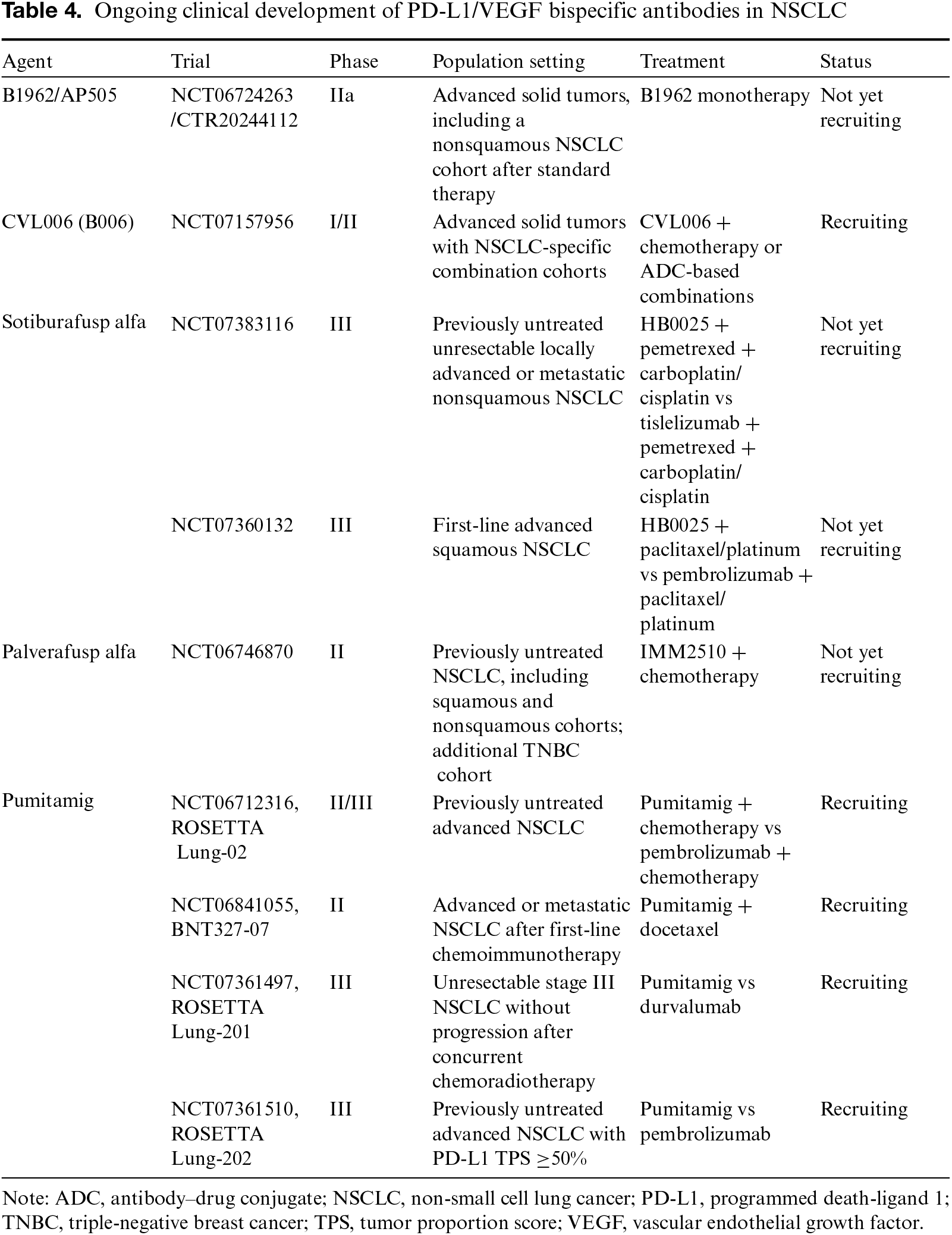
Clinical development of PD-L1/VEGF bispecific antibodies in NSCLC now spans multiple treatment settings, from first-line advanced disease to post-chemoimmunotherapy treatment and stage III consolidation. Key ongoing and recently active studies are summarized in Table 4.
B1962/AP505
B1962 and AP505 represent the same PD-L1/VEGF bispecific development program. Phase I development included AP505-101 (NCT06723964) in advanced solid tumors, which, according to sponsor information, has been completed.38 Current development is focused on the phase IIa TSL-B1962-02 study (NCT06724263), which includes a nonsquamous NSCLC cohort. Although the ClinicalTrials.gov record remains listed as not yet recruiting and was last updated in December 2024, AP Biosciences reported in March 2026 that AP505/B1962 was undergoing phase II evaluation by Tasly.39 No NSCLC-specific efficacy or safety results have yet been reported.
CVL006
CVL006 is a PD-L1/VEGF bispecific antibody being developed as monotherapy and in combination regimens. In a phase I study (NCT06621615), 29 patients with advanced solid tumors received CVL006 at 0.03–20 mg/kg every 2 weeks. Among 18 efficacy-evaluable patients, 2 of 9 treated at 20 mg/kg achieved partial responses and 4 achieved stable disease, corresponding to an ORR of 22.2% and a DCR of 66.7%. The maximum tolerated dose was not reached, and 20 mg/kg was selected as the recommended phase 2 dose.40 A separate phase I/II combination study (NCT07157956) has also reported preliminary safety and antitumor activity with chemotherapy or antibody–drug conjugates.41 However, neither study has reported NSCLC-specific efficacy, survival, or safety outcomes; therefore, the clinical activity of CVL006 in NSCLC remains undefined.
HB0025
HB0025 (sotiburafusp alfa) is being developed in combination with histology-specific platinum chemotherapy for previously untreated advanced NSCLC. Updated results from the phase II study NCT06758557 are summarized in Table 2. Two randomized phase III trials have subsequently been registered. NCT07360132 compares HB0025 plus paclitaxel/carboplatin with pembrolizumab plus the same chemotherapy backbone in first-line advanced squamous NSCLC, whereas NCT07383116 compares HB0025 plus pemetrexed/platinum with tislelizumab plus the same chemotherapy in first-line advanced nonsquamous NSCLC.42,43 Both studies remained listed as not yet recruiting at their latest registry updates.
IMM2510
A separate phase II study (NCT06746870) is evaluating IMM2510 plus histology-specific platinum chemotherapy as first-line treatment for squamous and nonsquamous NSCLC, extending development into an earlier treatment setting.44 The study remains listed as not yet recruiting in the latest ClinicalTrials.gov record. Further randomized studies will be needed to determine whether the preliminary activity observed with IMM2510 translates into a clinically meaningful benefit in first-line NSCLC.
Pumitamig (BNT327/PM8002; BMS-986545)
Pumitamig has the most advanced NSCLC development program in this class. The phase II study NCT05756972 evaluated pumitamig plus carboplatin/pemetrexed after EGFR-TKI failure, while the global phase II/III ROSETTA Lung-02 study (NCT06712316) is evaluating pumitamig plus histology-specific platinum chemotherapy versus pembrolizumab plus the same chemotherapy backbone in previously untreated advanced squamous or nonsquamous NSCLC.45 Development has expanded into additional settings. The phase II BNT327-07 study (NCT06841055) evaluates pumitamig plus docetaxel in stage IV NSCLC after progression on first-line platinum-based chemoimmunotherapy.46 ROSETTA Lung-201 (NCT07361497) compares pumitamig with durvalumab as consolidation therapy after concurrent platinum-based chemoradiotherapy for unresectable stage III NSCLC, whereas ROSETTA Lung-202 (NCT07361510) compares pumitamig monotherapy with pembrolizumab in previously untreated locally advanced or metastatic NSCLC with PD-L1 tumor proportion score (TPS) ≥50%.47,48
Pumitamig has progressed furthest into randomized registrational development, with multiple phase III NSCLC trials underway. HB0025 has also entered registrational development, with two phase III studies registered for first-line squamous and nonsquamous NSCLC, although neither is yet recruiting. B1962/AP505, CVL006, and IMM2510 remain in earlier phase I/II or phase II development. Mature randomized data on survival, response durability, toxicity, quality of life, and predictive biomarkers will be required to define the clinical role of each construct.
Potential Clinical Positioning
First-Line Oncogene-Negative NSCLC
In previously untreated oncogene-negative NSCLC, the key question is whether PD-(L)1/VEGF bispecific therapy can improve outcomes over established PD-(L)1-based treatments without excessive toxicity. This is being tested in randomized trials such as ROSETTA Lung-02 and ROSETTA Lung-202, making progression-free and overall survival, durability, safety, and quality of life more informative than response rate alone.
Ivonescimab provides proof of concept for combined checkpoint and VEGF blockade, although it targets PD-1 rather than PD-L1. In HARMONi-2, ivonescimab improved median progression-free survival versus pembrolizumab (11.1 vs 5.8 months; HR, 0.51),20 while HARMONi-6 showed an OS benefit with ivonescimab plus chemotherapy versus tislelizumab plus chemotherapy (27.9 vs 23.7 months; HR, 0.66).21 However, these results should not be directly extrapolated to PD-L1/VEGF constructs because differences in checkpoint target, Fc function, and VEGF-binding architecture may affect efficacy and toxicity.
Stage III Consolidation
PD-L1/VEGF blockade is also entering the unresectable stage III setting. ROSETTA Lung-201 (NCT07361497) directly compares pumitamig with durvalumab as consolidation therapy after platinum-based concurrent chemoradiotherapy. This study will determine whether integrated VEGF-A and PD-L1 blockade can improve disease control over the current checkpoint-inhibitor standard without compromising long-term tolerability in a potentially curative setting.
Treatment after Prior Immunotherapy
Post-immunotherapy NSCLC represents another emerging setting for clinical development. Preliminary IMM2510 activity provides an early signal in immunotherapy-pretreated squamous NSCLC, while the phase II BNT327-07 study (NCT06841055) is prospectively evaluating pumitamig plus docetaxel after progression on first-line platinum-based chemoimmunotherapy. Future studies should distinguish primary from acquired checkpoint inhibitor resistance and incorporate tissue and circulating biomarkers to characterize vascular, immune, and resistance-related changes. Randomized comparisons with established subsequent-line therapies will be required to define clinical benefit.
EGFR-Mutated NSCLC after TKI Failure
EGFR-mutated NSCLC after TKI failure represents a potential setting for PD-L1/VEGF bispecific therapy because these tumors generally show limited sensitivity to immune checkpoint inhibitor monotherapy, whereas VEGF blockade may enhance antitumor immunity.49,50 In the phase II NCT05756972 study, pumitamig plus carboplatin/pemetrexed showed encouraging activity after EGFR-TKI failure, although the single-arm design limits comparative interpretation. Future randomized studies should incorporate contemporary post-TKI comparators and relevant resistance-related, clinical, and genomic factors, particularly as antibody–drug conjugates and other biomarker-directed therapies reshape this treatment landscape.
Safety Considerations
PD-(L)1/VEGF bispecific antibodies combine toxicities associated with immune checkpoint inhibitors (ICIs) and VEGF blockade. Immune-mediated adverse events may include pneumonitis, hepatitis, colitis, endocrinopathies, nephritis, and dermatologic toxicity, whereas VEGF-related events include hypertension, proteinuria, bleeding, thrombosis, impaired wound healing, and gastrointestinal perforation.51,52
Bleeding risk is particularly relevant in squamous NSCLC. Bevacizumab has historically been restricted to nonsquamous disease because early clinical studies identified an increased risk of severe and potentially fatal pulmonary hemorrhage, particularly in patients with squamous histology.53 Nevertheless, current PD-(L)1/VEGF bispecific programs include squamous NSCLC, making careful patient selection and prospective characterization of hemorrhagic toxicity essential. Patients with recent hemoptysis, tumor cavitation or necrosis, major-vessel invasion, uncontrolled hypertension, or other clinically significant bleeding risks require particular caution.
Early clinical data suggest that immune-related toxicity is generally manageable, but antiangiogenic adverse events remain clinically relevant. In ROSETTA Lung-02, grade ≥3 treatment-related adverse events occurred in 44.2% of patients receiving pumitamig plus chemotherapy, while grade ≥3 immune-related adverse events occurred in 2.3% and bleeding events in 16.3%, including one grade 3 bleeding event.32 In the updated HB0025 study, grade ≥3 VEGF-related adverse events included proteinuria (8.8%), hypertension (6.4%), hemorrhage (4.0%), and thromboembolism (4.0%).27 These findings indicate that the safety profile reflects both the bispecific construct and concomitant chemotherapy, and that VEGF-related toxicities require specific monitoring. However, differences in study design, patient selection, and adverse-event attribution limit cross-trial comparisons.
An additional practical challenge is toxicity attribution and management. Because PD-(L)1 inhibition and VEGF blockade are integrated within a single construct, adverse events may reflect either functional component, the bispecific architecture, concomitant chemotherapy, or their interaction. This overlap can complicate causal attribution.54 Unlike separately administered checkpoint inhibitor plus antiangiogenic combinations, the two functional components of a bispecific antibody cannot be withheld or dose-adjusted independently; toxicity attributable to one pathway may therefore require interruption of the entire construct. Whether the potential advantages of integrated, tumor-directed dual blockade offset this reduced dosing flexibility remains to be determined in larger randomized studies.
Patient Selection and Biomarker Development
Optimal patient selection for PD-1/VEGF and PD-L1/VEGF bispecific antibodies remains undefined. PD-L1 expression is the most readily available biomarker, but current data suggest that it is unlikely to be sufficient as a standalone selection marker. Activity with ivonescimab, PF-08634404, PM8002/BNT327, and HB0025 has been observed across PD-L1 subgroups, including tumors with low or absent expression. These findings raise the possibility that concurrent VEGF blockade may extend antitumor activity across a broader range of PD-L1 expression than is typically associated with PD-(L)1 monotherapy, although this hypothesis requires prospective validation.20,24
Candidate angiogenic biomarkers include tumor or circulating VEGF-A levels, hypoxia-related gene-expression signatures, microvessel density, vascular permeability, and angiogenic cytokine profiles. Candidate immune-related biomarkers include CD8-positive T-cell infiltration, interferon-γ-related gene-expression signatures, myeloid-cell composition, T-cell receptor diversity or clonality, and circulating immune-cell phenotypes.55 Tumor histology, genomic features, prior immunotherapy or antiangiogenic exposure, and resistance mechanisms may also influence treatment sensitivity.
Composite biomarkers integrating checkpoint dependence, angiogenic activity, and the immune microenvironment may ultimately be more informative than PD-L1 expression or VEGF concentration alone. Serial assessment of circulating VEGF, tumor perfusion, vascular normalization, immune cell infiltration, and related molecular signatures may provide pharmacodynamic evidence of target engagement and help identify patients most likely to achieve a durable benefit.56 Because PD-1/VEGF and PD-L1/VEGF constructs differ in molecular architecture and target engagement, distinct biomarker strategies may ultimately be required for individual agents.
Conclusion
PD-1/VEGF and PD-L1/VEGF bispecific antibodies represent a promising strategy that combines immune checkpoint blockade with antiangiogenic therapy. Ivonescimab has the strongest clinical evidence, including benefits demonstrated in randomized phase III trials, while PF-08634404, pumitamig, HB0025, IMM2510, and other agents have shown encouraging early activity. However, most compounds remain supported by limited or nonrandomized data, and substantial differences in molecular design may preclude a uniform class effect. Ongoing phase III trials, longer-term safety assessment, and biomarker development will be essential to define their comparative efficacy, optimal patient selection, and ultimate role in NSCLC.
Acknowledgment
None.
Author Contributions
A.K. and S.G. performed the literature review and drafted the manuscript. E.B. conceived and supervised the review and critically revised the manuscript. All authors reviewed and approved the final manuscript.
Funding
This research received no specific grant from any funding agency in the public, commercial, or not-for-profit sectors.
Conflicts of Interest
The authors declare no conflicts of interest related to this work.
Data Availability Statement
No new data were generated or analyzed in this review. All data discussed in this article are derived from publicly available sources cited in the manuscript.
Ethics Approval
Not applicable. This review did not involve human participants, human data requiring institutional approval, or animal experiments.
Generative AI Declaration
The authors did not use generative AI technologies in the preparation of this manuscript.
References
[1] Bray F, Laversanne M, Sung H, et al. Global cancer statistics 2022: GLOBOCAN estimates of incidence and mortality worldwide for 36 cancers in 185 countries. CA Cancer J Clin. 2024;74(3):229–263. doi:10.3322/caac.21834.
[2] Duma N, Santana-Davila R, Molina JR. Non-small cell lung cancer: epidemiology, screening, diagnosis, and treatment. Mayo Clinic Proc. 2019;94(8):1623–1640. doi:10.1016/j.mayocp.2019.01.013.
[3] Wood R, Taylor-Stokes G. Cost burden associated with advanced non-small cell lung cancer in Europe and influence of disease stage. BMC Cancer. 2019;19(1):214. doi:10.1186/s12885-019-5428-4.
[4] Yang Y, Xia Y, Su C, et al. Measuring the indirect cost associated with advanced non-small cell lung cancer: a nationwide cross-sectional study in China. J Cancer Res Clin Oncol. 2023;149(8):4205–4214. doi:10.1007/s00432-022-04258-w.
[5] Reck M, Rodríguez-Abreu D, Robinson AG, et al. Five-year outcomes with pembrolizumab versus chemotherapy for metastatic non-small-cell lung cancer with PD-L1 tumor proportion score ≥50%. J Clin Oncol. 2021;39(21):2339–2349. doi:10.1200/JCO.21.00174.
[6] Herbst RS, Giaccone G, de Marinis F, et al. Atezolizumab for first-line treatment of PD-L1-selected patients with NSCLC. N Engl J Med. 2020;383(14):1328–1339. doi:10.1056/NEJMoa1917346.
[7] Garassino MC, Gadgeel S, Speranza G, et al. Pembrolizumab plus pemetrexed and platinum in nonsquamous non-small-cell lung cancer: 5-year outcomes from the phase 3 KEYNOTE-189 study. J Clin Oncol. 2023;41(11):1992–1998. doi:10.1200/JCO.22.01989.
[8] Novello S, Kowalski DM, Luft A, et al. Pembrolizumab plus chemotherapy in squamous non-small-cell lung cancer: 5-year update of the phase III KEYNOTE-407 study. J Clin Oncol. 2023;41(11):1999–2006. doi:10.1200/JCO.22.01990.
[9] Zhong T, Zhang L, Huang Z, et al. Design of a fragment crystallizable-engineered tetravalent bispecific antibody targeting programmed cell death-1 and vascular endothelial growth factor with cooperative biological effects. iScience. March 21, 2025;28(3):111722. doi:10.1016/j.isci.2024.111722.
[10] Sandler A, Gray R, Perry MC, et al. Paclitaxel-carboplatin alone or with bevacizumab for non-small-cell lung cancer. N Engl J Med. 2006;355(24):2542–2550. doi:10.1056/NEJMoa061884.
[11] Socinski MA, Nishio M, Jotte RM, et al. IMpower150 final overall survival analyses for atezolizumab plus bevacizumab and chemotherapy in first-line metastatic nonsquamous non-small cell lung cancer. J Thorac Oncol. 2021;16(11):1909–1924. doi:10.1016/j.jtho.2021.07.009.
[12] Mahaki H, Nobari S, Tanzadehpanah H, et al. Targeting VEGF signaling for tumor microenvironment remodeling and metastasis inhibition: therapeutic strategies and insights. Biomed Pharmacother. May, 2025;186:118023. doi:10.1016/j.biopha.2025.118023.
[13] Nowak-Sliwinska P, van Beijnum JR, Griffioen CJ, et al. Proinflammatory activity of VEGF-targeted treatment through reversal of tumor endothelial cell anergy. Angiogenesis. May, 2023;26(2):279–293. doi:10.1007/s10456-022-09863-4.
[14] Allen E, Jabouille A, Rivera LB, et al. Combined antiangiogenic and anti-PD-L1 therapy stimulates tumor immunity through HEV formation. Sci Transl Med. April 12, 2017;9(385):2322. doi:10.1126/scitranslmed.aak9679.
[15] Lin S, Hong M, Zhang J, et al. Characterization and functional evaluation of JS207, a novel bispecific antibody against human PD-1 and VEGFA. Front Immunol. 2025;16:1612547. doi:10.3389/fimmu.2025.1612547.
[16] Cui X, Jia H, Xin H, et al. A novel bispecific antibody targeting PD-L1 and VEGF with combined anti-tumor activities. Front Immunol. 2021;12:778978. doi:10.3389/fimmu.2021.778978.
[17] Chen D, Wu Z, Zhao X, et al. IMM2510, a novel anti-PD-L1/VEGF bispecific antibody for cancer immunotherapy. Antib Ther. January, 2026;9(1):86–99. doi:10.1093/abt/tbag002.
[18] Dong C, Wang X. Ivonescimab and other anti-programmed death-1/ligand 1 (PD-(L)1)/vascular endothelial growth factor (VEGF) bispecific antibodies: progress and prospects in cancer therapy. Antib Ther. April, 2026;9(2):191–200. doi:10.1093/abt/tbag016.
[19] Akeso I. Ivonescimab plus chemotherapy approved for first-line squamous NSCLC. August 12, 2026. Accessed August 22, 2026. https://akesobio.com/en/media/akeso-news/260812/.
[20] Xiong A, Wang L, Chen J, et al. Ivonescimab versus pembrolizumab for PD-L1-positive non-small cell lung cancer (HARMONi-2): a randomised, double-blind, phase 3 study in China. Lancet. March 8, 2025;405(10481):839–849. doi:10.1016/s0140-6736(24)02722-3.
[21] Lu S, Liu B, Luo Y, et al. Ivonescimab plus chemotherapy versus tislelizumab plus chemotherapy in advanced squamous non-small-cell lung cancer (HARMONi-6): interim overall survival analysis of a randomised, double-blind, phase 3 trial in China. Lancet. June 27, 2026;407(10548):2620–2629. doi:10.1016/s0140-6736(26)00966-9.
[22] Investigators HA-AS. Ivonescimab plus chemotherapy in non-small cell lung cancer with EGFR variant:a randomized clinical trial. JAMA. 2024;332(7):561–570. doi:10.1001/jama.2024.10613.
[23] Investigators HA-AS. Bispecific antibody ivonescimab added to chemotherapy in EGFR-variant non–small cell lung cancer: the HARMONi-a randomized clinical trial. JAMA. 2026;336(4):306–314. doi:10.1001/jama.2026.7745.
[24] Wu L, Yao J, Sun Y, et al. Updated results from a phase 2 trial of SSGJ-707 (PF-08634404), a PD-1/VEGF bispecific antibody, as monotherapy in patients with advanced non-small cell lung cancer (NSCLC). J Clin Oncol. June 1, 2026;44(16_suppl):8514. doi:10.1200/JCO.2026.44.16_suppl.8514.
[25] Li J, Kou W, Sun L, et al. Abstract CT057: preliminary results from the first-in-human study of MK-2010, a PD-1×VEGF bispecific antibody. Cancer Res. 2026;86(8_suppl):CT057. doi:10.1158/1538-7445.AM2026-CT057.
[26] Hu H, Fu Z, Liu J, et al. Pulmonary haemorrhage and haemoptysis associated with bevacizumab-related treatment regimens: a retrospective, pharmacovigilance study using the FAERS database. Front Pharmacol. 2024;15:1339505. doi:10.3389/fphar.2024.1339505.
[27] Wang L, Bai J, Liu B, et al. A phase II study of HB0025 (a PD-L1/VEGF bispecific antibody) in combination with chemotherapy as first-line treatment for non–small cell lung cancer (NSCLC). J Clin Oncol. June 1, 2026;44(16_suppl):8574. doi:10.1200/JCO.2026.44.16_suppl.8574.
[28] Liu R, Hu X, Song Z, et al. IMM2510, an anti-PD-L1/VEGF bispecific antibody fusion protein, in patients with advanced solid tumors: a phase I dose-escalation study. J Clin Oncol. June 1, 2024;42(16_suppl):e14506. doi:10.1200/JCO.2024.42.16_suppl.e14506.
[29] Yu X, Wang P, Zhang Y, et al. Phase I study of IMM2510, a PD-L1/VEGF bispecific antibody, in participants with advanced IO-treated SQ-NSCLC. J Clin Oncol. June 1, 2026;44(16_suppl):8580. doi:10.1200/JCO.2026.44.16_suppl.8580.
[30] Wu YL, Wang Z, Cheng Y, et al. 1255MO a phase II safety and efficacy study of PM8002/BNT327 in combination with chemotherapy in patients with EGFR-mutated non-small cell lung cancer (NSCLC). Ann Oncol. September 1, 2024;35:S804. doi:10.1016/j.annonc.2024.08.1312.
[31] Wu Y-L, Wang Z, Cheng Y, et al. Phase II study of BNT327/PM8002 in EGFR-mutated non-small cell lung cancer (NCT05756972): updated clinical data. 2024. https://investors.biontech.de/system/files-encrypted/nasdaq_kms/assets/2024/09/16/11-04-42/ESMO%202024%20Updated.pdf.
[32] Peters S, Lee Y, Erman M, et al. Phase 2 data from ROSETTA Lung-02, a global randomized phase 2/3 trial of pumitamig (PD-L1 × VEGF-A bsAb) + chemotherapy in 1L NSCLC. J Clin Oncol. June 1, 2026;44(16_suppl):8513. doi:10.1200/JCO.2026.44.16_suppl.8513.
[33] ClinicalTrials.gov. A Randomized, Double-blind, Multiregional Phase 3 Study of Ivonescimab Combined With Chemotherapy Versus Pembrolizumab Combined With Chemotherapy for the First-line Treatment of Metastatic Non-small Cell Lung Cancer (HARMONi-3). National Library of Medicine (US); October 26, 2023. Accessed July 1, 2026. https://clinicaltrials.gov/study/NCT05899608.
[34] ClinicalTrials.gov. A Randomized, Double-blinded, Multiregional Phase 3 Study of Ivonescimab Versus Pembrolizumab for the First-line Treatment of Metastatic Non-small Cell Lung Cancer in Patients Whose Tumors Demonstrate High PD-L1 Expression. National Library of Medicine (US); February 27, 2025. Accessed July 1, 2026. https://clinicaltrials.gov/study/NCT06767514.
[35] ClinicalTrials.gov. A Randomized, Double-blind, Multicenter Phase 3 Clinical Trial of Ivonescimab Versus Placebo, Combined With Docetaxel in Patients With Locally Advanced or Metastatic Non-small Cell Lung Cancer (NSCLC) That Has Progressed on or After PD-(L)1 Inhibitor-based Therapy. National Library of Medicine (US); July 8, 2025. Accessed July 1, 2026. https://clinicaltrials.gov/study/NCT06928389.
[36] ClinicalTrials.gov. An Interventional Phase 3, Double-Blind. In: Randomized Study to Evaluate the Efficacy and Safety of PF-08634404 in Combination With Chemotherapy Versus Pembrolizumab in Combination With Chemotherapy in Adult Participants With Locally Advanced or Metastatic Non-Small Cell Lung Cancer; January 6, 2026. Accessed July 1, 2026. https://clinicaltrials.gov/study/NCT07222566.
[37] ClinicalTrials.gov. A Phase II Study of JS207 (PD-1/VEGF Dual Antibody) in Combination With or Without JS004 or Docetaxel in Advanced Non-small Cell Lung Cancer With Disease Progression During or After the Treatment of Platinum-based Chemotherapy and Immunotherapy. National Library of Medicine (US); July 15, 2025. Accessed July 1, 2026. https://clinicaltrials.gov/study/NCT06924606.
[38] ClinicalTrials.gov. A Phase 1 Dose-Escalation Study to Evaluate the Tolerability, Pharmacokinetics, and Preliminary Anti-Tumor Activity of AP505 Injection, an Anti-PD-L1 and Anti-VEGF Bispecific Antibody, in Patients With Advanced Solid Tumors. National Library of Medicine (US); December 6, 2024. Accessed July 1, 2026. https://clinicaltrials.gov/study/NCT06723964.
[39] ClinicalTrials.gov. A Multicenter, Open-label Phase IIa Clinical Study to Evaluate the Efficacy and Safety of B1962 Injection in the Treatment of Advanced Malignant Solid Tumors. National Library of Medicine (US); December 4, 2024. Accessed July 1, 2026. https://clinicaltrials.gov/study/NCT06724263.
[40] Li J, Li N, Wang S, et al. Abstract 2666: an open-label, multicenter phase I clinical study of CVL006, a novel PD-L1/VEGF bispecific antibody, in advanced solid tumors. Cancer Res. 2026;86(7_Supplement):2666. doi:10.1158/1538-7445.AM2026-2666.
[41] Shen S, Zhang L, Fang W. Abstract CT095: phase I/II clinical trial of CVL006 combination therapy in advanced solid tumors. Cancer Res. 2026;86(8_Supplement):CT095. doi:10.1158/1538-7445.AM2026-CT095.
[42] ClinicalTrials.gov. A Randomized, Double-Blind. Multicenter Phase III Clinical Study of HB0025 Combined With Chemotherapy Versus Pembrolizumab Combined With Chemotherapy for the First-Line Treatment of Advanced or Metastatic Squamous Non-Small Cell Lung Cancer. National Library of Medicine (US); January 15, 2026. Accessed July 1, 2026. https://clinicaltrials.gov/study/NCT07360132.
[43] ClinicalTrials.gov. A Randomized, Double-Blind. Multicenter Phase III Clinical Study of HB0025 Injection Combined With Chemotherapy Versus Tislelizumab Combined With Chemotherapy as First-Line Treatment for Locally Advanced or Metastatic Nonsquamous Non-Small Cell Lung Cancer. National Library of Medicine (US); January 15, 2026. Accessed July 1, 2026. https://clinicaltrials.gov/study/NCT07383116.
[44] ClinicalTrialsgov. A Phase II Clinical Study to Evaluate the Safety, Pharmacokinetic Profile, and Preliminary Efficacy of IMM2510 in Combination with Chemotherapy As First-line Treatment in Subjects with Non-small Cell Lung Cancer or Triple-negative Breast Cancer. National Library of Medicine (US); December 18, 2024. Accessed July 1, 2026. https://clinicaltrials.gov/study/NCT06746870.
[45] ClinicalTrials.gov. A Phase II/III, Multisite, Randomized Master Protocol for a Global Trial of BNT327 in Combination With Chemotherapy and Other Investigational Agents in First-line Non-small Cell Lung Cancer. National Library of Medicine (US); May 15, 2024. Accessed July 1, 2026. https://clinicaltrials.gov/study/NCT06712316.
[46] ClinicalTrials.gov. A Phase II, Multisite, Open-label Trial of Pumitamig (BNT327) in Combination With Standard-of-care Chemotherapy in First-line and Second-line Non-small Cell Lung Cancer (NSCLC). National Library of Medicine (US); March 3, 2025. Accessed July 1, 2026. https://clinicaltrials.gov/study/NCT06841055.
[47] ClinicalTrialsgov. A Randomized, Multicenter, Open-label Phase 3 Study of Pumitamig Monotherapy Compared to Durvalumab in Participants With Unresectable Stage III NSCLC Without Progression After Platinum-based Concurrent Chemoradiation Therapy. National Library of Medicine (US); March 16, 2026. Accessed July 1, 2026. https://clinicaltrials.gov/study/NCT07361497.
[48] ClinicalTrials.gov. ROSETTA Lung-202: A Randomized, Double-Blind, Phase 3 Study of Pumitamig Monotherapy Compared to Pembrolizumab as First-line Treatment in Participants With Locally Advanced or Metastatic Non-Small Cell Lung Cancer With PD-L1 ≥50%. National Library of Medicine (US); March 12, 2026. Accessed July 1, 2026. https://clinicaltrials.gov/study/NCT07361510.
[49] Zhang X, Zhong X, Wang L. Efficacy and safety of immune checkpoint inhibitors in EGFR-mutant NSCLC patients with EGFR-TKI resistance: an updated systematic review and meta-analysis. J Thorac Dis. October 31, 2025;17(10):8181–8195. doi:10.21037/jtd-2025-415.
[50] Kuo HY, Khan KA, Kerbel RS. Antiangiogenic-immune-checkpoint inhibitor combinations: lessons from phase III clinical trials. Nat Rev Clin Oncol. June, 2024;21(6):468–482. doi:10.1038/s41571-024-00886-y.
[51] Schneider BJ, Naidoo J, Santomasso BD, et al. Management of immune-related adverse events in patients treated with immune checkpoint inhibitor therapy: ASCO guideline update. J Clin Oncol. December 20, 2021;39(36):4073–4126. doi:10.1200/JCO.21.01440.
[52] Donisan T, Balanescu DV, Abe JI, Lerman A, Iliescu CA, Herrmann J. Vascular toxicities of cancer therapies: 2025 update. Arterioscler Thromb Vasc Biol. February, 2026;46(2):e319867. doi:10.1161/atvbaha.125.319867.
[53] Johnson DH, Fehrenbacher L, Novotny WF, et al. Randomized phase II trial comparing bevacizumab plus carboplatin and paclitaxel with carboplatin and paclitaxel alone in previously untreated locally advanced or metastatic non-small-cell lung cancer. J Clin Oncol. June 1 2004;22(11):2184–2191. doi:10.1200/JCO.2004.11.022.
[54] Álvarez-Vallina L, Sanz L. Anti-angiogenic therapies in cancer: from endogenous inhibitors to bispecific VEGF x PD-(L)1 antibodies. Perspective. Front Immunol. January 23, 2026;17:1736806. doi:10.3389/fimmu.2026.1736806.
[55] Cappuyns S, Philips G, Vandecaveye V, et al. PD-1- CD45RA+ effector-memory CD8 T cells and CXCL10+ macrophages are associated with response to atezolizumab plus bevacizumab in advanced hepatocellular carcinoma. Nat Commun. November 29, 2023;14(1):7825. doi:10.1038/s41467-023-43381-1.
[56] Kabir AU, Subramanian M, Kwon Y, Choi K. Linking tumour angiogenesis and tumour immunity. Nat Rev Immunol. January 1, 2026;26(1):35–51. doi:10.1038/s41577-025-01211-z.
 |
Copyright: © 2026 Kuriakose et al. This work is licensed under a Creative Commons Attribution 4.0 International License, which permits unrestricted use, distribution, and reproduction in any medium, provided the original work is properly cited. |