| Journal of Clinical Question. 2026; 3(1): e102 https://doi.org/10.69854/jcq.2025.0043 Advance access publication date 22 January 2026 |
 |
Original Research
Aspiration Pneumonia versus Community-Acquired Pneumonia: Differences in Clinical Characteristics, Functional Status, and Mortality Predictors
Kou Chin1, Shuntaro Hiro1, Momo Hirata1, Mari Inoue1, Ryo Nagasawa 1, Hiroshi Ishi1,2, Yu Hara3,*
1Department of Respiratory, Kanto Rosai Hospital, Kawasaki, Japan.
2Department of Respiratory, Yokohama Rosai Hospital, Yokohama, Japan.
3Department of Respiratory, Yokohama City University Hospital, Yokohama, Japan.
*Corresponding Author: e-mail: yhara723@yokohama-cu.ac.jp
Submitted: November 17, 2025 Accepted: January 17, 2026
Clinical Question Box
How do aspiration pneumonia and community-acquired pneumonia differ in clinical characteristics and outcomes, and what factors predict in-hospital mortality?
Aspiration pneumonia occurs more commonly in older, frailer patients and is associated with greater functional dependence, higher illness severity, longer hospital stays, and significantly higher in-hospital mortality compared with community-acquired pneumonia. Impairments in Activities of Daily Living and elevated Pneumonia Severity Index scores are strong independent predictors of mortality. Even after adjustment for baseline characteristics, aspiration status itself remains a significant determinant of poorer outcomes, underscoring the importance of early identification of aspiration risk and targeted supportive interventions.
Abstract
Introduction: Aspiration pneumonia (AP) and community-acquired pneumonia (CAP) frequently present with overlapping clinical features, yet they differ markedly in patient demographics, functional status, microbial patterns, and clinical outcomes. A clearer understanding of these distinctions may improve diagnostic accuracy and support more tailored management strategies. Methods: This retrospective observational study analyzed adult patients admitted with pneumonia to two medical centers in Japan between January 2017 and December 2022. Clinical characteristics, laboratory and microbiological findings, functional status, and clinical outcomes were compared between AP and CAP. Prognostic factors for in-hospital mortality were assessed using multivariate logistic regression. Propensity score matching was applied to minimize baseline differences between groups. Results: Among the 784 patients, 183 had AP and 601 had CAP. Patients with AP were older and frailer, demonstrating greater disease severity, poorer functional status, and a higher comorbidity burden. They also exhibited distinct microbiological profiles and received different initial antibiotic regimens. In-hospital mortality was significantly higher in the AP group (15.9% vs. 4.2%), as was the median length of stay (21 vs. 15 days). Impaired Activities of Daily Living and higher Pneumonia Severity Index scores were independent predictors of mortality in both groups, although the magnitude of risk differed. After propensity score matching, 130 matched pairs were generated. Aspiration status remained associated with prolonged hospitalization (29.0 vs. 22.5 days; p = 0.0298) and higher mortality (13.8% vs. 7.7%; p < 0.001). Conclusion: AP represents a clinically distinct entity characterized by greater frailty, functional dependence, and disease severity, resulting in significantly worse outcomes compared with CAP. Functional impairment and aspiration risk are key prognostic determinants and should be integrated into routine clinical assessment.
Keywords: Aspiration pneumonia, community-acquired pneumonia, functional status, activities of daily living, pneumonia severity index, prognostic factors
Introduction
Aspiration pneumonia (AP) is an increasingly recognized clinical entity that presents substantial challenges in diagnosis, management, and prevention, particularly among aging and medically complex populations.1 Defined as a pulmonary infection caused by the inhalation of oropharyngeal or gastric contents, AP disproportionately affects older adults, individuals with impaired swallowing mechanisms, and those with neurological disorders or chronic functional decline.2 Recent epidemiological data indicate that the burden of AP is rising across multiple regions. In a longitudinal population-based study from Japan, the annual incidence increased from 12.4 per 100,000 in 2005 to 65.1 per 100,000 in 2019, with more than 80% of cases occurring in individuals aged ≥70 years.3 This trend reflects global demographic shifts and underscores AP as a growing public health concern. Diagnosis of AP remains particularly challenging. Traditional assumptions regarding the predominance of anaerobic bacteria have been revised, as recent evidence suggests a microbial profile increasingly dominated by aerobic Gram-positive and Gram-negative organisms.4 Radiographic findings, such as involvement of dependent lung segments, may support diagnostic evaluation but lack reliable specificity.5 Clinically, AP frequently presents with nonspecific or atypical features, including altered mental status, functional decline, or subtle respiratory symptoms.6
Differentiating AP from CAP is critical because these entities differ substantially in diagnostic classification, pathophysiological mechanisms, microbial profiles, clinical presentations, and expected outcomes.7 CAP remains a leading cause of hospitalization globally, with an estimated incidence of approximately 1,280 per 100,000 adults per year.8 However, multiple studies suggest that a considerable proportion of cases clinically labeled as CAP may, in fact, represent aspiration-related pneumonia. AP has been estimated to account for 5%–15% of CAP cases overall,9 up to 14.2% in a hospitalized Korean cohort,10 and particularly among older adults, potentially the majority of cases previously categorized as CAP.
The medical burden associated with AP is substantial. AP is linked to prolonged hospitalization, greater functional decline, and higher short- and long-term mortality compared with many other forms of pneumonia.11 Recent studies indicate that hospitalization for AP is often extended, with many cohorts reporting lengths of stay exceeding 1 week, and substantially longer durations among frail or functionally dependent patients.12 Early in-hospital mortality also remains considerable; contemporary data show 30-day mortality rates between 11.3% and 27.6%, with a meaningful proportion of deaths occurring within the first week of admission.13–15 Patients with dysphagia or recurrent aspiration risk experience significantly higher pneumonia readmission rates than those without these risk factors.16 Moreover, AP frequently occurs in both community settings (39.8%) and long-term care facilities (40.8%), underscoring its relevance across care environments and its disproportionate impact on frail, dependent, or institutionalized individuals.3 Collectively, these factors contribute to substantial healthcare utilization and highlight the need for improved preventive and diagnostic strategies.
As the incidence and burden of AP continue to rise, a clearer understanding of the distinctions between AP and CAP is essential for improving diagnostic accuracy, guiding therapeutic decisions, and informing preventive strategies such as dysphagia management and aspiration risk reduction. The present study aims to address this gap by systematically comparing the clinical characteristics of AP and CAP, including patient demographics, infectious pathogens, antibiotic utilization, comorbid conditions, mortality, and length of hospital stay. By elucidating these differences, this work seeks to enhance clinicians’ ability to recognize AP earlier, differentiate it more accurately from CAP, and implement tailored management strategies to optimize patient outcomes.
Methods
Study Design and Setting
This retrospective observational study was conducted at two medical centers, Yokohama City University Affiliated Hospital and Kanto Rosai Hospital, using data extracted from electronic medical records. All adult patients admitted with a diagnosis of pneumonia between January 1, 2017, and December 31, 2022, were screened. Institutional Review Board approval was obtained from both institutions (Approval Nos. B19060017 and KR2018-39). The study was conducted in accordance with the Declaration of Helsinki (revised in Brazil, 2013). The requirement for informed consent was waived due to the retrospective nature of the study; however, participants were provided with an opportunity to opt out.
Inclusion and Exclusion Criteria
Patients aged 18 years or older with a confirmed diagnosis of AP or CAP were included. Exclusion criteria comprised hospital-acquired pneumonia, ventilator-associated pneumonia, and any form of severe immunocompromise, including neutropenia, active chemotherapy, HIV infection with CD4 counts <200/µL, and a history of organ transplantation. Patients with significant structural lung disease, such as active tuberculosis or predominant bronchiectasis, were also excluded. Additionally, cases with incomplete clinical, radiological, or laboratory data required for analysis or propensity score matching were removed from the final dataset.
Definitions of AP and CAP
Due to the retrospective nature of the study, AP was defined according to the diagnosis made by the attending physician, typically based on a documented aspiration event or radiologic findings. Radiographic confirmation of pneumonia, particularly in dependent lung regions, was required for diagnosis. However, because AP classification relied on clinical judgment documented in medical records rather than standardized diagnostic criteria, the potential for misclassification bias cannot be excluded. CAP was defined as pneumonia acquired outside the healthcare setting and characterized by clinical symptoms such as cough, fever, sputum production, or dyspnea, together with newly identified pulmonary infiltrates on chest imaging. Patients who were readmitted for pneumonia within 1 week were considered to have the same episode as the preceding hospitalization.
Data Collection and Variables
Demographic characteristics, comorbidities, vital signs, presenting symptoms, and laboratory values at admission were extracted from electronic medical records. Radiographic findings, microbiological test results, and treatment-related information, including antibiotic regimens, were also collected. Functional status was evaluated using the Barthel Index (BI) and categorized as independent (BI 80–100), semi-dependent (BI 30–75), or dependent (BI 0–25). Additional clinical outcomes, including length of stay and in-hospital mortality, were recorded and analyzed.
Outcome Measures
The primary outcome of this study was in-hospital mortality and the identification of prognostic factors associated with death among patients diagnosed with AP. Secondary outcomes included comparative analyses between the AP and CAP groups with respect to demographic characteristics, clinical presentation, functional status, laboratory parameters, microbiological findings, antibiotic utilization, and length of hospital stay.
Propensity Score Matching
To reduce potential confounding and balance baseline differences between the AP and CAP groups, propensity score matching was performed. Propensity scores were estimated using logistic regression models that included age, sex, body mass index (BMI), major comorbidities, Pneumonia Severity Index (PSI), and Activities of Daily Living (ADL) classification. Inclusion of PSI and ADL in the propensity score model may have attenuated effect estimates and underestimated the total impact of AP on outcomes. This strategy was intentionally chosen to provide a conservative estimate of the independent effect of aspiration status beyond baseline severity and functional impairment. Matching was conducted at a 1:1 ratio using nearest-neighbor matching without replacement with a caliper width of 0.2 standard deviations of the logit of the propensity score. Covariate balance after matching was evaluated using standardized mean differences, with values <0.1 indicating acceptable balance.
Statistical Analysis
All statistical analyses were performed using JMP software (SAS Institute Inc., Cary, NC, USA). Continuous variables were summarized as means with standard deviations or medians with interquartile ranges, depending on data distribution, and were compared using the Student’s t-test or the Mann–Whitney U test. Categorical variables were presented as counts and percentages and compared using the chi-squared test or Fisher’s exact test. To identify independent prognostic factors for mortality in AP, multivariate logistic regression models were constructed. All reported p-values were two-sided, and statistical significance was defined as p < 0.05.
Results
Baseline Characteristics of the Study Population
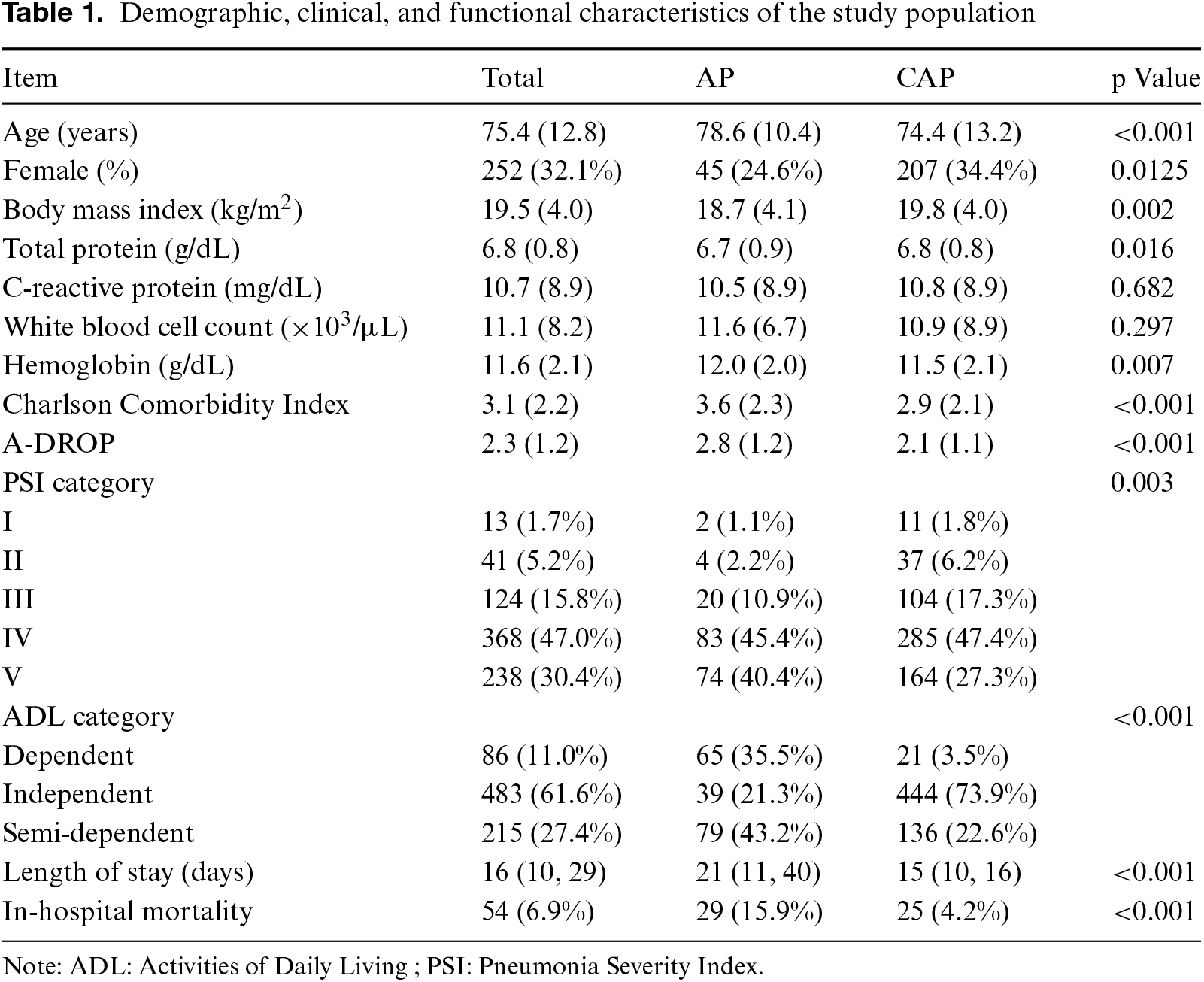
A total of 784 patients were enrolled, including 183 with AP and 601 with CAP (Table 1). Patients with AP were significantly older than those with CAP (78.6 ± 10.4 vs. 74.4 ± 13.2 years, p < 0.001) and had a lower proportion of females (24.6% vs. 34.4%, p = 0.0125). The AP group had lower BMI (18.7 ± 4.1 vs. 19.8 ± 4.0 kg/m2, p = 0.002) and lower total protein levels (6.7 ± 0.9 vs. 6.8 ± 0.8 g/dL, p = 0.016). Comorbidity burden was higher in AP patients, with a greater Charlson Comorbidity Index (3.6 ± 2.3 vs. 2.9 ± 2.1, p < 0.001). At admission, AP patients had higher A-DROP scores (2.8 ± 1.2 vs. 2.1 ± 1.1, p < 0.001) and more severe PSI classifications, with 40.4% in PSI class V compared with 27.3% in the CAP group (p = 0.003). Functional status differed markedly, with 35.5% of AP patients fully dependent on ADL vs. 3.5% of CAP patients (p < 0.001). Hospital stays were longer in the AP group (21 vs. 15 days, p < 0.001), and in-hospital mortality was significantly higher (15.9% vs. 4.2%, p < 0.001).
Antibiotic Utilization and Microbiological Findings
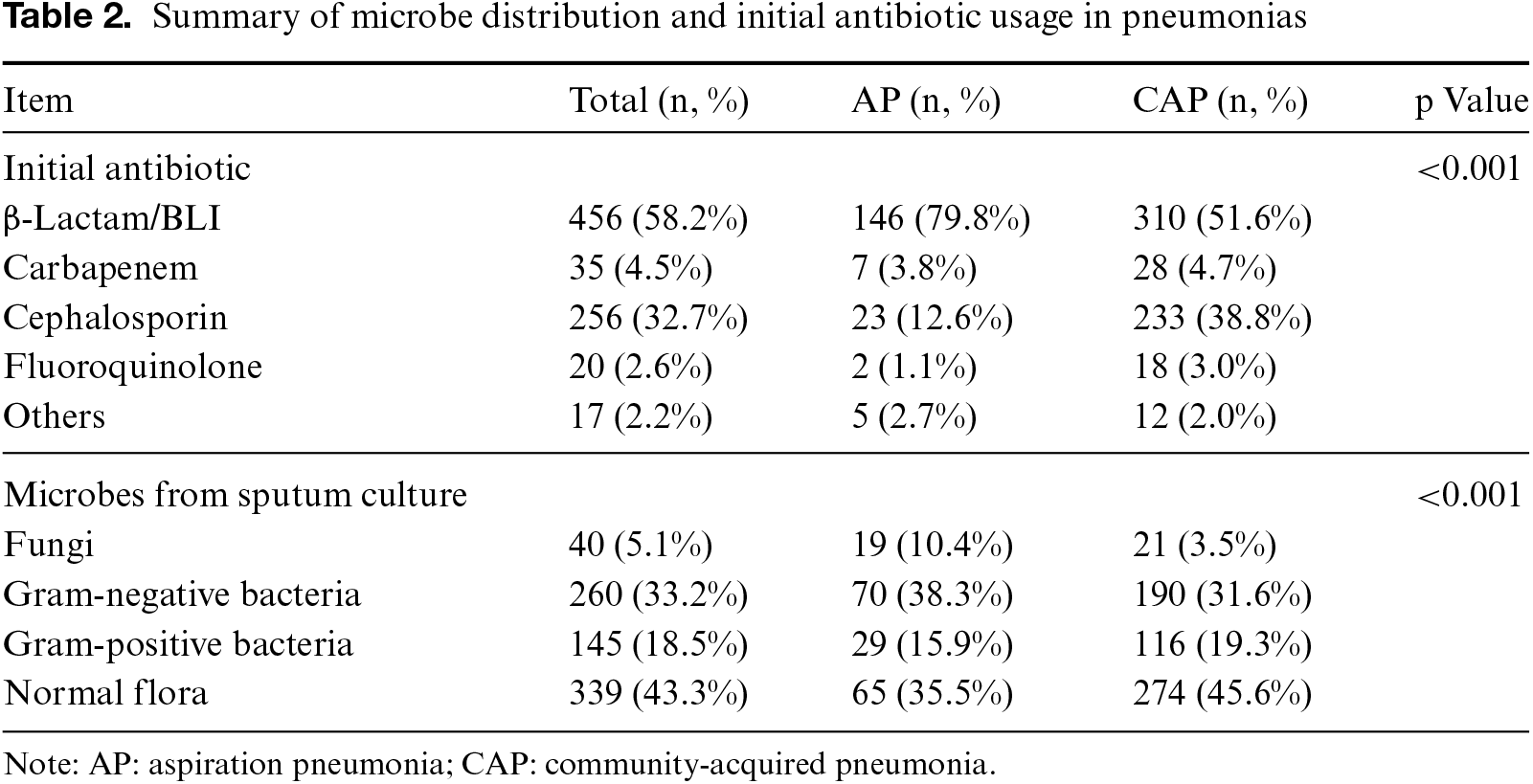
Initial antibiotic selection differed significantly between the AP and CAP groups (p < 0.001) (Table 2). Patients with AP were more frequently treated with β-lactam/β-lactamase inhibitor combinations (79.8% vs. 51.6%), whereas patients with CAP more commonly received cephalosporins (38.8% vs. 12.6%). Microbiological profiles derived from sputum cultures also differed between groups (p < 0.001). The AP group had higher proportions of fungal isolates (10.4% vs. 3.5%) and Gram-negative bacteria (38.3% vs. 31.6%), while samples from CAP patients more frequently yielded normal respiratory flora (45.6% vs. 35.5%).
Mortality Predictors: AP vs. CAP
Multivariable logistic regression for in-hospital mortality demonstrated notable differences between the two groups (Table 3). In the CAP group, independent predictors of mortality included the PSI score (odds ratio [OR] 1.02; 95% confidence interval [CI] 1.01–1.04; p < 0.001), semi-dependent ADL status (OR 11.1; 95% CI 1.35–91.3), and fully dependent ADL status (OR 5.0; 95% CI 1.58–43.1). In the AP group, ADL impairment was also strongly associated with mortality: semi-dependent status had an OR of 4.46 (95% CI 1.65–12.1; p < 0.001), and fully dependent status an OR of 1.73 (95% CI 1.29–10.31; p = 0.012). The PSI score remained an independent mortality predictor in the AP group as well (OR 1.02; 95% CI 1.01–1.03; p = 0.017). These findings are illustrated in Fig. 1, in which multivariate analysis demonstrated statistically significant prognostic factors for mortality (p < 0.001).
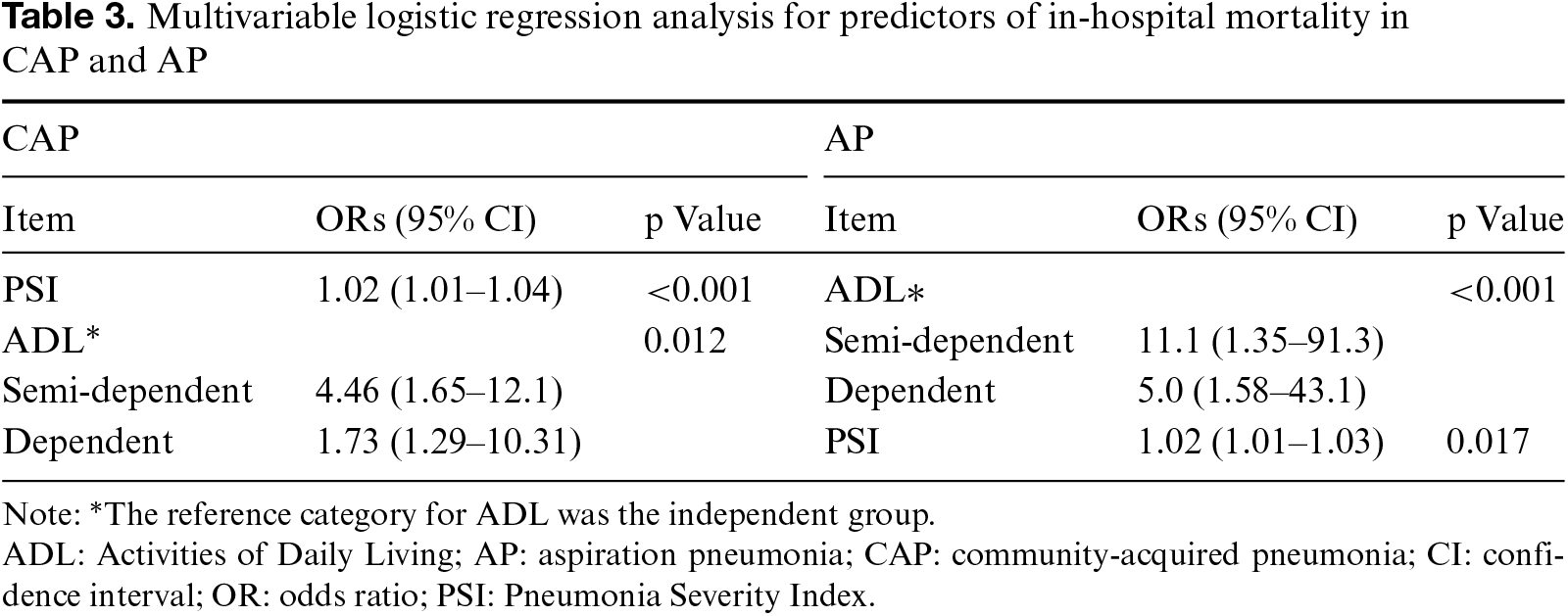
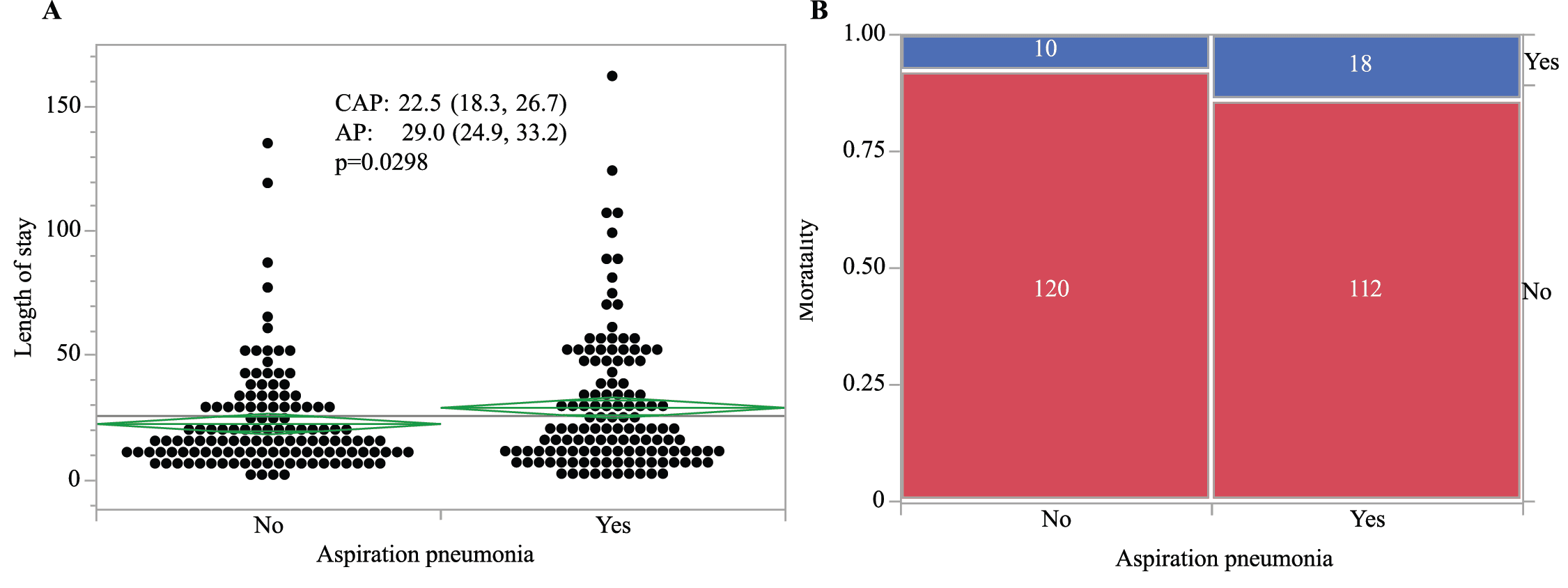
Figure 1. Adjusted Outcomes for Length of Stay and In-Hospital Mortality following Propensity Score Matching (A) Comparison of length of stay in matched pairs and (B) comparison of in-hospital mortality in matched pairs.
Propensity Score Matching
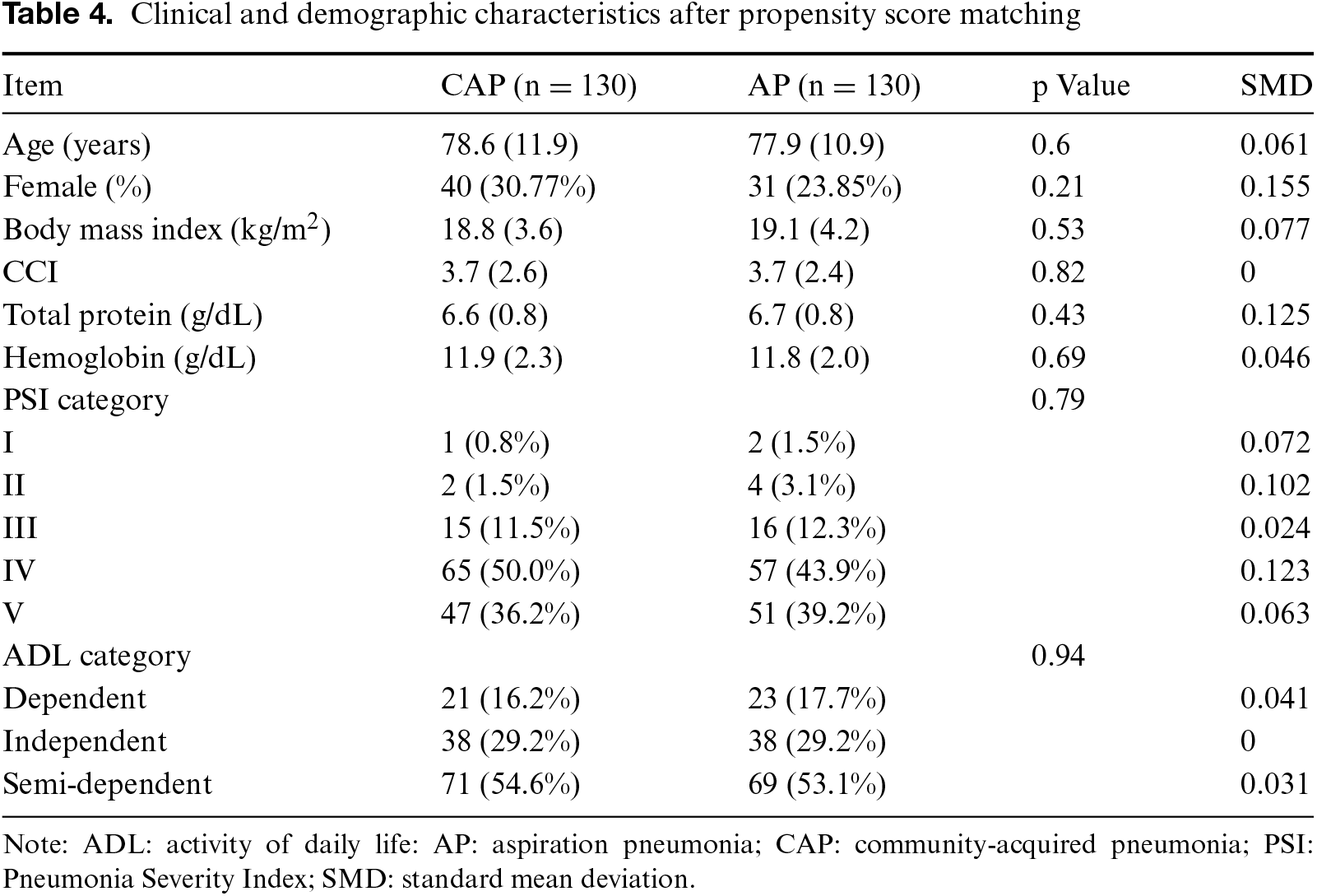
Propensity score matching was performed using age, sex, BMI, comorbidity burden, protein and hemoglobin levels, PSI categories, and ADL status, yielding 130 matched pairs of patients with and without aspiration (Table 4). After matching, baseline characteristics were well balanced between groups, with standardized mean differences below 0.1 for nearly all variables. Logit distribution plots and Love plots (Figs. S1 and S2) further confirmed adequate bias reduction and improved covariate balance.
Length of stay and in-hospital mortality were re-evaluated in the matched cohort. Hospital stay remained significantly longer in patients with aspiration (29.0 ± 2.1 vs. 22.5 ± 2.1 days, p = 0.03; Fig. 1A). In-hospital mortality, assessed using McNemar’s test, was also higher in the aspiration group (13.8% vs. 7.7%, p < 0.001; Fig. 1B). These results indicate that aspiration status independently affects clinical course and resource utilization, even after adjustment for baseline characteristics.
Discussion
This retrospective analysis of patients hospitalized with AP and CAP demonstrated substantial differences in demographic characteristics, functional status, disease severity, and clinical outcomes. Several findings were consistent with previous research, particularly the observation that AP predominantly affects older, frailer individuals with a greater comorbidity burden, and is associated with more severe clinical presentation and poorer in-hospital outcomes.17 The study also confirmed that functional impairment and elevated PSI scores remain important predictors of mortality in both AP and CAP, aligning with established prognostic literature.18,19 Notably, the analysis provides new insights by demonstrating that the magnitude and pattern of these prognostic associations differ between AP and CAP, and by showing that aspiration status remains independently associated with prolonged hospitalization and increased mortality, even after rigorous adjustment using propensity score matching. These findings suggest that aspiration contributes directly to disease trajectory beyond traditional risk indicators, thereby advancing current understanding of the unique clinical characteristics and prognostic implications of AP.
The finding that patients with AP had significantly lower ADL scores is consistent with previous evidence underscoring the central role of frailty and functional impairment in aspiration risk.20 Impaired ADL emerged as one of the strongest predictors of in-hospital mortality in both AP and CAP, emphasizing its value as a clinical indicator of vulnerability.21 In AP, semi-dependent and dependent ADL status substantially increased mortality risk, reflecting the cumulative impact of impaired swallowing function, reduced airway protection, malnutrition, and immobility on disease progression and outcomes.22 These findings reinforce the need for early dysphagia screening, nutritional optimization, and targeted rehabilitation interventions, particularly among high-risk older adults.
PSI also remained a consistent predictor of mortality in both AP and CAP cohorts.23 The concurrence of elevated PSI scores and impaired ADL likely reflects compounded physiological and functional vulnerability. Collectively, these findings support the incorporation of functional assessments into routine pneumonia severity evaluations, particularly for older adults with multimorbidity. Although PSI is routinely used to guide site-of-care decisions, the present results suggest that reliance on PSI alone may underestimate risk in patients with substantial functional impairment.
Propensity score matching allowed for a more balanced comparison between AP and CAP by adjusting for major demographic and clinical confounders. Importantly, aspiration remained associated with longer hospitalization even in the matched cohort, suggesting that aspiration itself contributes to worse outcomes rather than merely reflecting baseline frailty. The aspiration phenotype, characterized by recurrent microaspiration, impaired airway clearance, dysphagia-related complications, and distinct microbiological profiles, may lead to more complex clinical courses and delayed recovery.24 Differences in initial antibiotic selection between AP and CAP may reflect clinicians’ anticipation of broader pathogen coverage in suspected AP. Fungal and Gram-negative organisms were more frequently isolated from sputum cultures in the AP group; however, these findings may represent airway colonization rather than true infection. Microbiological data were analyzed descriptively and were not intended to establish causality, and the retrospective design precluded evaluation of how culture results influenced subsequent treatment decisions.
These findings have important implications for clinical pathways in pneumonia, supporting routine dysphagia screening at admission, particularly in older or functionally impaired patients, and early multidisciplinary involvement, including swallowing rehabilitation and nutritional support.25 Integrating these interventions into standardized care pathways may reduce complications, improve resource utilization, and enhance outcomes in patients with AP. Furthermore, AP warrants dedicated diagnostic criteria, management pathways, and prognostic models. Future research should validate these findings in larger, multicenter prospective cohorts using standardized assessments of swallowing function, frailty, cognition, and microbiome composition. Interventional studies focusing on dysphagia management, nutritional optimization, and functional rehabilitation may help determine whether modifying these factors can reduce aspiration-related complications and mortality. Additionally, the development of AP-specific prognostic tools that integrate functional, physiological, and microbiological indicators may further improve risk stratification and support individualized management strategies.26
Several limitations should be acknowledged. First, the retrospective design may introduce information and misclassification bias, as AP was defined based on attending physician diagnosis and medical record documentation. Second, although propensity score matching improved group comparability, residual confounding from unmeasured factors, such as frailty indices, cognitive status, swallowing function, nutritional status, and oral-hygiene practices, may remain. Third, the study’s conduct at only two hospitals may limit generalizability to other healthcare settings. Finally, microbiological findings were not the primary focus, and long-term outcomes, including post-discharge mortality, readmission, and functional decline, were not evaluated.
Conclusion
This retrospective study demonstrates that AP differs substantially from CAP in clinical profile, functional status, and outcomes. Patients with AP were older, frailer, and more comorbid, with markedly higher disease severity and in-hospital mortality. Impaired ADL and elevated PSI were strong predictors of mortality in both groups, underscoring the importance of integrating functional assessment into pneumonia evaluation. Even after propensity score matching, aspiration status remained independently associated with longer hospitalization and higher mortality, indicating that aspiration itself contributes meaningfully to clinical severity.
Acknowledgment
None.
Funding Statement
This study was supported by a grant from Kanto Rosai Hospital (Grant No. 21K017).
Author Contributions
K.C. contributed to the conception and design of the study, as well as to data analysis and interpretation. S.H., M.H., M.I., R.N., H.I., and Y.H. contributed to the revision and critical review of the manuscript. All authors approved the final version of the manuscript and agreed on the journal to which it was submitted.
Data Availability Statement
The raw data are available upon reasonable request to the corresponding author via email.
Ethics Approval Statement
This study protocol was approved by the IRBs of Yokohama City University and Kanto Rosai Hospital.
Patient Consent Statement
Not applicable.
Conflict of Interest Disclosure
The authors declare that they have no competing interests.
Supplemental Information
Supplemental information for this article can be found online at https://sup.jclinque.com/api/articles/102/download-suppl.
References
[1] Sanivarapu RR, Vaqar S, Gibson J, Aspiration pneumonia. In: StatPearls. Treasure Island (FL): StatPearls Publishing; March 20, 2024.
[2] Mandell LA, Niederman MS. Aspiration pneumonia. New England J Med. February 14, 2019;380(7):651–663. doi:10.1056/NEJMra1714562.
[3] Tomonaga I, Koseki H, Imai C, et al. Incidence and characteristics of aspiration pneumonia in the Nagasaki Prefecture from 2005 to 2019. BMC Pulm Med. April 20, 2024;24(1):191. doi:10.1186/s12890-024-03015-8.
[4] Vallianou NG, Skourtis A, Kounatidis D, et al. The role of the respiratory microbiome in the pathogenesis of aspiration pneumonia: implications for diagnosis and potential therapeutic choices. Antibiotics. 2023;12(1):140. doi:10.3390/antibiotics12010140.
[5] Yoshimatsu Y, Melgaard D, Westergren A, Skrubbeltrang C, Smithard DG. The diagnosis of aspiration pneumonia in older persons: a systematic review. Eur Geriatr Med. October 2022;13(5):1071–1080. doi:10.1007/s41999-022-00689-3.
[6] Ocrospoma S, Restrepo MI. Severe aspiration pneumonia in the elderly. J Intensive Med. July 2024;4(3):307–317. doi:10.1016/j.jointm.2023.12.009.
[7] Almirall J, Boixeda R, de la Torre MC, Torres A. Aspiration pneumonia: a renewed perspective and practical approach. Respirat Med. August 01, 2021;185:106485. doi:10.1016/j.rmed.2021.106485.
[8] Miyazaki T, Hirano K, Ichihara K, et al. Community-acquired pneumonia incidence in adults aged 18 years and older in Goto City, Japan: a prospective population-based study. CHEST Pulmonary. September 01, 2023;1(2):100007. doi:10.1016/j.chpulm.2023.100007.
[9] Girard V, Bai AD. Aspiration pneumonia. Cmaj. October 23, 2023;195(41):E1417. doi:10.1503/cmaj.230628.
[10] Jeon I, Jung GP, Seo HG, Ryu JS, Han TR, Oh BM. Proportion of aspiration pneumonia cases among patients with community-acquired pneumonia: a single-center study in Korea. Ann Rehabil Med. April 2019;43(2):121–128. doi:10.5535/arm.2019.43.2.121.
[11] Chen H, Hara Y, Horita N, Saigusa Y, Hirai Y, Kaneko T. Declined functional status prolonged hospital stay for community-acquired pneumonia in seniors. Clin Interv Aging. 2020;15:1513–1519. doi:10.2147/cia.S267349.
[12] Yamaguchi K, Miyagami T, Imada R, et al. Effect of poor oral health status at hospital admission on in-hospital outcomes of older patients with aspiration pneumonia. Eur Geriatr Med. April 2024;15(2):489–496. doi:10.1007/s41999-023-00917-4.
[13] Wakabayashi T, Hamaguchi S, Morimoto K. Clinically defined aspiration pneumonia is an independent risk factor associated with long-term hospital stay: a prospective cohort study. BMC Pulm Med. September 18, 2023;23:351. doi:10.1186/s12890-023-02641-y.
[14] Maeda K, Murotani K, Kamoshita S, Horikoshi Y, Kuroda A. Effect of parenteral energy or amino acid doses on in-hospital mortality among patients with aspiration pneumonia: a cohort medical claims database study. J Gerontol A Biol Sci Med Sci. August 12, 2022;12(8):1683–1690. doi:10.1093/gerona/glab306.
[15] Oi I, Ito I, Tanabe N, et al. Investigation of predictors for in-hospital death or long-term hospitalization in community-acquired pneumonia with risk factors for aspiration. Eur Clin Respir J. 2024;11(1):2335721. doi:10.1080/20018525.2024.2335721.
[16] Karunaratne TB, Clavé P, Ortega O. Complications of oropharyngeal dysphagia in older individuals and patients with neurological disorders: insights from Mataró hospital, Catalonia. Spain Front Neurol. 2024;15:1355199. doi:10.3389/fneur.2024.1355199.
[17] Suzuki J, Ikeda R, Kato K, et al. Characteristics of aspiration pneumonia patients in acute care hospitals: a multicenter, retrospective survey in Northern Japan. PLoS One. 2021;16(7):e0254261. doi:10.1371/journal.pone.0254261.
[18] Chen H, Hara Y, Horita N, Saigusa Y, Hirai Y, Kaneko T. Is rehabilitation effective in preventing decreased functional status after community-acquired pneumonia in elderly patients? Results from a multicentre, retrospective observational study. BMJ Open. September 15, 2022;12(9):e051307. doi:10.1136/bmjopen-2021-051307.
[19] Cilloniz C, Videla A, Pericàs JM. Identifying predictors of treatment failure with community-acquired pneumonia: an update. Expert Rev Anti Infect Ther. September 2025;23(9):797–809. doi:10.1080/14787210.2025.2527972.
[20] Akazawa N, Funai K, Hino T, et al. Increased intramuscular adipose tissue of the quadriceps at admission is more strongly related to activities of daily living recovery at discharge compared to muscle mass loss in older patients with aspiration pneumonia. BMC Geriatr. January 29, 2024;24(1):107. doi:10.1186/s12877-024-04718-7.
[21] Yamada K, Iwata K, Yoshimura Y, et al. Activities of daily living limitation and functional decline during hospitalization predict 180-day readmission and mortality in older patients with pneumonia: a single-center, retrospective cohort study. Respir Med. November–December 2024;234:107830. doi:10.1016/j.rmed.2024.107830.
[22] Banda KJ, Chu H, Chen R, et al. Prevalence of oropharyngeal dysphagia and risk of pneumonia, malnutrition, and mortality in adults aged 60 years and older: a meta-analysis. Gerontology. 2022;68(8):841–853. doi:10.1159/000520326.
[23] Hirooka N, Nakayama T, Kobayashi T, Nakamoto H. Predictive value of the pneumonia severity score on mortality due to aspiration pneumonia. Clin Med Res. June 2021;19(2):47–53. doi:10.3121/cmr.2020.1560.
[24] Teramoto S. The current definition, epidemiology, animal models and a novel therapeutic strategy for aspiration pneumonia. Respirat Investigat. January 01, 2022;60(1):45–55. doi:10.1016/j.resinv.2021.09.012.
[25] Clotet-Vidal S, Saez Prieto ME, Duch Llorach P, Gutiérrez ÁS, Casademont Pou J, Torres Bonafonte OH. Malnutrition, functional decline, and institutionalization in older adults after hospital discharge following community-acquired pneumonia. Nutrients. 2024;16(1):11. doi:10.3390/nu16010011.
[26] Kitsios GD, Nguyen VD, Sayed K, et al. The upper and lower respiratory tract microbiome in severe aspiration pneumonia. iScience. 2023;26(6):106832. doi:10.1016/j.isci.2023.106832.
 |
Copyright: © 2026 Chin et al. This work is licensed under a Creative Commons Attribution 4.0 International License, which permits unrestricted use, distribution, and reproduction in any medium, provided the original work is properly cited. |