| Journal of Clinical Question. 2026; 3(2): e114 https://doi.org/10.69854/jcq.2026.0014 Advance access publication date 30 April 2026 |
 |
Review
Advances in the Management of Hepatocellular Carcinoma: Evolving Systemic Therapy, Perioperative Strategies, and Care for Special Populations
Jing He, Xiao-Qin Wu, Zhen-Guang Wang *
*
The 3rd Department of Hepatic Surgery, Eastern Hepato-biliary Surgical Hospital, Naval Medical University, Shanghai, China.
*Corresponding Author: e-mail: wangzhenguang82@163.com
Submitted: March 06, 2026 Accepted: April 30, 2026
Clinical Question Box
What are the most important recent practice-changing developments in hepatocellular carcinoma management?
The management of hepatocellular carcinoma (HCC) is increasingly influenced by immune-based combinations, with nivolumab plus ipilimumab, atezolizumab plus bevacizumab, and the STRIDE (single tremelimumab regular interval durvalumab) regimen representing key first-line standards for appropriately selected patients. Treatment selection remains driven not only by tumor burden but also by hepatic reserve, bleeding risk, transplantation history, autoimmune comorbidity, and the likelihood of maintaining liver function through sequential therapy. Neoadjuvant systemic therapy is emerging as a promising strategy for selected resectable disease, whereas the updated results of IMbrave050 do not currently support the routine use of adjuvant atezolizumab plus bevacizumab following curative-intent treatment outside of clinical trials after longer follow-up. Following progression on first-line immunotherapy, tyrosine kinase inhibitors remain the backbone of subsequent therapy. Overall, modern HCC care requires individualized, multidisciplinary decision-making that integrates disease stage, liver function, and patient phenotype.
Abstract
Hepatocellular carcinoma (HCC) remains the dominant histologic subtype of primary liver cancer and a major cause of cancer mortality worldwide. Its epidemiology continues to evolve, with metabolic dysfunction-associated steatotic liver disease and steatohepatitis becoming increasingly important drivers in Western populations, while chronic hepatitis B virus infection remains a dominant cause in endemic regions. Management requires the integration of tumor burden, liver functional reserve, and patient-specific clinical constraints. Diagnosis in at-risk patients increasingly relies on noninvasive imaging criteria, and prognostic assessment is refined by objective tools such as the albumin–bilirubin grade. For advanced disease, first-line treatment has shifted decisively toward immune checkpoint inhibitor-based combinations, including nivolumab plus ipilimumab, atezolizumab plus bevacizumab, and tremelimumab plus durvalumab, with emerging tyrosine kinase inhibitor–immunotherapy combinations further broadening the treatment landscape. At the same time, perioperative strategies are moving earlier in the disease course, with encouraging neoadjuvant data in selected resectable tumors, although routine adjuvant immunotherapy remains unestablished after updated follow-up. In the post-immunotherapy setting, optimal sequencing is still evolving, but tyrosine kinase inhibitors remain the principal evidence-based option after progression on frontline immune-based therapy. Important management challenges persist in special populations, particularly patients with Child–Pugh B liver dysfunction, posttransplant recurrence, untreated high-risk varices, viral hepatitis at risk of reactivation, and rare actionable genomic alterations. Overall, the current HCC treatment landscape is characterized by growing therapeutic complexity, persistent evidence gaps in real-world fragile populations, and an increasing emphasis on individualized sequencing, preservation of hepatic reserve, and biomarker development beyond α-fetoprotein.
Keywords: Hepatocellular carcinoma, immunotherapy, systemic therapy, tyrosine kinase inhibitors, neoadjuvant therapy, liver cancer
Introduction and Epidemiology
Hepatocellular carcinoma (HCC) is the predominant form of primary liver cancer, accounting for approximately 85%–90% of cases, and liver cancer remains one of the leading causes of cancer-related mortality worldwide.1,2 As a highly aggressive malignancy that typically arises in the context of chronic liver disease, HCC poses a major global health burden. In 2022, liver cancer was responsible for approximately 866,000 new cases and 759,000 deaths worldwide, ranking sixth in incidence and third among causes of cancer-related mortality globally.3
The epidemiologic landscape of HCC is currently undergoing a rapid shift. While the incidence in regions such as Asia and Africa has historically been driven by endemic hepatitis B virus (HBV) infection and dietary exposure to aflatoxin B1,4 Western countries are witnessing an increase in cases attributed to metabolic factors. Specifically, metabolic dysfunction–associated steatotic liver disease (MASLD) and metabolic dysfunction–associated steatohepatitis (MASH) have emerged as the fastest-growing etiologies for primary liver malignancies in these regions.5 In the United States, patients with MASLD/MASH-related cirrhosis face an annual HCC incidence of approximately 2% to 2.4%.6
A primary clinical hurdle remains the late-stage presentation of the disease. HCC is frequently diagnosed late in its course due to the absence of symptoms during early-stage hepatocarcinogenesis and suboptimal surveillance rates among high-risk populations in the West.7 Consequently, many patients present with advanced disease, significantly limiting the availability of potentially curative therapeutic interventions.
Diagnosis and Precise Clinical Staging
The diagnostic paradigm for HCC is unique among solid organ malignancies, as a definitive diagnosis can frequently be established in high-risk patients using noninvasive imaging alone, thereby obviating the need for histologic confirmation. Under the Liver Imaging Reporting and Data System framework, a lesion categorized as LR-5 is considered definitely HCC.8 This categorization relies on radiographic hallmarks such as non-rim arterial phase hyperenhancement followed by washout in the portal venous or delayed phases.9 When these criteria are strictly applied, the specificity for HCC exceeds 95%.9 For sub-centimeter lesions detected during surveillance, AASLD guidance recommends close monitoring with ultrasound at short intervals of 3–6 months to assess for growth or the development of malignant features, rather than immediate transition to more intensive diagnostic imaging.10
Prognostic Stratification and the ALBI Grade
Effective management of HCC requires a delicate balance between assessing the oncologic tumor burden and the severity of the underlying hepatic dysfunction. While the Barcelona Clinic Liver Cancer (BCLC) system remains the global standard for treatment allocation, there is increasing reliance on more objective measures of liver reserve.11 The albumin–bilirubin (ALBI) score has emerged as an objective alternative to the Child–Pugh classification for assessing hepatic reserve in patients with HCC because it is based solely on serum albumin and bilirubin and avoids the subjective variables included in Child–Pugh scoring. Originally developed and internationally validated in HCC cohorts, the ALBI score is calculated as ALBI = (log10 bilirubin [μmol/L] × 0.66) + (albumin [g/L] × −0.085).12
The resulting grade provides a highly discriminative method for assessing liver function: ALBI grade I (≤−2.60) indicates well-preserved function, while grade III (>−1.39) indicates significant compromise.12 Objective liver function assessment is increasingly used when identifying patients who may be unsuitable for repeated transarterial chemoembolization (TACE). In particular, ALBI grade II or worse and a tumor burden beyond the up-to-seven criteria have been proposed as markers of poorer candidacy for TACE because these features are associated with a higher risk of liver function deterioration and a lower likelihood of sustained benefit from repeated locoregional therapy.13 For these individuals, earlier transition to systemic regimens is recommended to preserve liver function and optimize overall survival (OS) outcomes.
First-Line Systemic Therapy: The New Standards
The first-line therapeutic landscape for advanced HCC has shifted from tyrosine kinase inhibitor (TKI) monotherapy to immune checkpoint inhibitor (ICI)–based combination regimens, which are now preferred for many eligible patients.11 For patients with preserved liver function, typically Child–Pugh class A, first-line therapy for advanced HCC is increasingly selected using an evidence-based approach centered on ICI-based combinations, particularly either dual-ICI blockade or ICI plus antiangiogenic therapy (Fig. 1).14
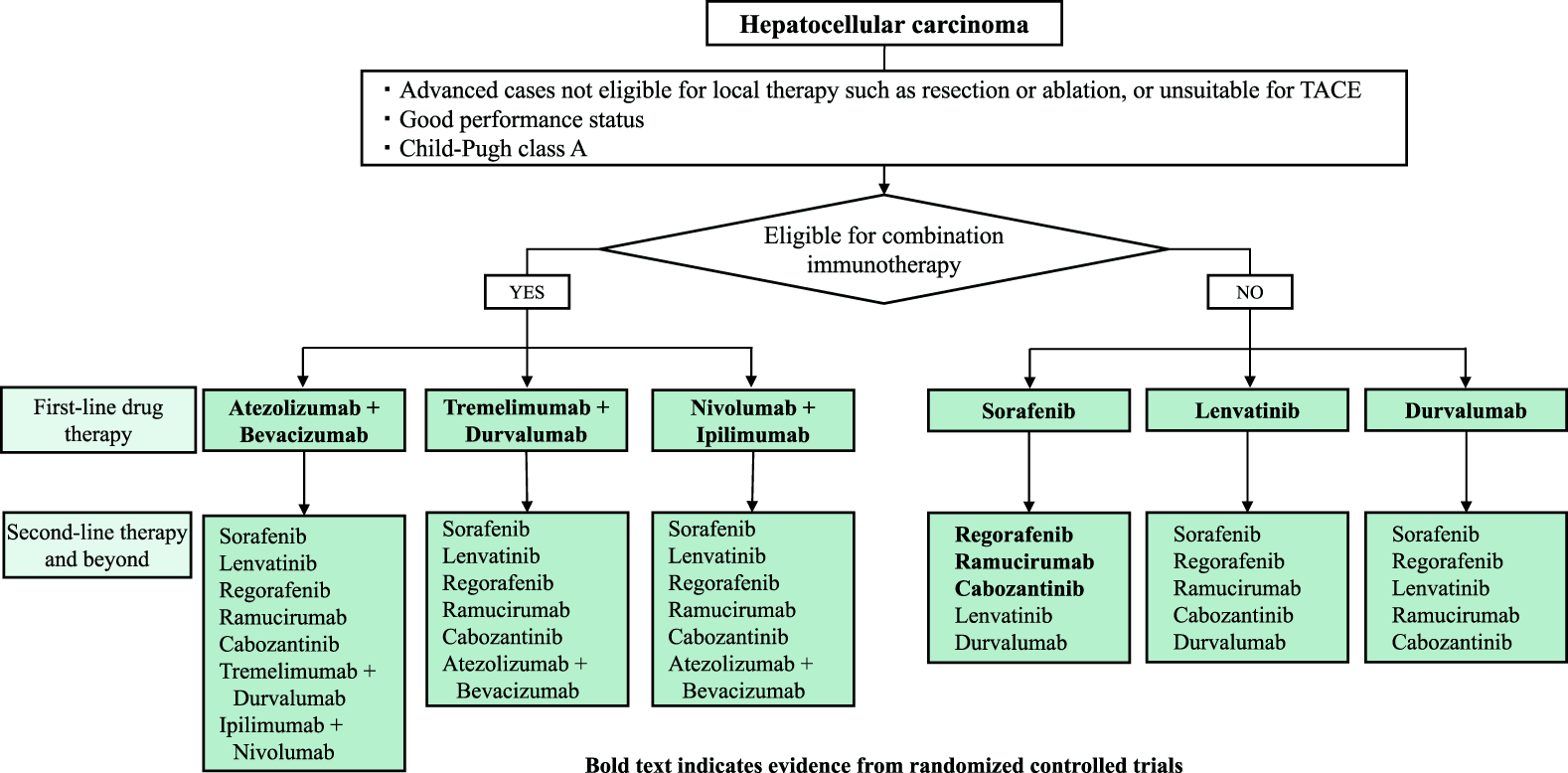
Figure 1. Algorithm for drug therapy for hepatocellular carcinoma.
Dual Checkpoint Blockade: Nivolumab Plus Ipilimumab
A milestone in the frontline management of unresectable or metastatic HCC was the regulatory approval in April 2025 of the combination of nivolumab and ipilimumab.15 This approval was based on the results of the Phase III CheckMate 9DW trial, which demonstrated the superior efficacy of dual inhibition of programmed cell death-1 (PD-1) and cytotoxic T-lymphocyte–associated protein 4. The regimen achieved a median OS of 23.7 months, representing a statistically significant improvement compared to the 20.6 months observed in patients receiving the investigator's choice of TKI (sorafenib or lenvatinib).16
Nivolumab plus ipilimumab is increasingly preferred for selected patients in whom achieving a high objective response rate (ORR) and durable long-term survival is the principal therapeutic goal. In CheckMate 9DW, the regimen achieved an ORR of 36%, with durable responses that support its role as a high-efficacy first-line option. This benefit must be balanced against toxicity: grade 3/4 treatment-related adverse events occurred in 41% of patients, and serious grade 3/4 treatment-related adverse events occurred in 25%, underscoring the need for vigilant monitoring and early management of immune-mediated adverse events.16 In parallel, a recent model-based cost-effectiveness analysis informed by CheckMate 9DW reported that nivolumab plus ipilimumab was cost-effective compared with lenvatinib or sorafenib in the United States, with an incremental cost-effectiveness ratio of $127,063.87 per quality-adjusted life-year, below the prespecified willingness-to-pay threshold of $150,000.17
Anti–PD-L1 Plus Anti-VEGF Synergy: Atezolizumab Plus Bevacizumab
The combination of atezolizumab and bevacizumab remains a foundational standard for frontline HCC based on the landmark IMbrave150 trial.18 In this study, the combination demonstrated a median OS of 19.2 months compared to 13.4 months for sorafenib, representing the first regimen to significantly outperform the historical TKI benchmark in both OS and progression-free survival (PFS).19 Real-world analyses have confirmed that the survival benefit of atezolizumab plus bevacizumab is reproducible in routine clinical practice, although safe implementation depends on rigorous pretreatment screening and ongoing monitoring, particularly for bleeding risk and portal hypertension.20 The most critical safety consideration is bevacizumab-associated hemorrhage, particularly in patients with portal hypertension. Because bevacizumab increases bleeding risk, pretreatment esophagogastroduodenoscopy is widely recommended before atezolizumab–bevacizumab, ideally based on a recent examination within the prior 6 months, to identify and treat high-risk esophagogastric varices and reduce major bleeding risk.21
The STRIDE Regimen: Tremelimumab Plus Durvalumab
The Phase III HIMALAYA trial established an OS benefit for the STRIDE (single tremelimumab with regular interval durvalumab) regimen, which consists of a single priming dose of tremelimumab combined with durvalumab, followed by durvalumab maintenance monotherapy.22 The STRIDE regimen achieved a median OS of 16.4 months in HIMALAYA, and long-term follow-up demonstrated a 5-year OS rate of 19.6%. In current practice, STRIDE is an important frontline option for patients in whom anti-VEGF (vascular endothelial growth factor) therapy is unsuitable, including those with clinically significant bleeding risk, portal hypertension, or other contraindications to bevacizumab.22 By avoiding bevacizumab, this regimen provides a durable immune-mediated response with a manageable toxicity profile for a broad segment of the HCC population.
Emerging TKI/ICI Combinations: CARES-310
Camrelizumab plus rivoceranib (apatinib) has emerged as a highly active first-line option for unresectable HCC. In the global Phase III CARES-310 study, this combination improved OS compared with sorafenib, and the final OS analysis reported a median OS of 23.8 versus 15.2 months, representing one of the longest median OSs reported in a first-line phase III trial in unresectable HCC.23 Although CARES-310 was conducted predominantly in HBV-associated HCC, camrelizumab plus rivoceranib has emerged as a high-activity first-line option for patients with substantial tumor burden, given its comparatively high ORR and broad efficacy across key clinical subgroups. The robust OS benefit (hazard ratio [HR] 0.64) underscores the potency of combining next-generation anti-angiogenic TKIs with PD-1 blockade in this disease space.23
Antiviral Management during ICI-Based Therapy
In newly diagnosed hepatitis-associated HCC, antiviral management should be integrated early into multidisciplinary oncologic care, particularly for patients being considered for neoadjuvant or first-line ICI-based therapy.24 Baseline viral assessment should include hepatitis B surface antigen, anti-hepatitis B core, anti-hepatitis C virus, and HBV DNA in patients with current or prior HBV exposure and HCV RNA when HCV infection is suspected.25 For HBV-associated HCC, prophylactic or therapeutic nucleos(t)ide analogue therapy with a high-genetic-barrier agent, such as entecavir, tenofovir disoproxil fumarate, or tenofovir alafenamide, should be initiated before or at the start of ICI therapy and continued during treatment to reduce the risk of HBV reactivation and preserve hepatic reserve.26 Updated HBV reactivation guidance supports HBV screening and antiviral prophylaxis before or at the start of systemic anticancer therapy in patients at risk for HBV reactivation, including those receiving immunomodulatory anticancer therapies; AASLD HCC guidance also recommends antiviral therapy for patients who meet HBV or HCV treatment criteria.10,25 For HCV-associated HCC, direct-acting antiviral therapy should be individualized in coordination with hepatology and oncology, considering tumor burden, liver function, urgency of systemic therapy, and expected prognosis.24 Antiviral therapy should generally not delay clinically indicated neoadjuvant or first-line ICI therapy; rather, viral suppression and serial monitoring of liver enzymes and viral load should proceed concurrently throughout treatment.
The Perioperative and Locoregional Frontier
A major recent shift in the management of HCC has been the integration of systemic therapy into the perioperative setting, motivated by the historically high recurrence rate following curative-intent partial hepatectomy, which often exceeds 50% and may approach 70% at 5 years.27 While potentially curative resection remains a cornerstone of management for patients with adequate liver reserve, the frequent emergence of local recurrence from preexisting microscopic tumor foci has driven the clinical community toward neoadjuvant and adjuvant systemic strategies.
Neoadjuvant Progress: Lessons from the CARES-009 Trial
The neoadjuvant landscape was advanced by the Phase II/III CARES-009 trial, a multicenter, open-label, randomized study in 294 patients with resectable HCC at intermediate or high risk of recurrence. The trial evaluated perioperative camrelizumab plus rivoceranib, consisting of 2 preoperative cycles followed by surgery and up to 15 postoperative cycles.28 The findings represent a critical milestone: perioperative systemic therapy significantly improved median event-free survival to 42.1 months, compared with 19.4 months with surgery alone (HR 0.59; 95% confidence interval [CI] 0.41–0.85). Similarly, median disease-free survival was prolonged to 40.8 versus 19.4 months, respectively (HR 0.59; 95% CI 0.40–0.86).28 Despite these efficacy gains, clinical implementation requires careful patient selection because treatment-related toxicity was substantial. In CARES-009, grade 3 or worse treatment-related adverse events occurred in 38% of patients receiving perioperative camrelizumab plus rivoceranib, and 2 treatment-related deaths were reported during neoadjuvant therapy. In addition, because the study population was predominantly enrolled in China and largely had HBV-related HCC (77%), further data are needed to determine the generalizability of these results to broader global populations and to nonviral etiologies of HCC.29
Adjuvant Therapy Challenges and the Evidence Gap
In contrast to the successes of neoadjuvant, the role of adjuvant ICIs remains fraught with challenges and is currently considered investigational. The foundational IMbrave050 trial, which evaluated adjuvant atezolizumab plus bevacizumab for treated patients at high risk of recurrence, initially generated significant enthusiasm by meeting its primary endpoint of improved recurrence-free survival (RFS) at the first interim analysis.30
However, with extended follow-up, the initial RFS benefit was not sustained, and OS remained immature, with no demonstrated OS advantage.31 Given the increased toxicity burden and the lack of a demonstrated survival benefit, current evidence does not support the routine use of adjuvant atezolizumab plus bevacizumab in clinical practice. In contrast, antiviral therapy remains recommended in patients with HBV- or HCV-related HCC when indicated for the underlying viral hepatitis, as it is associated with improved survival and reduced late recurrence after curative treatment. The search for an effective systemic adjuvant or secondary chemopreventive strategy continues in ongoing clinical trials.32
Sequential Therapy and the Post-Immunotherapy Landscape
Sequencing Paradigms following Frontline ICI Progression
The rapid adoption of ICI-based combinations as first-line therapy has created a significant evidence gap regarding optimal second-line sequencing. Most currently approved second-line agents were originally validated in patients after sorafenib failure, necessitating reliance on recent real-world analyses and contemporary reviews to guide practice following first-line immunotherapy.33,34 Current evidence generally favors a transition to a TKI rather than sequential dual immunotherapy after progression on atezolizumab plus bevacizumab.35 In a multicenter, registry-based 2026 study, second-line lenvatinib was associated with longer OS and higher disease control than durvalumab plus tremelimumab, although these findings remain preliminary because they derive from retrospective, non-randomized data. In that cohort, median OS was 14.0 months with lenvatinib versus 5.3 months with durvalumab plus tremelimumab (p = 0.047), and disease control rates were 76.7% versus 15.4%, respectively.36
Furthermore, the success of sequential therapy is closely linked to preservation of hepatic reserve. Objective measures of liver function, particularly the ALBI score, are independent prognostic factors for outcomes with second-line lenvatinib after atezolizumab plus bevacizumab. In a 2026 multicenter study, a lower pre-atezolizumab/bevacizumab ALBI score and a cumulative lenvatinib dose of ≥400 mg were independently associated with better survival, underscoring the importance of maintaining liver function and adequate treatment exposure.37
Evidence-Based TKIs and Biomarker-Selected Therapy
TKIs continue to serve as the backbone of second- and later-line therapy for advanced HCC. Evidence-based options include regorafenib and cabozantinib, both supported by phase III data in previously treated patients, while sorafenib remains a commonly used later-line option in contemporary practice, particularly following first-line immunotherapy.38,39 Indirect matching-adjusted comparison analyses have found no significant difference in OS between regorafenib and cabozantinib, with median OS of 11.1 and 11.3 months, respectively. However, cabozantinib was associated with longer PFS than regorafenib (5.5 vs. 3.0 months), suggesting a potential advantage when delaying radiographic progression is a priority, although these findings derive from indirect rather than head-to-head evidence.40
Precision medicine in HCC remains limited, with ramucirumab being the only approved biomarker-selected systemic option. In patients with a baseline α-fetoprotein (AFP) ≥400 ng/mL, ramucirumab has demonstrated a survival benefit, although contemporary real-world outcomes vary across cohorts.41
Emerging Therapeutic Strategies and Novel Mechanisms
An important therapeutic frontier in HCC is the evaluation of immune continuation strategies and cellular therapies. The Phase III IMbrave251 trial is assessing whether continuing atezolizumab in combination with lenvatinib or sorafenib improves outcomes compared with lenvatinib or sorafenib alone after progression on first-line atezolizumab plus bevacizumab.42 This strategy aims to determine if sustained PD-L1 inhibition can overcome acquired resistance when paired with anti-angiogenic multi-kinase inhibition.
Adoptive T-cell therapies represent a step toward personalized oncology. In the first-in-human ADP-A2AFP study, preliminary activity was observed in heavily pretreated patients, with early reports showing disease control in approximately two-thirds of treated patients.43 These advances are supported by the investigation of high-accuracy biomarkers such as fibroblast growth factor 9 (FGF-19), which, in one study, achieved an area under the curve of 0.98 for HCC detection.44 The FGF19–FGFR4 axis is also under active clinical investigation as both a biomarker and a therapeutic target.45
Clinical Barriers to Later-Line Delivery
Despite the expanding armamentarium of systemic agents, the attrition rate between treatment lines remains a formidable challenge. Only about 38% of patients successfully transitioned from first- to second-line therapy in a 2026 real-world cohort (50 of 131 patients). The most commonly reported barriers were patient choice (26.7%) and poor performance status (25.2%).46 These findings underscore that proactive toxicity management and preservation of liver function during frontline therapy are not simply supportive measures but fundamental prerequisites for maintaining eligibility for subsequent therapy and maximizing cumulative survival.47
Special Populations and Management Challenges
Therapeutic Strategies for Patients with Impaired Hepatic Reserve (Child– Pugh B)
A primary challenge in the management of advanced HCC remains the limited evidence for patients with Child–Pugh B liver function, as most pivotal phase III trials have strictly restricted enrollment to the Child–Pugh A population.48 For these fragile patients, OS is frequently governed more by the degree of underlying hepatic dysfunction than by the malignancy itself.
For patients with an Eastern Cooperative Oncology Group (ECOG) performance status <2 and minimal comorbidities, single-agent ICI therapy (durvalumab, tislelizumab, or pembrolizumab) is the preferred approach. While these agents are generally considered safe and do not show increased rates of grade ≥3 immune-related adverse events compared to Child–Pugh A populations, their efficacy is notably more modest.14 A systematic review and meta-analysis of clinical trial and real-world data found that, in Child–Pugh B advanced HCC treated with ICIs, the pooled ORR was 14% overall, with a pooled median OS of 5.49 months. In the ICI monotherapy subgroup, the pooled ORR was 12%.49
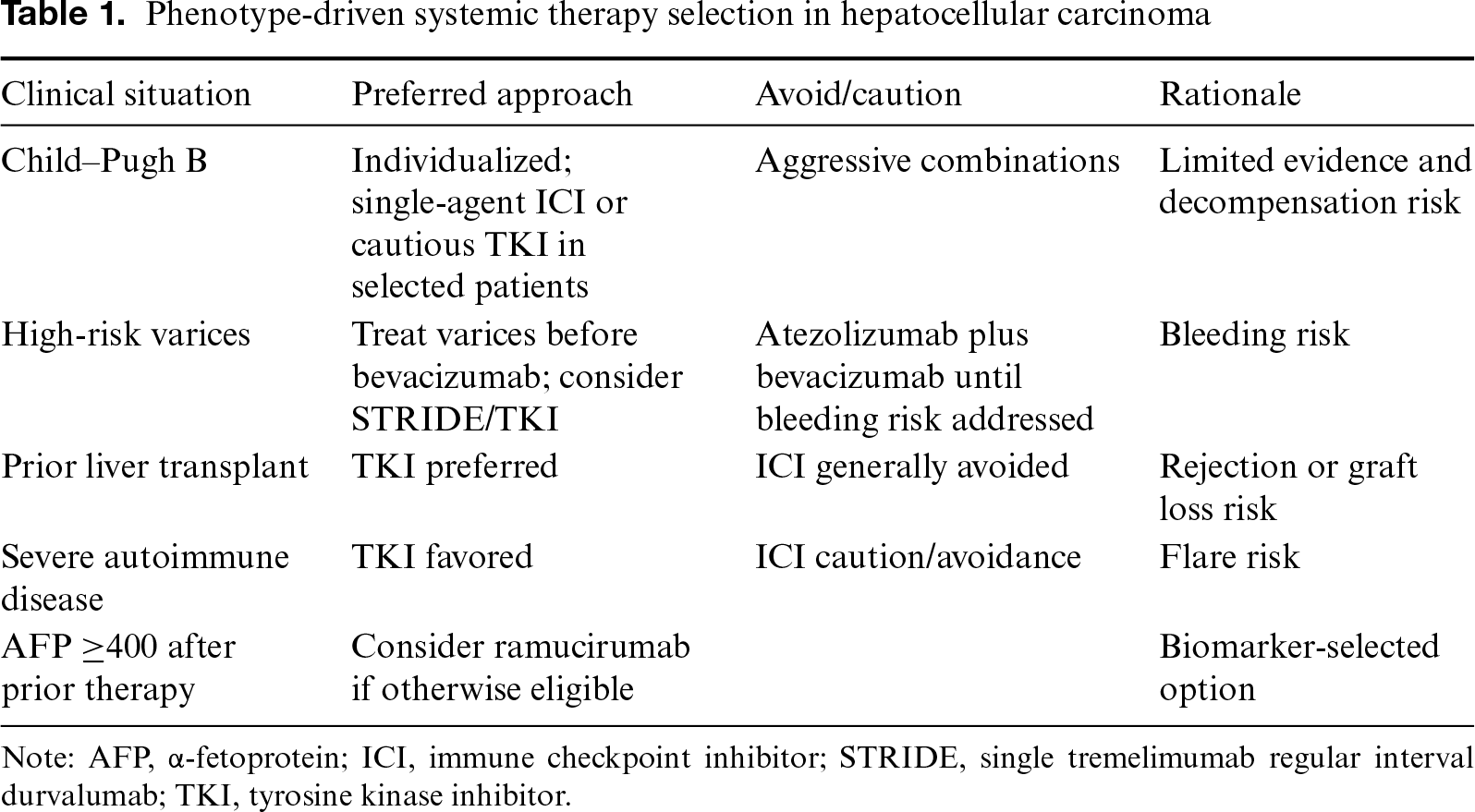
Anti-angiogenic TKIs remain a viable alternative, although they are often more difficult to tolerate in this setting (Table 1). Sorafenib has the most established safety experience in Child–Pugh B HCC, but outcomes remain substantially worse than in patients with preserved liver function. Recent reviews summarizing contemporary clinical and real-world data report a median OS of about 5.2 months in Child–Pugh B versus 13.6 months in Child–Pugh A patients.50 For patients with severe hyperbilirubinemia or Child–Pugh C status, systemic therapy is typically deferred in favor of best supportive care due to the lack of demonstrable benefit and the high risk of treatment-induced decompensation.51
Systemic Management in the Post-Liver Transplantation Setting
The management of HCC recurrence following orthotopic liver transplantation presents a unique immunological hurdle. ICIs are generally avoided and remain highly controversial in the posttransplant setting because of the substantial risk of allograft rejection and graft loss.52 Data suggest that ICI-induced activation of the host immune response may lead to liver allograft rejection rates of up to 39% in reported posttransplant series.53 Consequently, patients requiring systemic therapy for posttransplant recurrence should be managed in close consultation with transplant hepatology and ideally within the context of specialized clinical trials.
For patients with advanced or multifocal HCC recurrence after liver transplantation, systemic therapy with TKIs remains the mainstay of treatment. Sorafenib is the most extensively studied agent in this setting, and newer real-world data support lenvatinib as a valid, and possibly preferred, first-line option for selected patients.54 These agents are used in conjunction with posttransplant immunosuppression, typically with calcineurin-inhibitor minimization and selective incorporation of mammalian target of rapamycin inhibitors.55 However, vigilant monitoring is essential, as these patients may experience higher rates of treatment-related toxicities, including hand–foot skin reactions and acute hepatitis, requiring prompt dose modifications.
Rare Genomic Alterations and Viral Reactivation Risks
Universal screening for HBV and HCV is mandatory for all patients initiating systemic therapy for HCC. The risk of viral reactivation remains a significant concern during active treatment with ICIs or molecularly targeted agents. Patients with evidence of chronic or past HBV infection require continuous monitoring and, in most cases, antiviral prophylaxis for at least 12 months after the cessation of anticancer therapy.25
While HCC is rarely driven by actionable genomic fusions, precision oncology has provided a lifeline for a small subset of patients. For the rare patient whose tumor harbors a neurotrophic tyrosine receptor kinase (NTRK) fusion, treatment with a TRK inhibitor is recommended. Larotrectinib and entrectinib are established tumor-agnostic options, while repotrectinib is also Food and Drug Administration-approved and may be considered for appropriate patients. These agents can produce high response rates and durable benefits across NTRK fusion–positive solid tumors, representing an important precision oncology strategy in hepatobiliary malignancies.56–58
Biomarkers and Precision Oncology
The Actionability Gap: AFP and Beyond
Despite the rapid expansion of the systemic armamentarium, biomarker development in advanced HCC continues to lag behind that of other solid tumors, such as non-small cell lung cancer and melanoma. AFP remains the only routinely actionable biomarker in clinical practice.59 While highly useful as a prognostic indicator, correlating with tumor size, vascular invasion, and poor histologic differentiation, its predictive utility is primarily confined to determining eligibility for ramucirumab. Under the REACH-2 framework, ramucirumab is restricted to patients with a baseline AFP ≥400 ng/mL and remains the clearest successful example of biomarker-driven phase III drug development in HCC.60
Established immunotherapy biomarkers used in other malignancies, such as PD-L1 expression and tumor mutational burden (TMB), have failed to emerge as robust decision-making tools in HCC.61 PD-L1 status, in particular, does not consistently correlate with objective response or OS across pivotal phase III trials, and TMB in HCC is generally low, limiting its practical value for most patients.62
Emerging Molecular Signatures and Liquid Biopsy
The current research frontier is focused on moving beyond single-protein markers to define molecular subclasses and immune microenvironment signatures. Recent integrative genomic analyses have reclassified HCC into major metabolism- and signaling-based subclasses, such as the fatty acid degradation subtype, which may eventually guide personalized treatment algorithms.63
A critical molecular determinant in HCC is the activation of the WNT/β-catenin pathway. Mutations in CTNNB1, present in approximately 20–30% of tumors, define a molecular subclass associated with immune exclusion and relative resistance to immune checkpoint blockade.64 These tumors are typically immunologically “cold,” with reduced immune cell infiltration and relative insensitivity to ICI monotherapy. In contrast, a preexisting immune-activated tumor microenvironment, including higher intratumoral CD8+ T-cell density, has been associated with better clinical outcomes with atezolizumab plus bevacizumab.65,66
Liquid biopsy, particularly circulating tumor DNA (ctDNA) analysis, has strong potential to improve posttreatment surveillance in HCC and may help refine later-line treatment selection, but it has not yet become a routine standard of care for either use.67 Emerging data suggest that lower, or undetectable, ctDNA levels following treatment initiation are associated with improved outcomes and that serial ctDNA profiling may provide a real-time, noninvasive means of monitoring tumor evolution and the emergence of resistance-associated genomic alterations. However, in HCC, this approach remains promising rather than fully established.68
Phenotype-Driven Personalization and Clinical Constraints
In the absence of a universally implemented genomic roadmap, clinical personalization in HCC still relies heavily on tumor burden and host factors, especially liver functional reserve and performance status. Key variables that shape treatment selection and prognosis include ALBI grade, Child–Pugh class, the presence and extent of portal vein tumor thrombus, extrahepatic spread, and the etiology of the underlying liver disease.69
Patient safety remains a major determinant of treatment selection. In particular, patients with untreated or high-risk gastroesophageal varices are poor candidates for bevacizumab-containing regimens because of the increased risk of serious gastrointestinal and variceal bleeding.11 Similarly, patients with a history of liver transplantation face major challenges with ICIs because liver allograft rejection rates of up to 39% have been reported following checkpoint inhibitor exposure. Patients with severe or active autoimmune disease also require particular caution, as ICIs can trigger disease flares and immune-related toxicities.70 In these scenarios, phenotypic constraints often shift treatment toward TKIs, particularly sorafenib and lenvatinib. In posttransplant recurrence, TKIs remain the principal systemic option, and in patients for whom ICIs are unsuitable because of prior transplantation or severe active autoimmune disease, TKIs are commonly relied upon because of their broader clinical experience and lower risk of immune-mediated complications.54
Addressing the External Validity Gap
The external validity of modern systemic trials remains a concern for the oncology community. Most pivotal phase III data were derived from highly selected cohorts with Child–Pugh A liver function and ECOG performance status 0–1. In real-world practice, many patients present with impaired hepatic reserve, particularly Child–Pugh B cirrhosis. In this population, the survival benefit of aggressive systemic combinations is less well defined than in trial-eligible Child–Pugh A patients, while the risk of hepatic decompensation is substantially higher.49
Bridging this evidence gap remains an urgent priority. In Child–Pugh B HCC, single-agent ICIs have shown manageable safety and modest activity, with an ORR of about 12% in prospective nivolumab data and 12% in the monotherapy subgroup of a meta-analysis.71 However, prospective studies specifically designed to stratify these fragile patients into individualized therapeutic pathways remain limited. The field is still moving from empiric treatment selection toward a more integrated model that combines molecular profiling with phenotypic and hepatic-reserve optimization.72
Conclusion
The management of HCC is increasingly complex and requires coordinated multidisciplinary care that integrates oncologic stage, liver functional reserve, and patient phenotype. Immune-based combination therapy now defines the first-line standard for many patients, neoadjuvant strategies are expanding the perioperative frontier, and TKIs remain essential for post-immunotherapy sequencing and for selected populations in whom immunotherapy is unsuitable. At the same time, major external validity gaps persist because many pivotal datasets were generated in highly selected trial populations with preserved liver function and limited comorbidity. Closing these gaps will require prospective studies in fragile real-world populations and the continued development of biomarkers and sequencing strategies that align tumor biology with hepatic reserve and clinical phenotype.
Acknowledgment
None.
Funding Statement
None.
Ethics Approval Statement
Ethical approval was waived for this study because it was based on a secondary analysis of data from previously published studies and did not involve direct patient participation or new data collection.
Patient Consent Statement
Patient consent was waived because no identifiable patient information was collected or analyzed in this study.
Conflict of Interest
The authors declare that they have no competing interests.
Data Sharing Statement
Data sharing is not applicable because no new datasets were generated or analyzed.
Generative AI Declaration
During the preparation of this manuscript, the authors used ChatGPT to assist with proofreading. All content was subsequently reviewed and edited by the authors, who assume full responsibility for the accuracy and integrity of the published work.
Authors’ Contributions
Jing He and Zhen-Guang Wang contributed to the study design and drafting of the manuscript. Xiao-Qin Wu and Zhen-Guang Wang contributed to data interpretation and manuscript revision. All authors read and approved the final manuscript and agree with its content and data.
Supplemental Information
Supplemental information for this article can be found online at https://sup.jclinque.com/api/articles/114/download-suppl.
References
[1] European Association for the Study of the L, Sangro B, Argemi J, et al. EASL clinical practice guidelines on the management of hepatocellular carcinoma. J Hepatol. 2025;82(2):315–374. doi:10.1016/j.jhep.2024.08.028.
[2] Mauro E, de Castro T, Zeitlhoefler M, et al. Hepatocellular carcinoma: epidemiology, diagnosis and treatment. JHEP Reports. 2025;7(12):101571. doi:10.1016/j.jhepr.2025.101571.
[3] Organization WH. Global cancer burden growing, amidst mounting need for services. Published February 1, 2024. Accessed March 5, 2026. https://www.who.int/news/item/01-02-2024-global-cancer-burden-growing–amidst-mounting-need-for-services.
[4] Ndububa DA. Liver cancer surveillance in people with hepatitis B in Africa. Lancet Gastroenterol Hepatol. 2024;9(6):491–492. doi:10.1016/S2468-1253(24)00087-6.
[5] Hwang SY, Danpanichkul P, Agopian V, et al. Hepatocellular carcinoma: updates on epidemiology, surveillance, diagnosis and treatment. CMH. 2025;31(Suppl):S228–S254. doi:10.3350/cmh.2024.0824.
[6] Behari J, Gougol A, Wang R, et al. Incidence of hepatocellular carcinoma in nonalcoholic fatty liver disease without cirrhosis or advanced liver fibrosis. Hepatol Commun. July 1, 2023;7(7):223. doi:10.1097/hc9.0000000000000183.
[7] Daher D, Seif El Dahan K, Rich NE, et al. Hepatocellular carcinoma screening in a contemporary cohort of at-risk patients. JAMA Netw Open. 2024;7(4):e248755. doi:10.1001/jamanetworkopen.2024.8755.
[8] Elmohr MM, Chernyak V, Sirlin CB, Elsayes KM. Liver imaging reporting and data system comprehensive guide: MR imaging edition. Magn Reson Imaging Clin N Am. August 2021;29(3):375–387. doi:10.1016/j.mric.2021.05.012.
[9] Joo I. Preventing false positive imaging diagnosis of HCC: differentiating HCC from mimickers and practical strategies. J Liver Cancer. September 2025;25(2):217–232. doi:10.17998/jlc.2025.07.29.
[10] Singal AG, Llovet JM, Yarchoan M, et al. AASLD practice guidance on prevention, diagnosis, and treatment of hepatocellular carcinoma. Hepatology. December 1, 2023;78(6):1922–1965. doi:10.1097/hep.0000000000000466.
[11] Shin H, Yu SJ. A concise review of updated global guidelines for the management of hepatocellular carcinoma: 2017–2024. J Liver Cancer. March 2025;25(1):19–30. doi:10.17998/jlc.2025.02.03.
[12] Johnson PJ, Berhane S, Kagebayashi C, et al. Assessment of liver function in patients with hepatocellular carcinoma: a new evidence-based approach-the ALBI grade. J Clin Oncol. February 20, 2015;33(6):550–558. doi:10.1200/jco.2014.57.9151.
[13] Singal AG, Kudo M, Bruix J. Breakthroughs in hepatocellular carcinoma therapies. Clin Gastroenterol Hepatol. July 2023;21(8):2135–2149. doi:10.1016/j.cgh.2023.01.039.
[14] Gordan JD, Kennedy EB, Abou-Alfa GK, et al. Systemic therapy for advanced hepatocellular carcinoma: ASCO guideline update. J Clin Oncol. May 20, 2024;42(15):1830–1850. doi:10.1200/JCO.23.02745.
[15] U.S. Food and Drug Administration. FDA approves nivolumab with ipilimumab for unresectable or metastatic hepatocellular carcinoma. Published April 11, 2025. Accessed March 6, 2026. https://www.fda.gov/drugs/resources-information-approved-drugs/fda-approves-nivolumab-ipilimumab-unresectable-or-metastatic-hepatocellular-carcinoma.
[16] Yau T, Galle PR, Decaens T, et al. Nivolumab plus ipilimumab versus lenvatinib or sorafenib as first-line treatment for unresectable hepatocellular carcinoma (CheckMate 9DW): an open-label, randomised, phase 3 trial. Lancet. May 24, 2025;405(10492):1851–1864. doi:10.1016/s0140-6736(25)00403-9.
[17] Wu Q, Qin Y, Li Q. Nivolumab plus ipilimumab versus lenvatinib or sorafenib for US and Chinese patients with unresectable hepatocellular carcinoma: a cost-effectiveness analysis. Original research. Front Public Heal. January 12, 2026;13:229. doi:10.3389/fpubh.2025.1726477.
[18] Finn RS, Qin S, Ikeda M, et al. Atezolizumab plus bevacizumab in unresectable hepatocellular carcinoma. N Engl J Med. May 14, 2020;382(20):1894–1905. doi:10.1056/NEJMoa1915745.
[19] Cheng AL, Qin S, Ikeda M, et al. Updated efficacy and safety data from IMbrave150: atezolizumab plus bevacizumab vs. sorafenib for unresectable hepatocellular carcinoma. J Hepatol. April 2022;76(4):862–873. doi:10.1016/j.jhep.2021.11.030.
[20] Allaire M, Thiam EM, Amaddeo G, et al. Real-world outcomes of atezolizumab-bevacizumab in hepatocellular carcinoma: the prospective French CHIEF cohort. Liver Int. October 2025;45(10):e70337. doi:10.1111/liv.70337.
[21] Committee EG, Vogel A, Chan SL, et al. Hepatocellular carcinoma: ESMO clinical practice guideline for diagnosis, treatment and follow-up. Ann Oncol. 2025;36(5):491–506. doi:10.1016/j.annonc.2025.02.006.
[22] Investigators H, Sangro B, Chan SL, et al. Four-year overall survival update from the phase III HIMALAYA study of tremelimumab plus durvalumab in unresectable hepatocellular carcinoma. Ann Oncol. 2024;35(5):448–457. doi:10.1016/j.annonc.2024.02.005.
[23] Qin S, Gu S, Chan SL, et al. Camrelizumab plus rivoceranib versus sorafenib as first-line therapy for unresectable hepatocellular carcinoma (CARES-310): final analysis of a randomised, open-label, international, phase 3 study. Lancet Oncol. December 2025;26(12):1598–1611. doi:10.1016/s1470-2045(25)00543-1.
[24] Sangro B, Argemi J, Ronot M, et al. EASL clinical practice guidelines on the management of hepatocellular carcinoma. J Hepatol. February 2025;82(2):315–374. doi:10.1016/j.jhep.2024.08.028.
[25] Hwang JP, Feld JJ, Hammond SP, et al. Hepatitis B virus screening and management for patients with cancer prior to therapy: ASCO provisional clinical opinion update. J Clin Oncol. November 01, 2020;38(31):3698–3715. doi:10.1200/JCO.20.01757.
[26] Lee PC, Chao Y, Chen MH, et al. Risk of HBV reactivation in patients with immune checkpoint inhibitor-treated unresectable hepatocellular carcinoma. J Immunother Cancer. August 2020;8(2):e001072. doi:10.1136/jitc-2020-001072.
[27] Herrero A, Toubert C, Bedoya JU, et al. Management of hepatocellular carcinoma recurrence after liver surgery and thermal ablations: state of the art and future perspectives. Hepatobiliary Surg Nutr. February 1, 2024;13(1):71–88. doi:10.21037/hbsn-22-579.
[28] Wang Z, Fan J, Zhou S, et al. Perioperative camrelizumab plus rivoceranib versus surgery alone in patients with resectable hepatocellular carcinoma at intermediate or high risk of recurrence (CARES-009): a randomised phase 2/3 trial. Lancet. 2025;406(10515):2089–2099. doi:10.1016/S0140-6736(25)01720-9.
[29] Qin S, Chan SL, Gu S, et al. Camrelizumab plus rivoceranib versus sorafenib as first-line therapy for unresectable hepatocellular carcinoma (CARES-310): a randomised, open-label, international phase 3 study. Lancet. September 30, 2023;402(10408):1133–1146. doi:10.1016/s0140-6736(23)00961-3.
[30] Qin S, Chen M, Cheng AL, et al. Atezolizumab plus bevacizumab versus active surveillance in patients with resected or ablated high-risk hepatocellular carcinoma (IMbrave050): a randomised, open-label, multicentre, phase 3 trial. Lancet. November 18, 2023;402(10415):1835–1847. doi:10.1016/s0140-6736(23)01796-8.
[31] Yopp A, Chen M, Cheng A-L, et al. Updated data from IMbrave050: adjuvant atezolizumab plus bevacizumab for high-risk hepatocellular carcinoma. J Hepatol. 2026;69(6):1284. doi:10.1016/j.jhep.2026.01.006.
[32] Chan LL, Chan AWH, Yip TCF, et al. Attenuation of the second peak of bimodal recurrence of HBV-related HCC after curative treatment in the antiviral era. J Hepatol. 2025;83(6):1328–1337. doi:10.1016/j.jhep.2025.05.028.
[33] Wu M, Fulgenzi CAM, D’Alessio A, et al. Second-line treatment patterns and outcomes in advanced HCC after progression on atezolizumab/bevacizumab. JHEP Rep. February 2025;7(2):101232. doi:10.1016/j.jhepr.2024.101232.
[34] Chon YE, Kim DY, Kim MN, et al. Sorafenib vs. Lenvatinib in advanced hepatocellular carcinoma after atezolizumab/bevacizumab failure: a real-world study. Clin Mol Hepatol. July 2024;30(3):345–359. doi:10.3350/cmh.2023.0553.
[35] Kudo M. Lenvatinib as second-line regimen after atezolizumab plus bevacizumab combination therapy. Liv Cancer. February 202;15(1):1–9. doi:10.1159/000550634.
[36] Nishioka C, Tahata Y, Maesaka K, et al. Comparison of outcomes of second-line durvalumab plus tremelimumab and lenvatinib following first-line atezolizumab plus bevacizumab in unresectable hepatocellular carcinoma. medRxiv. 2026. doi:10.64898/2026.01.08.26343706.
[37] Takizawa D, Arai H, Shibasaki M, et al. Efficacy of lenvatinib as second-line therapy after atezolizumab plus bevacizumab for hepatocellular carcinoma. Current Oncol. 2026;33(3):159. doi:10.3390/curroncol33030159.
[38] Vogel A, Saborowski A, Rimassa L, El-Khoueiry A. Navigating second-line therapy after immunotherapy in advanced HCC. JHEP Rep. January 2026;8(1):101630. doi:10.1016/j.jhepr.2025.101630.
[39] Villeret F, Bouattour M, Blanc JF, et al. Cabozantinib for hepatocellular carcinoma in real-world practice (CLERANCE): a prospective, interventional study. Liv Cancer. November 17, 2025. doi:10.1159/000549076.
[40] Casadei-Gardini A, Rimassa L, Rimini M, et al. Regorafenib versus cabozantinb as second-line treatment after sorafenib for unresectable hepatocellular carcinoma: matching-adjusted indirect comparison analysis. J Cancer Res Clin Oncol. December 2021;147(12):3665–3671. doi:10.1007/s00432-021-03602-w.
[41] Zhu AX, Kang YK, Yen CJ, et al. Ramucirumab after sorafenib in patients with advanced hepatocellular carcinoma and increased α-fetoprotein concentrations (REACH-2): a randomised, double-blind, placebo-controlled, phase 3 trial. Lancet Oncol. February 2019;20(2):282–296. doi:10.1016/s1470-2045(18)30937-9.
[42] Hoffmann-La R. A study of atezolizumab with lenvatinib or sorafenib versus lenvatinib or sorafenib alone in hepatocellular carcinoma previously treated with atezolizumab and bevacizumab (IMbrave251). Clinical trial registry record. Updated February, 2026. Accessed March 7, 2026. https://clinicaltrials.gov/study/NCT04770896.
[43] Meyer T, Finn RS, Borad M, et al. Phase I trial of ADP-A2AFP TCR T-cell therapy in patients with advanced hepatocellular or gastric hepatoid carcinoma. J Hepatol. 2026;84(1):113–121. doi:10.1016/j.jhep.2025.07.033.
[44] Zhan TA, Xia F, Huang HW, Zhan JC, Liu XK, Cheng Q. Fibroblast growth factor 19-fibroblast growth factor receptor 4 axis: from oncogenesis to targeted-immunotherapy in advanced hepatocellular carcinoma. World J Gastrointest Oncol. September 15, 2025;17(9):108649. doi:10.4251/wjgo.v17.i9.108649.
[45] Mohamed GA, Nashaat EH, Fawzy HM, ElGhandour AM. Assessment of fibroblast growth factor 19 as a non-invasive serum marker for hepatocellular carcinoma. World J Hepatol. March 27, 2022;14(3):623–633. doi:10.4254/wjh.v14.i3.623.
[46] deBettencourt M, Gomez K, Yedavalli NU. Hepatocellular carcinoma second-line systemic therapies. J Clin Oncol. October 01, 2026;44(2_suppl):544. doi:10.1200/JCO.2026.44.2_suppl.544.
[47] Ariga M, Kuzuya T, Muto H, et al. The central role of liver function at treatment initiation and its preservation at progression for post-progression survival after atezolizumab plus bevacizumab in advanced hepatocellular carcinoma. Biomedicines. 2026;14(1):232. doi:10.3390/biomedicines14010232.
[48] Sasaki R, Shimose S, Saeki I, et al. Efficacy and safety of atezolizumab plus bevacizumab for patients with hepatocellular carcinoma and child-pugh class B. Liver Int. January 2026;46(1):e70466. doi:10.1111/liv.70466.
[49] Xie E, Yeo YH, Scheiner B, et al. Immune checkpoint inhibitors for child-pugh class B advanced hepatocellular carcinoma: a systematic review and meta-analysis. JAMA Oncol. 2023;9(10):1423–1431. doi:10.1001/jamaoncol.2023.3284.
[50] Mok K, Chen O, Yau J, Chan LL, Chan SL. Systemic therapy for child-pugh B patients with hepatocellular carcinoma. Exp Opin Emerg Drugs. February 01, 2025;30(1):1–5. doi:10.1080/14728214.2025.2456774.
[51] Nagalapuram V, Popuri N, Nipp RD, Ulahannan SV, Lau-Min KS. Management of advanced hepatocellular carcinoma: a review and practical guide. JCO Oncol Pract. September 01, 2025;21(9):1247–1256. doi:10.1200/OP-24-00872.
[52] De Martin E, Antonini TM, Uguen T, et al. Immune checkpoint inhibitors after liver transplantation: the role of immunosuppressive management. American J Transplan. 2026;20(2):333. doi:10.1016/j.ajt.2026.02.010.
[53] Rezaee-Zavareh MS, Hwang SY, Kim N, Adetyan H, Tran NH, Yang JD. Managing hepatocellular carcinoma recurrence after liver transplantation: emerging role of immune checkpoint inhibitors. Dis Oncol. July 28, 2025;16(1):1431. doi:10.1007/s12672-025-03226-3.
[54] Mazzarelli C, Berardi F, Bonfichi A, et al. Systemic treatment for hepatocellular carcinoma recurrence after liver transplantation. Curr Oncol. 2026;33(3):141. doi:10.3390/curroncol33030141.
[55] Rajendran L, Ivanics T, Claasen MPAW, Muaddi H, Sapisochin G. The management of post-transplantation recurrence of hepatocellular carcinoma. CMH. January 2022;28(1):1–16. doi:10.3350/cmh.2021.0217.
[56] Akhave N, Song Z, Hong DS, et al. Larotrectinib in patients with tumors with NTRK fusions: results from the NCI-MATCH ECOG-ACRIN trial (EAY131) subprotocol EAY131-Z1E. JCO Precis Oncol. February 2026;10:e2500612. doi:10.1200/po-25-00612.
[57] Demetri GD, De Braud F, Drilon A, et al. Updated integrated analysis of the efficacy and safety of entrectinib in patients with NTRK fusion-positive solid tumors. Clin Cancer Res. April 1, 2022;28(7):1302–1312. doi:10.1158/1078-0432.Ccr-21-3597.
[58] Besse B, Lin JJ, Bazhenova L, et al. Repotrectinib in NTRK fusion-positive advanced solid tumors: a phase 1/2 trial. Nat Med. February 2026;32(2):682–689. doi:10.1038/s41591-025-04079-7.
[59] Chan Landon L, Chan Kallista OK, Chan Stephen L. Systemic therapy for advanced hepatocellular carcinoma in 2026: current standard-of-care and emerging therapeutic strategies. J Gastroenterol Hepatol. March 26, 2026;2026:n/a(n/a). doi:10.1111/jgh.70354.
[60] Chan SL, Wong N, Lam WKJ, Kuang M. Personalized treatment for hepatocellular carcinoma: current status and future perspectives. J Gastroenterol Hepatol. July 01, 2022;37(7):1197–1206. doi:10.1111/jgh.15889.
[61] Sharma G, Baca Y, Goel S, et al. Evaluation of immuno-oncologic biomarkers and β-catenin expression in response of hepatocellular carcinomas to immunotherapy. npj Prec Oncol. January 20, 2026;10(1):86. doi:10.1038/s41698-026-01275-7.
[62] Kapelanski-Lamoureux A, Lazaris A, Meti N, Metrakos P. Current immunotherapy strategies and emerging biomarkers for the treatment of hepatocellular carcinoma. Cancers (Basel). December 2, 202;17(23):3870. doi:10.3390/cancers17233870.
[63] Li B, Li Y, Zhou H, et al. Multiomics identifies metabolic subtypes based on fatty acid degradation allocating personalized treatment in hepatocellular carcinoma. Hepatology. February 1, 2024;1(2):289–306. doi:10.1097/hep.0000000000000553.
[64] Dantzer C, Dif L, Vaché J, Basbous S, Billottet C, Moreau V. Specific features of ß-catenin-mutated hepatocellular carcinomas. British J Cancer. December 01, 2024;131(12):1871–1880. doi:10.1038/s41416-024-02849-7.
[65] Xiao X, Mo H, Tu K. CTNNB1 mutation suppresses infiltration of immune cells in hepatocellular carcinoma through miRNA-mediated regulation of chemokine expression. Int Immunopharmacol. December 01, 2020;89(6):107043. doi:10.1016/j.intimp.2020.107043.
[66] Ono A, Hayes CN, Miura R, Kawaoka T, Tsuge M, Oka S. Noninvasive prediction of the clinical benefit of immunotherapy in hepatocellular carcinoma. J Gastroenterol. September 01, 2025;60(9):1053–1069. doi:10.1007/s00535-025-02251-x.
[67] Wu B, Ke S, Zhu L, Dong R, Luan J. The impact of circulating tumor DNA on the prognosis of liver cancer and its predictive value: a meta analysis. Systematic review. Front Genet. February 12, 2026;17:3345. doi:10.3389/fgene.2026.1767755.
[68] Hwang S, Shin DJ, Kang B, et al. Clinical feasibility of circulating tumor DNA in patients with advanced hepatocellular carcinoma treated with atezolizumab plus bevacizumab. Liv Cancer. 2025. doi:10.1159/000549565.
[69] Reig M, Sanduzzi-Zamparelli M, Forner A, et al. BCLC strategy for prognosis prediction and treatment recommendations: the 2026 update. J Hepatol. 2026;84(3):631–654. doi:10.1016/j.jhep.2025.10.020.
[70] Le J, Sun Y, Deng G, Dian Y, Xie Y, Zeng F. Immune checkpoint inhibitors in cancer patients with autoimmune disease: Safety and efficacy. Hum Vaccin Immunother. December 2025;21(1):2458948. doi:10.1080/21645515.2025.2458948.
[71] Kudo M, Matilla A, Santoro A, et al. CheckMate 040 cohort 5: a phase I/II study of nivolumab in patients with advanced hepatocellular carcinoma and child-pugh B cirrhosis. J Hepatol. September 2021;75(3):600–609. doi:10.1016/j.jhep.2021.04.047.
[72] Morishita A, Oura K, Tai H, et al. Advances in the therapeutic landscape of hepatocellular carcinoma: current strategies and future perspectives. Cancers (Basel). February 12, 2026;18(4):609. doi:10.3390/cancers18040609.
 |
Copyright: © 2026 He et al. This work is licensed under a Creative Commons Attribution 4.0 International License, which permits unrestricted use, distribution, and reproduction in any medium, provided the original work is properly cited. |